Source Aluminium Spigot Lighting Truss for Stage, Events, Exhibitions
Compare 30 listings for Aluminium Spigot Lighting Truss featuring Vierendeel and ball joint designs suitable for stage performances, exhibition buildings, and outdoor heavy-duty shows. Buyers can evaluate customization options, tube dimensions, and connection types across verified suppliers.
Key considerations
Products List


Durable Spigot Connection Aluminum Truss for Event Lighting Solutions
$1200.00 - $11000.00
MOQ: 1 Pieces


China Performance Aluminum Alloy Spigot Lighting Stage Light Truss
$29.00 - $40.00
MOQ: 10 Square Meters

Aluminum Spigot Triangular Flat Curved Truss Stage Lighting Truss
$29.00 - $40.00
MOQ: 10 Square Meters



Comprehensive Sourcing Guide
Strategic Sourcing Guide for Aluminium Spigot Lighting Truss Systems
Procuring Aluminium Spigot Lighting Truss systems requires a rigorous understanding of structural engineering principles, material science, and supply chain verification. For event planners, construction firms, and exhibition organizers, the decision to source these components is not merely about purchasing metal tubing; it is about securing a safe, reliable, and versatile structural framework. The market offers a variety of configurations, from fixed trusses to space frame systems, each serving distinct functional requirements. This guide provides a comprehensive, evidence-based approach to sourcing these critical assets, ensuring that procurement decisions are grounded in verified technical specifications and compliance standards rather than marketing assertions.
Understanding Structural Classifications and Design Variants
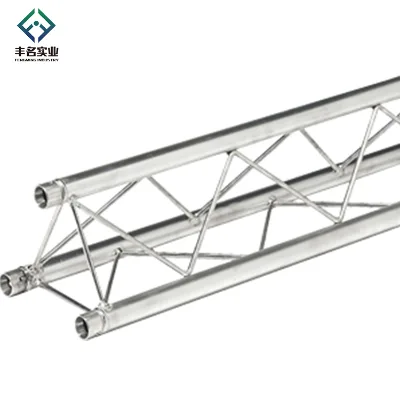
The foundation of any successful procurement strategy lies in correctly identifying the structural classification of the truss system. In the current market, aluminium trusses are generally categorized by their connection mechanisms and geometric properties. The "spigot truss" is a specific variant characterized by its pin-and-connector or bolted joint system, which allows for rapid assembly and disassembly without the need for complex welding on-site. This design is distinct from "ball joint trusses," which utilize spherical nodes for multi-directional connectivity, and "Vierendeel trusses," which rely on rigid connections rather than triangulation.
When evaluating suppliers, buyers must verify the specific structural classification. Data indicates that aluminium alloy is the predominant material due to its high strength-to-weight ratio, corrosion resistance, and ease of fabrication. The shape of the truss is typically square, providing a uniform profile that simplifies the integration of lighting fixtures and LED screens. However, the internal geometry can vary. Some systems are classified as "Space Frame Trusses," offering three-dimensional load-bearing capabilities, while others function as linear "Truss Bridges" or "Flat Truss Roofs."
The main tube dimensions are a critical specification that dictates load capacity. Observed market data points to a common main tube dimension of 50x3mm, though this is not a universal standard. Buyers should not assume that all 50x3mm tubes perform identically; the alloy grade and heat treatment process significantly influence tensile strength. Furthermore, the connection method is a primary differentiator. While "Spigot Truss" and "Bolt Truss" are often used interchangeably in general listings, the specific hardware—whether it is a pin-and-connector system or a screw-driven mechanism—must be confirmed against the project's safety requirements.
Technical Specifications and Material Verification
Technical due diligence is essential when sourcing aluminium trusses. The material composition is a primary driver of performance. The industry standard utilizes Aluminium Alloy, specifically selected for its durability in both indoor and outdoor environments. However, the specific alloy series (e.g., 6061-T6) is rarely explicitly stated in general product listings. Buyers must request material test reports to verify the alloy composition and temper, as these factors determine the truss's resistance to fatigue and environmental degradation.
The physical dimensions of the truss sections are equally critical. Standardized sizes such as 300x300mm, 400x400mm, and 400x600mm are frequently observed in the market. These dimensions refer to the cross-sectional profile of the truss. For custom projects, "Customized" sizing is available, allowing for tailored solutions that fit specific venue constraints. The height of the truss sections can also be customized, enabling the construction of towers or spans that meet unique load-bearing needs.
Packaging and protection are often overlooked but vital aspects of the technical specification. To prevent damage during transit, especially for the precision-machined connection points, products are typically packed in bubble film or air bubble film. Some suppliers offer custom packing requests, which is a valuable feature for buyers transporting equipment over long distances or through rough handling environments. The standard packaging ensures that the square shape and surface finish remain intact until installation.
Compliance, Certification, and Safety Standards
In the realm of event infrastructure, compliance is non-negotiable. The safety of performers, crew, and audience members depends on the truss system meeting rigorous international standards. Buyers must verify that the supplier holds valid certifications from recognized bodies. The market data highlights "TUV" and "ISO 9001" as prevalent certifications. Specifically, the standard "TUV ISO 9001: 2008" is cited as a quality management benchmark, indicating that the manufacturer adheres to consistent production processes.
However, the presence of a certification label on a product listing does not guarantee that every unit sold meets the standard. Buyers must request current, verifiable certificates that cover the specific product model, such as the "QYtruss031" or generic "Lighting truss 01" models. It is crucial to distinguish between a company's general quality certification and product-specific structural testing. The truss system must be capable of supporting dynamic loads, including the weight of lighting fixtures, speakers, and the potential movement of the structure during an event.
Safety factors are implied through the structural classification. A "Fixed Truss" implies a permanent or semi-permanent installation, whereas a "Spigot Truss" designed for "Outdoor Heavy Duty Show" usage must withstand wind loads and vibration. The "Truss Used" category often specifies "Indoor Outdoor Event," suggesting a dual-purpose design. Buyers should verify that the supplier has conducted load testing on the specific truss configuration intended for their project. Without documented test results, the claim of "Excellent" quality remains an observation rather than a verified fact.
Cost Drivers and Economic Considerations
The pricing of Aluminium Spigot Lighting Truss systems is influenced by a complex interplay of factors. The observed price range in the market spans from $1 to $11,000, reflecting the vast difference between single components and complete system packages. This wide variance is driven by the total quantity, the complexity of the design, and the level of customization required.
Material costs are a primary driver. Aluminium prices fluctuate based on global commodity markets, and the thickness of the main tube (e.g., 3mm vs. thicker gauges) directly impacts the cost per meter. Customization is another significant cost factor. While "Customized Design" is available, it often incurs higher tooling and engineering fees compared to standard off-the-shelf models. The "MOQ" (Minimum Order Quantity) also plays a role in pricing, with observed ranges from 1 to 2000 units. Buyers ordering small quantities may face higher unit costs, while bulk orders can leverage economies of scale.
Additional costs include logistics and packaging. The origin of the product, whether from "Changzhou" or "Guangdong, China(Mainland)," affects shipping costs and lead times. Suppliers offering "Pack in Bubble Film or as Your Request" may charge extra for specialized packaging solutions. Buyers should also consider the cost of accessories, such as "Truss Lift Tower," "Truss Plate," "Truss Cover," and "Clamp," which are often sold separately. These components are essential for a complete system but can significantly increase the total procurement budget if not accounted for early in the planning phase.
Typical Applications and Usage Scenarios
Aluminium spigot lighting trusses are versatile structures designed for a wide array of applications. The primary usage categories include "Background Plate," "Stage Performance," "Exhibition Building," and "Building Construction." In the context of stage performance, these trusses serve as the backbone for lighting rigs, allowing for the precise positioning of spotlights, moving heads, and wash lights. The "Function" of the truss is often described as "Event Lighting," highlighting its role in creating visual effects and ensuring adequate illumination for performers.
The versatility of the system extends to "DJ Event Concert Outdoor Performance" scenarios. In these environments, the truss must be robust enough to support heavy lighting arrays and withstand outdoor conditions. The "Truss System" is frequently utilized for "Truss Display" purposes, supporting "LED" and "LED Screen" installations. This dual functionality allows event organizers to integrate visual media directly into the structural framework, creating immersive environments.
For exhibition buildings, the truss provides a modular framework that can be reconfigured for different booth layouts. The "Square" shape and "Spigot" connection method facilitate quick assembly, which is crucial for trade shows with tight setup schedules. In building construction, the truss can be used for temporary roofing or scaffolding, demonstrating its adaptability beyond the entertainment industry. The "Occassion" of use, such as "Outdoor Heavy Duty Show," dictates the required load-bearing capacity and durability of the system.
Supplier Evaluation and Quality Control Protocols
Evaluating a supplier requires a multi-faceted approach that goes beyond reviewing product listings. Buyers should prioritize suppliers who demonstrate transparency in their manufacturing processes and quality control measures. The "Brand Name" of the supplier, such as "Dragontruss," can be a factor in brand reputation, but it should not be the sole criterion for selection. Instead, focus on the supplier's ability to provide detailed technical documentation and their track record in delivering "Stable, Durable, Easy to Install and Dismantle" products.
Quality control should be verified through the supplier's adherence to standards. The presence of "TUV ISO 9001" certification is a positive indicator, but buyers must ensure that the certification is current and covers the specific manufacturing facility. Requesting samples or site visits can provide insight into the quality of the aluminium alloy and the precision of the machining. The "Features" of the truss, such as stability and ease of installation, should be validated through practical testing or third-party reviews.
When assessing suppliers, consider their location and logistics capabilities. Suppliers based in "Changzhou" or "Guangdong, China(Mainland)" may have different lead times and shipping costs. Buyers should inquire about the "prod_packing" standards to ensure that the truss arrives in perfect condition. The ability to offer "Customized Design" and "Customized" standard sizes is also a sign of a flexible and capable supplier. Finally, verify the "Other Function" capabilities, such as the ability to hang speakers and lighting, to ensure the truss meets all project requirements.
Long-Term Procurement and Lifecycle Management
Sourcing aluminium spigot lighting trusses is an investment that extends beyond the initial purchase. Long-term considerations include maintenance, storage, and the potential for reuse. The "Aluminium" material offers excellent corrosion resistance, but regular inspection is necessary to detect wear and tear, particularly at the connection points. The "Pin & Connector" mechanism, while efficient, is subject to mechanical stress and should be checked for deformation or loosening after each use.
Storage is another critical factor. The "Bubble Film" packaging protects the truss during transit, but long-term storage requires a dry, controlled environment to prevent oxidation. Buyers should plan for the lifecycle of the truss, considering how often it will be assembled and disassembled. The "Easy to Install and Dismantle" feature is a key advantage for frequent users, reducing labor costs and minimizing the risk of damage during setup.
Future-proofing the procurement strategy involves selecting a supplier who can support the truss system with compatible accessories and upgrades. The availability of "Truss Accessories" such as "Truss Lift Tower" and "Truss Plate" ensures that the system can be expanded or modified as project needs evolve. By focusing on quality, compliance, and supplier reliability, buyers can ensure that their Aluminium Spigot Lighting Truss systems provide safe and effective performance for years to come.
FAQs
What structural classifications are available for Aluminium Spigot Lighting Truss?
Available classifications include Fixed Truss, Space Frame Truss, and Vierendeel Truss. These systems utilize square shapes and aluminum alloy materials, with options for both spigot and bolt truss connections to suit various stage and exhibition needs.
Which certifications should I verify for Aluminium Spigot Lighting Truss suppliers?
You should verify TUV and ISO 9001 certifications, specifically looking for the TUV ISO 9001: 2008 standard. These certifications indicate adherence to quality management processes, though buyers must request current certificates for specific product models like QYtruss031.
Can I customize the dimensions of Aluminium Spigot Lighting Truss systems?
Yes, customized designs and sizes are available for specific project requirements. While standard cross-sections include 300x300mm and 400x400mm, buyers can request tailored main tube dimensions and heights to fit unique venue constraints or load-bearing needs.
How are Aluminium Spigot Lighting Truss products typically packed for shipping?
Products are typically packed in bubble film or air bubble film to protect precision connection points. Some suppliers offer custom packing requests upon buyer demand, ensuring the square profile and surface finish remain intact during transit from origins like Changzhou or Guangdong.
What are the common usage scenarios for Aluminium Spigot Lighting Truss?
Common usages include background plates, stage performances, exhibition buildings, and building construction. These systems support event lighting, LED screens, and heavy-duty outdoor shows, serving as stable frameworks for lighting fixtures and speakers in various indoor and outdoor environments.
Which main tube dimensions are standard for Aluminium Spigot Lighting Truss?
A common main tube dimension observed in the market is 50x3mm. However, this is not a universal standard, and buyers should verify the specific alloy grade and heat treatment, as these factors significantly influence the tensile strength and load capacity of the truss.
Can Aluminium Spigot Lighting Truss be used for outdoor heavy duty shows?
Yes, these trusses are designed for outdoor heavy duty shows and general indoor outdoor events. The aluminum alloy material provides corrosion resistance, and the spigot connection system allows for rapid assembly and disassembly required for temporary event structures.