Source Aluminium Truck Canopy for Storage Transport and Camping
Explore 30 verified listings for Aluminium Truck Canopy options featuring waterproof, shockproof, and rustproof designs. Buyers can compare models like Ubox159 and Ubox2228, review customization services, and evaluate lead times from Chinese manufacturers.
Key considerations
Products List


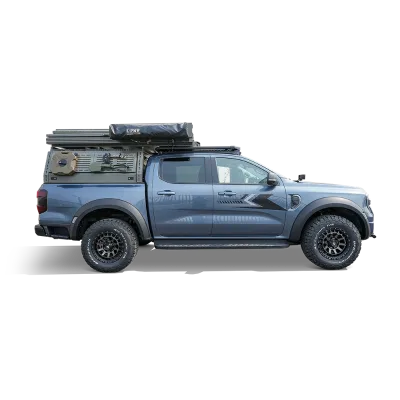


Pickup Canopy Aluminium Pickup Truck Canopy Special Vehicles Modification
$4600.00 - $12000.00
MOQ: 1 Sets


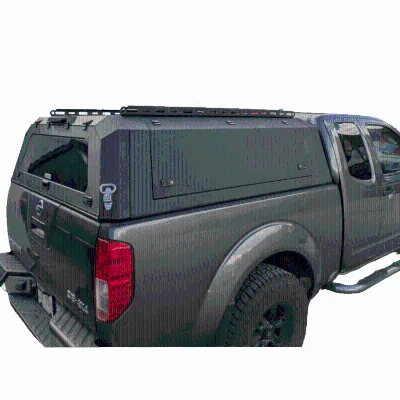

Comprehensive Sourcing Guide
Strategic Sourcing Guide for Aluminium Truck Canopies
The global demand for robust vehicle storage solutions has elevated the Aluminium Truck Canopy to a critical component in commercial and recreational logistics. Sourcing these units requires a disciplined approach that balances material integrity, functional versatility, and supply chain reliability. Buyers must navigate a complex landscape where product attributes vary significantly between listings, often mixing technical specifications with marketing claims. This guide provides a structured framework for evaluating aluminium truck canopies, focusing on verified data points and industry-standard procurement practices to ensure a successful acquisition.
Material Composition and Structural Integrity
The foundation of a reliable truck canopy lies in its material composition. While the core keyword specifies aluminium, the supply data indicates a nuanced market where materials may be listed as "Aluminum," "Steel," or a composite of "Steel/Aluminum." For buyers specifically targeting aluminium units, verification of the alloy grade and thickness is paramount. The observed specifications highlight thickness options of 2.5mm and 3mm, which are critical determinants of structural rigidity and resistance to impact. Thicker gauges generally offer superior durability for heavy-duty applications, while thinner variants may suffice for lighter utility tasks.
Surface treatment is another vital aspect of material integrity. The data points to "Polyester Powder Coating" as a standard process, which serves to protect the aluminium substrate from environmental degradation. This coating is essential for achieving the "Rustproof" and "Anti-Corrosion" benefits often advertised. Buyers should verify that the surface treatment covers all welded seams, as the "Fully Seam Welded" attribute suggests a construction method designed to eliminate gaps where moisture could accumulate. The choice between "Flat," "Checker," and "Diamond" plate finishes also influences the final product's utility, with textured surfaces offering enhanced grip and aesthetic appeal for outdoor activities.
Technical Specifications and Functional Attributes
When evaluating technical specifications, buyers must distinguish between the product's intended function and its physical capabilities. The observed product attributes reveal a diverse range of functionalities, including "Waterproof," "Shockproof," and "Dustproof" capabilities. These claims are often linked to the sealing mechanisms and the "Lockable T-Lock" systems found in these units. The presence of "Gas Strut" and "Hinges" as standard trims indicates a focus on ease of access and safety during operation.
Capacity is a variable that requires careful assessment based on the specific vehicle model. The supply data lists "Medium Capacity" and "Big Capacity" as distinct categories, suggesting that buyers must align their selection with their payload requirements. Furthermore, the "Fitment" attributes specify compatibility with "Single," "Dual," and "Extra Cab" configurations. This variability means that a single product model cannot be assumed to fit all vehicle types. Buyers must cross-reference the canopy's dimensions and mounting points with their specific truck chassis to ensure a proper fit. The "End Use" categories, ranging from "Storage" and "Transportation" to "Camping" and "Working," further dictate the necessary internal layout and accessory integration.
Compliance, Certification, and Standards
In the B2B procurement of industrial vehicle accessories, compliance with international standards is non-negotiable. The available data explicitly lists several certifications, including "TUV," "GS," and a suite of ISO standards: "ISO9001," "ISO45001," and "ISO14001." These certifications indicate that the manufacturer adheres to specific quality management, occupational health and safety, and environmental management protocols. However, buyers must treat these as observations of specific listings rather than universal guarantees for all aluminium canopies.
The "prod_standard" field in the data shows values like "1800" and "Multiple," which likely refer to internal manufacturing standards or specific regional compliance codes. Since the data does not define the exact nature of these standards, buyers should request detailed documentation from the supplier to verify that the product meets the regulatory requirements of their target market. Additionally, the "Customization" attribute is marked as "Available," which implies that suppliers can tailor products to meet specific local regulations or client specifications. This flexibility is a significant advantage for large-scale procurement but requires clear communication of requirements to ensure the final product remains compliant.
Cost Drivers and Pricing Dynamics
Understanding the cost structure of aluminium truck canopies is essential for budget planning. The observed price range in the market spans from $44.5 to $12,000 USD, a variance that reflects differences in material quality, size, customization level, and included accessories. The lower end of the spectrum likely corresponds to basic, smaller units with minimal features, while the higher end encompasses large, fully customized canopies with advanced accessories like "Roof Racks," "Water Tanks," and "Mud Guards."
Several factors drive these costs. First, the material choice between pure aluminium and steel-aluminum composites significantly impacts the base price. Second, the thickness of the aluminium, ranging from 2.5mm to 3mm, affects material usage and manufacturing complexity. Third, the level of customization, such as specific color options ("Black," "White," "Silver," "Alloy," or "Customized") and the inclusion of specialized trims, adds to the final cost. Finally, the "Supply Ability" of 1500 pieces per month suggests that volume discounts may be available for large orders, but buyers should verify if the supplier can scale production to meet urgent demand without compromising quality.
Supplier Evaluation and Operational Capacity
Selecting the right supplier involves more than just comparing product features; it requires an assessment of operational reliability. The data indicates that the primary production origin is "China," with specific mentions of "Hangzhou" as a manufacturing hub. This geographic concentration can be advantageous for logistics but requires due diligence regarding the supplier's export experience and communication capabilities.
Key operational metrics to evaluate include the "Lead Time," which is observed to range from 25-35 days to 35-40 days. This variance suggests that lead times are dependent on the order size, customization level, and current production load. Buyers should confirm the specific lead time for their order to avoid supply chain disruptions. The "MOQ" (Minimum Order Quantity) also varies, with some listings showing an MOQ of 1 piece, while others require 6 pieces or up to 100. This flexibility allows buyers to test the market with small orders or commit to larger volumes for better pricing.
Furthermore, the "Services" offered, such as "OEM," "ODM," and "Custom Build," indicate a supplier's ability to adapt to specific client needs. A supplier offering these services is likely to have a more robust engineering team and quality control infrastructure. Buyers should verify the supplier's "Supply Ability" claims of 1500 pieces per month to ensure they can handle peak demand periods.
Quality Control and Inspection Protocols
Implementing a rigorous quality control (QC) protocol is essential to mitigate the risks associated with sourcing from international markets. Given the "Fully Seam Welded" construction and the "Polyester Powder Coating" finish, visual and dimensional inspections should be prioritized. Buyers should verify that the welding is continuous and free of porosity, which could compromise the "Waterproof" and "Dustproof" claims. The surface coating should be inspected for uniformity, adhesion, and resistance to chipping or peeling.
The "Lockable T-Lock" mechanism and "Gas Strut" systems require functional testing to ensure they operate smoothly and securely. Buyers should request pre-shipment inspection reports that include photos of the welding seams, coating quality, and functional tests of the locking and lifting mechanisms. Additionally, the "Pallet" and "Carton Packed" packaging options should be evaluated to ensure they provide adequate protection during transit, preventing damage to the delicate powder-coated surfaces.
Long-Term Procurement and Maintenance Considerations
For long-term procurement success, buyers must consider the lifecycle of the Aluminium Truck Canopy. The "Multi-Purpose Usage" and "End Use" categories suggest that these units are subjected to varied environmental conditions, from extreme heat to heavy rain. The "Anti-Corrosion" and "Rustproof" features are critical for longevity, but buyers should inquire about the warranty terms and the availability of replacement parts, such as hinges, locks, and gas struts.
The "Customization" availability allows for future upgrades or modifications, which can extend the useful life of the canopy. Buyers should establish a relationship with the supplier that supports ongoing service and support. The "Lead Time" of 25-40 days should be factored into inventory planning, ensuring that spare parts or replacement units can be sourced promptly if needed. Finally, the "Type" of product, whether classified as a "Case," "Carbon Brush" (which appears to be a data anomaly and should be verified), or "Ute Canopy," must be clearly defined in the purchase order to avoid confusion and ensure the correct product is delivered.
Comparative Analysis of Product Attributes
To facilitate decision-making, the following table summarizes the key attributes observed in the supply data, highlighting the variability that buyers must navigate.
| Attribute Category | Observed Values | Procurement Implication |
|---|---|---|
| Material | Aluminum, Steel/Aluminum | Verify alloy grade and purity for corrosion resistance. |
| Thickness | 2.5mm, 3mm | Thicker gauges offer better impact resistance; verify based on load. |
| Surface Finish | Flat, Checker, Diamond | Select based on slip resistance and aesthetic requirements. |
| Coating | Polyester Powder Coating | Essential for rustproofing; check for uniformity and adhesion. |
| Certifications | TUV, GS, ISO9001/45001/14001 | Verify specific certificates apply to the batch being purchased. |
| Lead Time | 25-35 Days, 35-40 Days | Plan inventory based on the higher end of the range for safety. |
| MOQ | 1, 6, 100 Pieces | Negotiate MOQ based on order volume and budget constraints. |
| Fitment | Single, Dual, Extra Cab | Must match specific truck chassis to ensure proper installation. |
| Accessories | Roof Rack, Water Tank, Mud Guard | Confirm inclusion in the base price or as an add-on cost. |
| Packing | Pallet, Carton Packed | Ensure packaging is robust enough for international shipping. |
By adhering to these guidelines and rigorously verifying the data points provided, buyers can effectively source high-quality aluminium truck canopies that meet their operational needs while minimizing procurement risks. The market offers significant flexibility, but success depends on precise specification matching and thorough supplier due diligence.
FAQs
What certifications do Aluminium Truck Canopy suppliers hold?
Suppliers often hold TUV, GS, and ISO9001, ISO45001, and ISO14001 certifications. These indicate adherence to quality and safety standards, but buyers must verify that specific certificates apply to the batch being purchased rather than assuming universal coverage.
How long is the lead time for custom aluminium truck canopies?
The lead time typically ranges from 25 to 40 days depending on order size and customization. Buyers should plan inventory based on the longer 35 to 40 day window to avoid supply chain disruptions during peak production periods.
Which thickness options are available for Aluminium Truck Canopy construction?
Available thickness options include 2.5mm and 3mm aluminium sheets. Thicker gauges generally offer superior durability for heavy-duty applications, while thinner variants may suffice for lighter utility tasks requiring less structural rigidity.
Can aluminium truck canopies be customized for specific truck fits?
Yes, customization is available for Single, Dual, and Extra Cab configurations. Buyers must cross-reference the canopy dimensions and mounting points with their specific truck chassis to ensure a proper fit before ordering.
What is the minimum order quantity for Aluminium Truck Canopy purchases?
Minimum order quantities vary from 1 piece up to 100 pieces depending on the supplier. Some listings allow small test orders of 6 pieces, while others require larger volumes to unlock better pricing or production slots.
Which surface treatments protect aluminium truck canopies from corrosion?
Polyester powder coating is the standard treatment used to protect the aluminium substrate. This finish is essential for achieving rustproof and anti-corrosion benefits, and it should cover all fully seam welded areas to prevent moisture accumulation.