Source Aluminum Alloy Forklift Wheel Cylinder for Excavator, Repair Shop, and Rent Services
Find 30 listings for Aluminum Alloy Forklift Wheel Cylinder compatible with excavators and repair shops. Compare specifications, prices, and lead times from verified suppliers offering custom options and standard models.
Key considerations
Products List


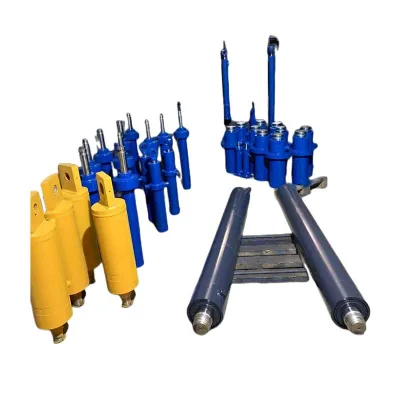
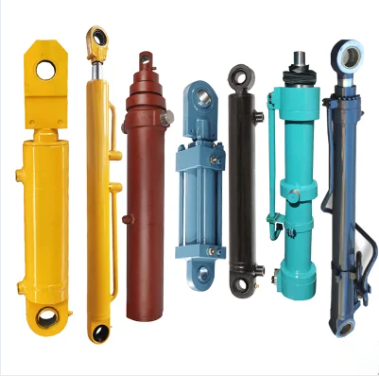
Forklift Parts Steering Axle Forklift Rear Axle with Steering Hydraulic Cylinder
$100.00 - $300.00
MOQ: 1 Pieces




Comprehensive Sourcing Guide
Strategic Sourcing Guide for Aluminum Alloy Forklift Wheel Cylinders
Understanding Technical Specifications and Component Variability
When sourcing aluminum alloy forklift wheel cylinders, buyers must first recognize that the market presents a diverse array of specifications rather than a single standardized unit. The core keyword implies a hydraulic component designed for lifting or steering mechanisms within forklift operations, yet the actual product data reveals significant variation in model numbers, weights, and structural designs. For instance, observed product models range from specific identifiers like "Mitsubishi 4T" and "5/6FD/FB 2/3T" to generic designations such as "hydraulic cylinder" and specific part numbers like "8265041311." This variability indicates that an aluminum alloy wheel cylinder is not a monolithic product but a category containing distinct configurations tailored to different forklift chassis and load capacities.
The structural integrity of these cylinders is often defined by their internal mechanism. Data indicates the presence of "Piston Type" structures with a "Straight Trip" working method, which suggests a direct linear motion application typical for lifting forks or steering axles. Furthermore, the "Adjusted Form" is noted as "Switching Type," implying a specific operational logic for engaging and disengaging hydraulic pressure. Buyers must verify that the aluminum alloy construction aligns with the required pressure ratings, as the observed data includes "Medium Pressure" classifications. The weight of these components varies considerably, with observations ranging from 0.55kg to 4kg, suggesting that the aluminum alloy formulation and the internal piston dimensions differ based on the intended load. A cylinder weighing 0.65kg serves a different function than one weighing 4kg, and selecting the wrong weight class can lead to premature failure or insufficient lifting capacity.
Compliance, Certification, and Safety Standards
In the B2B procurement of hydraulic components, compliance with international safety and environmental standards is non-negotiable. The available product data highlights specific certifications such as "RoHS" and "GS," which are critical indicators of material safety and electrical/mechanical compliance. RoHS (Restriction of Hazardous Substances) ensures that the aluminum alloy and associated seals do not contain prohibited heavy metals, while GS (Geprüfte Sicherheit) indicates a German safety certification, often implying rigorous testing against mechanical failure. However, buyers should not assume that every listed product possesses these certifications; they must be verified on a per-supplier basis.
Beyond specific certifications, the "Standard" classification observed in the data is listed simply as "Standard," which is a generic descriptor. In the context of forklift cylinders, this usually refers to adherence to ISO or ANSI standards for hydraulic cylinders, but the exact numerical standard (e.g., ISO 6020/2) is not explicitly provided in the source text. Therefore, procurement teams must request explicit documentation confirming the specific standard the cylinder meets. Additionally, the "Surface Treatment" noted as "Oxygenation" suggests a specific chemical process applied to the aluminum alloy to enhance corrosion resistance. Buyers should verify the thickness and quality of this treatment, as forklifts often operate in environments with varying humidity and chemical exposure. The "Work Temperature" is listed as "Normal Temperature," which implies the cylinder is not designed for extreme thermal environments without additional cooling or heating systems. Understanding these limits is essential for applications in cold storage or high-heat industrial zones.
Cost Drivers and Pricing Dynamics
The pricing landscape for aluminum alloy forklift wheel cylinders is influenced by several dynamic factors, including material costs, customization levels, and order volume. The observed price range in the market spans from $5 to $30,000 USD, a vast disparity that reflects the difference between small replacement parts and large, custom-engineered hydraulic assemblies. The lower end of this spectrum likely corresponds to standard, off-the-shelf cylinders with minimal customization, while the higher end may involve complex units with specialized aluminum alloys, custom piston configurations, or integrated sensors.
A significant cost driver is the "Customization" attribute. While the data indicates that customization is "Available" and some products are marked as "Customized" with a "Yes" for the "Customize" attribute, standard models are also prevalent. Customization typically increases the unit price due to the engineering time and specialized tooling required. Conversely, standard models benefit from economies of scale. The "MOQ" (Minimum Order Quantity) also plays a pivotal role in cost efficiency. Observed MOQs range from 1 piece to 10 pieces, with specific instances of 1 PCS or 1 Set. Suppliers offering an MOQ of 1 allow for low-risk testing and small-batch procurement, which is ideal for maintenance shops or pilot projects. However, buyers seeking bulk discounts for fleet-wide replacements should negotiate based on higher volumes, even if the listed MOQ is low. The "Payment" terms, including "Tt," "Western Union," and "Trade Assurance," also affect the financial risk and cash flow management for the buyer, with Trade Assurance offering a layer of protection that may justify a slightly higher price point.
Typical Applications and Operational Context
The application of aluminum alloy forklift wheel cylinders extends beyond simple lifting, covering a broad spectrum of industrial and commercial uses. The data explicitly lists applications such as "Mechanical Hydraulic Cylinder" usage in "Excavator" contexts, which, while distinct from forklifts, indicates the cylinder's versatility in heavy machinery. More specifically, the data points to "Forklift Rent & Service Shop" and "Forklift Repair Shop" as primary use cases. This suggests that these components are frequently sourced for maintenance, retrofitting, and repair operations rather than just original equipment manufacturing (OEM).
The "Condition" of the products is noted as "New Assembled," which is crucial for buyers seeking reliability. In repair shops, the "Number Per Vehicle" is often "One," indicating that these cylinders are typically replaced individually rather than in sets. The "Vehicle Model" compatibility is another critical factor, with specific references to models like "S6s" and "D DX215-9 Midarm." Buyers must ensure that the aluminum alloy cylinder matches the specific hydraulic system of their forklift, as mismatched specifications can lead to system incompatibility. The "Shipping by" method, observed as "Air," suggests that these components are often treated as high-priority, time-sensitive replacements, necessitating fast logistics to minimize equipment downtime. The "Lead Time" of 1 to 2 days further supports the need for rapid deployment in repair scenarios, where every hour of downtime impacts operational efficiency.
Supplier Evaluation and Verification Protocols
Evaluating suppliers for aluminum alloy forklift wheel cylinders requires a rigorous approach to verifying the authenticity of product attributes and the reliability of the supply chain. Since the product count is 30 with significant variation in models, buyers must avoid generalizing supplier capabilities based on a single listing. The "prod_origin" is consistently listed as "China," which is a common manufacturing hub for hydraulic components, but buyers should verify the specific factory location and its quality management systems.
Key evaluation criteria include the "Warranty" period, with observed data showing a "12 Months" warranty. This is a standard benchmark, but buyers should confirm if the warranty covers manufacturing defects only or also includes shipping damage and installation errors. The "prod_packing" varies between "Carton Box," "Wooden Box," and "Strong Carton Box," indicating different levels of protection during transit. For high-value or heavy cylinders, a wooden box is preferable to prevent damage. Buyers should also scrutinize the "Standard" dimensions, such as "1503030cm" or "0.45kg," to ensure the packaging and product specifications align with their logistical capabilities. Furthermore, the "Surface Treatment" of "Oxygenation" should be verified through material safety data sheets (MSDS) to ensure it meets the specific environmental requirements of the buyer's facility.
Quality Control and Long-Term Procurement Considerations
Implementing a robust quality control (QC) strategy is essential for long-term procurement success. Given the "Medium Pressure" rating and "Piston Type" structure, buyers should insist on pressure testing reports before finalizing large orders. The "Lead Time" of 1 to 2 days is impressive, but buyers must ensure that this speed does not compromise quality checks. A "New Assembled" condition implies that the product is ready for immediate use, but the assembly process must be verified to ensure no contaminants entered the hydraulic system.
Long-term procurement considerations involve building a relationship with suppliers who can provide consistent quality and technical support. The "Customization" availability suggests that suppliers can adapt products to specific needs, which is valuable for fleet standardization. Buyers should also consider the "Application" diversity; a supplier capable of serving both "Forklift Rent & Service Shop" and "Excavator" markets likely has a broader technical expertise. The "Payment" options, particularly "Trade Assurance," offer a safety net for long-term contracts, allowing buyers to pay in stages or upon delivery verification. Finally, the "Weight" variations observed (0.55kg to 4kg) highlight the need for a detailed inventory management system to track which cylinder weights correspond to which forklift models, preventing costly errors in ordering. By focusing on these technical and logistical details, buyers can secure a reliable supply of aluminum alloy forklift wheel cylinders that meet their operational demands.
Comparative Analysis of Product Attributes
To facilitate decision-making, the following table summarizes key observed attributes across the product spectrum, highlighting the variability buyers must navigate.
| Attribute Category | Observed Variations | Procurement Implication |
|---|---|---|
| Product Model | Mitsubishi 4T, 5/6FD/FB 2/3T, 8265041311, SY NO. 1742, Hydraulic Cylinder | Must match specific forklift chassis and hydraulic system requirements. |
| Weight | 0.55kg, 0.62kg, 0.65kg, 1.2kg, 4kg | Heavier units may indicate higher load capacity or larger piston size. |
| Certification | RoHS, GS | Essential for environmental compliance and safety assurance. |
| MOQ | 1 PCS, 1 Set, 1-10 | Low MOQ allows for testing; higher volumes may yield better pricing. |
| Lead Time | 1~2 Days | Indicates high availability and suitability for urgent repairs. |
| Packing | Carton Box, Wooden Box, Strong Carton Box | Heavier units require stronger packaging (Wooden Box) to prevent damage. |
| Surface Treatment | Oxygenation | Critical for corrosion resistance in varied operating environments. |
| Warranty | 12 Months | Standard protection period; verify coverage scope for specific defects. |
This comparative view underscores the necessity of precise specification matching. A buyer cannot simply select the lowest price or the shortest lead time without verifying that the weight, model number, and certification align with their specific forklift requirements. The diversity in attributes, from the "Straight Trip" working method to the "Switching Type" adjustment, demands a thorough technical review before any procurement decision is made. By adhering to these evidence-based guidelines, buyers can mitigate risks and ensure the acquisition of high-quality aluminum alloy forklift wheel cylinders that enhance operational efficiency and safety.
FAQs
What certifications do aluminum alloy forklift wheel cylinders have?
Available units carry RoHS and GS certifications to ensure safety and environmental compliance. Buyers must verify these marks on specific listings as not all products share them.
How long is the lead time for these hydraulic components?
The typical lead time ranges from 1 to 2 days for rapid delivery. This short window supports urgent repair needs in forklift service shops and rental facilities.
Can I customize the specifications of the cylinder?
Customization is available for many models to meet specific operational needs. Buyers should confirm the customize attribute on individual product pages before placing orders.
What is the minimum order quantity for purchasing?
Minimum order quantities start at 1 piece or 1 set depending on the supplier. This low threshold allows for single-unit replacements or small batch testing.
Which packaging types are used for shipping these parts?
Products are shipped in carton boxes, strong carton boxes, or wooden boxes. Heavier units often require wooden packaging to prevent damage during transit.
What is the weight range of the aluminum alloy cylinders?
Observed weights vary from 0.55kg to 4kg based on the model and capacity. Selecting the correct weight is critical for matching the specific forklift load requirements.