Source Aluminum Housing SPD LED Driver for Light, Industry, Vehicle
Find 30 aluminum housing spd led driver options for light, construction, and vehicle applications. Compare constant voltage and current models with IP20 or IP65 ratings, short circuit protection, and CE or TUV certifications to match your specific project requirements; compare the available evidence and request quotations based on your requirements.
Key considerations
Products List






Comprehensive Sourcing Guide
Aluminum Housing SPD LED Driver Sourcing Guide
Procuring aluminum housing SPD LED drivers requires careful attention to thermal management and surge protection capabilities, as these components are critical for maintaining system stability in demanding environments. The aluminum enclosure serves a dual purpose by dissipating heat generated during operation and providing a robust physical barrier against mechanical stress. Buyers must verify that the housing design aligns with the specific thermal load of the intended application to prevent premature failure due to overheating.
When evaluating potential suppliers, it is essential to distinguish between constant voltage and constant current output types, as the choice dictates compatibility with different LED arrays. The observed market data indicates a wide range of power ratings, from low-wattage units suitable for digital products to high-power drivers designed for industrial and construction lighting. Understanding these distinctions ensures that the selected driver matches the electrical requirements of the load without compromising safety or efficiency.
Product Scope and Observed Listing Signals
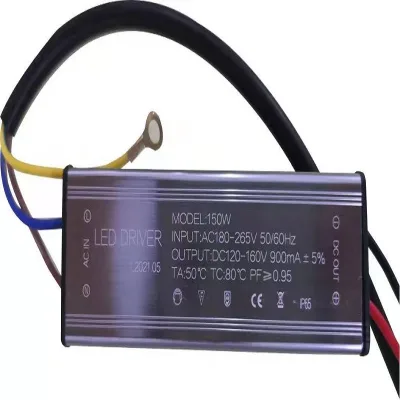
The current market listings reveal a diverse array of aluminum housing drivers with varying dimensions, such as models measuring 85x40x20mm or larger units like the 150W variants. These physical specifications are not merely cosmetic but directly influence the installation footprint and heat dissipation surface area available for the internal circuitry. Buyers should cross-reference the listed dimensions with their enclosure designs to ensure a proper fit, noting that some products offer customization options to meet unique spatial constraints.
Listing signals also highlight significant variations in power supply modes, including both constant voltage and constant current sources, which cater to different LED driving strategies. While some units are rated for specific voltages like 5V or 24V, others support broader input ranges such as AC85-265V, offering greater flexibility for global deployment. It is crucial to analyze the stated output type and modulation system, such as PWM, to confirm that the driver can deliver the required performance characteristics for the specific lighting project.
Technical Specifications to Verify
Verifying the electrical output parameters is the first step in ensuring driver compatibility, particularly regarding the rated power and voltage stability. The available data points to specific power ratings like 6W or 150W, alongside constant voltage options ranging from 5V to 48V, which must align precisely with the LED load requirements. Buyers should confirm that the driver's output type, whether single or multi-channel, matches the circuit design to avoid issues with current balancing or voltage drops across the array.
Thermal and environmental protection ratings are equally critical, as the aluminum housing must withstand the operating conditions of the installation site. Specifications such as IP20 or IP65 indicate the level of ingress protection against dust and water, which is vital for outdoor or industrial applications where exposure to the elements is likely. Additionally, checking for built-in protections like short circuit, over current, and over voltage safeguards ensures that the driver can handle transient spikes without damaging the connected lighting fixtures.
Compliance and Safety Documentation
Safety compliance is a non-negotiable aspect of sourcing, with certifications like CCC, CE, RoHS, and TUV serving as indicators of adherence to international safety standards. These certifications validate that the driver has undergone rigorous testing for electrical safety, electromagnetic compatibility, and hazardous substance restrictions. Buyers must request valid certification documents for each batch to ensure that the products meet the regulatory requirements of the destination market, as non-compliant units can lead to legal liabilities and market rejection.
Beyond basic safety, the documentation should also cover performance standards and quality assurance protocols that guarantee long-term reliability. The presence of specific standards, such as those defining physical dimensions or power ratings, helps in verifying that the product matches the technical description provided. It is advisable to review the manufacturer's test reports to confirm that the driver's efficiency, power factor, and dimming capabilities meet the project specifications before finalizing the procurement order.
Cost Drivers and Commercial Terms
The cost of aluminum housing SPD LED drivers is influenced by several factors, including the rated power, the complexity of the internal circuitry, and the level of customization required. Higher wattage units with advanced features like high power factors or specific modulation systems typically command a premium price compared to basic constant voltage models. Buyers should analyze the total cost of ownership, considering that a slightly higher initial investment in a high-efficiency driver can result in significant energy savings over the product's lifespan.
Commercial terms such as minimum order quantities and packaging standards also play a significant role in the overall procurement strategy. The observed MOQ ranges from 1 to 5000 units, allowing flexibility for both small-scale projects and large industrial deployments. Additionally, the packaging method, whether standard export cartons or specialized air transport packaging, affects shipping costs and the risk of damage during transit, which must be factored into the budget planning.
Supplier Qualification and Quality Control
Selecting a qualified supplier involves verifying their manufacturing capabilities and their track record in producing reliable electronic components. The origin of the products, often listed as Zhejiang or Guangdong in China, provides insight into the regional manufacturing ecosystem and the potential for supply chain consistency. Buyers should assess the supplier's ability to maintain quality control throughout the production process, ensuring that every unit meets the specified standards for power, protection, and physical dimensions.
Quality control measures should extend beyond the final inspection to include incoming material checks and in-process testing. Suppliers that offer customization services demonstrate a higher level of flexibility and technical competence, which is beneficial for projects with unique requirements. It is essential to establish clear communication channels for addressing any quality issues that may arise, ensuring that the supplier is responsive and committed to resolving problems promptly to maintain project timelines.
Long-Term Procurement Checks
Establishing a long-term procurement strategy requires regular audits of supplier performance and product consistency over time. Buyers should monitor the stability of key specifications, such as the constant voltage output and protection mechanisms, to ensure that the drivers continue to perform as expected after extended use. Regular testing of sample units from new batches can help identify any drift in performance or quality issues before they impact the entire installation.
Future-proofing the procurement process involves staying informed about technological advancements and regulatory changes that may affect the suitability of current driver models. As lighting technologies evolve, the demand for higher efficiency and smarter control systems will likely increase, necessitating a proactive approach to updating the product portfolio. Maintaining a relationship with suppliers who can adapt to these changes ensures a steady supply of compatible and compliant components for future projects.
FAQs
What certifications are available for these LED drivers?
Certifications include CCC, ISO, RoHS, CE, and TUV depending on the specific model. These ensure compliance with international safety and environmental standards. Buyers should verify the exact certificate list for their target market before ordering to guarantee regulatory acceptance and product reliability.
Can I customize the output voltage for my project?
Yes, customization is available for constant voltage outputs. Standard options include 5V, 12V, 18V, 24V, 36V, and 48V. You can specify the required voltage during the inquiry process to ensure the driver matches your LED load requirements precisely without additional modification.
What is the typical packaging method for shipping?
Products are packed in standard exporting cartons or air transport packaging. This ensures safe delivery during logistics. The packaging is designed to protect the drivers from damage. Buyers should confirm the specific packing details with the supplier to meet their warehouse handling requirements.
What protection features are built into the drivers?
The drivers feature short circuit, over current, and over voltage protection. These safeguards prevent damage to the LED lights and the driver itself. This enhances system longevity and safety. The protection mechanisms are standard across many models to ensure reliable operation in various environments.
What is the rated power for the standard models?
Rated power varies by model, with common options including 6W and 150W. The 6W model is compact, while the 150W version offers higher output. Select the power rating that matches your LED load to ensure efficient performance and avoid overloading the circuit during operation.
Where are these LED drivers manufactured?
Manufacturing locations include China, specifically Zhejiang and Guangdong provinces. These regions are known for robust electronics manufacturing capabilities. Buyers can expect consistent quality and supply chain efficiency. Origin details should be confirmed with the supplier to align with any regional sourcing preferences or trade requirements.