Source Anime Plush Animal Toy for Gifts, Decor, and Collectibles
Compare 23 Anime Plush Animal Toy options from verified manufacturers offering OEM/ODM services. Buyers can evaluate customization, certifications, and sample times for gifts, decor, and collectibles.
Key considerations
Products List


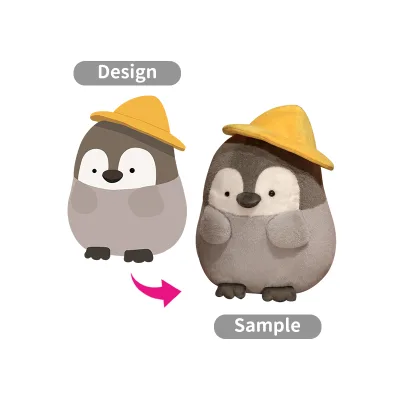
Stuffed & Plush Toys Animals Pet Toys Wholesale Anime Plush Dolls Custom Plush Toys
$3.99 - $6.99
MOQ: 100 Pieces




Comprehensive Sourcing Guide
Strategic Sourcing Guide for Anime Plush Animal Toys
The global market for soft toys has evolved significantly, with the "Anime Plush Animal Toy" category representing a high-growth segment driven by character licensing, collectibility, and the enduring appeal of soft tactile products. For B2B procurement professionals, sourcing this specific niche requires a disciplined approach that balances creative customization with rigorous supply chain verification. Unlike generic stuffed animals, anime-themed plush toys often demand precise attention to character accuracy, specific material safety standards, and flexible production models that can accommodate both mass production and small-batch sampling. This guide outlines the essential technical, compliance, and operational factors buyers must evaluate to secure a reliable supply chain for these products.
Technical Specifications and Production Attributes
When evaluating potential suppliers for anime plush animal toys, the technical specifications provided by the manufacturer serve as the primary baseline for quality assessment. The observed product data indicates a diverse range of production capabilities, including both machine production and hand-made techniques. Buyers must determine which method aligns with their brand's quality expectations. Machine production typically offers consistency and scalability, ideal for large-volume orders where uniformity in stitching and stuffing density is critical. Conversely, hand-made options may provide superior detail in complex character features, such as facial expressions or unique fabric textures, though they often come with longer lead times and higher unit costs.
The physical dimensions of the plush toys are a critical specification. The available data suggests a wide variance in sizing, ranging from short plush toys to custom lengths between 20 and 200 centimeters. This flexibility allows buyers to target different market segments, from pocket-sized keychain accessories to large, display-ready collectibles. The "Plush Length" attribute is often tied to the "Modelling Source," which in this context is frequently animals, though the anime aesthetic dictates the final stylization. Buyers should verify the exact dimensions for their specific order, as the standard production models listed (such as plush toy-2005 or HWY000000) may require modification to match specific character designs.
Furthermore, the customization capabilities are a defining feature of this category. The supply chain data confirms that customization is available, with options for custom logos, customer-specific designs, and variable weights. The "Names of Animals" attribute indicates that while the base models may be animal-based, the final product is often a stylized version of a dog or other creature adapted to an anime aesthetic. Procurement teams must ensure that the supplier can accurately translate 2D character art into 3D plush forms, paying close attention to the "Style" attributes, which include standing animals and general stuffed animal forms. The "Feature" of being soft and comfortable is a universal expectation, but the specific fabric composition and stuffing material must be verified to ensure they meet the tactile standards required for the target demographic.
Compliance and Certification Verification
Safety compliance is non-negotiable in the plush toy industry, particularly when the target audience includes children. The observed product listings highlight a robust array of certifications, including CE, En71, ASTM, Cpsia, Reach, and Ukca. These standards represent the regulatory requirements for the European Union, the United States, and other international markets. However, buyers must not assume that every listed product automatically satisfies all these standards. The data shows that while some entries list "CE, En71, ASTM, Cpsia, Reach," others may only list a subset. It is the buyer's responsibility to request specific test reports for the exact product model being ordered.
The "Testing" and "Certificate" attributes in the supply data reveal that some suppliers also hold BSCI and ISO9001 certifications. While BSCI focuses on social compliance and factory working conditions, and ISO9001 addresses quality management systems, these are distinct from product safety certifications. A supplier may possess ISO9001 but lack the specific ASTM F963 or EN 71 test results required for the toy itself. Buyers should explicitly request the latest third-party test reports for the specific SKU, ensuring that the tests cover flammability, small parts, mechanical and physical properties, and chemical safety. The presence of "Ukca" indicates compliance with the United Kingdom's post-Brexit standards, which is essential for any shipment destined for the UK market.
Additionally, the "Age Range" and "Age" attributes vary across the data, with some products listed for "All Ages" and others specifically for "3 Years and up." This distinction is crucial for compliance. Toys intended for children under three years old face stricter regulations regarding small parts and choking hazards. If a supplier lists a product as suitable for "All Ages," the buyer must verify that the specific design does not contain detachable parts that would fail safety tests for the younger demographic. The "Standard" attributes, such as "20-200cm" or specific carton dimensions, should be cross-referenced with the intended age group to ensure the product size and weight are appropriate for the target market's safety guidelines.
Cost Drivers and Pricing Dynamics
Understanding the cost structure of anime plush animal toys is essential for budgeting and margin analysis. The observed price range in the market spans from 0.5 to 6.99 USD, a wide variance that reflects differences in size, material quality, production complexity, and order volume. Several key factors drive these costs. First, the "Customization" level significantly impacts pricing. A standard, off-the-shelf animal plush will be at the lower end of the price spectrum, while a fully custom anime character with unique fabrics, embroidery, and specific molding will command a premium.
Second, the production method is a primary cost driver. "Hand-Made" production, while offering higher perceived quality, generally incurs higher labor costs compared to "Machine Production." Buyers must weigh the cost difference against the potential for higher retail prices and brand differentiation. Third, the "MOQ" (Minimum Order Quantity) plays a vital role in unit pricing. The data indicates an MOQ range of 1 to 1000 units. Orders placed at the lower end, such as samples or small batches with an MOQ of 1, will naturally carry a higher per-unit cost. Conversely, larger orders approaching the 1000-unit threshold will benefit from economies of scale, reducing the unit price.
The "Sample Time" and "Production Time" also influence the overall cost of capital. With sample times ranging from 3-7 working days to 15 working days, and production times averaging around 20 days or varying by order quantity, delays can impact inventory planning and cash flow. Buyers should factor in the potential for expedited shipping or overtime labor costs if they require faster turnaround times. Finally, the "Packing" specifications, such as 1PC/PP Bag, 30-40PC/Carton, or Export Carton, affect logistics costs. Complex packaging requirements or the need for custom boxes (as opposed to standard cartons) will add to the total landed cost of the product.
Typical Applications and Market Segmentation
Anime plush animal toys serve a diverse range of applications, extending beyond traditional play. The "Usage" attributes in the supply data highlight "Gift" and "Kids Gift" as primary categories, but the market extends further. These products are frequently utilized as promotional items, corporate gifts, and merchandise for anime conventions and fan events. The "Gender" attribute is listed as "Unisex," indicating that these toys have broad appeal across different demographics, making them versatile for various marketing campaigns.
The "Style" of the product, such as "Standing Animal" or "Stuffed Animals," dictates its application. Standing animals are often designed for display purposes, making them popular as desk accessories or shelf decorations for collectors. In contrast, traditional stuffed animals are optimized for hugging and play, targeting a younger audience or those seeking comfort items. The "Modelling Source" being "Animals" suggests that while the base form is recognizable, the anime influence allows for creative interpretation, appealing to fans of specific franchises or general anime culture.
Buyers should also consider the "Feature" of the product, such as "Soft Comfortable," which enhances its utility as a comfort object or a therapeutic item. The "Label or Hang Tag" customization option allows for branding opportunities, making these toys suitable for corporate gifting or event souvenirs. The ability to customize the "Logo" and "Name" further expands the application scope, enabling companies to create branded merchandise that resonates with their specific customer base. Understanding these applications helps buyers align their procurement strategy with their intended market segment, whether it is mass-market retail, niche collector markets, or corporate promotional channels.
Supplier Evaluation and Quality Control
Selecting the right supplier requires a rigorous evaluation process that goes beyond the initial product listing. Buyers should prioritize suppliers who demonstrate transparency in their "Technical" capabilities and "Certification" status. The presence of multiple certifications like CE, ASTM, and BSCI is a positive indicator, but verification is key. Buyers should request copies of valid certificates and ensure they are current. The "OEM/ODM" capability is another critical factor; suppliers offering "Aceptable" (Acceptable) OEM/ODM services should be able to provide a portfolio of previous custom work to demonstrate their ability to handle complex designs.
Quality control (QC) protocols must be established before production begins. Given the variation in "Sample Time" and "Production Time," buyers should implement a clear QC schedule that includes pre-production sample approval, in-line inspections, and final random inspections. The "Packing" standards, such as "Export Carton" or "Boxed," should be verified to ensure they protect the product during transit. For anime plush toys, where visual accuracy is paramount, the inspection should focus on fabric quality, stitching integrity, and the accuracy of the character representation.
Buyers should also assess the supplier's responsiveness and communication channels. The ability to provide a "Customers Logo" and customize the "Label or Hang Tag" requires close collaboration. A supplier that is responsive to design changes and provides timely updates on production progress is essential for maintaining project timelines. Additionally, the "MOQ" flexibility is a sign of a supplier's willingness to accommodate different order sizes, which is beneficial for testing the market with smaller batches before committing to large-scale production.
Long-Term Procurement Considerations
Sourcing anime plush animal toys is not a one-time transaction but a long-term partnership that requires strategic planning. The "Production Time" of about 20 days or according to order quantity suggests that lead times can fluctuate based on volume. Buyers should plan for potential delays, especially during peak seasons or when supply chain disruptions occur. Establishing a relationship with a supplier who can scale production up or down based on demand is crucial for managing inventory levels and avoiding stockouts or overstock situations.
Sustainability and ethical sourcing are increasingly important considerations in the toy industry. While the data mentions BSCI certification, which addresses social compliance, buyers should inquire about the environmental impact of the materials used. The "Technical" aspect of "Machine Production" versus "Hand-Made" may also have implications for energy consumption and waste generation. Buyers should ask suppliers about their waste management practices and the recyclability of their packaging materials, such as the "PP Bag" or "Carton" options.
Finally, the "Customization" aspect offers opportunities for product differentiation and brand loyalty. As the anime market evolves, buyers should work with suppliers who can adapt to new trends and character releases. The ability to quickly prototype and produce new designs based on emerging anime trends can provide a competitive advantage. By maintaining a flexible and collaborative relationship with suppliers, buyers can ensure a steady supply of high-quality, compliant, and market-relevant anime plush animal toys that meet the evolving demands of their customers.
FAQs
Can I customize the logo and design of the plush toy?
Yes, customization is available for logos and designs. Buyers can request custom logos and specific animal names like dogs, with options for standing or general stuffed styles to match brand needs.
What certifications do these anime plush toys hold?
Products hold certifications including CE, En71, ASTM, Cpsia, Reach, and Ukca. Some suppliers also provide BSCI and ISO9001 certificates, ensuring compliance with safety standards for various international markets.
What is the minimum order quantity for samples?
The minimum order quantity for samples is one unit. This allows buyers to test product quality before committing to larger production runs that may have higher volume requirements.
How long does it take to produce a sample?
Sample production typically takes between 3 to 15 working days depending on the supplier. Buyers should verify the specific timeline as it varies from 3-7 days for some models to 15 days for others.
Which age groups are these plush toys suitable for?
These toys are suitable for all ages, though some specific models are recommended for children aged 3 years and up. Buyers must verify age suitability to ensure compliance with safety regulations for younger children.
What are the available packaging options for bulk orders?
Packaging options include 1PC per PP bag, 30-40 pieces per carton, or export cartons. Custom boxed packaging is also available depending on the specific product model and order requirements.
Can I order custom sizes for the plush animals?
Yes, custom sizes are available ranging from 20 to 200 centimeters. Buyers can specify weights and dimensions to create unique standing animals or short plush toys tailored to their collection.