Source anti-rust moisture absorption desiccant for Building, Window, and Electronic
Find 30 verified options for anti-rust moisture absorption desiccant suitable for building, window, and electronic applications. Buyers can compare specifications like particle size, adsorption capacity, and packaging to select the right supplier for their needs.
Key considerations
Products List




Comprehensive Sourcing Guide
Strategic Sourcing Guide for Anti-Rust Moisture Absorption Desiccants
Understanding Material Composition and Functional Mechanisms
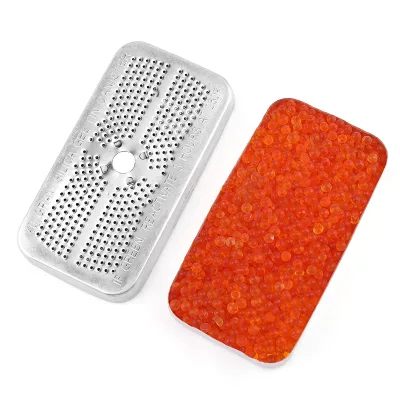
When sourcing anti-rust moisture absorption desiccants, the primary distinction lies in the chemical nature of the sorbent material. The market presents two dominant categories: physical desiccants and chemical desiccants. Physical desiccants, such as silica gel, operate through adsorption, where moisture adheres to the surface of the material without altering its chemical structure. These are often identified by their bead shape and are suitable for applications requiring reversible drying cycles. In contrast, chemical desiccants, such as calcium chloride, function through absorption and chemical reaction. These materials trap moisture within their crystal lattice, often resulting in a phase change from solid to liquid or gel.
The specific product attributes observed in the current market indicate a diverse range of compositions. Some listings specify a composition of polymer, calcium chloride, mineral salt, and kaolin, which suggests a hybrid approach designed to maximize absorption capacity while maintaining structural integrity. Other entries focus exclusively on silica gel, categorized as a physical desiccant with a working temperature range of -10ºC to 80ºC. It is critical for buyers to verify the exact sorbent type before procurement, as the mechanism dictates the disposal method and the maximum humidity levels the product can handle. The observed working humidity range for these products spans from 10% to 99%, indicating a broad operational envelope, but the specific capacity varies significantly between the chemical and physical types.
Technical Specifications and Performance Metrics
Selecting the correct desiccant requires a rigorous review of technical specifications, particularly particle diameter, bulk density, and adsorption capacity. For calcium chloride-based products, the particle diameter is often standardized between 1.5mm and 2.0mm, with a particle size pass rate of 98%. This ensures uniform flow and consistent performance within packaging. The bulk density for these solid structures is typically greater than or equal to 0.72g/ml, a metric that influences how much desiccant can be packed into a given volume without compromising the structural strength of the packaging.
Performance metrics are equally vital for anti-rust applications. The water adsorption capacity for certain chemical desiccants is observed to be greater than or equal to 20% by weight under specific conditions (50% relative humidity at 25ºC). However, other product lines, particularly those utilizing silica gel or hybrid polymer compositions, report absorbing capacities ranging from 170% to 300%. This significant variance underscores the necessity of matching the desiccant's capacity to the specific volume of air and the expected moisture load of the shipment. Additionally, the adsorption temperature rise is a critical safety parameter; some products exhibit a temperature increase of greater than or equal to 30 degrees Celsius during the absorption process, which must be considered when packaging temperature-sensitive goods.
| Specification Parameter | Observed Range/Value | Application Relevance |
|---|---|---|
| Particle Diameter | 1.5 - 2.0 mm | Ensures uniform distribution and flow |
| Bulk Density | ≥ 0.72 g/ml | Determines packing efficiency and volume |
| Water Adsorption | ≥ 20% Wt (Chemical) | Indicates baseline moisture removal capability |
| Absorbing Capacity | 170% - 300% (Silica/Hybrid) | Critical for high-moisture environments |
| Dust Amount | ≤ 30 ppm | Prevents contamination of sensitive products |
| Wear Rate | ≤ 0.2% Wt | Ensures structural integrity during transit |
Compliance, Certification, and Safety Standards
In the realm of industrial procurement, verifying compliance with international standards is non-negotiable, yet the available data presents a complex landscape regarding certifications. While general industry knowledge often references standards such as ISO 9001, DIN 55473, REACH, or RoHS, the specific product listings provided do not explicitly confirm these certifications for every item. Therefore, buyers must treat the presence of these standards as a verification requirement rather than an inherent attribute of the listed products.
Safety and environmental compliance should be a primary focus during the supplier evaluation phase. For chemical desiccants containing calcium chloride, mineral salts, and polymers, it is essential to request Material Safety Data Sheets (MSDS) to understand the chemical hazards and proper handling procedures. The observed ammonia adsorption capacity of less than or equal to 0.2% Wt suggests a specific chemical stability, but this must be cross-referenced with the intended application environment. If the desiccant is used in food, medical, or household applications, the supplier must provide documentation proving the absence of toxic heavy metals and compliance with relevant food-grade or medical-grade regulations. Buyers should explicitly ask for certification documents rather than assuming they are included, as the product attributes list "Standard" values like 0.5g to 5g or 10g/bag, which refer to packaging weights rather than regulatory compliance.
Cost Drivers and Procurement Economics
The cost of anti-rust moisture absorption desiccants is influenced by several factors, including the type of sorbent, packaging format, and order volume. The observed price range in the market spans from $0.01 to $610, a wide variance that reflects differences in product scale, from small single-use packets to bulk industrial containers. The Minimum Order Quantity (MOQ) also varies significantly, ranging from 1 unit to 10,000 units, allowing for flexibility in procurement strategies for both small businesses and large manufacturers.
Packaging plays a substantial role in the final cost. Products are available in various configurations, including wooden boxes with steel frames, carton packing, bags, and breathable waterproof materials combined with non-woven fabric. The choice of packaging affects both the unit price and the logistics costs. For instance, a wooden box with a steel frame offers superior protection for heavy-duty industrial applications but incurs higher material and shipping costs compared to simple bagged silica gel. Furthermore, the working temperature and sustainable working hours (observed as 90 days for some products) impact the lifecycle cost. A desiccant that maintains efficacy for a longer duration may have a higher upfront cost but offers better value by reducing the frequency of replacement and the risk of product damage due to moisture.
Typical Applications and Industry Use Cases
The versatility of anti-rust moisture absorption desiccants allows them to serve a wide array of industries. The observed product attributes list applications ranging from agricultural and industrial sectors to medical, household, garments, wood, electronic, and leather goods. This broad applicability stems from the ability to tailor the desiccant's properties to specific environmental needs.
In the building and window industry, hollow glass processing requires desiccants that can maintain a dry environment within the glass cavity to prevent fogging and corrosion. The "Deep Processing Depth" attribute specifically highlights the suitability of certain products for hollow glass applications. For the electronic and leather industries, the low dust amount (≤ 30 ppm) and high compressive strength (≥ 20n/piece) are critical to prevent physical damage to sensitive components. In the agricultural and garment sectors, the focus shifts to preventing mold and mildew, where the high absorbing capacity (up to 300%) ensures that moisture is effectively removed from enclosed spaces. Buyers must align the product's specific attributes, such as the "Structure: Solid" or "Shape: Beads," with the physical constraints of their packaging to ensure optimal performance.
Supplier Evaluation and Quality Control Protocols
Evaluating suppliers for desiccant procurement requires a focus on consistency, origin, and quality control measures. The product origin is frequently listed as Shandong, China, or Shenyang, China, indicating that the majority of the supply chain is concentrated in these regions. While these locations are known for manufacturing capabilities, buyers should verify the specific factory's quality control processes. The "Customization: Available" attribute suggests that many suppliers are willing to tailor specifications, such as particle size, packaging, or chemical composition, to meet unique buyer requirements.
Quality control should extend beyond the initial purchase. Buyers should request sample testing to verify key metrics such as the dust amount, wear rate, and adsorption temperature rise. The observed "Sample: Can Provide" attribute indicates that most suppliers are open to this practice. It is also advisable to conduct a pilot run before committing to a large order, especially when dealing with custom specifications. The delivery date is noted as approximately 15 days, which serves as a baseline for lead time planning, but this should be confirmed with the specific supplier to account for potential delays. Additionally, the "Drying Method: Static Drying" mentioned in the attributes implies a specific manufacturing process that may affect the final moisture content of the desiccant before it reaches the customer, a factor that should be included in the quality acceptance criteria.
Long-Term Procurement and Sustainability Considerations
For long-term procurement strategies, sustainability and supply chain resilience are paramount. The "Sustainable Working Hours" of 90 days for certain products suggest a design focused on extended protection, which can reduce the frequency of maintenance and replacement. However, the disposal of used desiccants, particularly chemical ones that have absorbed moisture, requires careful consideration. Calcium chloride-based desiccants often turn into a liquid solution after saturation, necessitating specific disposal protocols that comply with local environmental regulations.
Buyers should also consider the adaptability of the supplier to changing market conditions. The availability of customization allows for adjustments in packaging and specifications as product requirements evolve. The wide range of standard weights, from 2g to 100g, and packaging formats, including 10g/bag or 50g/bag options, provides the flexibility to optimize inventory levels and reduce waste. By maintaining a relationship with suppliers who offer these flexible options, buyers can ensure a steady supply of high-quality desiccants that meet their evolving anti-rust and moisture control needs without compromising on performance or compliance.
FAQs
What is the water adsorption capacity for chemical desiccants?
Chemical desiccants have a water adsorption capacity greater than or equal to 20% by weight under 50% relative humidity at 25 degrees Celsius. This baseline ensures effective moisture removal for standard industrial packaging applications requiring stable humidity control.
Which particle diameter ensures uniform flow for hollow glass processing?
The particle diameter is standardized between 1.5 and 2.0 millimeters to ensure uniform flow and consistent performance. A particle size pass rate of 98% guarantees that the material fits specific cavity requirements without clogging or uneven distribution.
Can suppliers provide samples for testing dust amount and wear rate?
Yes, suppliers can provide samples to verify key metrics like dust amount and wear rate. The observed dust amount is less than or equal to 30 ppm, and the wear rate is less than or equal to 0.2% by weight, ensuring minimal contamination.
How long does the sustainable working period last for these desiccants?
The sustainable working hours for certain products last approximately 90 days. This duration allows for extended protection in enclosed spaces without requiring frequent replacement, provided the working humidity remains between 10% and 99%.
What is the typical lead time for delivery of these desiccants?
The delivery date is about 15 days from the order confirmation. This lead time serves as a baseline for planning, though it may vary based on the specific supplier location in Shandong or Shenyang and the selected packaging format.
Which working temperature range supports safe operation for sensitive goods?
The working temperature range spans from -10 degrees Celsius to 80 degrees Celsius. This broad envelope allows the desiccant to function safely in various environments while maintaining structural integrity during the absorption process.
Can buyers customize the packaging for specific industrial applications?
Customization is available for packaging and specifications to meet unique buyer requirements. Options include wooden boxes with steel frames, carton packing, or breathable waterproof materials combined with non-woven fabric to suit different logistical needs.