Source App Control Bluetooth Baby Monitor for Home, Travel, and Care
Find and compare 30 listings for App Control Bluetooth Baby Monitor devices suitable for home monitoring, travel safety, and infant care. Buyers can review specifications like wireless technology, sensor types, and power supply modes from verified Chinese manufacturers.
Key considerations
Products List


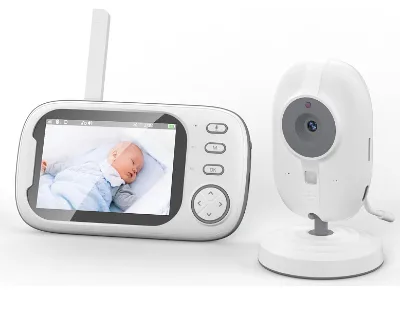


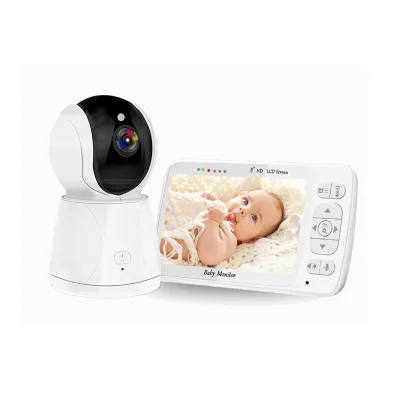
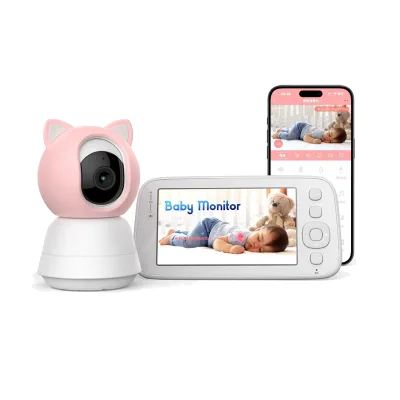
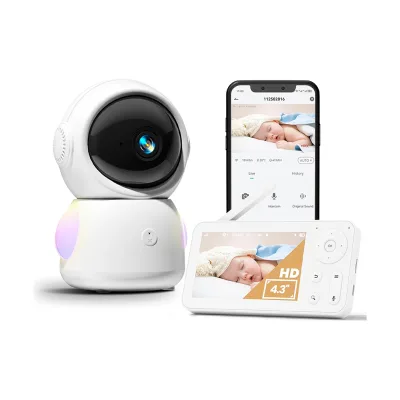
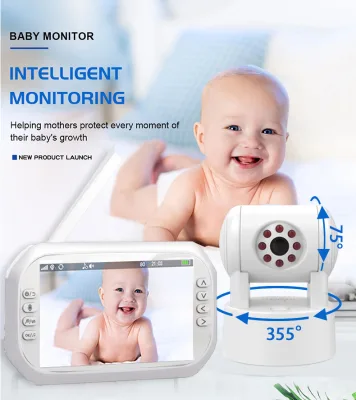
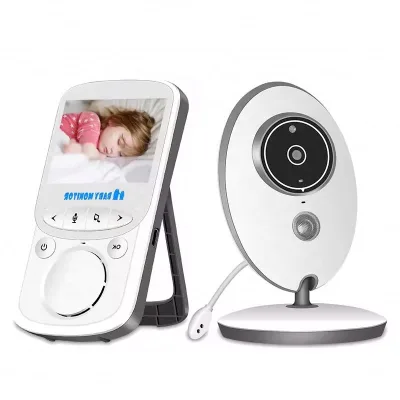
Smart Night Vision Baby Monitor with Temperature Display and Music Playback
$26.00 - $30.00
MOQ: 10 Pieces






Comprehensive Sourcing Guide
Strategic Sourcing Guide for App-Controlled Bluetooth Baby Monitors
Understanding the Product Category and Technical Architecture
The core keyword "App Control Bluetooth Baby Monitor" defines a specific segment of infant care technology that merges wireless connectivity with mobile device integration. In the context of B2B procurement, buyers must distinguish between devices that rely solely on proprietary radio frequencies and those that utilize Bluetooth Low Energy (BLE) or Wi-Fi protocols to interface with smartphone applications. The supplied product data indicates a market where "Wireless" technology is a primary classification, often paired with specific app ecosystems such as "V380" for video surveillance variants. However, a critical distinction exists between general CCTV cameras and dedicated physiological monitoring devices.
When evaluating technical specifications, the buyer must scrutinize the sensor technology and resolution capabilities. The observed data points to "CMOS" sensors with a "1/3 inch" size and "4MP" pixel counts for video-centric units, alongside "520tvl" horizontal resolution for other surveillance models. For audio and physiological monitoring, the focus shifts to frequency ranges. Specific entries in the dataset reference an "Ultrasound Frequency" of "1.0-3.0MHz," which is a standard range for fetal heart rate monitoring, though this is distinct from standard audio baby monitors. The "Fhr Range" of "30-240bpm" further clarifies the physiological monitoring capability.
Buyers should note that "Bluetooth" connectivity implies a direct, short-range link, whereas "App Control" often necessitates a broader network infrastructure, potentially involving Wi-Fi gateways or cloud servers. The presence of "Remote Control: Without Remote Control" in the data suggests that the primary interface is indeed the mobile application, removing the need for dedicated hardware remotes. This design choice reduces manufacturing costs but increases reliance on the stability of the mobile operating system and the security of the app ecosystem. The "Power Supply Mode" observed includes options for "Solar and Power," indicating a need for versatile energy solutions, particularly for units intended for outdoor or long-term deployment, though indoor baby monitors typically rely on standard electric power.
Compliance, Certification, and Regulatory Standards
Navigating the regulatory landscape is paramount for medical and consumer electronics. The supplied facts explicitly list "CE" certification as a recurring attribute for multiple product lines, including fetal dopplers and cameras. Furthermore, "FCC" and "RoHS" certifications are noted for specific models, indicating compliance with electromagnetic interference standards in the United States and restrictions on hazardous substances in the European Union, respectively. For products classified under "Physiological Functions of Diagnosis and Monitoring Equipment," the "CE" mark is particularly significant, often serving as a gateway to the European market.
The dataset also references "ISO" standards alongside "CE," suggesting adherence to broader quality management systems. However, buyers must verify the specific ISO standard (e.g., ISO 13485 for medical devices) rather than assuming generic compliance. The "Product Name" entry "Fetal Doppler Fetal Heart Rate Monitor-CE Appr" highlights that some devices in this category may cross into medical device territory, requiring stricter regulatory scrutiny than standard consumer electronics. The "Classification" field explicitly labels certain units as "Patient Monitor" or "ECG" type devices, which triggers different import and sales regulations compared to simple audio/video monitors.
When sourcing, the absence of a specific certification in the provided list does not guarantee non-compliance, but it necessitates a rigorous request for documentation. Buyers should verify that the "CE" marking is supported by a valid Declaration of Conformity and that the "FCC" ID corresponds to the specific hardware revision. For the "V380" app ecosystem mentioned in the data, buyers must ensure that the software component complies with data privacy regulations such as GDPR or CCPA, as the app handles sensitive video and audio feeds. The "Warranty Period" of "18 Months for Main Unit, 6 Months for Accessory" is a specific observation that reflects manufacturer confidence but should be cross-referenced with local consumer protection laws which may mandate longer minimum warranties.
Cost Drivers and Pricing Dynamics
The pricing landscape for app-controlled baby monitors is highly variable, influenced by the complexity of the technology and the intended use case. The observed price range in the market spans from $0.10 to $1,640.00 USD. This extreme variance indicates that the category encompasses both low-cost accessories or components and high-end, fully integrated medical-grade monitoring systems. The lower end of the spectrum likely corresponds to basic audio sensors or simple camera modules, while the upper end reflects units with advanced physiological sensors, high-resolution video, and comprehensive medical certifications.
Several factors drive these costs. The "Sensor Size" of "1/3 inch" and "4MP" resolution contribute to higher manufacturing expenses for video units. The inclusion of "Wireless" technology and the development of proprietary or licensed apps like "V380" add significant software development costs. Additionally, the "Material" composition, primarily "Plastic," keeps costs lower, but the integration of medical-grade ultrasound transducers (1.0-3.0MHz) significantly increases the bill of materials. The "MOQ" (Minimum Order Quantity) range of 1 to 200 units also impacts the unit price; buyers ordering at the lower end of the MOQ spectrum may face higher per-unit costs compared to bulk purchasers.
Customization is a major cost driver. The data shows a split between "Customized" and "Non-Customized" options. Products marked as "Customized" often require tooling changes, branding adjustments, or firmware modifications, which can increase the unit price and extend lead times. Conversely, "Non-Customized" units benefit from economies of scale. The "Packing" specifications, ranging from "Carton" to "Paper Box" and "Standard Export Packaging," also influence logistics costs. Buyers should analyze the total landed cost, including packaging, shipping, and potential tariffs, rather than focusing solely on the FOB price. The "Standard" dimensions provided, such as "251815/cm" and "35X20X30 cm," are critical for calculating shipping volume and freight charges.
Typical Applications and Usage Scenarios
The application of these devices varies significantly based on their classification. The "Usage Mode" is explicitly defined as "For External Use" in some contexts, which may refer to outdoor surveillance or perimeter monitoring, while other entries classify the device as a "Birth Control Instrumentation" or "Patient Monitor," indicating indoor, clinical, or domestic use. The "Group" attribute "Female" suggests a specific target demographic for certain monitoring devices, likely related to maternal health or fetal monitoring.
For the "Fetal Doppler" and "Fetal Heart Rate Monitor" segments, the primary application is prenatal care, allowing parents or healthcare providers to monitor the fetal heart rate within the "30-240bpm" range. These devices often feature a "Screen" size of "10" inches or similar displays for real-time visualization. In contrast, the "CCTV Camera" and "Bullet Camera" variants with "Waterproof / Weatherproof" and "Vandal-proof" features are designed for security applications, potentially used in nurseries or common areas where physical durability is required. The "Effective Distance" of "≧30m" for certain models highlights their suitability for larger rooms or outdoor environments.
The "Type" attribute further delineates usage: "ECG" and "Patient Monitor" imply medical-grade monitoring, while "BabySound B" and "Cuff" suggest consumer-grade audio or physiological monitoring. The "Style" of "Bullet Camera" indicates a specific form factor suitable for mounting on walls or ceilings. Buyers must align the product's intended application with their market strategy. For instance, a device marketed for "External Use" with "Solar and Power" options is unsuitable for a hospital bedside monitor, whereas a "Non-Customized" medical device may be too rigid for a consumer brand seeking rapid market entry with unique branding.
Supplier Evaluation and Sourcing Verification
Evaluating suppliers requires a deep dive into their geographic and operational capabilities. The observed product origins include "Hebei, China," "Shenzhen," and "Guangdong, China." These regions are known for distinct manufacturing strengths; Shenzhen is a hub for electronics and camera technology, while Hebei and Guangdong may have broader manufacturing bases for medical devices and general consumer goods. The "prod_origin" field is a critical verification point, as supply chain transparency is essential for quality assurance.
Buyers should assess the supplier's ability to handle the "Customization" requirements. The data shows that some products are "Customized" while others are "Non-Customized." A supplier capable of both offers greater flexibility. The "Warranty Period" of "18 Months for Main Unit, 6 Months for Accessory" is a specific claim that must be validated through the supplier's after-sales support structure. Buyers should inquire about the supplier's process for handling warranty claims, particularly for electronic components like "CMOS" sensors or batteries.
The "Standard" packaging dimensions and "prod_packing" types (Carton, Paper Box) are indicators of the supplier's logistics maturity. "Standard Export Packaging" suggests a readiness for international shipping, but buyers must verify the durability of the packaging to prevent damage during transit. The "MOQ" of 1 indicates a supplier willing to accommodate small trials, which is valuable for new buyers, while an MOQ of 200 suggests a focus on volume. Buyers should also check for "Certification" validity, ensuring that the "CE," "FCC," and "RoHS" marks are current and applicable to the specific model being sourced.
Quality Control and Long-Term Procurement Considerations
Quality control in this sector must address both hardware durability and software security. The "Feature" list includes "High Definition," "Mini Size," "Auto BLC," and "Waterproof / Weatherproof," which are physical attributes that require rigorous testing. For "Wireless" devices, the stability of the connection and the "Remote Control" functionality (or lack thereof) must be tested under various interference conditions. The "APP" integration, specifically with "V380," requires a review of the software's security protocols to prevent unauthorized access to the video feed.
Long-term procurement considerations involve the supply chain's resilience and the product's lifecycle. The "Warranty Period" is a key indicator of product reliability, but buyers should also consider the availability of spare parts. For devices with "Solar and Power" modes, the lifespan of the battery or solar components is a critical factor. The "prod_standard" dimensions and "prod_model" numbers (e.g., "UMFMR001," "MY-C010D") serve as unique identifiers for inventory management and future reordering.
Buyers must also plan for regulatory changes. As data privacy laws evolve, the "APP" component may require updates to remain compliant. The "Certification" status, particularly "CE" and "FCC," may need renewal or re-testing if the hardware design changes. The "Nature" attribute "No" in the provided data is ambiguous and should be clarified with the supplier to ensure it does not indicate a lack of a specific feature or compliance status. Finally, the "Group" and "Type" attributes suggest that marketing strategies must be tailored to the specific user demographic, whether it is "Female" for maternal health or general consumers for home security.
Comparative Analysis of Product Attributes
To facilitate decision-making, the following table summarizes key attributes observed in the market data, highlighting the diversity within the "App Control Bluetooth Baby Monitor" category.
| Attribute Category | Observation A (Medical/Physiological) | Observation B (Video/CCTV) | Observation C (General Consumer) |
|---|---|---|---|
| Primary Type | Fetal Doppler / Patient Monitor | CCTV Camera / Bullet Camera | Baby Sound / Birth Control Instrument |
| Key Certification | CE, ISO | CE, FCC, RoHS | CE |
| Sensor Technology | Ultrasound (1.0-3.0MHz) | CMOS (1/3 inch, 4MP) | Not Specified |
| Resolution/Spec | Fhr Range: 30-240bpm | 520tvl / 1080P HDMI | Screen: 10 |
| Power Source | Electric | Solar and Power | Electric |
| Connectivity | Wireless | Wireless | Bluetooth / App Control |
| Customization | Customized | Non-Customized | Customized / Non-Customized |
| Origin | Guangdong, China | Shenzhen | Hebei, China |
| Warranty | 18 Months (Main Unit) | Not Specified | 18 Months (Main Unit) |
This comparison underscores the necessity for buyers to define their specific requirements before engaging with suppliers. A device suitable for medical monitoring will differ significantly in cost, certification, and technical specs from a standard home security camera with app control. By rigorously applying the criteria outlined in this guide, buyers can navigate the complex landscape of app-controlled baby monitors and secure products that meet their quality, compliance, and operational standards.
FAQs
Can I find app control bluetooth baby monitors with CE certification?
Yes, CE certification is available for multiple product lines including fetal dopplers and cameras. Some models also carry FCC and RoHS marks for broader compliance. Buyers should verify the specific Declaration of Conformity for each unit.
What is the typical MOQ for these monitoring devices?
The minimum order quantity ranges from 1 to 200 units depending on the supplier and product type. Lower MOQs allow for small trials, while higher volumes may reduce per-unit costs. Customization options can also influence the required order size.
How long is the warranty period for the main unit?
The warranty period is typically 18 months for the main unit and 6 months for accessories. This reflects manufacturer confidence but should be cross-referenced with local consumer protection laws. Buyers must validate the after-sales support structure before purchasing.
Which sensor technology is used in the video camera models?
Video models utilize CMOS sensors with a 1/3 inch size and 4MP pixel counts. Some surveillance variants offer 520tvl horizontal resolution. These specifications ensure high definition and mini size suitable for various monitoring applications.
Can I source devices with wireless technology and app control?
Yes, wireless technology is a primary classification often paired with app ecosystems like V380. These devices typically lack a remote control, relying instead on mobile applications for interface. This design reduces manufacturing costs but requires stable mobile connectivity.
What are the power supply options for these monitors?
Power supply modes include electric power and options for solar and power. Electric power is standard for indoor units, while solar options suit outdoor or long-term deployment. Buyers must align the power source with the intended usage scenario.
Where are these products typically manufactured in China?
Products originate from regions including Hebei, Shenzhen, and Guangdong. Shenzhen is a hub for electronics and camera technology, while other regions may focus on medical devices. Supply chain transparency is essential for quality assurance when sourcing from these locations.