Source Astronomical Digital Time Switch Timer for Lighting
Find 30 options for the Astronomical Digital Time Switch Timer to automate lighting and industrial processes. Compare wired models with ABS housings, varying wattage outputs, and CE certification to select the right timer switch for your specific operational needs; compare the available evidence and request quotations based on your requirements.
Key considerations
Products List

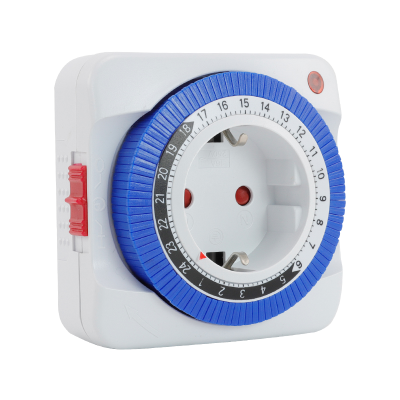


Superior Performance Time Control Switch Timer Switch Digital Time Switch
$5.00 - $5.71
MOQ: 10 Pieces


Digital Timer Switch Manufacturer High Quality British Standard Electronic Controller Timer
$4.96 - $5.26
MOQ: 2000 pieces

Bx-T054 High Quality Multifunctional Professional Household 24 Hour Timer
$3.55 - $4.25
MOQ: 500 pieces


Precision Digital Electronic Timer for Cooking and Study Time Management
$0.79 - $1.15
MOQ: 1000 Pieces


Comprehensive Sourcing Guide
Astronomical Digital Time Switch Timer Sourcing Guide
The Astronomical Digital Time Switch Timer serves as a critical automation component for industrial and commercial lighting control, enabling precise scheduling based on solar calculations rather than fixed clock times. These devices are essential for applications requiring energy efficiency and automated operation in environments where manual intervention is impractical or costly. Buyers must recognize that while the core function remains consistent, the internal architecture varies significantly between mechanical and electronic implementations, directly impacting reliability and feature sets.
Procurement decisions should prioritize the specific operational theory of the unit, as observed listings include both quartz-based mechanical mechanisms and fully digital electronic counters. The distinction is vital because mechanical units often rely on physical gears and may offer a back-up time of up to 100 hours, whereas electronic models provide higher precision with minimum setting intervals as low as one second. Understanding this fundamental difference ensures the selected device aligns with the required durability and accuracy for the intended installation environment.
Product Scope and Observed Listing Signals
Current market listings for astronomical digital time switches reveal a diverse range of models, including specific identifiers like ETU-63A, KG316T, and AH3D-DM, each catering to distinct operational needs. The observed product attributes indicate a strong presence of units designed for industrial usage, featuring capabilities such as reversible counting, summation metering, and universal counter functions. Buyers should note that while some units are packaged in blister packs for single-item retail, others arrive in standard exporting cartons or export packaging suitable for bulk industrial distribution.
The functional scope extends beyond simple time switching to include complex operations like addition and subtraction counting, which are critical for inventory or production tracking applications. Listings confirm that these devices often support a maximum current of 16A or 15A, with output capacities reaching up to 1875W, making them suitable for heavy-duty loads. Procurement teams must verify the specific model number against their load requirements, as the physical dimensions and packing standards, such as 10.875.1CM or 5X5X4 cm, vary significantly between manufacturers.
Technical Specifications to Verify
When evaluating technical specifications, the operating voltage range is a primary consideration, with observed units supporting a broad spectrum from 100-240VAC to a maximum voltage of 250VAC. Buyers must ensure compatibility with their local power infrastructure, as some models feature outside battery backups while others rely on mains power for continuous operation. The dial configuration also varies, with some units utilizing a 96-pin dial for daily settings, while others offer a minimum setting interval of 15 minutes, which dictates the granularity of the control schedule.
The internal mechanism and counter type further define the device's suitability for specific tasks, ranging from synchronous counters to binary counters and electromagnetic counters. It is essential to verify whether the unit supports a specific PLC type, such as SE PLC, or if it functions as a standalone timer switch. Additionally, the output type, whether volt output or volt-free, must match the control logic of the connected equipment to prevent signal conflicts or operational failures in complex automation systems.
Compliance and Safety Documentation
Safety compliance is non-negotiable for electrical timing devices, and the presence of CE certification is a baseline requirement for products originating from major manufacturing hubs like Zhejiang, China. Buyers should request valid certification documents to confirm that the unit meets international safety standards for electrical equipment, particularly given the high power outputs observed in some listings. Without proper certification, the risk of electrical hazards increases, potentially leading to equipment damage or safety violations in regulated industrial facilities.
Beyond general safety, specific standards regarding current handling and voltage tolerance must be documented and verified before finalizing any purchase. The observed maximum current ratings of 15A or 16A indicate the device's capacity to handle specific loads, but these figures must be cross-referenced with the manufacturer's official datasheets. Procurement teams should ensure that the product documentation explicitly states the maximum voltage and current limits to prevent overloading scenarios that could compromise the integrity of the entire electrical system.
Cost Drivers and Commercial Terms
The commercial landscape for these devices is influenced by the complexity of the internal mechanism, with electronic digital models generally commanding higher prices than their mechanical counterparts. The observed price range of 0.5 to 100 USD reflects this disparity, where basic mechanical timers sit at the lower end while advanced digital units with multiple counter functions and solar tracking capabilities occupy the higher tier. Buyers must balance the initial unit cost against the long-term value provided by features like back-up time and precise setting intervals.
Minimum Order Quantities (MOQ) and packaging requirements also play a significant role in total procurement costs, with observed ranges spanning from single items to 3000 units. Bulk purchasing often unlocks better pricing, but the packaging format, whether blister packs or export cartons containing 100 pieces per carton, affects logistics and storage expenses. Procurement strategies should account for these variables to optimize the total cost of ownership, ensuring that the order volume aligns with both budget constraints and storage capabilities.
Supplier Qualification and Quality Control
Supplier qualification for astronomical digital time switches requires a rigorous assessment of their manufacturing capabilities and quality control processes, particularly given the concentration of production in Zhejiang, China. Buyers should verify that the supplier has a proven track record of producing units with consistent performance, as the market includes various models with different theories, such as digital and mechanical, which require distinct production expertise. A qualified supplier will provide transparent information about their production lines and quality assurance protocols.
Quality control measures must extend to the final product, ensuring that every unit meets the specified standards for current, voltage, and operational time. The presence of customization options suggests that suppliers should be capable of adapting products to specific client needs, but this requires strict oversight to maintain consistency. Buyers should request sample units for testing to verify that the actual performance matches the listed specifications, particularly regarding the minimum setting interval and the reliability of the counter mechanisms.
Long-Term Procurement Checks
Establishing a long-term procurement strategy involves regular audits of supplier performance and product consistency to ensure ongoing reliability. Buyers should monitor the supply chain for any changes in materials, such as the use of ABS plastic, or shifts in production standards that could affect the durability of the timer switches. Continuous verification of the product origin and certification status is essential to maintain compliance and prevent the introduction of substandard components into the supply chain.
Future-proofing the procurement process requires staying informed about technological advancements in timer technology, such as the evolution from mechanical to fully digital systems. Buyers should maintain open communication with suppliers to anticipate updates in model specifications, such as new PLC types or enhanced counter functions. By proactively managing these relationships and verifying product attributes over time, organizations can ensure a stable supply of high-quality astronomical digital time switches that meet their evolving operational needs.
FAQs
What is the maximum output capacity of the ETU-63A timer?
The ETU-63A model supports a maximum output of 1875W. This capacity is suitable for standard industrial and commercial applications requiring reliable timed switching. Buyers should verify that their specific load requirements do not exceed this limit to ensure safe and effective operation of the device.
Which certifications are available for these digital time switches?
The listed digital time switches carry CE certification. This indicates compliance with European health, safety, and environmental protection standards. Buyers should confirm that the specific model they intend to purchase includes this certification to ensure it meets regulatory requirements for their target market.
What is the minimum setting interval for the SUL180A timer?
The SUL180A timer allows a minimum setting interval of 15 minutes per day. This granularity is useful for applications requiring precise daily scheduling. Users should consider whether this interval meets their operational needs, as it may not support second-level precision for high-frequency switching tasks.
Can buyers customize the packaging for these timer switches?
Customization is available for these timer switches. Suppliers can adapt packaging to meet specific buyer requirements, such as branding or export standards. This flexibility helps buyers align the product presentation with their retail or distribution needs, ensuring the items arrive in the desired condition.
What is the operating voltage range for the TB338 timer?
The TB338 timer operates within a voltage range of 100-240VAC. This wide range makes it compatible with various global power standards. Buyers should ensure their local electrical infrastructure falls within this range to prevent operational issues or potential damage to the device.
How does the ETU-63A timer handle time settings?
The ETU-63A timer supports a minimum time setting of 1 second. This high precision allows for detailed scheduling and control in industrial processes. It is ideal for applications where exact timing is critical, providing greater flexibility than timers with coarser resolution intervals.
What materials are used in the construction of these timers?
The timers are constructed using ABS material. This plastic is known for its durability and resistance to impact, making it suitable for industrial environments. The use of ABS ensures the device maintains structural integrity under normal operating conditions and physical handling.