Source Automatic Adjustable Welding Turntable for Steel, Pipe, and Tank Fabrication
Find 30 Automatic Adjustable Welding Turntable units with varying capacities and dimensions. Buyers can compare specifications like loading capacity, rotation speed, and tilting angles to select the right equipment for industrial welding tasks.
Key considerations
Products List


Customizable Self-Adjusting Manipulator Rotator Turntable Welding Rotary Table
$2000.00 - $2500.00
MOQ: 1 Pieces

Customizable Color Dynamic Welding Turntable for Enhanced Positioning
$1000.00 - $5000.00
MOQ: 1 Pieces


Heavy-Duty Adjustable Speed Welding Positioner Turntable for Precision Work
$1400.00 - $4500.00
MOQ: 1 Pieces


Versatile Welding Turntable and Table for Enhanced Project Efficiency
$1250.00 - $2500.00
MOQ: 1 Pieces

Premium Reliable Welding Table with Adjustable Tilt and Rotary Function
$1250.00 - $6750.00
MOQ: 1 Pieces


Premium Tilt Welding Table with 13-Month Warranty and Video Assistance
$600.00 - $8000.00
MOQ: 1 Pieces
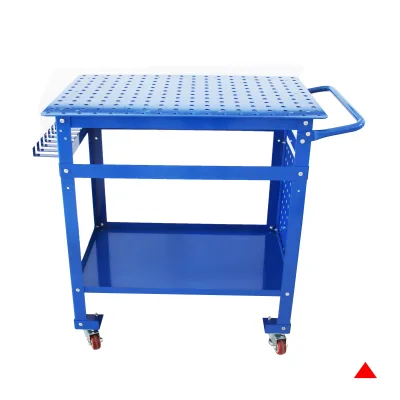

Industrial Welding Turntable with Smooth Rotation for Seamless Welding
$1000.00 - $10000.00
MOQ: 1 Pieces


Tank Welding Turning Table, Rotation Welding Machine, Welding Positioner Turntable
$2000.00 - $5250.00
MOQ: 1 Pieces


500kg Welding Rotary Table Welding Turntable
$1000.00 - $10000.00
MOQ: 1 Sets
Wuxi Datang Welding & Cutting Mechanical Equipment Co., Ltd.


Welding Rotary Turntable Designed for Full or Partial Automation Welding Processes
$1000.00 - $100000.00
MOQ: 1 Sets
Comprehensive Sourcing Guide
Strategic Sourcing Guide for Automatic Adjustable Welding Turntables
The global manufacturing landscape increasingly relies on automated positioning systems to enhance weld quality, reduce operator fatigue, and streamline production cycles. Among these systems, the Automatic Adjustable Welding Turntable stands out as a critical piece of equipment for fabricators handling cylindrical or symmetrical workpieces. This guide provides a disciplined, evidence-based approach to sourcing these machines, focusing on verified technical attributes, compliance verification, and long-term operational viability. Buyers must navigate a market where specifications vary significantly between models, requiring a rigorous evaluation of product data rather than relying on marketing generalizations.
Technical Specifications and Configuration Analysis
When evaluating an Automatic Adjustable Welding Turntable, the primary focus must be on the mechanical configuration and load-bearing capabilities. The core functionality of these units often involves a combination of rotation and tilting to position the workpiece at optimal angles for welding. Based on observed product data, the market offers distinct structural types, including platform and gantry configurations. The choice between these structures depends heavily on the footprint of the workshop and the specific geometry of the workpieces being processed.
Load capacity is a non-negotiable specification. Available data indicates that sets can support maximum loading capacities up to 2200 kilograms. However, buyers must verify this figure against their specific application, as the actual capacity is often a function of the eccentricity distance. The maximum eccentricity distance observed in current listings ranges from 100mm to 150mm. This parameter defines how far the center of gravity of the workpiece can be offset from the center of rotation while maintaining stability. A turntable with a 150mm eccentricity offers greater flexibility for off-center loads compared to a unit limited to 100mm.
The rotational and tilting mechanisms are equally critical. Units are frequently equipped with frequency control for setting the rotation speed, allowing for precise adjustments. Observed rotation speeds vary, with ranges such as 0.1 to 1 rpm or 0.35 to 3.5 rpm depending on the motor power and gear reduction ratios. Motor power ratings, such as 500 watts or 0.18 kilowatts, directly influence the torque available for heavy-duty applications. The tilting angle is another key variable; some models offer an overturning angle of 0 to 90 degrees, while others provide a more extensive range of 0 to 120 degrees. This range determines whether the machine can handle vertical welding or requires the workpiece to be inverted.
Furthermore, the dimensions of the working table must align with the diameter of the workpiece. Specifications show working table diameters ranging from 400mm to 2300mm, with specific models supporting applicable workpiece diameters between 101mm and 1524mm. The physical footprint of the machine, such as a dimension of 2820mm by 700mm by 960mm, must be accommodated within the facility layout. Buyers should also note that the voltage requirements can vary, with options for 110V/220V or fixed 220V systems, necessitating a check against local power infrastructure.
Compliance, Certification, and Standard Verification
In the industrial equipment sector, compliance with international standards is a prerequisite for safety and insurance validity. While specific certification statuses like CE or ISO 9001 are often cited in broader market contexts, buyers must treat these as claims requiring verification rather than inherent guarantees. The sourcing process should include a request for valid, up-to-date certification documents from the supplier.
Product standards are often defined by the physical construction and testing protocols. For instance, some product data references standards related to packaging dimensions, such as 102x82x50cm, or volume specifications like 4.5m³, which may relate to shipping or storage requirements rather than operational safety. However, the structural integrity of the turntable is paramount. Buyers should verify that the machine adheres to relevant mechanical safety standards for rotating equipment.
It is crucial to distinguish between the product's origin and its compliance. The majority of these units originate from China, a major manufacturing hub for industrial machinery. While the origin provides context for supply chain logistics, it does not automatically confer compliance. The buyer must ensure that the specific model, such as those with model numbers like AUT-SWP-ZW or TRS2200, has undergone the necessary testing for the target market. This includes verifying that the electrical components meet local voltage and frequency requirements and that the mechanical safety guards are installed according to the destination country's regulations.
Cost Drivers and Pricing Structures
Understanding the cost structure of automatic adjustable welding turntables requires an analysis of the variables that influence the final price. The observed price range in the market is vast, spanning from 1 to 100,000 USD. This wide disparity is not indicative of a single product tier but rather reflects the diversity in capacity, automation level, and customization.
The primary cost drivers include the maximum loading capacity, the complexity of the tilting mechanism, and the precision of the frequency control system. A unit capable of handling 2200kg with a 120-degree tilting range and high-torque motors will naturally command a higher price than a basic 400mm table with limited rotation. Additionally, the customization of services, such as color options (e.g., Blue and Yellow or custom requests) and specific structural modifications, can add to the base cost.
Packaging also plays a role in the total landed cost. Products are shipped in various configurations, including wooden boxes, wooden cases, and steel frames. The choice of packaging affects the weight and volume of the shipment, which in turn influences freight charges. For example, a steel frame might offer superior protection for heavy loads but increase the shipping weight compared to a standard wooden case. Buyers should calculate the total cost of ownership, including freight, insurance, and customs duties, rather than focusing solely on the unit price.
Typical Applications and Operational Scenarios
Automatic adjustable welding turntables are designed for a wide array of industrial applications, primarily where cylindrical or symmetrical components require consistent weld quality. The ability to rotate the workpiece at controlled speeds allows for continuous welding without the need for manual repositioning, which is essential for long seam welds.
The observed applicable workpiece diameter range of 101mm to 1524mm suggests suitability for everything from small pipe fittings to large pressure vessels and storage tanks. The platform structure is often preferred for applications where the workpiece needs to be lifted and rotated on a stable base, while gantry structures may be utilized for larger, heavier assemblies that require overhead support or specific access angles.
The adjustable nature of these turntables makes them ideal for multi-pass welding operations where the angle of the weld needs to be changed frequently. The overturning angle of 0 to 90 degrees or 0 to 120 degrees allows operators to position the weld joint in the flat or horizontal position, which is generally the most efficient and highest quality welding position. This capability reduces the skill level required for the welder and minimizes defects associated with vertical or overhead welding.
Supplier Evaluation and Service Capabilities
Selecting a reliable supplier is as critical as selecting the right machine. The market data indicates that suppliers offer various after-sales services, including video technical support and online support. These services are vital for troubleshooting operational issues without the need for immediate on-site visits, which can be costly and time-consuming.
Warranty terms are another key factor in supplier evaluation. A standard warranty period observed in the market is 13 months. Buyers should scrutinize the terms of this warranty, including what components are covered, the duration of coverage for critical parts like motors and gearboxes, and the process for claiming repairs. The condition of the product is listed as "New," but buyers must ensure that the supply chain guarantees the machine is brand new and not refurbished or used equipment misrepresented as new.
Lead times are also a significant consideration in procurement planning. Data suggests a lead time of approximately 10 days for certain models. However, this can vary based on the level of customization required. If a buyer requests specific colors, dimensions, or voltage configurations, the lead time may extend. It is essential to confirm the production schedule and delivery timeline before finalizing the purchase to avoid project delays.
Quality Control and Long-Term Procurement Considerations
Ensuring the long-term reliability of an Automatic Adjustable Welding Turntable requires a robust quality control strategy. Buyers should verify the condition of the product upon receipt, checking for any signs of damage during transit, particularly given the heavy nature of the equipment. The packaging, whether a wooden box, wooden case, or steel frame, should be inspected to ensure it has provided adequate protection.
For long-term procurement, the availability of spare parts is a critical factor. The motor power, rotation speed, and tilting mechanisms are subject to wear and tear. Buyers should inquire about the availability of replacement motors, gears, and control panels. The ability to customize the product, such as adjusting the color or specifications, should also be considered in the context of future maintenance and operational changes.
Furthermore, the structural integrity of the machine, whether platform or gantry, must be maintained. Regular inspections of the welding turning rolls type, which can be adjustable or self-adjusting, are necessary to ensure they continue to support the load effectively. The eccentricity distance should be monitored to ensure it remains within the specified limits, preventing instability during operation.
Comparative Analysis of Key Models
To facilitate decision-making, the following table compares key attributes of observed product models. This comparison highlights the diversity in specifications and helps buyers identify the model that best fits their operational needs.
| Attribute | Model AUT-SWP-ZW | Model AUT-SWP-ZW-3T | Model TRS2200 | Model HBZ | Model zhb |
|---|---|---|---|---|---|
| Type | Welding Positioner | Welding Positioner | Welding Turntable | Welding Turntable | Welding Turntable |
| Max Load (Set) | Not Specified | Not Specified | 2200 kgs | Not Specified | Not Specified |
| Max Eccentricity | 150mm | Not Specified | 100mm | Not Specified | Not Specified |
| Rotation Speed | Not Specified | Not Specified | 0.1-1 rpm | 0.05-0.5 rpm | 0.35-3.5 rpm |
| Tilting Angle | Not Specified | Not Specified | 0-90° | 0-120° | Not Specified |
| Motor Power | 500 w | Not Specified | Not Specified | 0.18kw | Not Specified |
| Voltage | 220V | Not Specified | 110V/220V | Not Specified | Not Specified |
| Structure | Platform | Not Specified | Not Specified | Gantry | Not Specified |
| Packing | Wooden Box | Wooden Case | Ply W/Case | Steel Frame | Not Specified |
| Lead Time | Not Specified | Not Specified | 10 Days | Not Specified | Not Specified |
This table illustrates that no single model dominates all categories. The choice depends on the specific requirements of the application, such as the need for high load capacity (TRS2200), specific tilting angles (HBZ), or particular voltage requirements. Buyers must cross-reference these specifications with their operational constraints to make an informed decision.
In conclusion, sourcing an Automatic Adjustable Welding Turntable requires a meticulous approach that balances technical specifications, compliance verification, and supplier reliability. By focusing on verified data and avoiding assumptions, buyers can secure equipment that enhances productivity and ensures safety in their welding operations. The wide range of available options allows for tailored solutions, but the responsibility lies with the buyer to validate every claim and specification before committing to a purchase.
FAQs
What is the maximum loading capacity for these turntables?
Available data indicates sets can support maximum loading capacities up to 2200 kilograms. Buyers must verify this figure against their specific application as actual capacity depends on the eccentricity distance.
How does the eccentricity distance affect stability?
The maximum eccentricity distance observed ranges from 100mm to 150mm. This parameter defines how far the center of gravity can be offset from the rotation center while maintaining stability during operation.
Can the rotation speed be adjusted precisely?
Yes, units are frequently equipped with frequency control for setting rotation speed. Observed ranges vary, such as 0.1 to 1 rpm or 0.35 to 3.5 rpm depending on the specific motor power and gear ratios.
What tilting angles do these machines offer?
Some models offer an overturning angle of 0 to 90 degrees while others provide a range of 0 to 120 degrees. This range determines whether the machine can handle vertical welding or requires workpiece inversion.
What is the standard lead time for these units?
Data suggests a lead time of approximately 10 days for certain models. This timeline can vary based on the level of customization required for specific colors, dimensions, or voltage configurations.
What warranty terms are typically provided?
A standard warranty period observed in the market is 13 months. Buyers should scrutinize the terms to understand what components are covered and the process for claiming repairs on critical parts.
Are customization services available for these products?
Customization services are available for color and specifications. Buyers can request specific colors like blue and yellow or modify dimensions to align with their facility layout and workpiece geometry.