Source Automatic Bi-Directional Steel Bar Bender for Construction, Rebar, and Metal
Find and compare 30 automatic bi-directional steel bar bender options for construction sites, rebar processing, and metal fabrication. Review specifications like bending capacity, voltage, and motor power to select the right machine for your needs.
Key considerations
Products List


$1380.00
MOQ: 1 Pieces


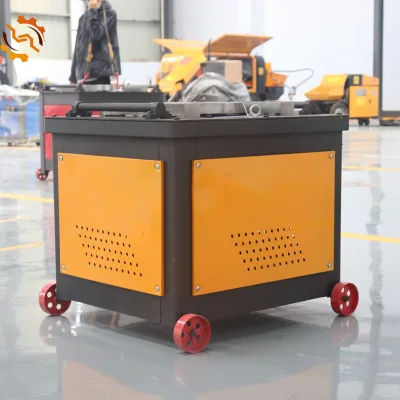
Automatic Stainless Steel Carbon Steel Bar Bending Steel Bar Bending Machine
$9800.00 - $10800.00
MOQ: 1 Pieces


Advanced Automatic CNC Steel Bar Bender with User-Friendly Controls
$8345.00 - $20860.00
MOQ: 1 Pieces


Automatic Steel Bar Bending Machine Rebar Bender for Efficient Bending Operations
$1000.00 - $10000.00
MOQ: 1 Pieces


Comprehensive Sourcing Guide
Strategic Sourcing Guide for Automatic Bi-Directional Steel Bar Benders
The procurement of automatic bi-directional steel bar benders represents a critical decision for construction and manufacturing entities seeking to optimize rebar processing workflows. These machines are engineered to bend steel bars with precision, often featuring dual-directional capabilities that allow for complex angles without repositioning the material. The market offers a diverse array of configurations, ranging from compact semi-automatic units to heavy-duty CNC systems. Buyers must navigate a landscape defined by varying power requirements, bending capacities, and automation levels to ensure the selected equipment aligns with specific project demands. This guide synthesizes available product data and industry standards to provide a structured approach for evaluating and acquiring these essential industrial assets.
Technical Specifications and Performance Parameters
When evaluating automatic bi-directional steel bar benders, the primary focus must be on the machine's bending capacity, power consumption, and operational speed. The supplied data indicates a significant variance in capabilities across different models, necessitating a careful match between machine specifications and the intended rebar diameter. For instance, certain models are designed for smaller diameter bars, with a bending capacity ranging from 6 to 25mm, while others are built for heavier industrial applications, supporting capacities up to 6-40mm. The maximum bending angle is a consistent feature across many units, typically allowing for a full 0-180-degree rotation, which is essential for creating complex structural shapes.
Power requirements vary significantly depending on the machine's size and intended throughput. Some units operate on single-phase power supplies, accepting voltages such as 110V, 220V, or 230V at 50/60 Hz, making them suitable for smaller workshops or locations with limited electrical infrastructure. In contrast, high-capacity models often require three-phase power, specifically 380V at 50Hz, to drive motors with rated powers of 3kW or higher. The motor power itself can range from 1.7kW for lighter duty machines to 3kW for heavy-duty units. Buyers must verify the electrical compatibility of the site before procurement to avoid costly retrofits.
Speed is another critical performance metric. The bending speed, defined as the time required to complete a full cycle, can range from 2.5 to 3 seconds for cutting and bending operations combined, or 5.0 to 7.0 seconds for pure bending cycles depending on the model. Cutting speeds are also specified, with some machines capable of 32 cuts per minute. These figures are not universal; they are specific to the model's design and load. The physical dimensions of the machines also vary, with compact units measuring approximately 450500440 mm and larger industrial models extending to 910900900 mm. Understanding these physical constraints is vital for facility planning and floor space allocation.
Compliance, Certification, and Safety Standards
Ensuring that a steel bar bender meets international safety and quality standards is a non-negotiable aspect of the procurement process. The provided product data highlights specific certifications that buyers should look for as indicators of compliance. The CE certification is explicitly mentioned for certain models, signifying conformity with health, safety, and environmental protection standards for products sold within the European Economic Area. Additionally, ISO 9001 certification is noted, which indicates that the manufacturer has implemented a quality management system that meets international standards for consistency and reliability.
Beyond specific certifications, buyers must verify the condition of the machinery. The data confirms that the listed products are "New," which is a crucial distinction in the industrial equipment market where refurbished units are common. However, the absence of a specific certification on a listing does not necessarily imply non-compliance; it may simply mean the data point was not captured in the specific product description. Therefore, buyers should request official certification documents directly from the supplier rather than relying solely on the product listing.
Safety features are often integrated into the design of automatic benders, particularly those labeled as "Automatic" or "CNC." The automation level, whether semi-automatic or fully automatic, impacts the safety protocols required. Machines with high-speed cutting and bending cycles, such as those achieving 32 cuts per minute, require robust guarding and emergency stop mechanisms. Buyers should ensure that the machine's design includes these safety features and that the manufacturer provides a comprehensive safety manual in the local language of the operating site.
Cost Drivers and Total Cost of Ownership
The price of automatic bi-directional steel bar benders is influenced by several factors, including the machine's capacity, automation level, and material construction. The observed price range in the market spans from approximately $200 to $20,860, reflecting the vast difference between small, manual or semi-automatic units and large, fully automated CNC systems. The lower end of this spectrum typically corresponds to machines with smaller bending capacities (e.g., 6-25mm) and lower power ratings, while the higher end includes heavy-duty models capable of handling 6-40mm bars with three-phase power and advanced CNC controls.
Weight is another significant cost driver. The standard weight of these machines varies from 18kg for compact units to 450kg for large industrial models. Heavier machines generally imply a more robust frame and higher-quality components, which contribute to durability but also increase shipping costs. Shipping logistics are particularly important given the origin of these machines, which is predominantly China, with specific origins noted as Hebei. The weight and dimensions of the unit will directly impact freight charges and insurance premiums.
Buyers must also consider the Total Cost of Ownership (TCO), which extends beyond the initial purchase price. This includes energy consumption, maintenance costs, and the cost of replacement parts. Machines with higher wattage ratings, such as 2800W or 3000W, will incur higher electricity costs over their lifespan compared to 1600W or 1700W models. Furthermore, the warranty period is a key financial consideration. While some models offer a 1-year warranty, others provide a 2-year warranty, which can reduce the risk of unexpected repair costs in the early stages of operation. The packaging type, whether iron boxes or wooden cases, also affects the initial cost and the protection of the machine during transit.
Typical Applications and Material Compatibility
Automatic bi-directional steel bar benders are designed for a wide range of applications in the construction and metalworking industries. The primary application is the bending of steel bars and rebar for reinforced concrete structures. The data indicates that these machines are suitable for processing various materials, including carbon steel, stainless steel, alloy, aluminum, and copper. However, the specific suitability depends on the machine's capacity and the hardness of the material. For example, models with a bending capacity of 6-40mm are ideal for heavy-duty construction projects requiring large diameter rebar, while those with 6-25mm capacity are better suited for smaller residential or light commercial projects.
The versatility of these machines allows them to handle different types of steel bars, including rebar and metal bars. The ability to bend materials like stainless steel and copper expands their utility beyond standard concrete reinforcement, making them valuable for architectural metalwork and specialized fabrication. The automation level also dictates the application scope; semi-automatic machines are often used in environments where flexibility and operator control are prioritized, whereas CNC machines are preferred for high-volume production runs requiring precise, repeatable bends.
Supplier Evaluation and Quality Assurance
Selecting a reliable supplier is as important as selecting the right machine. The supply chain for these machines is heavily concentrated in China, with specific regions like Hebei identified as production hubs. Buyers should evaluate suppliers based on their ability to provide clear technical documentation, certification proof, and after-sales support. The presence of certifications like CE and ISO 9001 is a strong indicator of a supplier's commitment to quality, but these should be verified through official channels.
Quality control during the manufacturing process is critical. Buyers should inquire about the testing procedures used to ensure the machine meets the specified bending capacity and speed. The data shows that bending speeds and capacities are specific to the model, so buyers must ensure that the machine they receive matches the advertised specifications. Additionally, the condition of the machine must be confirmed as "New" to avoid receiving refurbished or used equipment that may have hidden defects.
Packaging is another aspect of quality assurance. The data mentions various packaging types, including iron boxes, plastic bags, and wooden cases. For heavy machines, wooden cases are typically required to prevent damage during international shipping. Buyers should verify that the packaging is robust enough to protect the machine from moisture and physical impact during transit. The warranty terms, whether 1-year or 2-year, also reflect the supplier's confidence in their product's durability and should be a key factor in the supplier selection process.
Long-Term Procurement Considerations and Maintenance
Long-term success with automatic bi-directional steel bar benders depends on proper maintenance and the availability of spare parts. The warranty period is a critical factor in this regard, with options ranging from 1 to 2 years. A longer warranty period often indicates a manufacturer's confidence in the longevity of their product. Buyers should also consider the availability of technical support and the ease of obtaining replacement parts. Machines with higher automation levels, such as CNC models, may require specialized technicians for maintenance, so the availability of local support is essential.
The operational environment also plays a role in the long-term performance of the machine. Machines designed for single-phase power may be more susceptible to voltage fluctuations in certain regions, so buyers should ensure that their site has stable power supplies or invest in voltage stabilizers. The bending capacity and speed of the machine should be matched to the workload to prevent overuse and premature wear. Regular maintenance schedules, including lubrication, calibration, and inspection of critical components, are necessary to maintain the machine's efficiency and safety.
In conclusion, sourcing an automatic bi-directional steel bar bender requires a comprehensive understanding of the technical specifications, compliance requirements, and cost factors involved. By carefully evaluating the machine's capacity, power requirements, and certification status, buyers can make informed decisions that align with their operational needs. The diversity of available models, from compact 18kg units to heavy 450kg industrial machines, offers flexibility for various applications, but it also demands a rigorous selection process to ensure the chosen equipment delivers the desired performance and reliability.
FAQs
What certifications do automatic bi-directional steel bar benders have?
Some models carry CE certification and ISO 9001 quality management certification. Buyers should verify specific documents for each unit as not all listings display every certification explicitly.
Which bending capacities are available for these machines?
Available capacities range from 6-25mm up to 6-40mm depending on the model. Select the unit based on your required rebar diameter to ensure safe and precise operation.
Can these machines operate on single-phase power supplies?
Yes, many models support single-phase voltage of 110V, 220V, or 230V at 50/60 Hz. Heavy-duty units may require three-phase 380V power, so check the motor voltage specification.
How long is the warranty period for these machines?
Warranty periods typically range from one year to two years depending on the specific model. Longer warranties often indicate higher manufacturer confidence in the machine's durability and build quality.
What materials can these benders process effectively?
These machines are suitable for carbon steel, stainless steel, alloy, aluminum, and copper. Ensure the selected model has sufficient power and capacity for the specific material hardness you intend to bend.
Where are these machines primarily manufactured?
Most units originate from China, with specific production hubs identified in Hebei. Buyers should consider shipping logistics and lead times associated with this origin when planning procurement.