Source Automatic Computerized Drip Irrigation Pipe for Agriculture, Greenhouses, and Landscaping
Find 30 verified listings for Automatic Computerized Drip Irrigation Pipe designed for agricultural, greenhouse, and landscaping applications. Compare specifications, certifications, and pricing from suppliers in China to select the right PE water-supply pipes and irrigation systems for your project.
Key considerations
Products List


Drip Irrigation Hose Automatic Irrigation System Drip Irrigation Hose Pipe
$0.18 - $0.21
MOQ: 100 Meters


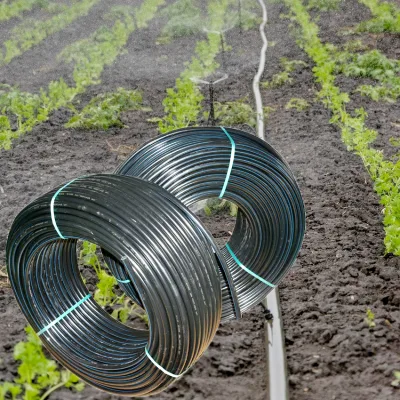

Advanced Drip Irrigation Pipe with Integrated Cylindrical Dripper System
$0.05 - $0.35
MOQ: 500 Meters


Premium 16mm Agricultural Drip Irrigation Pipe with Cylindrical Dripper Irrigation System
$0.05 - $0.35
MOQ: 10000 Meters

High-Quality 16mm Agricultural Drip Irrigation Pipe for Efficient Watering
$0.05 - $0.35
MOQ: 500 Meters


Comprehensive Sourcing Guide
Strategic Sourcing Guide for Automatic Computerized Drip Irrigation Pipe Systems
Understanding the Technical Architecture of Automated Pipe Systems
The procurement of Automatic Computerized Drip Irrigation Pipe systems requires a precise understanding of the underlying mechanical and material engineering. These systems are not merely passive conduits but are integrated components of a larger agricultural automation ecosystem. The core product category identified in current market listings is the PE Water-supply Pipe, which serves as the primary distribution medium for water and nutrients. These pipes are engineered with specific material properties to ensure longevity and efficiency under pressure. The material composition is explicitly Polyethylene (PE), a thermoplastic polymer known for its flexibility and resistance to chemical degradation.
A critical technical differentiator in these systems is the automation level. The observed product attributes indicate that the machinery associated with these pipes is fully Automatic and Computerized. This implies the integration of sensors, control units, and automated valves that manage flow rates without manual intervention. The production of these specialized pipes often involves single-screw extrusion processes, as noted in the specific machinery specifications like the SLRM-26 and MS-1 models. The "Computerized" attribute suggests that the manufacturing or the end-use control systems utilize advanced digital interfaces for precision.
The physical specifications of the pipes vary significantly based on the intended application and the specific model. For instance, the PAL-Drip model is characterized by a specific standard dimension of 16*0.12mm, indicating a thin-walled design suitable for precise drip application. In contrast, other models like the MSPM-115 or IIFM may serve different pressure requirements or flow capacities. The mechanical performance is further defined by tensile strength, which is observed at 3.9MPa in certain listings, ensuring the pipe can withstand operational pressures without bursting. Additionally, the contraction percentage is strictly controlled at less than 0.4%, and water absorption is minimal at less than 0.01%, which are vital metrics for maintaining consistent flow rates over time.
Compliance Verification and Certification Standards
In the global B2B market, verifying compliance is as critical as evaluating the physical product. Buyers must rigorously check the certification status of suppliers to ensure that the automatic computerized drip irrigation pipes meet international safety and quality benchmarks. The available data indicates a wide spectrum of certifications held by manufacturers in this sector. Common certifications include CE, which signifies conformity with health, safety, and environmental protection standards for products sold within the European Economic Area. Furthermore, ISO9001 is frequently cited, representing adherence to quality management systems that ensure consistent product quality.
Beyond basic quality and safety, specific agricultural and industrial sectors may require additional certifications. The observed data lists GMP (Good Manufacturing Practice), QS, UL, and CCC certifications. GMP is particularly relevant for systems that might be used in food production environments where hygiene is paramount. UL certification indicates compliance with safety standards for electrical components, which is essential given the "Computerized" and "Electricity" power source attributes of these systems. The CCC mark is a mandatory certification for products sold in China, ensuring they meet local safety requirements.
When sourcing, buyers should not assume that every listed product possesses all these certifications. The data shows variations, such as one listing mentioning "CE,ISO9001:Computerized" while another lists "CE,ISO9001:GMP,QS,UL,CCC." This variance suggests that certification status is model-specific or batch-specific. Therefore, the procurement strategy must include a direct request for valid, up-to-date certification documents for the specific model number being ordered. Verification should extend to the origin of the product, with Shandong, China, being a noted production hub. Buyers must ensure that the certifications provided are current and issued by recognized bodies, as the presence of a certification mark alone does not guarantee compliance without valid documentation.
Cost Drivers and Pricing Structure Analysis
The pricing landscape for Automatic Computerized Drip Irrigation Pipe systems is highly variable, reflecting the complexity of the technology and the scale of production. The observed price range in the market spans from $0.01 to $96,000. This enormous disparity is not indicative of a single product type but rather a reflection of the entire supply chain, from raw pipe materials to fully integrated, computerized irrigation systems. The lower end of the spectrum likely represents individual pipe segments or basic components, while the upper end encompasses complete automated systems, including the computerized control units, pumps, and extensive piping networks.
Several factors drive the cost of these systems. First, the level of automation is a primary cost driver. Systems described as "Automatic" and "Computerized" require sophisticated control hardware and software, which significantly increases the unit price compared to manual or semi-automatic alternatives. Second, the material specifications play a crucial role. High-grade PE with specific tensile strength (3.9MPa) and low water absorption rates commands a premium over standard materials. Third, the scale of the order, defined by the Minimum Order Quantity (MOQ), impacts the unit cost. The observed MOQ range is vast, from 1 to 100,000 units. Larger orders typically benefit from economies of scale, reducing the per-unit cost, whereas small orders may incur higher logistical and setup fees.
Packaging and logistics also contribute to the final cost. The data indicates various packing methods, including "by Sea," "by Courier Company," "Roll," and "Wooden Package." The choice of packaging affects shipping costs and product protection. For instance, a "Wooden Package" for a large system like the DYP 40-1000m model will incur higher freight costs compared to a simple roll. Buyers must calculate the total landed cost, including shipping, insurance, and duties, rather than focusing solely on the base product price. The specific model, such as the DYP 40-1000m, suggests a system capable of covering significant areas, which inherently carries a higher price tag due to the volume of material and the complexity of the computerized control infrastructure.
Typical Applications and Operational Scenarios
The versatility of automatic computerized drip irrigation pipes allows them to be deployed across a wide range of agricultural and industrial applications. The primary application field identified is Agriculture, specifically for irrigation systems. These pipes are designed to deliver water directly to the root zone of plants, minimizing evaporation and runoff. The "Drip" designation in the product type, such as the PAL-Drip model, highlights their suitability for high-value crops like fruits, vegetables, and vineyards where water efficiency is critical.
Beyond simple irrigation, these systems are integrated into broader drainage and irrigation modes. The data points to "Sprinkler Irrigation Equipment" and "Pumping Irrigation" as specific modes of operation. This indicates that the pipes are often part of a larger network that includes pumps, such as the Centrifugal Pump mentioned in the specifications. The power source is consistently listed as Electricity, confirming that these systems rely on grid power or generators to operate the automated valves and control units.
The systems are also adaptable to different structural requirements. Specifications mention "Span Length" options of 48m, 54.5m, and 61.3m, with an "Overhang Length" of 6.7m. This suggests that the pipes are used in large-scale greenhouse structures or open-field setups where structural support is necessary. The "Qty of Spans" ranging from 1 to 16 indicates that the systems can be scaled up for massive commercial farms. Furthermore, the use of "Hot DIP Galvanization" on associated metal components, such as the frame or gun systems (e.g., Nelson Sr75 & Sr100), ensures durability in harsh outdoor environments. The application extends to "Ground Drainage and Irrigation Machinery," making these pipes essential for managing water levels in fields prone to flooding or requiring precise moisture control.
Supplier Evaluation and Operational Capabilities
Selecting the right supplier is a multifaceted process that goes beyond price comparison. Buyers must evaluate the supplier's operational capabilities, including their production technology and customization options. The data confirms that "Customization" is available, and the products are "Customized," meaning suppliers can tailor the pipe dimensions, flow rates, and automation features to specific project needs. This is a critical capability for large-scale agricultural projects where standard specifications may not suffice.
The production process is another key evaluation metric. The use of "Single-screw" extrusion technology, as seen in models like SLRM-26, indicates a specific manufacturing approach. Buyers should inquire about the capacity of the supplier's machinery and their ability to maintain consistent quality across large batches. The "Computerized" nature of the production suggests a high degree of precision and repeatability, which is essential for meeting the strict tensile strength and contraction percentage requirements.
Logistics and delivery capabilities are also paramount. The observed origin locations, primarily Shandong, China, and the various packing methods ("by Sea," "by Courier Company," "Roll," "Wooden Package") highlight the need for a supplier with robust logistics networks. For international buyers, the ability to handle "by Sea" shipping for large volumes or "Courier Company" for smaller, urgent orders is vital. The supplier's ability to provide a "Wooden Package" for heavy equipment like the DYP 40-1000m model demonstrates their experience in handling complex shipments. Buyers should verify the supplier's lead times and their track record for on-time delivery, as delays in irrigation system installation can have significant impacts on crop cycles.
Quality Control and Long-Term Procurement Considerations
Ensuring the long-term reliability of automatic computerized drip irrigation pipes requires a rigorous quality control (QC) strategy. The physical properties of the pipes, such as the 3.9MPa tensile strength and less than 0.4% contraction percentage, must be verified through third-party testing or in-house QC reports. Buyers should request test results that confirm these specifications for the specific batch being ordered. The material composition, specifically PE, must be free from contaminants that could degrade the pipe's performance over time.
Long-term procurement considerations also involve the maintenance and lifecycle of the system. The "Computerized" aspect implies a reliance on electronic components that may require updates or repairs. Buyers should assess the supplier's after-sales support, including the availability of spare parts and technical assistance. The "Surface" treatment of "Hot DIP Galvanization" on metal components is a key indicator of corrosion resistance, which is essential for the longevity of the system in outdoor environments.
Furthermore, the scalability of the system is a long-term consideration. The ability to expand the system, indicated by the "Qty of Spans" ranging up to 16, suggests that the initial investment can be part of a larger, phased expansion plan. Buyers should ensure that the chosen supplier can support future expansions without requiring a complete system overhaul. The standard dimensions, such as 1222.6m or 3232.6m, provide a framework for planning, but flexibility is key. Ultimately, the goal is to procure a system that not only meets immediate irrigation needs but also offers durability, adaptability, and support for years of operation. By focusing on these technical, compliance, and operational factors, buyers can make informed decisions that optimize their agricultural productivity and investment returns.
FAQs
What certifications do automatic computerized drip irrigation pipes have?
These pipes commonly hold CE and ISO9001 certifications, with some models also featuring GMP, QS, UL, and CCC marks. Buyers must verify specific certification documents for the exact model number, as standards vary by batch and origin in Shandong, China.
How is the material of these pipes defined?
The pipes are constructed from Polyethylene (PE), classified as thermosetting plastics pipe for durability. This material ensures low water absorption under 0.01% and a contraction percentage below 0.4%, maintaining consistent flow rates in automated systems.
Can the product specifications be customized for specific projects?
Yes, customization is available for dimensions and automation features to meet unique agricultural needs. Models like PAL-Drip offer specific standards such as 16*0.12mm, while others like SLRM-26 utilize single-screw extrusion for tailored production runs.
What is the typical price range for these systems?
The observed price range spans from 0.01 to 96000 USD depending on system complexity. Lower costs apply to basic pipe segments, while higher prices cover fully integrated computerized systems including pumps and extensive piping networks for large-scale agriculture.
Which packaging methods are used for shipping these pipes?
Products are shipped via sea freight, courier companies, or in rolls and wooden packages. The choice depends on the model, such as the DYP 40-1000m requiring wooden packaging, ensuring protection during transit from Shandong, China to global destinations.
How does the automation level affect the irrigation process?
The systems are fully automatic and computerized, utilizing sensors and control units for precise flow management. This automation reduces manual intervention, integrating with electricity-powered centrifugal pumps to optimize water delivery for sprinkler and drip irrigation modes.