Find Automatic Dual-Chamber Liquid Paint Disperser for Paint, Ink & Coatings
Source an Automatic Dual-Chamber Liquid Paint Disperser for mixing and dispersion work in paint, ink, and daily chemical production. Compare 30 listings covering SUS304 and SUS316L builds, 500-1000 L capacities, 18.5-22 kW power, and water-cooled high-speed operation before requesting quotes.
Key considerations
Products List


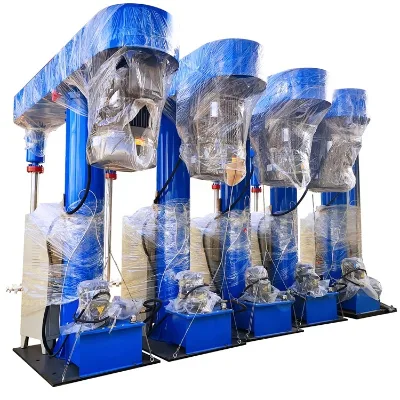


High Speed Agitator Paint Disperser for Acrylic Coatings and Ink Dissolution
$2580.00 - $3280.00
MOQ: 1 Pieces


Paint and Coating High-Speed Disperser, Dual Axis Disperser, Ink Mixer
$998.00 - $29998.00
MOQ: 1 Pieces


High Speed Disperser 200L for Paint 1000L Emulsion Paint Mixing Machine Paint Disperser Mixer
$980.00 - $48750.00
MOQ: 1 Pieces


Comprehensive Sourcing Guide
Automatic Dual-Chamber Liquid Paint Disperser Sourcing Guide
Sourcing an Automatic Dual-Chamber Liquid Paint Disperser requires a careful balance between high-speed dispersion capabilities and precise temperature control, particularly for sensitive formulations like daily chemical products, paints, and cosmetics. The market offers a range of machinery that combines spiral stirring types with high-speed dispersing mechanisms, allowing buyers to address both mixing and milling needs within a single unit. These systems are typically constructed from stainless steel materials, specifically SUS304, SUS304L, SUS316, or SUS316L, ensuring durability and resistance to corrosion when processing aggressive chemicals or food-grade ingredients. Buyers must evaluate whether the specific model meets their viscosity requirements and production volume, as capacities range from 200 liters to over 1000 liters, with some units designed for continuous operation in industrial settings.
The procurement process involves verifying critical technical parameters such as rotation speed, power consumption, and voltage compatibility, which vary significantly across different models. For instance, some units operate at rotation speeds between 100 and 1000 rpm, suitable for gentle mixing or coating applications, while others exceed 1000 rpm, designed for high-speed dispersing tasks required in paint and ink manufacturing. Power ratings also differ, with common configurations including 18.5 kW and 22 kW motors, driven by core components like motors, gears, pumps, and bearings. Understanding these distinctions is essential for aligning the equipment with your specific production line, ensuring that the disperser can handle the material processed, whether it be plastics, chemicals, food, or liquid coatings, without compromising efficiency or product quality.
Product Scope and Observed Listing Signals
The observed market signals indicate a diverse range of automatic dual chamber liquid paint dispersers, with prices ranging from $350 to $999,999 USD, reflecting variations in capacity, material grade, and automation level. Most listings show a minimum order quantity (MOQ) of one unit, suggesting that suppliers are flexible in accommodating both pilot-scale trials and full-scale industrial deployments. The products are predominantly sourced from China, with many models customized to meet specific buyer requirements, including standardized or bespoke configurations. This customization extends to the mixing capacity, with options available for 200L, 500L, and 1000L chambers, allowing buyers to select equipment that matches their batch size and throughput needs.
Key selling points highlighted in the market include high productivity, milling capabilities, and coating functionalities, indicating that these machines are versatile enough to handle multiple processing stages. The condition of the equipment is consistently listed as new, with warranties typically lasting one year, providing a baseline level of assurance for buyers. Additionally, many suppliers offer video outgoing inspections and machinery test reports, which serve as critical verification tools for assessing the machine’s performance before shipment. These signals suggest that buyers should prioritize suppliers who provide comprehensive documentation and visual proof of the machine’s operational status, ensuring that the equipment meets the specified technical requirements before finalizing the purchase.
Technical Specifications to Verify
When evaluating technical specifications, buyers must verify the rotation speed and power output to ensure compatibility with their production requirements. For high-speed dispersing applications, models with rotation speeds exceeding 1000 rpm and power ratings of 22 kW are common, while lower-speed applications may require units with speeds between 100 and 1000 rpm and power ratings around 18.5 kW. Voltage compatibility is another critical factor, with options including 110V, 220V, 380V, 400V, and 440V, depending on the local electrical infrastructure. Buyers should confirm that the selected model’s voltage and power specifications align with their facility’s capabilities to avoid costly modifications or operational inefficiencies.
Material construction and cooling methods are also essential considerations, as they impact the machine’s durability and performance. Most units are constructed from stainless steel grades such as SUS304, SUS304L, SUS316, or SUS316L, with the choice depending on the corrosiveness of the materials being processed. Water cooling is a common feature, helping to maintain optimal operating temperatures during high-speed dispersion, which is crucial for preventing thermal degradation of sensitive ingredients. Additionally, buyers should verify the core components, including the motor, gear, pump, and bearing, to ensure they are of high quality and suitable for continuous operation. These specifications directly influence the machine’s lifespan and maintenance requirements, making them critical factors in the procurement decision.
Compliance and Safety Documentation
Compliance and safety documentation are paramount when sourcing industrial machinery, particularly for applications involving food, chemicals, or cosmetics. Buyers should verify that the equipment holds relevant certifications, such as ISO and CE, which indicate adherence to international quality and safety standards. These certifications are not merely formalities but serve as indicators of the manufacturer’s commitment to producing reliable and safe machinery. Additionally, buyers should request detailed documentation on the machine’s electrical safety, including voltage ratings and grounding requirements, to ensure compliance with local regulations and prevent potential hazards in the workplace.
Beyond certifications, buyers should also assess the supplier’s after-sales service capabilities, particularly their ability to provide engineers for overseas machinery servicing. This support is crucial for addressing any technical issues that may arise during installation or operation, ensuring minimal downtime and maintaining production efficiency. Furthermore, buyers should verify that the supplier provides comprehensive user manuals, maintenance guides, and troubleshooting resources, which are essential for training staff and ensuring the machine is operated correctly. These documentation and service elements are critical for long-term operational success, reducing the risk of unexpected failures and ensuring that the equipment performs as expected throughout its lifecycle.
Cost Drivers and Commercial Terms
Cost drivers for automatic dual chamber liquid paint dispersers include the material grade, capacity, power rating, and level of customization. Stainless steel grades such as SUS316L, which offer superior corrosion resistance, typically command higher prices than SUS304, while larger capacities and higher power ratings also increase the overall cost. Customization options, such as bespoke configurations or specific voltage requirements, can further impact the price, as they require additional engineering and manufacturing efforts. Buyers should carefully evaluate these factors to determine the most cost-effective solution that meets their technical and operational needs, avoiding unnecessary expenditures on features that may not be essential for their application.
Commercial terms, including payment methods, shipping arrangements, and warranty conditions, also play a significant role in the total cost of ownership. Most suppliers offer sea transportation for shipping, which is cost-effective for large machinery but requires careful planning to ensure timely delivery. Warranty periods typically range from one year, providing a baseline level of protection against manufacturing defects, but buyers should negotiate extended warranty options or maintenance contracts if available. Additionally, buyers should clarify the terms for machinery test reports and video outgoing inspections, ensuring that these verification steps are included in the purchase agreement. These commercial terms directly impact the risk and cost associated with the procurement, making them critical areas for negotiation and clarification.
Supplier Qualification and Quality Control
Supplier qualification is a critical step in the procurement process, requiring buyers to assess the manufacturer’s reputation, production capabilities, and quality control measures. Buyers should verify the supplier’s certifications, such as ISO and CE, and request references from previous clients to gauge their reliability and service quality. Additionally, buyers should inquire about the supplier’s production processes, including their use of standardized or customized manufacturing techniques, to ensure that the equipment meets their specific requirements. This due diligence helps mitigate the risk of purchasing substandard machinery and ensures that the supplier has the expertise to deliver a high-quality product.
Quality control measures, such as machinery test reports and video outgoing inspections, are essential for verifying the equipment’s performance before shipment. Buyers should request detailed test results that demonstrate the machine’s ability to meet the specified technical parameters, including rotation speed, power output, and cooling efficiency. Video inspections provide a visual confirmation of the machine’s condition and functionality, allowing buyers to identify any potential issues before the equipment leaves the supplier’s facility. These quality control steps are crucial for ensuring that the purchased machinery performs as expected, reducing the risk of post-purchase disputes and ensuring a smooth installation and commissioning process.
Long-Term Procurement Checks
Long-term procurement checks involve monitoring the machine’s performance, maintenance requirements, and supplier support over its operational lifecycle. Buyers should establish a regular maintenance schedule, based on the manufacturer’s recommendations, to ensure that core components such as motors, gears, pumps, and bearings are inspected and serviced regularly. This proactive approach helps prevent unexpected failures and extends the machine’s lifespan, reducing the total cost of ownership. Additionally, buyers should maintain open communication with the supplier, particularly regarding after-sales service, to ensure that any technical issues are addressed promptly and efficiently.
Furthermore, buyers should periodically review the machine’s performance against the initial specifications, verifying that it continues to meet the required production standards. This includes monitoring parameters such as rotation speed, power consumption, and cooling efficiency, as well as assessing the quality of the processed materials. If any deviations are identified, buyers should work with the supplier to troubleshoot and resolve the issues, ensuring that the machine operates at optimal performance levels. These long-term checks are essential for maintaining production efficiency and ensuring that the investment in the Automatic Dual-Chamber Liquid Paint Disperser delivers the expected return over time.
FAQs
What certifications do automatic dual chamber liquid paint dispersers have?
These machines typically hold ISO and CE certifications to ensure compliance with international safety and quality standards. The CE mark confirms adherence to European health, safety, and environmental protection requirements, while ISO certification indicates a standardized quality management system. Buyers should verify specific documentation from the supplier to confirm these credentials are valid for their region.
What materials are used in the construction of these mixers?
The main body and contact parts are constructed from stainless steel, specifically SUS304, SUS304L, SUS316, or SUS316L grades. These materials provide excellent corrosion resistance and hygiene, making them suitable for processing chemicals, food, and paint. The choice of grade depends on the specific chemical compatibility required for the liquid being processed.
What is the typical capacity range for these dispersers?
Available models range from 200 liters to 1000 liters and above, with specific options like 500 liters or 1000 liters. The mixing capacity is selected based on production volume needs. Larger capacities support high productivity for daily chemical and paint manufacturing, ensuring efficient batch processing for industrial applications.
Can these machines process food and chemical materials safely?
Yes, the machines are designed to process chemicals, food, paint, and ink. The use of food-grade stainless steel options like SUS316L ensures safety for food applications. The design supports high-speed dispersing and agitation, making them versatile for various liquid formulations in the daily chemical and coating industries.
What after-sales service is provided for these industrial mixers?
Suppliers offer engineers available to service machinery overseas, ensuring global support. This includes installation guidance and maintenance assistance. The machines come with a one-year warranty and provided inspection reports, including video outgoing inspections, to guarantee quality before shipment and ensure long-term operational reliability.
What power and voltage options are available for these units?
Power options include 18.5 kW and 22 kW models, with voltages ranging from 110V to 440V, including 380V and 400V. This flexibility allows adaptation to different regional electrical standards. The high-speed disperser type ensures efficient mixing, with rotation speeds varying from 100-1000 rpm or above 1000 rpm depending on the model.