Source Automatic Dumpling Filling Machine for Dumplings, Samosas, Empanadas
Find and compare 30 Automatic Dumpling Filling Machine options for commercial kitchens. Evaluate models with varying capacities from 60 to 60,000 pieces per hour, power ratings, and voltage requirements to select the right equipment for your production needs; compare the available evidence and request quotations based on your requirements.
Key considerations
Products List


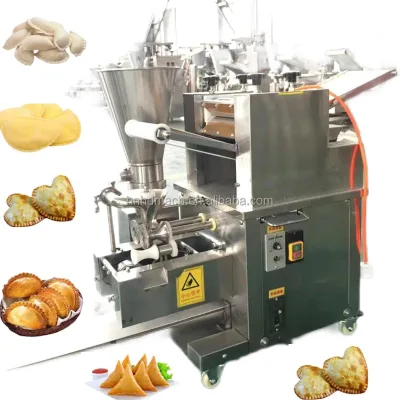


Automatic Dumpling Making Machine High Quality Dumpling Forming Machine
$17500.00 - $21500.00
MOQ: 1 sets


Fx Best-Selling Dumpling Machine Automatic Dumpling Machine Dumpling Machine
$17500.00 - $21500.00
MOQ: 1 sets


Semi-Automatic Shrimp Dumpling Machine Adjustable Filling Production Line
$17620.00 - $19160.00
MOQ: 1 Pieces

Commercial Semi-Automatic Shrimp Dumpling Machine Adjustable Filling Production Line
$17620.00 - $19160.00
MOQ: 1 Pieces


Reduce Production Cost High Efficiency Automatic Dumpling Wonton Machine
$13000.00 - $14500.00
MOQ: 1 Pieces


Dumpling Machine Automatic Dumpling Machine for Home Small Dumpling Machine
$2560.00 - $3600.00
MOQ: 1 Sets

Comprehensive Sourcing Guide
Automatic Dumpling Filling Machine Sourcing Guide
Procuring an Automatic Dumpling Filling Machine requires a clear understanding of the diverse capabilities available in the current market. Listings indicate a wide spectrum of machinery, ranging from semi-automatic units with capacities of 60 to 400 pieces per hour to high-speed industrial systems producing up to 60,000 pieces per hour. Buyers must first define their production volume needs to avoid over-specifying or under-capacitating their operations. The observed product count of thirty distinct listings suggests a competitive landscape where differentiation is often based on speed, automation level, and specific dough handling requirements.
The application scope extends beyond traditional dumplings to include similar filled pastries such as samosas and empanadas, as indicated by specific model attributes. This versatility is a critical factor for buyers planning to diversify their product lines without investing in entirely new machinery. However, the variation in power consumption, from low-wattage manual-assist devices to 13.39 kW industrial units, highlights the importance of matching machine electrical requirements with facility infrastructure. Understanding these operational differences ensures that the selected equipment aligns with both production goals and utility constraints.
Product Scope and Observed Listing Signals
The market for automatic dumpling filling machines presents a significant variance in pricing and minimum order quantities, reflecting the disparity between entry-level and industrial-grade equipment. Observed price ranges span from approximately six dollars to two million dollars, a gap that typically correlates with the level of automation, material quality, and production speed. Minimum order quantities are generally low, often starting at one unit, which facilitates initial trials for small businesses or pilot testing for larger enterprises. This accessibility allows buyers to acquire single units for specific tasks without committing to large-scale inventory investments.
Product specifications reveal distinct categories of machinery, including models designed for precise weight control, such as those producing 26-28 gram pieces or adjustable ranges like 14-26 grams. Physical dimensions also vary widely, with some units measuring compact sizes like 70x45x80 cm, while others require substantial floor space, such as a molding host size of 2500x850x1500 mm. Buyers should carefully evaluate the footprint and weight of the machine, noting that some units weigh over 1,450 kg, which may necessitate reinforced flooring or specialized logistics for installation. These physical attributes directly impact factory layout planning and operational safety.
Technical Specifications to Verify
Voltage and power requirements are primary technical considerations that must be verified against local electrical standards. Listings show machines operating on both 220V and 380V systems, with power ratings ranging from 5 watts to 13.39 kilowatts. Selecting a machine with incompatible voltage can lead to operational failure or safety hazards, making it essential to confirm the electrical supply at the installation site. Additionally, the power source is predominantly electric, though some high-capacity models may require air supply pressures of at least 0.6 MPa, adding another layer of infrastructure complexity that buyers must assess during the planning phase.
Dough handling capabilities are another critical technical specification, particularly regarding flour moisture content tolerance. Some machines are designed to handle dough with moisture levels between 42% and 50%, which is crucial for maintaining consistent product quality and preventing machine jams. The inclusion of features like independent filling pumps and dough sheet feeders indicates a focus on precision and consistency in the filling process. Buyers should verify the specific product models, such as LPJ-001 or HM-XLTB, to understand the exact mechanical advantages and limitations of each design, ensuring the machine can process the specific dough formulations used in their production.
Compliance and Safety Documentation
Certification status is a key indicator of manufacturing quality and regulatory compliance for international trade. Many listed machines carry CE and ISO certifications, which are essential for ensuring that the equipment meets European safety and environmental standards. The presence of ISOCE markings suggests adherence to integrated quality and safety management systems, providing buyers with confidence in the manufacturer’s production processes. However, buyers must request valid certification documents and verify their authenticity, as these credentials are critical for customs clearance and operational legality in many jurisdictions.
Safety documentation should also include detailed operational manuals and maintenance guidelines, particularly for machines with complex components like switchboards and timing devices. The inclusion of timing devices in certain models suggests advanced control features that require proper programming and safety interlocks to prevent accidents. Buyers should ensure that the supplier provides comprehensive documentation on emergency stop procedures, electrical grounding, and mechanical guarding. Proper documentation not only aids in safe operation but also facilitates quicker troubleshooting and reduces downtime during maintenance activities.
Cost Drivers and Commercial Terms
Packaging and shipping logistics significantly influence the total cost of ownership for automatic dumpling filling machines. Listings indicate various packaging methods, including wooden cases, wood packing, and export wooden box packaging, which are designed to protect the machinery during transit. The choice of packaging can affect shipping costs and insurance premiums, especially for heavy units weighing up to 650 kg or more. Buyers should clarify who is responsible for packaging costs and ensure that the packaging meets international shipping standards to prevent damage during transport.
Commercial terms such as customization availability and after-sales support are also major cost drivers. Many suppliers offer customization options, allowing buyers to tailor the machine to specific production needs, which may incur additional costs. The availability of spare parts and technical support should be negotiated as part of the commercial agreement, as these factors impact long-term operational efficiency. Buyers should also consider the lead time for production and delivery, as delays can disrupt supply chains. Clear communication regarding these terms helps in budgeting accurately and avoiding unexpected expenses.
Supplier Qualification and Quality Control
Supplier qualification is a critical step in ensuring the reliability and longevity of the purchased equipment. Buyers should verify the supplier’s manufacturing capabilities, including their production facilities and quality control processes. The origin of the machines, often listed as China or specific provinces like Henan, can provide insights into the supplier’s industrial ecosystem and expertise. However, buyers must conduct due diligence to assess the supplier’s reputation, financial stability, and track record in exporting similar machinery. This verification helps mitigate risks associated with supplier insolvency or poor service quality.
Quality control measures should be established before production begins, including pre-shipment inspections and performance testing. Buyers should request detailed specifications and test results for key components, such as the molding host and filling pump, to ensure they meet the agreed-upon standards. The ability to customize the machine suggests that the supplier has flexible manufacturing processes, but this flexibility must be balanced with rigorous quality assurance protocols. Establishing clear quality benchmarks and inspection criteria helps ensure that the delivered machine performs as expected and meets the buyer’s production requirements.
Long-Term Procurement Checks
Long-term procurement success depends on the availability of ongoing support and spare parts. Buyers should verify the supplier’s commitment to after-sales service, including the availability of technical support, training, and maintenance services. The complexity of automatic dumpling filling machines, with their various electrical and mechanical components, requires regular maintenance to ensure optimal performance. Establishing a service agreement with the supplier can help minimize downtime and extend the lifespan of the equipment. Buyers should also consider the cost and availability of spare parts, ensuring that critical components can be replaced quickly when needed.
Continuous evaluation of the machine’s performance and efficiency is essential for maintaining production quality. Buyers should monitor key performance indicators, such as production speed, waste rate, and energy consumption, to identify areas for improvement. Regular maintenance and calibration of the machine’s timing devices and filling pumps can help maintain consistent product quality. Additionally, staying informed about technological advancements in the industry can help buyers upgrade their equipment or adopt new processes to remain competitive. Long-term procurement checks ensure that the investment in automatic dumpling filling machines continues to deliver value over time.
FAQs
What is the production capacity of automatic dumpling filling machines?
Production capacity varies significantly by model, ranging from 60 to 400 pieces per hour for smaller units up to 60,000 pieces per hour for high-speed industrial lines. Buyers should select equipment based on their specific daily output requirements and operational scale to ensure efficiency.
Can these machines handle different dumpling weights?
Yes, many models support adjustable weight settings, such as 14-16g, 16-18g, 18-20g, and up to 26-28g per piece. This flexibility allows manufacturers to produce various dumpling sizes and types, including samosas and empanadas, without requiring extensive mechanical adjustments.
What power source and voltage do these machines require?
Most automatic dumpling filling machines operate on electric power sources. Common voltage specifications include 220V for smaller units and 380V for larger industrial models. The power consumption typically ranges from 5W to 13.39kW depending on the machine's size and production speed capabilities.
Are automatic dumpling filling machines customizable?
Customization is available for many automatic dumpling filling machines to meet specific production needs. Buyers can often request modifications to dimensions, capacity, or functional components. This ensures the equipment integrates seamlessly into existing factory layouts and meets unique product formulation requirements.
What certifications are typically associated with these machines?
Many automatic dumpling filling machines carry CE and ISO certifications, ensuring compliance with international safety and quality standards. These certifications indicate that the manufacturing processes and final products meet rigorous regulatory requirements, providing buyers with confidence in the equipment's reliability and operational safety.
How is the machine weight and size determined?
Machine dimensions and weight vary by model, with some units weighing around 510g to 1450kg. Sizes range from compact 70x45x80cm units to large systems measuring 6800x1000x1500mm. Buyers must consider floor space and load-bearing capacity when planning installation.