Source Automatic Fresh Meat Skewering Machine for Restaurants, Plants, and Catering
Compare 30 automatic fresh meat skewering machine listings from verified suppliers. Buyers can evaluate specifications like 500 to 2000 skewers per hour output, 304 stainless steel construction, and 220V electric power for meat processing plants, restaurants, and catering services; compare the available evidence and request quotations based on your requirements.
Key considerations
Products List




Comprehensive Sourcing Guide
Automatic Fresh Meat Skewering Machine Sourcing Guide
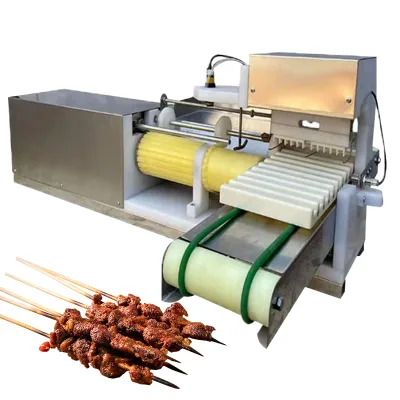
The market for automatic fresh meat skewering machines presents a diverse range of capabilities tailored to specific processing volumes and ingredient types. Current listings indicate a primary focus on high-efficiency units capable of handling meat, seafood, and bean products with a production rate of up to 500 skewers per hour for specific models. Buyers must distinguish between fully automatic and semi-automatic grades, as the operational workflow and labor requirements differ significantly between these configurations.
Procurement decisions should prioritize the specific mechanical output required for the intended production line, noting that some units offer a throughput of 1800 to 2000 strings per hour. The observed product range includes models with varying control methods, from touch panels to microcomputer systems, which directly impacts the ease of operation and the precision of the skewering process. Understanding these distinctions is essential for matching the equipment to the specific throughput needs of a meat processing plant.
Product Scope and Observed Listing Signals
Buyers should verify the physical dimensions and material composition of the equipment, as observed listings specify dimensions such as 80×60×100cm or 1000×1000×360mm depending on the model. The construction material is consistently noted as stainless steel, with specific references to SUS304 grades, ensuring durability and hygiene compliance for food contact surfaces. These physical attributes are critical for determining whether the machine fits within the available floor space of an existing facility.
The packaging and origin details provide additional context for logistics planning, with most units shipped in wooden cases from manufacturing hubs in Zhengzhou or Henan, China. While the observed price range is broad, spanning from 440 to 110,000 USD, the specific cost is often tied to the level of automation and the power source requirements. Buyers must carefully review the listed specifications to ensure the machine's voltage, such as 220V/50Hz, aligns with the electrical infrastructure of their target location.
Technical Specifications to Verify
Technical verification must begin with the power source and voltage compatibility, as units are typically designed for 220V electric operation with power consumption around 15 Watts. It is crucial to confirm the specific voltage requirements against local grid standards to prevent operational failures or the need for expensive transformers. The control method, whether a touch panel or microcomputer system, dictates the user interface complexity and the potential for automated adjustments during the skewering process.
Efficiency metrics and output capacity are equally vital, with some models claiming a processing speed of 1.5 to 2.0 seconds per string or a total output of 1800 to 2000 strings per hour. Buyers should validate these efficiency claims against their actual production targets, noting that the applicable ingredients may vary between fresh meat, chicken, mutton, and beef. The skewer specification, often listed as 3.0mm×20cm, must also be confirmed to ensure compatibility with the desired product size and presentation standards.
Compliance and Safety Documentation
Safety and hygiene compliance are paramount in the meat processing industry, requiring that all equipment surfaces meet food-grade standards. The consistent use of stainless steel materials, including SUS304, suggests a baseline adherence to sanitary design principles, but buyers should request specific documentation regarding surface finish and cleanability. Verification of the equipment's suitability for thermal or mild processing ensures that the machine can handle the specific preparation methods required for the final product.
Documentation regarding the warranty and after-sales support is essential for mitigating long-term operational risks. Most observed listings provide a warranty period of 12 months or one year, accompanied by services such as video technical support or online assistance. Buyers should explicitly confirm the scope of these support services to ensure that technical issues can be resolved promptly without significant downtime, which is critical for maintaining continuous production schedules.
Cost Drivers and Commercial Terms
The commercial terms for these machines are heavily influenced by the level of customization and the specific model configuration selected. While the minimum order quantity is frequently listed as a single set, the final price is driven by factors such as the inclusion of custom features, the complexity of the control system, and the specific output capacity required. Buyers should be aware that the wide price range observed in the market reflects these significant variations in feature sets and performance capabilities.
Packaging and shipping logistics represent another key cost driver, with most units requiring wooden case packaging for protection during transit. The origin location, typically in China, implies specific shipping routes and potential import duties that must be factored into the total landed cost. Understanding the full scope of these commercial terms, including the single item selling units and the specific packing dimensions, allows for more accurate budgeting and financial planning for the procurement project.
Supplier Qualification and Quality Control
Supplier qualification should focus on the manufacturer's ability to provide consistent quality and reliable after-sales service. The presence of specific brand names and detailed product models, such as FL-Dani or TZ, indicates a level of established manufacturing capability, but buyers must verify the supplier's track record in the meat processing sector. The availability of video technical support and online assistance suggests a commitment to remote troubleshooting, which is a positive indicator of supplier responsiveness.
Quality control measures must be validated through the inspection of the equipment's condition and material specifications. Buyers should ensure that the machines are supplied as new units with clear specifications regarding their automatic grade and production efficiency. The consistency of the material, such as the use of stainless steel, and the adherence to standard dimensions are key indicators of manufacturing quality that should be confirmed before finalizing any purchase agreement.
Long-Term Procurement Checks
Long-term procurement success depends on establishing a clear framework for ongoing maintenance and performance monitoring. Buyers should verify the availability of spare parts and the specific warranty terms to ensure that the equipment remains operational over its intended lifespan. The 12-month warranty period observed in many listings provides a baseline for initial support, but extended service agreements may be necessary for continuous high-volume operations.
Regular performance audits are essential to ensure that the machine continues to meet the required production efficiency and output standards. Buyers should track the actual skewering speed and string output against the claimed specifications of 500 skewers per hour or 1800-2000 strings per hour to identify any degradation in performance. Establishing a routine for checking the control systems and material integrity will help maintain the high efficiency and reliability expected from professional meat processing equipment.
FAQs
What is the production efficiency of this machine?
The machine achieves a production efficiency of 500 skewers per hour for standard operations. This output rate applies when processing meat, seafood, or bean products using the specified 3.0mm by 20cm skewer specifications.
Can the equipment be customized for specific needs?
Yes, customization is available for this automatic meat processing equipment. Buyers can request tailored solutions while the standard model features a touch panel control method and operates on a 220V electric power source.
What materials are used to construct the machine?
The equipment is constructed from 304 stainless steel to ensure durability and hygiene. This material choice supports its application in meat processing plants and ensures compliance with food safety standards for fresh meat handling.
How long is the warranty period for this unit?
The standard warranty period provided for this unit is 12 months. This coverage includes video technical support and online assistance to ensure operational continuity for buyers in the meat industry sector.
What is the power voltage requirement for operation?
The machine requires a power voltage of 220V at 50Hz for standard operation. This electrical specification ensures compatibility with common industrial power supplies used in meat processing facilities across various regions.
Which ingredients are suitable for this skewering machine?
This machine is suitable for processing meat, seafood, and bean products. It is specifically designed for fresh meat applications, handling chicken, mutton, and beef with high efficiency and minimal manual intervention.
What is the minimum order quantity for purchasing?
The minimum order quantity is one set for this automatic meat skewering machine. Buyers can source single units directly, making it accessible for small-scale operations or pilot testing in new facilities.