Source Multifunctional Griddle Gas Cooker for Restaurants, Hotels, and Garages
Source 30 Multifunctional Griddle Gas Cooker options from verified Chinese manufacturers. Compare induction and gas models with 3 to 8 burners, electronic ignition, and stainless steel construction for commercial kitchens, hotels, and garage setups; compare the available evidence and request quotations based on your requirements.
Key considerations
Products List

Energy Efficient Panel Stainless Steel Three Burner Kitchen Gas Cooker
$10.00 - $12.00
MOQ: 999 Pieces


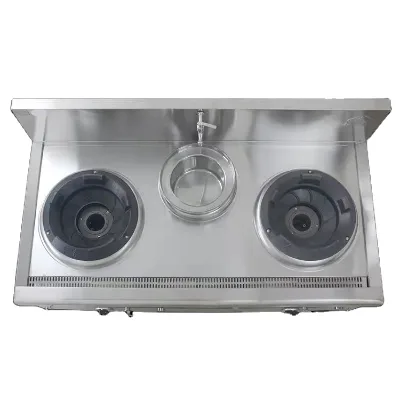

Heavy-Duty 4 Burner Gas Cooker with Griddle and Oven
$600.00 - $1500.00
MOQ: 1 Pieces
Guangzhou Junjian Kitchen Appliances & Refrigeration Equipment Co., Ltd.

Factory Hot Sale Gas Griddle with Cabinet
$456.00 - $480.00
MOQ: 1 Pieces
Guangzhou Junjian Kitchen Appliances & Refrigeration Equipment Co., Ltd.




Comprehensive Sourcing Guide
Multifunctional Griddle Gas Cooker Sourcing Guide
Sourcing a Multifunctional Griddle Gas Cooker requires careful evaluation of both commercial durability and versatile cooking capabilities. Buyers must distinguish between standard household units and heavy-duty equipment designed for high-volume environments. The market offers a wide spectrum of options, ranging from compact portable burners to large, built-in commercial ranges. Understanding these distinctions is critical for aligning procurement with specific operational needs, whether for a small café, a large hotel kitchen, or a specialized garage setup.
Procurement decisions should also account for the diverse material compositions and customization options available. Stainless steel remains the predominant material due to its corrosion resistance and ease of cleaning, which are essential for maintaining hygiene standards in professional kitchens. However, some listings indicate customized material options, suggesting that buyers can tailor the unit’s construction to specific environmental demands. This flexibility allows for specialized configurations that may enhance longevity or integrate seamlessly with existing kitchen infrastructure, provided the supplier can reliably deliver on these custom specifications.
Product Scope and Observed Listing Signals
The observed product landscape reveals a significant variance in application contexts, spanning from household use to commercial, hotel, and garage settings. Listings frequently highlight features such as electronic ignition systems and knob-based controls, which suggest a focus on user-friendly operation. The presence of APP-controlled options indicates a growing trend toward smart kitchen integration, allowing for remote monitoring or adjustment. Buyers should verify whether these digital features are standard across all models or reserved for premium tiers, as this impacts both the initial investment and the long-term maintenance requirements of the equipment.
Material specifications and burner configurations vary widely, with options including three, four, six, or even eight burners. Some products are explicitly marketed as restaurant gas burners or commercial cooktops, while others are labeled as built-in gas cookers. This diversity implies that the term "multifunctional griddle" may encompass a broad range of devices, from simple single-burner units to complex multi-zone cooking stations. Procurement teams must carefully cross-reference the listed burner count and gas type compatibility with their actual kitchen layout and fuel supply infrastructure to avoid mismatches in installation or performance.
Technical Specifications to Verify
Technical verification must begin with the power output and energy efficiency ratings, which directly influence cooking speed and operational costs. Listings indicate power ratings such as 1500 watts for electric components or high BTU outputs for gas burners, alongside Class A energy efficiency ratings. Buyers should confirm the actual gas consumption rates and thermal efficiency to ensure the unit meets their volume requirements without excessive fuel waste. Additionally, the voltage specifications, often listed as 220V, must be matched with the local electrical infrastructure, particularly for units that combine gas heating with electric ignition or control systems.
Dimensional accuracy and installation requirements are equally critical for seamless integration into existing kitchen spaces. Observed sizes range from compact portable units to large built-in models measuring up to 650x770x850mm or larger custom dimensions. Buyers must verify the cutout requirements for built-in installations and ensure that the single package dimensions fit within their delivery and handling constraints. The weight of the unit, sometimes listed as high as 100kg, necessitates proper floor support and handling equipment during installation, which should be factored into the logistical planning phase of the procurement process.
Compliance and Safety Documentation
Safety compliance is paramount when sourcing gas-powered cooking equipment, particularly for commercial applications. Buyers must ensure that the supplier provides documentation verifying compliance with local gas safety standards and electrical regulations. While specific certification names are not always listed, the presence of features like flameout protection indicates a commitment to basic safety mechanisms. Procurement teams should request detailed safety manuals and certification reports that confirm the unit’s ability to automatically shut off gas supply in the event of flame failure or other critical malfunctions.
Warranty and after-sales support structures also play a crucial role in risk mitigation. Most listings offer a one-year warranty and provide free spare parts, which is a standard baseline for commercial equipment. However, buyers should clarify the scope of this warranty, including whether it covers labor costs or only parts, and verify the availability of technical support in the operating language, such as English. Establishing a clear channel for spare parts ordering and technical assistance is essential for minimizing downtime in a professional kitchen environment where equipment reliability is directly tied to service continuity.
Cost Drivers and Commercial Terms
Cost structures for multifunctional griddle gas cookers are influenced by material quality, burner count, and customization levels. Stainless steel construction and higher burner configurations typically command higher prices, while basic models with fewer features may be more cost-effective. The observed price range of 10 to 1500 USD reflects this disparity, with entry-level portable units at the lower end and complex commercial ranges at the higher end. Buyers should align their budget with the specific performance requirements of their kitchen, avoiding over-specification for low-volume tasks or under-specification for high-demand environments.
Minimum order quantities (MOQ) and packaging details also impact the total cost of ownership. MOQs can range from single items to thousands of units, affecting the unit price through economies of scale. Packaging methods, such as corrugated boxes or wooden frames, are designed to protect the equipment during transit but may add to shipping costs. Buyers should negotiate clear terms regarding packaging standards to prevent damage during delivery and consider the logistical implications of bulk orders, including storage space and handling requirements at the destination facility.
Supplier Qualification and Quality Control
Supplier qualification should focus on manufacturing capabilities and quality assurance processes. The place of origin, often listed as Shandong or Shaanxi in China, indicates a concentration of manufacturing hubs for kitchen equipment. Buyers should verify the supplier’s production capacity and history to ensure they can consistently meet quality standards. Customization options, such as private mold availability or logo design, suggest that some suppliers offer OEM services, which requires rigorous quality control to maintain brand consistency and product reliability across customized batches.
Quality control measures should include pre-shipment inspections and verification of key components. Buyers should request detailed inspection reports that cover gas leak tests, ignition reliability, and surface finish quality. The availability of free spare parts and a one-year warranty suggests a level of confidence in product durability, but buyers should still implement their own incoming quality checks. Establishing a clear communication channel for reporting defects and resolving issues promptly is essential for maintaining a productive relationship with the supplier and ensuring long-term satisfaction with the purchased equipment.
Long-Term Procurement Checks
Long-term procurement success depends on the supplier’s ability to provide consistent support and product evolution. Buyers should monitor the supplier’s track record for delivering products that meet the specified energy efficiency and performance standards over time. The availability of updated models with improved features, such as enhanced APP control or better ignition systems, can provide opportunities for upgrading existing fleets. Maintaining a relationship with a reliable supplier ensures access to these innovations and facilitates smoother transitions when replacing or expanding kitchen equipment.
Sustainability and operational efficiency should also be considered in long-term planning. As energy costs rise, the efficiency of the gas cookers becomes a significant factor in operational budgets. Buyers should periodically review the performance of installed units against their initial specifications and consider retrofitting or replacing older models with more efficient alternatives. Additionally, staying informed about changes in gas regulations and safety standards ensures that the procurement strategy remains compliant and aligned with industry best practices, protecting the business from potential regulatory risks and operational disruptions.
FAQs
What materials are used for these multifunctional griddle gas cookers?
These gas cookers are built with stainless steel, and customized material options are also available. Stainless steel is widely chosen for commercial and household kitchens because it resists heat, grease, and daily wear. Buyers can confirm material thickness and finish with the supplier before ordering, since specifications can be tailored to match different cooking environments and usage levels.
Can the burner configuration be customized before ordering?
Yes, burner configurations can be customized, with listed options including 4, 6, and 8 burners. Customization is explicitly available, so buyers can request layouts suited to restaurant kitchens, hotels, or other commercial cooking spaces. It is best to share your kitchen dimensions and cooking volume with the supplier early so the appropriate burner count and cooktop size can be confirmed.
Which gas types are supported by these gas cooker units?
These units support both LPG and natural gas, giving buyers flexibility across different installation environments. Before ordering, confirm which gas type your site supplies, since regulators and connection fittings can differ between the two. Some suppliers can adjust configurations for specific gas requirements, so state your gas source clearly when requesting a quotation to ensure compatible specifications.
How can I get replacement parts if something wears out?
Free spare parts are provided as part of the after-sales service, and the products carry a one-year warranty. Keep your order records and model number handy when contacting the seller, as this speeds up part identification. For anything outside the warranty period, ask the supplier about purchasing spare parts separately to keep the equipment running without long downtime.
What sizes are available for these gas cookers?
One listed model measures 650 by 770 by 850 millimeters, with customized sizes also available. Other listed dimension options include 4-burner units from 60 by 75 by 80 centimeters up to 80 by 85 by 80 centimeters, and 6-burner units from 90 by 75 by 80 centimeters up to 120 by 80 by 80 centimeters. Measure your kitchen space carefully before choosing.
Can I add my own logo or branding to the equipment?
Yes, logo and graphic design customization is available with customer-supplied branding. This suits distributors, restaurant groups, and equipment dealers who want branded units. Provide artwork files and placement requirements to the supplier before production begins. Note that the private mold option is not available, so customization applies to surface branding and appearance rather than changing the underlying mold design.
How is the equipment packed for shipping?
Packing options include cartons, wooden frames, and corrugated boxes, with one listed unit sold as a single item in a 60 by 60 by 50 centimeter package. Heavier commercial units, such as those with a listed single gross weight of 100 kilograms, benefit from wooden frames for protection. Confirm the packing method with your supplier, especially for sea freight, to reduce transit damage risk.
Which applications suit these multifunctional gas cookers best?
Listed applications include commercial kitchens, hotels, garages, and household use, with restaurant kitchen cooking being a primary usage. Multi-burner gas ranges with ovens are well suited to restaurants preparing bread, pizza, cake, and biscuits. Consider burner count, size, and gas type against your daily cooking volume. Knob control and electronic ignition make daily operation straightforward for busy kitchen staff.