Source Egg Waffle Machine for Biscuit, Cake, and Crispy Stick Production
Explore 30 Egg Waffle Machine options for biscuit, cake, and crispy stick production. Compare semi-automatic models with CE certification, varying power ratings, and dimensions to find the right equipment for your bakery needs; compare the available evidence and request quotations based on your requirements.
Key considerations
Products List


220V Electric Egg Waffle Machine Professional Hong Kong Egg Waffle Maker
$41.00 - $50.00
MOQ: 20 Pieces


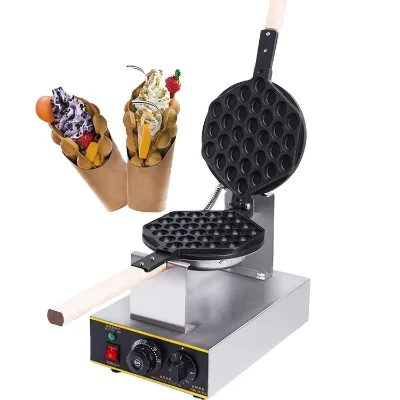


Hot Selling Waffle Egg Roll Machine Egg Skin Maker Egg Cone Making Machine
$4000.00 - $4500.00
MOQ: 1 Pieces


Professional Supplier Waffle Maker / Egg Roll Machine / Waffle Making Machine
$3889.00 - $5055.00
MOQ: 1 Sets

High Efficiency Wafer Making Machine / Egg Roll Making Machine / Waffle Maker
$3889.00 - $5055.00
MOQ: 1 Sets


Comprehensive Sourcing Guide
Egg Waffle Machine Sourcing Guide
Procuring an Egg Waffle Machine requires careful evaluation of the specific production needs, as the market offers distinct variations ranging from semi-automatic units to fully automated systems. Buyers must first distinguish between models designed for high-volume commercial bakeries and those intended for smaller retail operations or food trucks. The observed product range includes specific models like the ET-DZ-01E and TA-DEW-1, which feature different power ratings and dimensions that directly impact kitchen layout and workflow efficiency.
When initiating a search, it is critical to verify the voltage and power supply compatibility, as many units operate on 220V with a 50Hz frequency, which is standard in many regions but may require transformers elsewhere. The observed listings indicate a wide price spectrum, suggesting that cost should not be the sole determinant of selection. Instead, buyers should prioritize machines that align with their specific output requirements, ensuring the selected unit can handle the intended volume of cake or biscuit production without compromising on the quality of the final waffle product.
Product Scope and Observed Listing Signals
The current market for egg waffle machines presents a diverse array of configurations, including semi-automatic grades that balance operational control with labor efficiency. Specific product attributes observed include models with timing devices and varying power outputs, such as the 1.4kw and 1.2+1.2kw configurations, which dictate the heating speed and consistency of the baking process. Buyers should note that while some units are marketed as non-customized, others explicitly offer customization options, allowing for tailored solutions that fit unique production lines or branding requirements.
Dimensional data is a crucial signal for procurement planning, as the physical footprint of the machine must fit within the available kitchen space. Observed specifications range from compact units measuring 265330270mm to larger industrial models with dimensions like 438360208mm, each carrying different weight profiles from 4.96kgs to 9.5kg. These physical constraints influence not only the installation process but also the logistics of shipping and packaging, which are typically handled in cartons and may require specific handling instructions to prevent damage during transit.
Technical Specifications to Verify
Voltage and power compatibility are the first technical parameters that must be validated to ensure safe and effective operation. The supplied data confirms that many units operate at 220V with a 50Hz rated frequency, but buyers must confirm these details against their local electrical infrastructure to avoid equipment failure or safety hazards. Additionally, the power source is consistently listed as electric, yet the specific wattage, such as 1.55kw or 1.4kw, varies by model and directly correlates with the machine's ability to maintain consistent thermal processing temperatures for optimal waffle texture.
Dimensional and weight specifications are equally vital for logistical planning and equipment integration. Buyers should verify the overall dimensions, such as 390340245mm or 255x600x305mm, to ensure the machine fits the designated counter space and allows for adequate ventilation. The weight of the unit, ranging from approximately 8kgs to 9.5kg, affects stability during operation and the ease of relocation if the production setup changes. Confirming these exact measurements prevents costly installation errors and ensures the machine can be safely integrated into the existing workflow.
Compliance and Safety Documentation
Safety certifications are a non-negotiable aspect of sourcing food processing equipment, as they validate that the machine meets international safety standards. The observed listings frequently cite CE certification, indicating compliance with European health, safety, and environmental protection standards. Buyers must request and verify the specific CE documentation for the model they intend to purchase, ensuring that the certification is current and applies to the exact configuration being ordered, rather than relying on general claims that may not cover the specific unit.
Beyond electrical safety, buyers should investigate additional quality standards and material certifications that ensure the machine is suitable for food contact. While some listings mention ISOCE or other standards, the specific nature of these certifications must be clarified to confirm they cover food-grade materials and thermal processing safety. It is essential to obtain the full certificate of conformity from the supplier, which should detail the testing procedures and compliance with relevant food safety regulations, providing assurance that the equipment will not introduce contaminants into the production process.
Cost Drivers and Commercial Terms
The pricing of egg waffle machines is influenced by a complex mix of factors, including power capacity, automation level, and the inclusion of advanced features like timing devices. The observed price range spans from 26 USD to 230,000 USD, reflecting the vast difference between basic manual units and high-end industrial systems. Buyers should understand that higher costs often correlate with increased durability, higher efficiency, and more robust construction, which are critical for maintaining consistent output in a commercial environment.
Minimum Order Quantity (MOQ) and payment terms are significant commercial variables that affect the total cost of acquisition. The data indicates an MOQ range of 1 to 20 pieces, with some specific models requiring a minimum of 10 pieces, which can impact the initial investment for small businesses. Buyers must negotiate these terms carefully, considering whether bulk purchasing offers a better unit price or if a single-unit purchase is more suitable for testing the equipment before scaling up production.
Supplier Qualification and Quality Control
Supplier qualification is paramount when sourcing industrial kitchen equipment, as the reliability of the manufacturer directly impacts the longevity and performance of the machine. Buyers should prioritize suppliers who demonstrate a clear origin, such as those based in Guangzhou or Guangdong, China, and who provide transparent information about their production processes. Verifying the supplier's history and reputation for delivering "Strong and Durable" products is essential to ensure that the equipment will withstand the rigors of daily commercial use.
Quality control measures should be a central part of the procurement agreement, with specific attention paid to the condition of the goods upon delivery. The observed listings specify that products are "New," but buyers must establish clear inspection protocols to verify that the machine arrives in perfect working order without any manufacturing defects. Requesting pre-shipment photos or videos of the specific unit, along with a detailed checklist of functional tests, helps mitigate the risk of receiving damaged or non-compliant equipment.
Long-Term Procurement Checks
Sustainable procurement requires a focus on the long-term maintenance and support capabilities of the supplier. Buyers should inquire about the availability of spare parts, such as heating elements or molds, to ensure that the machine can be repaired quickly if a component fails. The "High Efficiency" and "Strong and Durable" attributes observed in the listings are only valuable if the supplier can provide the necessary support to maintain these performance levels over the lifespan of the equipment.
Future scalability is another critical consideration for buyers planning to expand their production capabilities. As the business grows, the initial machine may need to be supplemented or replaced with higher-capacity models, so maintaining a relationship with a supplier who offers a range of compatible products is beneficial. Buyers should also verify the lead times for restocking and the supplier's ability to handle custom orders, ensuring that the supply chain remains robust and responsive to changing market demands.
FAQs
What voltage and power requirements do these egg waffle machines have?
These machines run on 220V electric power at 50Hz, with rated power typically between 1.2kW and 1.55kW depending on the model. Confirm your local electrical supply matches before ordering, and plan for a dedicated circuit since commercial kitchens often run multiple appliances simultaneously on shared wiring.
Can I customize an Egg Waffle Machine before ordering?
Yes, customization is available on listed models, although some units are sold as non-customized standard versions. Customization typically covers branding, plate patterns, or specification adjustments arranged with the supplier before production. Discuss requirements early because customized orders may differ in minimum order quantity, lead time, and pricing compared with standard stock units.
Which certifications do the egg waffle machines carry?
Listed machines carry CE certification, and some models show ISO certification as well. Certification matters for import approval and food-service compliance in many regions, so request the certificate documents from the supplier before placing an order. Verify that the certificate matches the exact model number you intend to purchase rather than relying on listing claims.
How much do these egg waffle machines weigh and what are their dimensions?
Weights and sizes vary by model. Compact units weigh around 4.96 kilograms net with dimensions near 265 by 330 by 270 millimeters, while double-plate models reach roughly 438 by 360 by 208 millimeters. Larger units weigh about 8 to 9.5 kilograms. Check the specific model specification sheet to confirm counter space and shipping weight.
What is the minimum order quantity for an Egg Waffle Machine?
Minimum order quantities generally start low, with listed requirements around 10 pieces per order, and some suppliers accept single-piece trial orders. Small MOQs make it practical to test a unit before committing to volume. Confirm the exact MOQ per model with each supplier, since customized versions often carry different minimums than standard configurations.
How are egg waffle machines packed for shipping?
Standard packing is carton packaging, with gross weight slightly above net weight due to packing materials; for example one model lists 4.96 kilograms net against 6 kilograms gross. Carton packing suits courier and air freight for small quantities. For bulk orders, ask suppliers about reinforced or palletized packing options to reduce transit damage risk.
Can these machines make products other than egg waffles?
Yes, listed usage covers cake and biscuit applications, and related models include six-grid crispy stick machines producing sticks of about 140 by 40 by 20 millimeters. Interchangeable or dedicated plates determine the output type. If you need multiple product formats, confirm with the supplier which plate options or machine variants support your menu before ordering.