Source Automatic Helmet Cleaning and Deodorizing Vending Machine for Gyms, Hotels, and Malls
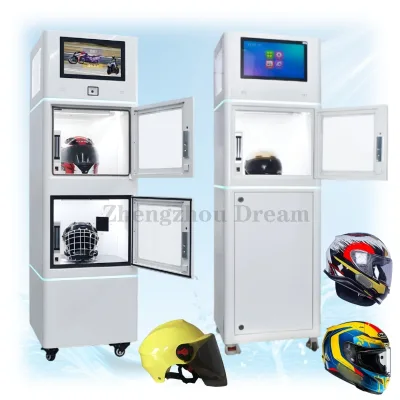
Compare 22 automatic helmet cleaning and deodorizing vending machines from verified suppliers. These units feature touch screens, multiple payment options, and built-in power cords for indoor or outdoor use.
Key considerations
Products List

Multi-Language Automated Helmet Cleaning & Deodorizing Vending Machine
$2899.00 - $3199.00
MOQ: 1 Pieces

Indoor Touch Screen Automated and Deodorizing Vending Automatic Helmet Machine
$3099.00 - $3399.00
MOQ: 1 Pieces


Automated Vending Machine for Helmet Hygiene and Deep Cleaning Helmet Machine
$1899.00 - $2399.00
MOQ: 1 Pieces


Automatic Helmet Cleaning Vending Machine for Quick and Easy Maintenance
$1399.00 - $1499.00
MOQ: 1 Pieces


Durable Helmet Cleaning Vending Machine for Long-Lasting Performance
$1399.00 - $1499.00
MOQ: 1 Pieces


Comprehensive Sourcing Guide
Automatic Helmet Cleaning and Deodorizing Vending Machine Sourcing Guide
Procuring an Automatic Helmet Cleaning and Deodorizing Vending Machine requires a careful balance between mechanical hygiene capabilities and automated payment infrastructure. These units are designed to provide self-service sanitation for protective headgear, typically found in high-traffic urban environments, logistics hubs, or industrial sites where hygiene standards are critical. The core value proposition lies in the integration of specialized cleaning agents, such as distributed disinfection sprays, with robust vending machine electronics that allow for unattended operation. Buyers must evaluate how the physical dimensions of the machine accommodate various helmet sizes while ensuring the internal mechanisms can handle the weight and volume of the items being processed.
The market for these specialized vending solutions is characterized by a mix of standard industrial designs and customizable configurations. Suppliers often offer models that support extended networking and mobile backend management, allowing operators to monitor usage, revenue, and maintenance needs remotely. This connectivity is essential for maintaining service levels in public-facing installations. Furthermore, the ability to customize payment methods, ranging from traditional coin and note acceptance to modern QR code and credit card swiping, ensures that the machine can adapt to the local payment habits of its target audience. Understanding these operational nuances is the first step in selecting a unit that aligns with your business model.
Product Scope and Observed Listing Signals
The current market landscape for automatic helmet cleaning machines reveals a diverse range of product specifications, with observed listing prices ranging from 1188 to 3500 USD. This price variance often correlates with the complexity of the payment system, the size of the cleaning chamber, and the degree of customization available. Most listings indicate a minimum order quantity (MOQ) of one unit, suggesting that suppliers are willing to accommodate single-unit purchases for pilot programs or small-scale deployments. This flexibility is advantageous for buyers testing the viability of the service in a specific location before committing to a larger fleet.
Observed product attributes highlight significant variation in physical dimensions and power requirements. For instance, some models are listed with packing dimensions around 7407002010mm, while others are more compact at 7007001920mm. These differences directly impact the footprint required for installation and the ease of transport. Additionally, the voltage specifications vary, with some units supporting 110~240V, which is crucial for international procurement. Buyers should note that while many units are described as "New" and "Automatic," the specific cleaning capacity, such as a 70kg washing capacity mentioned in some contexts, must be verified against the actual mechanical design to ensure it meets the throughput demands of your intended location.
Technical Specifications to Verify
When evaluating the technical aspects of these machines, the screen interface and user experience are paramount. Many units feature a 15.6-inch touch screen, which serves as the primary interface for customer interaction. It is essential to verify that the software supports multiple languages, including Chinese and English, to cater to diverse user bases. The management backend is often accessible via H5 mobile platforms, allowing for real-time monitoring. Buyers should confirm that the system includes failure self-detection and power-off protection features, which are critical for minimizing downtime and preventing damage to the internal mechanisms during unexpected power fluctuations.
The cleaning mechanism itself requires close scrutiny, particularly regarding the charge system and payment integration. While some models support a coin and note system, others offer more advanced options including paper currency, credit cards, and QR codes. The presence of small change dispensing capabilities is another key differentiator; some units are equipped with this feature, while others are not. Additionally, the power supply method, typically a built-in power cord, must be compatible with the electrical infrastructure of the installation site. Verifying the power consumption, which can be around 2500W for certain models, is necessary to ensure that the local electrical grid can support the load without requiring expensive upgrades.
Compliance and Safety Documentation
Safety and regulatory compliance are non-negotiable aspects of sourcing automated hygiene equipment. Buyers must ensure that the machine meets the electrical safety standards of the destination country, particularly given the wide voltage range of 110-240V. It is crucial to request documentation that verifies the insulation properties and the safety of the internal wiring, especially since the machine operates in environments that may be exposed to moisture from cleaning sprays. The environmental condition rating, whether indoor or outdoor, must match the installation site to prevent premature degradation of electronic components.
Warranty and after-sales support are also key components of the compliance and safety framework. Most suppliers offer a one-year warranty, which should be clearly defined in the contract. Buyers should verify what this warranty covers, including parts and labor, and whether it extends to the cleaning mechanism and payment modules. Additionally, the use of cleaning agents, such as distributed disinfection sprays, must comply with local health and safety regulations. It is advisable to confirm that the chemicals used are safe for both the machine’s internal components and the users, and that the machine includes proper ventilation or filtration systems to manage any fumes or moisture generated during the cleaning cycle.
Cost Drivers and Commercial Terms
The total cost of ownership for an automatic helmet cleaning machine is influenced by several factors beyond the initial purchase price. Customization options, such as specific branding, color schemes, or tailored payment integrations, can significantly increase the unit cost. The inclusion of advanced features like extended networking capabilities and mobile backend management also adds to the price. Buyers should carefully assess which features are essential for their operation and which are optional, to avoid overpaying for functionalities that may not be utilized in their specific deployment scenario.
Commercial terms, including payment methods and shipping logistics, play a significant role in the overall financial planning. Suppliers may offer various payment methods, including banknotes, coins, cards, tokens, and QR codes, which can affect the initial setup costs. The origin of the product, often China or specific regions like Guangdong, impacts shipping costs and lead times. Buyers should negotiate clear terms regarding packaging, such as wooden crate packaging for fragile components, and ensure that the supplier provides adequate insurance during transit. Understanding these cost drivers helps in creating a realistic budget that accounts for both the upfront investment and the ongoing operational expenses.
Supplier Qualification and Quality Control
Selecting a reliable supplier is critical to ensuring the long-term success of your helmet cleaning vending machine deployment. Buyers should prioritize suppliers who demonstrate a strong track record in manufacturing automated hygiene equipment. Verification of the supplier’s production capabilities, including their ability to handle customized orders and maintain consistent quality, is essential. Requesting references or case studies from previous clients can provide valuable insights into the supplier’s reliability and the performance of their machines in real-world conditions.
Quality control processes should be transparent and rigorous. Buyers should inquire about the testing procedures employed by the supplier, including stress tests for the cleaning mechanism and payment systems. It is advisable to request a sample unit or conduct a factory audit if the order volume justifies it. Additionally, verifying the supplier’s commitment to after-sales support, including the availability of spare parts and technical assistance, is crucial. A supplier that offers comprehensive training and documentation for operation and maintenance will significantly reduce the risk of operational disruptions and extend the lifespan of the equipment.
Long-Term Procurement Checks
Long-term procurement success depends on the ability to monitor and optimize the performance of the vending machine fleet over time. Buyers should establish key performance indicators (KPIs) such as machine uptime, cleaning cycle efficiency, and revenue per unit. Regular maintenance schedules should be implemented to ensure that the cleaning mechanisms, payment systems, and touch screens remain in optimal condition. Leveraging the mobile backend management features allows for proactive maintenance, where potential issues are identified and addressed before they lead to significant downtime.
As technology evolves, buyers should remain open to upgrading their machines with newer features or software updates. This may include enhanced payment security, improved user interfaces, or more efficient cleaning technologies. Building a strong relationship with the supplier can facilitate access to these updates and new models. Additionally, staying informed about changes in local regulations regarding hygiene standards and payment processing can help buyers adapt their operations accordingly. By maintaining a strategic approach to procurement and operations, buyers can ensure that their automatic helmet cleaning vending machines continue to deliver value and meet the needs of their users.
FAQs
What payment methods does the machine support?
The machine supports multiple payment methods including paper money, coins, credit cards, and QR codes. Some models also accept tokens and allow for customization of payment options to suit specific business needs.
Can the machine operate in outdoor environments?
Yes, certain models are designed for outdoor environmental conditions. Other units are intended for indoor use only, so the specific installation environment must be verified against the product specifications before purchase.
How is the machine powered and installed?
The unit features a built-in power cord and supports voltage frequencies ranging from 110 to 240V. It utilizes a plug and play installation method, allowing for quick setup without complex wiring requirements.
What is the warranty period for this equipment?
The standard warranty period provided for this equipment is one year. This coverage ensures protection against defects and supports the reliability of the automatic cleaning and deodorizing functions during the initial operational phase.
Does the machine offer customization options?
Customization is available for various features including color, languages, and payment systems. Buyers can request specific configurations such as different packaging or functional adjustments to meet unique operational requirements.
What is the power consumption of the machine?
The machine operates with a power rating of 2500W. This power level supports high-efficiency cleaning operations while maintaining stable performance for continuous daily use in commercial or public settings.
How does the machine detect failures?
The system includes failure self-detection capabilities to monitor operational status continuously. This feature helps identify issues early, ensuring minimal downtime and maintaining the efficiency of the helmet cleaning process.