Source Automatic PVC Label Making Machine for Drinks Cosmetics Oil
Compare 30 automatic PVC label making machines from verified suppliers in Dongguan and Ruian. These units support horizontal and vertical structures with customization options for sealing and labeling beverages, cosmetics, and oils.
Key considerations
Products List


Automatic PVC Rubber Label Making Machine Soft Key Chain Label Sticker
$5000.00 - $8000.00
MOQ: 1 Pieces


2022 China Advanced Technology PVC Label Making Machine with Cleaning System
$5000.00 - $8000.00
MOQ: 1 Pieces


$25000.00 - $40000.00
MOQ: 1 Sets

$25000.00 - $40000.00
MOQ: 1 Sets


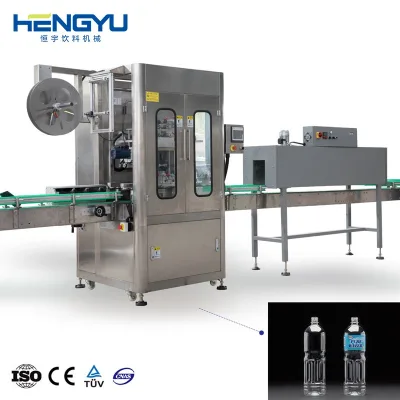
$5131.23 - $30787.39
MOQ: 1 sets


Factory High Speed Shrink Sleeve Label Making Machine of Cutting Machine
$4000.00 - $10000.00
MOQ: 1 Sets

$10000.00 - $15000.00
MOQ: 1 Sets

High Speed PVC Pet Rewinding Center Shrink Sleeve Label Making Machine
$12000.00 - $25000.00
MOQ: 1 Sets
Comprehensive Sourcing Guide
Strategic Sourcing Guide for Automatic PVC Label Making Machines
Understanding the Technical Landscape of Automated Labeling Systems
When sourcing an Automatic PVC Label Making Machine, buyers must first distinguish between the specific manufacturing processes involved. The market often conflates label printing with label application. Based on the available product data, the core keyword "Automatic PVC Label Making Machine" often intersects with high-speed Packaging Sealing Machines and Sleeve Labeling Machines designed for the final application of PVC or film-based labels onto containers. The technical specifications observed in the current supply base reveal a diverse range of configurations, from horizontal to vertical structures, each suited for different production line layouts.
The structural orientation of the machine is a primary technical differentiator. Some units are designed with a Horizontal structure, which may be preferable for specific conveyor integration or space-constrained environments. In contrast, other models feature a Vertical structure, often optimized for gravity-fed bottle feeding or specific sleeve application geometries. For instance, one observed model, designated as DH-E01, utilizes a horizontal configuration, while another, DH-DM12, employs a vertical setup. The choice between these structures dictates the footprint and the flow of materials through the production line.
Furthermore, the automation level is a critical technical parameter. The supply data indicates the availability of both Automatic and Semi-Automatic grades. An Automatic Grade machine typically integrates servo-driven mechanisms for continuous operation, whereas a Semi-Automatic variant may require operator intervention for specific stages like bottle loading or label feeding. The ZHA-300 model, for example, is classified as an Automatic Vertical Round Bottle Labeling Machine, suggesting a high degree of integration for round container applications. Buyers must verify if the machine's Driven Type is purely Electric or if it incorporates pneumatic elements, as some data points list Air Pressure requirements (e.g., 6kg), indicating a hybrid drive system that requires compressed air infrastructure.
Compliance and Certification Verification Protocols
In the B2B industrial sector, compliance is not merely a formality but a prerequisite for market access and operational safety. When evaluating potential suppliers for automatic labeling equipment, the verification of certifications must be rigorous. The observed product data confirms that CE certification is a common attribute among listed machines, indicating compliance with European health, safety, and environmental protection standards. Some listings explicitly pair CE with ISO certification, suggesting a broader adherence to international quality management systems.
However, buyers should not assume that every machine in a catalog possesses these credentials. The presence of a certification claim in a product description is an observation, not a guaranteed fact for every unit. Procurement teams must request valid, current certificates directly from the supplier. It is essential to verify that the CE marking corresponds to the specific machine model and that the ISO certification covers the manufacturing facility, not just the product design. Additionally, while some data references CE as a standard for the machine's prod_standard, buyers must ensure this aligns with the regulatory requirements of their specific destination market. For instance, machinery intended for export to North America may require UL or ETL certification, which is not mentioned in the current data set.
The prod_origin of the machinery also plays a role in compliance. Many units listed originate from Dongguan or Ruian, China, regions known for their manufacturing clusters. While these locations are hubs for machinery production, the origin does not automatically guarantee compliance. Buyers must cross-reference the country of origin with the specific certification documents provided. The Wooden Case Packing or Wooden Package mentioned in the specifications is a standard for international shipping, but the treatment of the wood (e.g., ISPM 15 compliance) should also be verified to prevent customs delays.
Cost Drivers and Pricing Structure Analysis
The pricing of automatic PVC label making machines is influenced by a complex array of factors, including automation level, motor specifications, and structural complexity. The observed price range in the market spans from 0 to 40,000 USD, a variance that reflects the difference between basic semi-automatic units and fully integrated, high-speed automatic systems. This wide range indicates that a "one-size-fits-all" budget approach is ineffective.
A primary cost driver is the Power consumption and the Servo Motor configuration. Machines equipped with multiple Servo Motors (e.g., 4PCS noted in some specifications) command a higher price due to the precision and reliability they offer. These motors enable Loadcell Auto Tension control, which is critical for maintaining consistent label application on varying bottle diameters. In contrast, machines with lower power ratings, such as 500W or 1000W, may be more affordable but could lack the torque required for high-speed, heavy-duty applications.
The Voltage requirements also impact cost and installation expenses. The data shows options for 220V, 380V, or Customized voltage configurations. A machine requiring 380V three-phase power may necessitate additional electrical infrastructure upgrades at the buyer's facility, adding to the total cost of ownership. Conversely, 220V single-phase units are more versatile for smaller facilities but may have limitations on power output.
The MOQ (Minimum Order Quantity) is another significant financial consideration. The observed MOQ range spans from 1 to 10,000 units, though this likely refers to the production capacity or batch size rather than the purchase of the machine itself. For the machinery purchase, buyers should clarify if the supplier offers a single-unit purchase or requires a bulk order for custom configurations. Customization is listed as Available, which often incurs additional engineering and tooling costs. Buyers must factor in these variable costs when comparing the base price of a standard model against a customized solution.
Typical Applications and Material Compatibility
The versatility of automatic labeling machines is a key selling point, with applications spanning a vast array of industries. The product data highlights a broad Application scope, including Vegetable, Fruit, Tea, Drinks, Dairy Products, Hair Care Products, Skin Care Products, Cosmetics, and Oil. This indicates that the machinery is designed to handle diverse container shapes and sizes, from rigid plastic bottles to glass jars.
The Packaging Material compatibility is equally critical. The observed specifications mention Film as the primary material, which aligns with the use of PVC or shrink sleeves. The Packaging Material Mechanical Properties are described as Flexible Container Sealing, suggesting the machine's ability to handle the elasticity and tension of film-based labels without tearing or misalignment. The Type of machine is often specified as a Packaging Sealing Machine or Sleeve Labeling Machine, confirming their role in the final packaging stage.
The Max Speed of Working is a performance metric that directly correlates with production volume. One observed model boasts a speed of 300m/Min, which is suitable for high-volume beverage or cosmetic production lines. However, buyers must ensure that this speed is sustainable for their specific product type. For example, labeling heavy glass bottles may require a slower speed to prevent breakage, whereas lightweight plastic bottles can often tolerate higher speeds. The Work Journey dimensions, such as 60400120mm, provide insight into the maximum label size the machine can accommodate, which is vital for ensuring the machine meets the specific branding requirements of the product.
Supplier Evaluation and Operational Capabilities
Evaluating a supplier for automatic labeling equipment requires a deep dive into their operational capabilities and track record. The prod_origin data points to specific manufacturing hubs like Dongguan, Guangdong and Ruian, China. While these regions are known for their industrial output, buyers should verify the supplier's actual production capacity and quality control processes. The Condition of the machines is listed as New, but buyers must confirm the manufacturing date and the warranty terms associated with new equipment.
The Customization attribute is a strong indicator of a supplier's flexibility. The availability of Customized options suggests that the supplier can adapt the machine to specific client needs, such as unique voltage requirements or specialized label feeding mechanisms. However, customization introduces complexity. Buyers should assess the supplier's engineering team's ability to deliver these custom solutions within a reasonable timeframe. The prod_packing method, typically a Wooden Case, is standard for protecting machinery during transit, but the supplier's experience in packaging and shipping fragile industrial equipment is also a factor.
When evaluating suppliers, buyers should also consider the Stock availability. Some listings indicate Stock: Yes, which implies immediate delivery for standard models. In contrast, customized models may require a longer lead time. The Weight of the machines, ranging from 350kg to 380kg in observed data, affects logistics and installation requirements. Suppliers who can provide detailed installation guides and on-site support are preferable, especially for heavy, complex machinery.
Quality Control and Long-Term Procurement Considerations
Ensuring the long-term reliability of an Automatic PVC Label Making Machine requires a robust quality control strategy. The Dimension of Whole Machine varies significantly, with some models measuring 3180mm x 1450mm x 1650mm, while others are more compact. Buyers must verify that the machine's dimensions fit their production floor and that the Standard dimensions (e.g., L1200W1000H1600MM) are accurate. Discrepancies in dimensions can lead to installation failures or operational bottlenecks.
Long-term procurement considerations include maintenance and spare parts availability. Machines with Servo Motors and Loadcell Auto Tension systems are sophisticated and require specialized maintenance. Buyers should inquire about the availability of spare parts and the supplier's technical support network. The Classification of the machine, such as Automatic Vertical Round Bottle Labeling Machine, suggests a specific use case, and the supplier should be able to provide training on operating and maintaining that specific classification.
Furthermore, the Air Pressure requirements, such as 6kg, must be compatible with the buyer's existing plant infrastructure. If the plant lacks the necessary compressed air supply, additional investment in air compressors will be required. The Voltage compatibility, whether 220V or 380V, must be confirmed to avoid electrical hazards. Finally, the Certification status, particularly CE and ISO, should be re-verified periodically to ensure ongoing compliance, especially if regulations change or if the machine is relocated to a different market.
Comparative Analysis of Machine Specifications
To facilitate informed decision-making, the following table summarizes key technical attributes observed in the current market data. This comparison highlights the diversity in specifications that buyers must navigate when selecting the right equipment.
| Feature | Model DH-E01 | Model DH-DM12 | Model ZHA-300 | Model ZHZ-300 |
|---|---|---|---|---|
| Structure | Horizontal | Vertical | Vertical | N/A |
| Automatic Grade | Automatic | N/A | Automatic | N/A |
| Power (W) | 1000 | 500W | N/A | N/A |
| Voltage | 220V380V/Customized | 220V | N/A | N/A |
| Weight | 380 Kg | 350kg | N/A | N/A |
| Certification | CE | ISO, CE | N/A | CE |
| Origin | Dongguan | Dongguan, Guangdong | Ruian, China | N/A |
| Application | General | General | Drinks, Cosmetics | N/A |
| Packing | Wooden Case | Wooden Case Packing | Wooden Package | Wood Package |
This table illustrates that while some models share common attributes like CE certification and Wooden Case packing, others differ significantly in power, voltage, and structure. Buyers must use this data as a starting point for verification rather than a definitive specification sheet. The prod_model numbers serve as unique identifiers, but the actual capabilities of a specific unit must be confirmed through direct communication with the supplier. By carefully analyzing these specifications against the buyer's specific production needs, procurement teams can select a machine that offers the optimal balance of performance, compliance, and cost-effectiveness.
FAQs
What certifications do automatic PVC label making machines typically have?
Many listed machines carry CE certification, and some models also include ISO certification. Buyers must verify that these credentials apply to the specific unit and request valid certificates directly from the supplier before purchase.
Which automation grades are available for these labeling machines?
The supply base offers both Automatic and Semi-Automatic grades depending on the model. Automatic units often integrate servo motors for continuous operation, while semi-automatic variants may require operator intervention for specific loading stages.
Can buyers customize voltage requirements for these machines?
Yes, customization is available for voltage configurations such as 220V, 380V, or other custom settings. Buyers should confirm specific electrical infrastructure needs to ensure the machine fits their facility's power supply capabilities.
What is the typical price range for automatic labeling equipment?
Observed prices range from 0 to 40,000 USD based on automation level and motor specifications. Higher costs are associated with units featuring multiple servo motors and advanced tension control systems compared to basic models.
How does machine structure affect the production line layout?
Machines are available in both Horizontal and Vertical structures to suit different line layouts. Horizontal units may fit space-constrained environments, while vertical setups are often optimized for gravity-fed bottle feeding and sleeve application.
What packaging materials are compatible with these sealing machines?
These machines handle film-based materials with flexible container sealing properties. They are designed for applications involving bottles and are suitable for sealing various packaging types including drinks, cosmetics, and dairy products.