Source Automatic Pyrolysis Rendering Machine for Tire and Plastic Recycling
Find and compare 30 Automatic Pyrolysis Rendering Machine listings from Chinese manufacturers. Evaluate options based on daily capacity, heating methods, and material compatibility for efficient waste-to-fuel processing.
Key considerations
Products List


Continuous Pyrolysis Machine Vary with Customizable Capacity 15-120 Tons/Day
$240000.00 - $2400000.00
MOQ: 1 Sets


$45000.00 - $120000.00
MOQ: 1 Pieces
SHANGQIU ZHONGQING ENVIRONMENTAL PROTECTION SCIENCE AND TECHNOLOGY CO., LTD.


Continuous Waste Tire Pyrolysis Machine
$300000.00 - $500000.00
MOQ: 1 Sets
SHANGQIU ZHONGQING ENVIRONMENTAL PROTECTION SCIENCE AND TECHNOLOGY CO., LTD.

Fully Automatic Continuous Pyrolysis Plant
$300000.00 - $1000000.00
MOQ: 1 Sets
SHANGQIU ZHONGQING ENVIRONMENTAL PROTECTION SCIENCE AND TECHNOLOGY CO., LTD.


High-Quality PLC Control System Stable Operation Automatic Pyrolysis
$39500.00 - $39800.00
MOQ: 1 Pieces
Shangqiu Mingsen Environmental Protection Equipment Co., Ltd.


No Releasing Harmful Plastic to Oil Automatic Pyrolysis
$39500.00 - $39800.00
MOQ: 1 Pieces
Shangqiu Mingsen Environmental Protection Equipment Co., Ltd.


Easy to Operate Eco-Friendly Fast Response Pyrolysis Diesel
$39500.00 - $39800.00
MOQ: 1 Sets
Shangqiu Mingsen Environmental Protection Equipment Co., Ltd.


Touch screen Pyrolysis Desorption Apparatus thermal pyrolysis desorption instrument machine
$12000.00 - $25000.00
MOQ: 1 Pieces
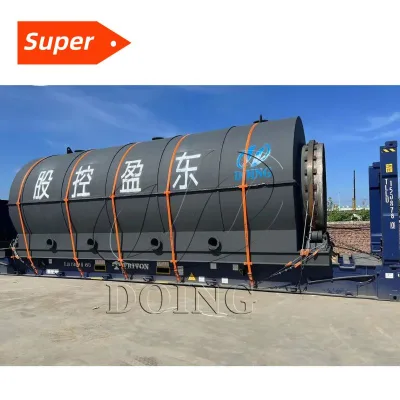


Automatic Continuous Tyre and Plastic Automatic Continuous Tyre and Plastic Pyrolysis
$588000.00 - $1505000.00
MOQ: 1 Sets

Unuseful Tyre Catalytic Pyrolysis Facility/Continuous and Automatic with Large Capacity
$588000.00 - $1505000.00
MOQ: 1 Sets

Full Auto Continuous Production Waste Tire Derived Fuel Oil Machine
$588000.00 - $1505000.00
MOQ: 1 Sets

Full Auto Continuous Production Waste Tire Derived Fuel Oil Machine
$588000.00 - $1505000.00
MOQ: 1 Sets

Flameless Waste Incinerator Pyrolysis Equipment Respecting Environment
$30000.00 - $3000000.00
MOQ: 1 Sets
Comprehensive Sourcing Guide
Automatic Pyrolysis Rendering Machine Sourcing Guide
The Automatic Pyrolysis Rendering Machine represents a specialized class of industrial equipment designed to convert waste materials such as tires, rubber, and plastic into usable oil and carbon black through thermal decomposition. These systems operate by heating raw materials in an oxygen-free environment, a process known as pyrolysis, to break down complex hydrocarbons into smaller molecules. The automation features observed in current listings indicate a shift toward semi-continuous or fully automatic operation, reducing the need for manual intervention during the feeding and discharge phases. Buyers should recognize that these machines are primarily engineered for the recycling sector, aiming to transform non-condensable gases and solid waste into valuable energy sources and raw materials.
Procurement of this machinery requires a clear understanding of the specific output requirements, as the equipment is often customized to handle varying feedstock types and capacities. The observed product range includes units capable of processing between 5 and 240 tons per day, with specific models tailored for tire oil extraction or general plastic and rubber recycling. The distinction between direct and indirect heating methods is critical, as it influences the purity of the output oil and the safety profile of the operation. Buyers must align their selection with their specific waste stream characteristics, ensuring the machine's heating method and reactor design match the intended raw material composition.
Product Scope and Observed Listing Signals
The market for automatic pyrolysis rendering machines displays a wide variance in capacity and configuration, ranging from compact 5-ton daily units to large-scale industrial plants capable of 240 tons per day. Listings frequently highlight the ability to customize the reactor size and overall structure, with horizontal configurations being the standard design for these units. The observed price signals suggest a significant investment, with costs varying based on the scale of the reactor, the complexity of the condensation system, and the inclusion of auxiliary equipment like smoke scrubbers. Buyers should note that while some units are listed with specific model numbers like ZQ-TP10 or ZQ-TP20, the actual specifications often require verification against the buyer's specific throughput needs.
A key signal in the product listings is the emphasis on the material composition of the reactor and the flexibility of the fuel requirements. Many units are constructed from high-grade steel such as Q245r or Q345r, with options for customization to meet specific durability demands. The fuel requirement varies by model; some systems are designed to operate without external fuel by utilizing non-condensable gas generated during the process, while others may require natural gas, light diesel oil, or fuel oil for initial heating. This distinction is vital for operational cost analysis, as the energy source directly impacts the long-term efficiency and sustainability of the rendering process.
Technical Specifications to Verify
When evaluating the technical specifications of an Automatic Pyrolysis Rendering Machine, the reactor thickness and dimensions are primary indicators of durability and safety. Verified data points include reactor wall thicknesses ranging from 16mm to 18mm, with specific dimensions such as 22007700mm or 26006600mm being common configurations. Buyers must verify that the reactor material matches the intended service life, with many units boasting a service life of 15 years or more when constructed from appropriate steel grades. The condenser and smoke scrubber dimensions, such as Dn630mm and Dn1000mm respectively, are also critical for ensuring efficient cooling and emission control, directly affecting the quality of the recovered oil and compliance with environmental standards.
The operational parameters, including voltage, power consumption, and heating methods, must be scrutinized to ensure compatibility with the buyer's facility infrastructure. Standard voltage requirements are often listed as 380V, with power consumption ranging from 10 to 15kw for specific components, though total system power may vary based on capacity. The heating method, whether indirect or direct, and the ability to maintain an adjustable constant temperature are essential for controlling the pyrolysis reaction rate. Additionally, the oil output ratio, typically observed between 40% and 45% for tire feedstock, should be confirmed against the specific raw material being processed to ensure the projected yield meets economic expectations.
Compliance and Safety Documentation
Ensuring that the Automatic Pyrolysis Rendering Machine complies with international and local environmental regulations is a non-negotiable aspect of the procurement process. The observed listings indicate that these machines are designed to meet emissions standards for China, the EU, and other international jurisdictions, often utilizing advanced smoke scrubbers and cooling systems to minimize pollutants. Buyers must request detailed documentation proving that the emission control systems, including the specified Dn1000mm scrubbers, have been tested and certified to meet the specific regulatory thresholds of their operating region. Without this verification, the risk of regulatory fines or operational shutdowns due to non-compliance is significant.
Safety certifications and structural integrity documentation are equally critical for the safe operation of high-temperature pyrolysis units. The presence of ISO and CE certifications in the product attributes suggests a baseline adherence to safety and quality management systems, but buyers should verify the scope of these certifications to ensure they cover the specific machinery model being purchased. The warranty terms, which vary between one and two years, serve as a proxy for the manufacturer's confidence in the product's reliability. It is essential to review the warranty conditions carefully, as they often dictate the scope of coverage for critical components like the reactor and heating systems, which are subject to high thermal stress.
Cost Drivers and Commercial Terms
The total cost of ownership for an Automatic Pyrolysis Rendering Machine is driven by several factors, including the reactor capacity, material quality, and the level of automation integrated into the system. The observed price range of 4,000 to 47,000,000 USD reflects the vast difference between small-scale units and large industrial plants, with costs escalating significantly as capacity increases and customization options are added. Buyers should analyze the cost per ton of daily capacity to determine the most economical option for their specific production volume, rather than focusing solely on the total unit price. The inclusion of modular installation features and the choice between containerized or bulk packing can also influence the final landed cost.
Commercial terms such as the minimum order quantity (MOQ) and payment conditions are generally favorable in this sector, with many suppliers offering an MOQ of just one unit. This flexibility allows buyers to start with a single unit and scale up as their operations grow, reducing the initial financial barrier to entry. However, the lead time and delivery terms, which are not explicitly detailed in the provided facts, require direct negotiation with the supplier. Buyers should clarify whether the price includes the cost of the reactor, condenser, and scrubber assembly, or if these are quoted separately, as this can significantly impact the budget planning for the project.
Supplier Qualification and Quality Control
Selecting a qualified supplier for an Automatic Pyrolysis Rendering Machine requires a thorough assessment of their manufacturing capabilities and quality control processes. The observed product origins, including Hunan, Changsha, and Shangqiu in China, indicate a concentration of manufacturing expertise in these regions, but buyers should verify the specific factory's track record and production capacity. The availability of customization options suggests that suppliers are willing to adapt the machine design to specific client needs, but this requires a robust engineering team to ensure that modifications do not compromise the structural integrity or safety of the unit.
Quality control measures should extend beyond the final inspection to include the sourcing of raw materials and the fabrication process. The use of specific steel grades like Q245r and Q345r for the reactor and optional components is a positive indicator, but buyers should request mill certificates to verify the material composition. The warranty period, typically ranging from one to two years, is a key metric for supplier confidence, but it should be supported by a clear after-sales service plan that includes technical support and spare parts availability. Buyers should also inquire about the installation model, whether it is modular or assembled boiler, to ensure the supplier can provide adequate on-site guidance during the setup phase.
Long-Term Procurement Checks
Long-term procurement success for automatic pyrolysis rendering machines depends on the establishment of a reliable supply chain for spare parts and ongoing technical support. Given the high-temperature and high-stress nature of the pyrolysis process, components such as the reactor, condenser, and heating elements are subject to wear and tear over time. Buyers should negotiate a long-term agreement with the supplier that guarantees the availability of critical spare parts, particularly those made from specialized materials like Q345r, to minimize downtime during the machine's service life. The observed service life of 15 years or more underscores the importance of a proactive maintenance strategy supported by the supplier.
Continuous monitoring of the machine's performance and compliance with evolving environmental standards is essential for maintaining operational efficiency. Buyers should implement a schedule for regular inspections and testing to ensure that the emissions control systems remain effective and that the oil output ratio remains consistent with the initial projections. The ability to customize the machine for future upgrades or changes in feedstock type is a valuable feature that should be leveraged to extend the machine's relevance and utility. By maintaining a close relationship with the supplier and staying informed about industry developments, buyers can ensure that their investment in automatic pyrolysis rendering technology remains a profitable and sustainable asset.
FAQs
What is the daily processing capacity of automatic pyrolysis rendering machines?
The daily processing capacity ranges from 5 to 240 tons per unit, depending on the specific model selected. Customizable options are available to match production needs, with common configurations offering 5, 10, 15, or 18 tons per day. This flexibility allows businesses to scale operations efficiently based on raw material availability and output requirements.
Can the machine handle multiple types of raw materials?
Yes, the equipment is designed to process various materials including tires, plastic, rubber, and oil sludge. The system supports indirect or direct heating methods to accommodate different feedstock characteristics. This versatility ensures efficient pyrolysis treatment for diverse waste streams, maximizing resource recovery and operational adaptability.
What certifications do these automatic pyrolysis machines hold?
These machines typically hold ISO and CE certifications, ensuring compliance with international safety and quality standards. The emissions also comply with Chinese, EU, and other international regulations. These credentials verify that the equipment meets rigorous manufacturing and environmental performance criteria for global deployment and operational safety.
How is the heating method controlled in the reactor?
The heating method is adjustable and can be indirect or direct, maintaining constant temperature control. Energy sources include non-condensable gas, natural gas, light diesel oil, wood, coal, or fuel oil. This adjustable system ensures stable pyrolysis conditions, optimizing oil output rates and energy efficiency during continuous or semi-continuous operation.
What is the expected service life and warranty period?
The service life is generally 15 years or more, with warranty periods of 1 to 2 years depending on the supplier. The reactor is constructed from durable materials like Q245r or Q345r steel. This longevity and support structure ensure reliable long-term performance for industrial waste processing applications with minimal downtime.
Is the installation process complex for new buyers?
Installation is simplified through modular or assembled boiler designs, often shipped in containers or bulk. The system features automatic operation and semi-continuous functionality to reduce manual intervention. This streamlined setup minimizes on-site assembly time, allowing for quicker commissioning and faster return on investment for new facility operators.