Source Automatic Small Gold Washing Machine for mining, prospecting, and recycling
Compare 30 listings for the Automatic Small Gold Washing Machine featuring capacities from 1 to 800 tons per hour. Buyers can evaluate specifications like voltage, power, and certification standards to find suitable units for ore washing and separation tasks.
Key considerations
Products List


Small-Scale Gold Washing Machine with Portable-Operation for Desert-Gold-Mining
$26800.00 - $28800.00
MOQ: 1 Sets


50 Tph Gold Washing Machine with Water-Recycling-System for Small-Miners
$26800.00 - $28800.00
MOQ: 1 Sets

Large-Scale Gold Washing Machine with Portable-Operation for River-Gold-Mining
$35800.00 - $38800.00
MOQ: 1 Sets

Large-Scale Gold Washing Machine with Material-Washing for River-Gold-Mining
$42000.00 - $45000.00
MOQ: 1 Sets


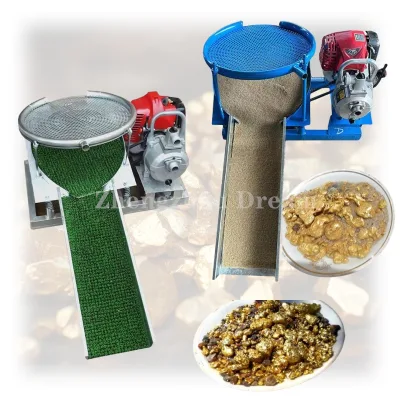


High-Quality Gold Washing Machine with Reliable After-Sales Support
$13000.00 - $14000.00
MOQ: 1 Pieces


High-Performance Gold Washing Machine for Enhanced Output and Support
$13000.00 - $14000.00
MOQ: 1 Pieces
Comprehensive Sourcing Guide
Strategic Sourcing Guide for Automatic Small Gold Washing Machines
Understanding the Technical Landscape and Core Specifications
When sourcing an Automatic Small Gold Washing Machine, buyers must first navigate a complex array of technical specifications that define the machine's capability and suitability for specific mining environments. The market offers a diverse range of models, often categorized by their primary function, such as the Diamond Washing Plant, rotary scrubber machine, or Trommel Screen. These variations are not merely cosmetic; they dictate the operational efficiency and the type of ore that can be processed. For instance, the "Small Gold Washing Machine" is frequently designed with a specific focus on gravity separation, distinguishing it from larger-scale industrial plants that may rely on chemical leaching or flotation.
A critical parameter to evaluate is the production capacity, which varies significantly across available units. Data indicates that capacities can range from 1 to 200 tons per hour, with some specialized models extending up to 800 tons per hour. This wide spectrum requires the buyer to align the machine's throughput with their actual mining volume. A unit rated for 100 tons per hour may be ideal for a medium-sized operation, whereas a smaller unit with a capacity of 1 to 800 tons per hour might be necessary for fluctuating ore grades or seasonal mining peaks. The feeding density is another vital technical constraint, typically observed in the range of 30% to 50%. Ensuring the machine can handle this density without clogging is essential for maintaining continuous operation.
Power consumption and voltage requirements are equally decisive factors. The electrical infrastructure of the mining site must be compatible with the machine's power needs. Available units often operate on a standard 380V voltage, with power ratings spanning from 15 to 55 kilowatts. This range suggests that while some models are designed for energy efficiency, others may require substantial power input to drive heavy-duty components like the rotary scrubber or the trommel screen. The rotation speed, observed at specific instances like 27.6 revolutions per minute, directly influences the separation efficiency. Buyers should verify that the rotation speed is adjustable or optimized for the specific particle size of their ore, which can range from 0-2mm to 0-6mm.
The physical dimensions and weight of the equipment are practical considerations for logistics and site installation. Some units are compact, with dimensions around 6 meters in length, 2 meters in width, and 2 meters in height, and weigh less than 1 ton, making them suitable for remote or mobile operations. Conversely, other heavy-duty models may weigh up to 2 tons. The material composition, often carbon steel with heat-resistant features, ensures durability in harsh mining conditions. The output size, which can be customized to specific requirements like 0-6mm or 0-2mm, must be matched to the downstream processing needs of the buyer.
Compliance, Certification, and Regulatory Standards
In the B2B procurement of industrial machinery, compliance with international standards is not optional; it is a prerequisite for safety and market access. The supplied data highlights that many automatic small gold washing machines come with CE and ISO9001 certifications. These certifications indicate that the manufacturing process adheres to specific quality management systems and that the product meets European safety, health, and environmental protection requirements. However, it is crucial for buyers to verify that these certifications are current and applicable to the specific model being purchased, as certification status can vary between different product lines.
The origin of the machinery is a significant factor in determining the regulatory framework it must satisfy. A substantial portion of these machines originates from Ganzhou, Jiangxi, China, a region known for its mining equipment industry. While this location offers competitive pricing and a mature supply chain, it also necessitates a thorough review of the export standards. The products are typically packed according to export packing standards or shipped nude in containers, which affects the cost and risk of transit damage. Buyers should ensure that the packaging is robust enough to protect the machinery during long-distance shipping, especially given the heavy nature of the equipment.
Furthermore, the standard of the product itself can differ based on the model. Some units are described as "complete" or "based on model," suggesting that the level of compliance and feature set may vary. It is imperative for procurement teams to request specific documentation proving that the machine meets the safety standards of the destination country. For instance, if the machine is to be used in North America or Asia, local regulations regarding noise, emissions, and electrical safety must be met. The presence of a CE mark is a strong indicator, but it should be accompanied by a valid test report or declaration of conformity.
The warranty period is another aspect of compliance and risk management. The observed warranty terms range from 1 year to 2 years. A longer warranty period often reflects the manufacturer's confidence in the durability and quality of their product. Buyers should carefully review the terms of the warranty, including what components are covered, the duration of coverage, and the process for claiming repairs or replacements. This is particularly important for critical components like the trommel screen or the gravity separator, which are subject to high wear and tear.
Cost Drivers and Total Cost of Ownership Analysis
The price range for automatic small gold washing machines is vast, spanning from 160 to 160,000 USD. This enormous variance is driven by several key factors, including capacity, power rating, material quality, and the level of automation. A unit priced at the lower end of the spectrum may be a basic model with a lower capacity and simpler mechanical design, suitable for small-scale or artisanal mining operations. In contrast, a unit at the higher end likely features advanced automation, higher throughput, and more durable materials, making it suitable for large-scale industrial applications.
Buyers must look beyond the initial purchase price to understand the total cost of ownership (TCO). This includes installation costs, energy consumption, maintenance expenses, and the cost of spare parts. Machines with higher power ratings, such as those in the 15-55kW range, will incur higher electricity costs. However, if these units offer superior energy-saving features, the long-term savings may offset the initial investment. The energy-saving attribute is a critical consideration, as it directly impacts the operational budget over the life of the machine.
Another significant cost driver is the customization level. The availability of customization allows buyers to tailor the machine to their specific ore characteristics, but it often comes at a premium. Customized units may require longer lead times and higher upfront costs compared to standard models. However, the investment in customization can lead to higher recovery rates and reduced waste, ultimately improving the profitability of the mining operation. The market for these machines includes regions like Asia, Africa, and North America, where the cost of labor and regulatory compliance can also influence the final price.
The lead time for delivery is another factor that affects the overall cost and project timeline. Some suppliers offer immediate delivery with a lead time of just 2 days for in-stock items, while others may have longer production schedules. The ability to source a machine quickly can be crucial for projects with tight deadlines. However, buyers should be cautious of suppliers promising unrealistically short lead times, as this may indicate a lack of quality control or the use of substandard components.
Typical Applications and Operational Scenarios
The application of automatic small gold washing machines is diverse, ranging from small-scale alluvial gold mining to larger industrial operations. The primary usage is for ore washing and separation, where the machine separates gold particles from sand, gravel, and other impurities. The specific application depends on the type of ore and the desired output size. For example, the "Diamond Washing Plant" is designed for processing diamond-bearing ores, while the "Small Gold Washing Machine" is optimized for gravity separation of gold particles.
The feeding density of 30% to 50% is a critical parameter for these applications. In scenarios where the ore is wet and sticky, the machine must be able to handle the high density without clogging. The rotation speed of the trommel screen or rotary scrubber must be adjusted to ensure effective separation. In some cases, the output size may need to be fine-tuned to 0-2mm or 0-6mm to meet the requirements of downstream processing equipment. The ability to handle a wide range of capacities, from 1 to 800 tons per hour, makes these machines versatile for different mining scales.
The market for these machines is global, with significant demand in Asia, Africa, and North America. In Africa, where artisanal and small-scale mining is prevalent, the compact and portable nature of these machines is highly valued. In Asia, the demand is driven by the need for efficient processing of large volumes of ore. In North America, the focus is often on compliance with strict environmental and safety regulations. Buyers should consider the local mining conditions, such as the climate and terrain, when selecting a machine. For instance, a machine used in a hot and dry climate may require different cooling and lubrication systems compared to one used in a humid environment.
Supplier Evaluation and Quality Assurance Protocols
Evaluating suppliers for automatic small gold washing machines requires a rigorous approach to ensure the quality and reliability of the equipment. The brand name "Gelin" is mentioned in the context of some products, indicating a specific manufacturer in the market. However, buyers should not rely solely on brand reputation but should conduct a comprehensive due diligence process. This includes verifying the supplier's production capabilities, quality control systems, and after-sales support.
One of the key indicators of a reliable supplier is the provision of testing services. The availability of testing as a service suggests that the supplier is confident in the performance of their machines and is willing to demonstrate their capabilities. Buyers should request test reports or performance data to validate the claims made by the supplier. The condition of the product, typically listed as "New," should be verified through physical inspection or third-party quality assurance.
The warranty period is another important factor in supplier evaluation. A supplier offering a 2-year warranty is generally more reliable than one offering only 1 year, as it indicates a higher level of confidence in the product's durability. Buyers should also check the supplier's track record in terms of delivery times and customer satisfaction. The ability to provide a "complete" standard or a model-specific standard is a sign of a supplier's attention to detail and commitment to quality.
Quality control should be integrated into the procurement process from the beginning. Buyers should establish clear quality standards and specifications before placing an order. This includes defining the acceptable range for parameters such as capacity, power consumption, and output size. Regular inspections and audits during the manufacturing process can help identify and address any quality issues before the machine is shipped. The use of standard packaging, such as export packing standards or container shipping, is essential to protect the machine during transit.
Long-Term Procurement Considerations and Maintenance Strategy
Sourcing an Automatic Small Gold Washing Machine is not just a one-time transaction; it is the beginning of a long-term relationship with the supplier. Buyers should consider the long-term implications of their procurement decisions, including maintenance, spare parts availability, and technical support. The condition of the machine, typically "New," will degrade over time, and regular maintenance is essential to ensure optimal performance and longevity.
The warranty period, whether 1 or 2 years, should be viewed as a starting point for the maintenance strategy. Buyers should develop a proactive maintenance plan that includes regular inspections, lubrication, and part replacements. The availability of spare parts is crucial for minimizing downtime. Suppliers who offer a comprehensive range of spare parts and have a local presence or a reliable logistics network can significantly reduce the risk of prolonged downtime.
The customization options available, such as the ability to adjust the rotation speed or output size, should be leveraged to optimize the machine's performance over time. As the mining operation evolves, the machine may need to be adapted to new requirements. A supplier that offers ongoing technical support and training can help buyers maximize the value of their investment. The energy-saving features of the machine should also be monitored to ensure they are delivering the expected benefits.
Finally, buyers should consider the environmental impact of their procurement decisions. The use of carbon steel and heat-resistant materials is a positive step, but buyers should also evaluate the machine's energy efficiency and its potential for recycling at the end of its life. By choosing a supplier that prioritizes sustainability and quality, buyers can ensure that their mining operations are both profitable and environmentally responsible. The market's focus on Asia, Africa, and North America highlights the global nature of this industry, and buyers should be prepared to navigate the complexities of international trade and regulatory compliance.
FAQs
What certifications do automatic small gold washing machines have?
Many units carry CE and ISO9001 certifications to ensure safety and quality compliance. These standards verify that the manufacturing process meets international requirements for machinery used in mining environments.
How much does an Automatic Small Gold Washing Machine cost?
Prices range from 160 to 160,000 USD depending on capacity and features. Higher costs typically reflect advanced automation, larger throughput, or specialized customization for specific ore types.
Can I customize the capacity of the washing machine?
Yes, customization is available to tailor the machine to specific mining volumes. Capacities can be adjusted to fit needs ranging from 1 to 800 tons per hour based on request.
What is the lead time for delivery of these machines?
Some suppliers offer immediate delivery with a lead time of just 2 days for in-stock items. Other models may require longer production schedules depending on customization and manufacturing schedules.
Which countries supply these automatic gold washing machines?
Products originate primarily from Ganzhou, Jiangxi, China, a known hub for mining equipment. These machines are exported globally to markets in Asia, Africa, and North America.
What warranty periods are offered for the equipment?
Warranty terms typically range from 1 year to 2 years depending on the specific model. A longer warranty often indicates higher manufacturer confidence in the durability of components like the trommel screen.