Source Automatic Steel Mechanical Parking Equipment for Garages, Malls, Hospitals
Compare 28 Automatic Steel Mechanical Parking Equipment units from verified suppliers. Explore tower systems, robot parking, and two-post lifts with varying capacities and safety features for diverse commercial applications; compare the available evidence and request quotations based on your requirements.
Key considerations
Products List


Smart Parking Hydraulic Mechanical Car Parking Valet Parking Equipment
$1500.00 - $2000.00
MOQ: 1 unit


Automated Parking Innovative Horizontal Parking Equipment for Compact Vehicle Storage
$1360.00 - $1580.00
MOQ: 50 Sets


OEM Design Vertical Rotary Parking System Automatic Car Parking Equipment
$4500.00 - $4900.00
MOQ: 20 Pieces


Multilevel Parking Automatic Parking Equipment Car Parking System
$2000.00 - $5000.00
MOQ: 5 unit/units
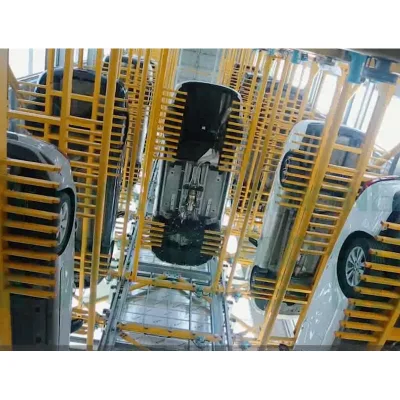

Multi-storey Car Mechanical Parking Equipment Vehicle Parking Lift System
$5000.00 - $11000.00
MOQ: 3 Pieces

Mechanical Tower Parking Equipment with High Efficiency Vehicle Storage and Retrieval
$1500.00 - $3000.00
MOQ: 1 Pieces

High Efficiency Mechanical Parking Garage Equipment for Modern Smart City Developments
$1500.00 - $3000.00
MOQ: 1 Pieces

Automatic Parking Equipment with Intelligent Identification and Convenient User Operation Features
$1500.00 - $3000.00
MOQ: 1 Pieces

Professional Automated Parking Equipment for Public Parking Facilities and Commercial Buildings
$1500.00 - $3000.00
MOQ: 1 Pieces

Intelligent Parking Lift Equipment with Flexible Configuration and Reliable Structural Stability
$1500.00 - $3000.00
MOQ: 1 Pieces

Smart Parking Equipment for Urban Infrastructure with Reliable Automatic Vehicle Handling System
$1500.00 - $3000.00
MOQ: 1 Pieces

Comprehensive Sourcing Guide
Automatic Steel Mechanical Parking Equipment Sourcing Guide
Procuring Automatic Steel Mechanical Parking Equipment requires a strategic approach that balances spatial efficiency with operational reliability. Buyers must first define their specific capacity needs, as systems can accommodate up to 120 vehicles per unit, making them suitable for high-density urban environments. The choice between tower parking systems and robot parking solutions depends heavily on the available footprint and the desired throughput. Understanding these fundamental distinctions ensures that the selected technology aligns with the project’s architectural constraints and user flow requirements.
The procurement process also involves evaluating the mechanical design and lifting mechanisms that drive system performance. Options range from fully automatic operations controlled by IC cards to manual or half-automatic modes, offering flexibility for different user bases. Hydraulic and mechanical lifting mechanisms each present distinct advantages regarding speed and maintenance. Buyers should carefully assess the lifting speed, which typically ranges from 60 to 120 meters per minute, to ensure it meets the expected vehicle turnover rates without creating bottlenecks during peak usage hours.
Product Scope and Observed Listing Signals
The market for Automatic Steel Mechanical Parking Equipment presents a diverse range of configurations, including tower systems, two-post lifts, and four-post lifts. Observed listings indicate a price range from approximately $1,360 to $55,000, reflecting variations in complexity, capacity, and material quality. Minimum order quantities generally start at one unit, allowing for scalable procurement strategies. Buyers should note that while some products are marketed as robot parking systems, others are classified as traditional mechanical lifts, each serving different installation scenarios and budget constraints.
Vehicle compatibility is a critical factor in narrowing down product options. Most systems support standard SUVs and sedans with specific dimensional limits, such as a maximum length of 5,300mm and a width of 1,900mm. Height restrictions are also common, with available car heights typically ranging from 1,550mm to 2,050mm. Buyers must verify these dimensions against their target vehicle fleet to prevent operational issues. Additionally, the center inlet and outlet design is prevalent in tower systems, optimizing space utilization while maintaining smooth vehicle entry and exit flows.
Technical Specifications to Verify
When evaluating technical specifications, the load capacity and lifting height are paramount for safety and functionality. Observed data shows load capacities ranging from 2,000kg to 3,600kg, ensuring that heavier vehicles like large SUVs can be parked securely. The lifting height, often around 1,600mm to 1,840mm, must be sufficient to accommodate the vertical clearance of the parking structure. Buyers should verify that the chosen system’s usable platform width, which can be up to 2,100mm, provides adequate space for vehicle maneuvering without risking damage to the equipment or the vehicles.
The power supply and operational mode are also key technical considerations. Most systems require a three-phase, five-wire 380V 50Hz power supply, which must be available at the installation site. The operation mode, whether fully automatic, manual, or IC card-based, dictates the user experience and security level. Safety features such as overload protection, emergency stop buttons, and anti-collision sensors are essential for preventing accidents. Buyers should confirm that these features are integrated into the system’s design to ensure compliance with local safety regulations and to protect both the infrastructure and the parked vehicles.
Compliance and Safety Documentation
Compliance with international standards is a non-negotiable aspect of sourcing Automatic Steel Mechanical Parking Equipment. Certifications such as CE, ISO9001, and TUV indicate that the manufacturer adheres to rigorous quality and safety protocols. Buyers should request valid certification documents to verify that the equipment meets the regulatory requirements of their target market. These certifications not only ensure product quality but also provide legal protection and peace of mind for the end-user, reducing the risk of liability in case of equipment failure or accidents.
Safety documentation should also include detailed manuals and maintenance guidelines. The equipment typically comes with a warranty, often covering five years for the main structure and one year for parts, which reflects the manufacturer’s confidence in their product. Buyers should review the warranty terms carefully to understand what is covered and what requires additional service contracts. Additionally, the presence of safety features like fire suppression systems and automatic safety locks should be documented and verified to ensure that the system can handle emergency situations effectively and protect the parked vehicles from potential hazards.
Cost Drivers and Commercial Terms
The cost of Automatic Steel Mechanical Parking Equipment is influenced by several factors, including the system type, capacity, and customization options. Tower parking systems with higher capacities and advanced automation features tend to be more expensive than simpler two-post or four-post lifts. Customization availability allows buyers to tailor the system to specific site requirements, which can impact the final price. Buyers should obtain detailed quotes that break down the costs of the main structure, mechanical components, and any additional safety or automation features to ensure transparency in pricing.
Commercial terms such as payment methods, delivery schedules, and after-sales support are also critical considerations. The observed minimum order quantity of one unit suggests flexibility for small-scale projects, while larger orders may benefit from volume discounts. Buyers should negotiate clear terms regarding the delivery lead time and the packaging standards, which are typically designed for export to protect the equipment during transit. Additionally, understanding the warranty claims process and the availability of spare parts is essential for minimizing downtime and ensuring long-term operational efficiency.
Supplier Qualification and Quality Control
Supplier qualification is a crucial step in ensuring the reliability of Automatic Steel Mechanical Parking Equipment. Buyers should verify the supplier’s manufacturing capabilities, including their production facilities and quality control processes. Suppliers located in industrial hubs like Qingdao, China, often have established supply chains and experienced workforces. However, buyers should conduct due diligence to confirm the supplier’s reputation and track record in delivering high-quality parking systems. Requesting references from previous clients can provide valuable insights into the supplier’s performance and customer service.
Quality control measures should be clearly defined and agreed upon before placing an order. This includes inspections of raw materials, such as aluminum and steel components, and verification of the finishing processes like powder coating. Buyers should also ensure that the supplier conducts rigorous testing of the lifting mechanisms and safety features before shipment. Establishing a clear communication channel for addressing any quality issues during the manufacturing process can help prevent delays and ensure that the final product meets the specified requirements. Regular updates and progress reports from the supplier can further enhance transparency and trust.
Long-Term Procurement Checks
Long-term procurement checks focus on the sustainability and maintainability of the Automatic Steel Mechanical Parking Equipment. Buyers should consider the availability of spare parts and the ease of maintenance when selecting a system. A robust warranty and responsive after-sales support are essential for addressing any issues that may arise during the equipment’s lifecycle. Buyers should also evaluate the supplier’s commitment to continuous improvement and innovation, as this can lead to better performance and lower operating costs over time.
Regular maintenance and inspections are vital for ensuring the longevity and safety of the parking system. Buyers should develop a comprehensive maintenance plan that includes routine checks of the mechanical components, electrical systems, and safety features. Training for local staff on proper operation and basic troubleshooting can also reduce the risk of operational errors and extend the equipment’s lifespan. By prioritizing long-term procurement checks, buyers can maximize the return on investment and ensure a seamless parking experience for users.
FAQs
What is the maximum load capacity for the tower parking system?
The tower parking system supports a maximum load capacity of 2000kg. This mechanical lifting mechanism ensures safe operation for standard vehicles while maintaining structural integrity during automated cycles.
Can the system accommodate vehicles up to 5300mm in length?
Yes, the system accommodates vehicles up to 5300mm in length. It also supports widths up to 1900mm and heights between 1550mm and 2050mm, fitting most SUVs and sedans effectively.
Which safety features are included in the automatic parking unit?
The unit includes overload protection, fire suppression systems, emergency stop buttons, and anti-collision sensors. These features ensure operational safety during fully automatic lifting and parking cycles.
How is the parking system operated by users?
Users operate the system via code or IC card. The equipment supports fully automatic, half automatic, and manual working modes to provide flexibility for different operational requirements and user preferences.
What certifications does the automatic parking equipment hold?
The equipment holds CE, ISO, and TUV certifications. These standards verify compliance with international safety and quality requirements for the hydraulic cylinder and steel cable design used in the system.
What is the warranty coverage for the main structure?
The warranty covers five years for the main structure and one year for parts. This coverage applies to the hydraulic lifting mechanism and ensures long-term reliability for the parking facility.
Can the system be customized for specific installation needs?
Yes, customization is available for specific installation needs. The system is designed for outdoor use and can be configured with a center vehicle inlet and outlet to fit various site layouts.