Source Automatic Wood Sanding Machine for Plywood, Furniture, and Flooring
Find 30 automatic wood sanding machines from verified Chinese manufacturers. Compare models like ZDBS1300-4A and MH-SM-RR with variable speeds, CE/ISO certifications, and custom options for plywood thickness sanding and furniture finishing.
Key considerations
Products List


High-Performance Automatic Wood Sanding Machine for Superior Finishes
$6900.00 - $7200.00
MOQ: 1 Pieces

Wood Polishing Machine Brush Sanding Machine Wood Thinner Woodworking Machinery
$11900.00 - $12200.00
MOQ: 1 Pieces

Professional Wood Sanding Machine with CE Certification and Support
$10400.00 - $11000.00
MOQ: 1 Pieces


Sanding Machine for Solid Wood Furniture Polishing Machine Wood Sanding Machine
$2300.00 - $2500.00
MOQ: 1 Pieces

High Quality Automatic Wood Polish Sander Woodworking Sanding Machine Wood Brush Sanding Machine
$4900.00 - $5659.00
MOQ: 1 Pieces

Hot Sale Automatic Wood Sanding Machine Wood Furniture Sanding and Polishing Machine
$4900.00 - $5200.00
MOQ: 1 Pieces


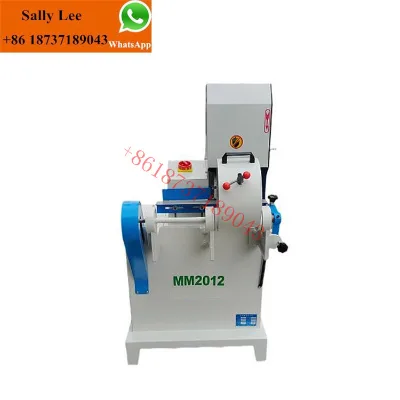


$70000.00 - $75000.00
MOQ: 1 Pieces
Comprehensive Sourcing Guide
Strategic Sourcing Guide for Automatic Wood Sanding Machines
Understanding the Technical Landscape of Automated Sanding
The acquisition of an Automatic Wood Sanding Machine represents a significant capital investment for manufacturers seeking to enhance throughput and surface finish consistency. In the current market, these machines are primarily categorized by their sanding mechanism and automation level. Buyers will frequently encounter models designated as "Belt Wood Sander" or "Disc Wood Sander," each serving distinct processing needs. The "Belt Wood Sander" is often favored for continuous planing and edge sanding, while the "Disc Wood Sander" provides a different contact pattern suitable for specific curvature or flat surface treatments.
A critical technical attribute to verify is the "Automatic Grade." The market presents a split between fully "Automatic" systems and "Semiautomatic" configurations. Fully automatic units, such as those with the model identifier ZDBS1300-4A, are designed for high-volume production lines where material handling is integrated directly into the sanding process. In contrast, semiautomatic models like the ZDBS1000-8BX may require more operator intervention for loading or unloading, offering flexibility for smaller batch runs. The "Working Way" is another essential specification; most modern units operate on an "Automatic" basis, ensuring consistent feed rates and pressure application.
Dimensional specifications are paramount when evaluating machine fit within a facility. The physical footprint of these machines varies significantly. For instance, specific models have standard dimensions recorded as 250018001800mm, while others, such as the ZDBS1000-6R, measure 210018002000mm. Larger industrial units, like the MH-SM-RR, can reach dimensions of 220031003050mm. Buyers must ensure their facility floor space and ceiling height accommodate these exact measurements. Furthermore, the "Sanding Width" is a functional constraint; observed ranges indicate capabilities from 40mm up to 1300mm, allowing for the processing of both narrow trim and wide plywood sheets. The "Sanding Thickness" capacity typically spans from 5mm to 100mm, defining the maximum material depth the machine can handle effectively.
Compliance and Certification Verification
In the global B2B market, regulatory compliance is not merely a formality but a prerequisite for market access and operational safety. When sourcing automatic wood sanding machines, buyers must rigorously verify the certification status of the equipment. The most frequently observed certifications in the current supply chain include CE and ISO. These marks indicate adherence to European safety standards and international quality management systems, respectively. Some listings also reference FDA certification, though this is less common for heavy machinery and may pertain to specific material contact components or safety interlocks rather than the entire mechanical assembly.
The presence of the CE mark is particularly critical for buyers operating in or exporting to the European Union, as it signifies that the machine meets essential health, safety, and environmental protection requirements. Similarly, ISO certification suggests that the manufacturer follows standardized procedures for quality control and production consistency. However, buyers should not assume that every listed product automatically satisfies all certification requirements. It is essential to request valid, up-to-date certificates from the supplier for the specific model number being purchased. For example, while one model might be listed with CE and ISO, another variant like the ZDR-R1000 might only carry CE certification. The absence of a specific certification on a listing does not necessarily mean the machine is non-compliant, but it requires explicit confirmation from the manufacturer before proceeding with a purchase order.
Cost Drivers and Pricing Structures
The pricing of automatic wood sanding machines is highly variable, influenced by a complex matrix of factors including automation level, physical dimensions, and customization options. The observed price range in the market spans from approximately 1 USD to 75,000 USD. This wide disparity indicates that the "1 USD" figure likely represents a nominal deposit, a component price, or a listing error rather than the full machine cost. Realistic procurement budgets should be aligned with the higher end of this spectrum, reflecting the heavy industrial nature of the equipment.
Several key drivers influence the final cost. First, the "Automatic Grade" is a primary cost determinant. Fully automatic systems with integrated conveyor feeds and automated pressure controls command a premium over semiautomatic or manual-feed alternatives. Second, the "Customization" factor plays a significant role. Many suppliers offer "Optional Upgrade" services or fully "Customized" configurations to meet specific production line requirements. These bespoke modifications, which may include unique sanding head arrangements or specialized control interfaces, will increase the unit price. Third, the "Packing" method affects logistics costs. Machines are typically shipped in "Plywood Cases" or "Wooden Boxes" to protect against transit damage. Some listings mention "Optional Wooden Bos" (likely a typo for Box), which implies that packaging can be tailored to the buyer's shipping needs, potentially adding to the cost.
The "Minimum Order Quantity" (MOQ) is another financial consideration. The observed MOQ range is 1 to 9,800 units. While an MOQ of 1 allows for single-unit procurement, a high MOQ suggests that the supplier may be a large-scale manufacturer expecting bulk orders or that the listing refers to a component rather than a complete machine. Buyers should clarify whether the MOQ applies to the entire machine or specific consumables like sanding belts or discs. Additionally, the "Target Audience" listed as "Wood Working Population, Wholesaler, Retailer" suggests that the market serves a diverse range of buyers, from small workshops to large industrial distributors, each with different pricing expectations and volume capabilities.
Typical Applications and Operational Scope
Automatic wood sanding machines are engineered to serve a broad spectrum of applications within the woodworking industry. The primary application identified is "Sanding Plywood Thickness," making these machines ideal for manufacturers producing plywood, laminated boards, and engineered wood products. The ability to handle a "Sanding Thickness" of up to 100mm allows these machines to process thick structural panels, while the lower limit of 5mm ensures they can also refine thin veneers without causing damage.
The "Working Heads" specification is crucial for understanding the machine's versatility. Models featuring "Two Heads" are particularly effective for simultaneous top and bottom sanding, ensuring parallelism and uniform thickness across the entire board. This dual-head configuration is essential for high-precision applications where surface flatness is critical. The "Variable Speed" attribute is another operational feature that enhances application flexibility. By allowing the operator to adjust the feed or sanding speed, the machine can be tuned for different wood densities, grain patterns, or desired surface finishes. This adaptability makes the equipment suitable for a "Wood Working Population" that includes furniture makers, flooring manufacturers, and cabinetry producers.
The "Character" of the machine, described as "Thick and Solid," implies a robust construction designed to withstand the rigors of continuous industrial operation. This structural integrity is necessary to maintain precision over long periods and to minimize vibration, which can affect the quality of the sanding finish. The "Latest Edition" status of some models suggests that buyers are accessing the most recent technological advancements, which may include improved dust extraction systems, energy-efficient motors, or more intuitive control panels.
Supplier Evaluation and Origin Considerations
When evaluating potential suppliers, the geographical origin of the machinery is a significant factor. The majority of the observed products originate from China, specifically from regions such as Qingdao, Shandong Qingdao, and Linyi City. Qingdao, in particular, is a major hub for industrial machinery manufacturing, known for its logistics capabilities and established supply chains. The specific origin, such as "Linyi City, China," may indicate a specialized cluster of woodworking machinery producers. Buyers should verify the exact location to assess the supplier's proximity to ports and their logistical efficiency.
Supplier evaluation should also focus on the "Condition" of the equipment. The market listings consistently indicate "New" condition, which is standard for direct procurement from manufacturers. However, buyers must confirm whether the "New" status includes all necessary accessories, such as sanding belts, dust collection hoses, and spare parts. The "Special Service" attribute, noted as an "Optional Upgrade," suggests that suppliers may offer additional support services such as installation, training, or extended warranties. These services can be valuable for buyers unfamiliar with the specific machinery or those operating in remote locations.
The "prod_packing" details, such as "Plywood Cases" or "Wooden Box," are indicators of the supplier's attention to detail. Proper packaging is essential for protecting the machine during international shipping. Buyers should inquire about the specific packaging standards to ensure the machine arrives without damage. Additionally, the "prod_standard" dimensions and weight specifications, such as a "Net weight: 2200kg" or a standard weight of "2500kg," are critical for planning freight logistics and determining the necessary lifting equipment at the destination facility.
Quality Control and Long-Term Procurement Strategy
Ensuring the long-term reliability of an Automatic Wood Sanding Machine requires a proactive approach to quality control. Buyers should prioritize suppliers who can provide detailed test results and performance data, although such data is not explicitly listed in the current market observations. Instead, buyers must request this information directly. Key performance indicators to verify include the "Driving-wheel velocity," which is observed at 1420r/min for certain models. This speed is a critical parameter for the machine's operational efficiency and should be matched against the buyer's production requirements.
Long-term procurement considerations also involve the availability of spare parts and maintenance support. The "Customization" and "Optional Upgrade" features suggest that the machine may have proprietary components. Buyers should ensure that the supplier has a robust supply chain for replacement parts to minimize downtime. The "Automatic Grade" of the machine also influences maintenance needs; fully automatic systems may require more specialized technical knowledge for troubleshooting compared to semiautomatic models.
Finally, buyers should establish a clear communication channel with the supplier regarding the "Target Audience" and specific application needs. By aligning the machine's capabilities with the buyer's production goals, such as "Sanding Plywood Thickness" or handling specific board dimensions, the procurement process becomes more efficient. The "Latest Edition" status of the equipment implies that the supplier is committed to innovation, which is a positive indicator for future support and upgrades. By carefully evaluating these factors, buyers can secure a reliable and efficient Automatic Wood Sanding Machine that meets their specific operational demands.
FAQs
What certifications do automatic wood sanding machines typically have?
Most models carry CE and ISO certifications, with some listings also showing FDA marks. Buyers should verify specific certificates for the exact model, as not every unit automatically satisfies all certification requirements listed in general descriptions.
Which sanding width and thickness ranges are available for these machines?
The observed sanding width ranges from 40mm to 1300mm, while thickness capacity spans 5mm to 100mm. These dimensions allow processing of both narrow trim and wide plywood sheets for various woodworking applications.
How does the automatic grade affect machine operation and cost?
Fully automatic systems like the ZDBS1300-4A offer high-volume production with integrated feeds, while semiautomatic models require more operator intervention. Fully automatic units generally command a higher price due to their advanced automation capabilities.
Can buyers request customization or optional upgrades for these machines?
Yes, customization is available, and optional upgrades can be selected to meet specific production line requirements. These bespoke modifications may include unique sanding head arrangements or specialized control interfaces that increase the unit price.
What are the standard packaging and shipping dimensions for these units?
Machines are typically packed in plywood cases or wooden boxes, with dimensions varying by model. For example, some units measure 2500*1800*1800mm, while larger industrial models can reach 2200*3100*3050mm, requiring careful facility planning.
Where are the primary manufacturing origins for these automatic sanding machines?
The majority of products originate from China, specifically from Qingdao, Shandong Qingdao, and Linyi City. Qingdao is a major hub known for logistics capabilities, while Linyi represents a specialized cluster of woodworking machinery producers.