Source Bamboo Fiber Antibacterial Cleaning Cloth for kitchen, vehicle, and glass
Compare 27 listings for Bamboo Fiber Antibacterial Cleaning Cloth suitable for kitchen, vehicle, and glass applications. Buyers can evaluate specifications like GSM, size, and customization options from verified suppliers in Jiangsu, China.
Key considerations
Products List


High Quality Hot Sale Microfiber Bamboo Cleaning Cloth for Kitchen Cleaning
$1.55 - $1.57
MOQ: 3000 Pieces


Topeco White Bamboo Fiber Cleaning Cloth Durable Anti-Bacterial Cleaner
$0.02 - $0.28
MOQ: 2000 Pieces


Kitchen Cleaning Cloth Dishes Cloths Bamboo Fiber Cleaning Towel Dishcloth
$0.20 - $0.23
MOQ: 2000 Pieces




Comprehensive Sourcing Guide
Strategic Sourcing Guide for Bamboo Fiber Antibacterial Cleaning Cloths
Understanding Material Composition and Functional Attributes
When sourcing bamboo fiber antibacterial cleaning cloths, the primary objective is to identify products that balance natural fiber benefits with the mechanical durability required for industrial and commercial cleaning tasks. The core material profile for these items often involves a specific blend rather than 100% bamboo, as pure bamboo fibers can lack the structural integrity needed for heavy-duty wiping. Based on observed market data, a high-performance composition frequently cited is 80% Polyester and 20% Polyamide. This blend leverages the softness and absorbency associated with bamboo-derived fibers while utilizing synthetic components to ensure the cloth retains its shape and cleaning efficiency after repeated washing.
The physical structure of the cloth is equally critical. Buyers should look for specific weave patterns, such as the "Microfiber Weft Lattice," which enhances surface area contact and liquid absorption. The weight of the fabric, measured in Grams per Square Meter (GSM), is a direct indicator of thickness and durability. Observed specifications in this category range from 180-350 GSM for lighter, general-purpose cloths to 300-400 GSM for more robust applications. A weight of 300 GSM is often considered a standard for heavy-duty vehicle or appliance cleaning, providing a balance between softness and scrubbing power.
It is essential to distinguish between the marketing term "bamboo fiber" and the actual chemical composition. While some products are marketed as "Bamboo Microfiber Cloth" or "Bamboo Fiber Cleaning Kit," the functional performance often relies on the microfiber technology embedded within the weave. The antibacterial claim, while a key search term, must be verified against specific test data or certifications rather than assumed based on the material name alone. The presence of bamboo in the blend may offer natural antimicrobial properties, but the synthetic polyester and polyamide components are primarily responsible for the mechanical removal of dirt and bacteria.
Technical Specifications and Performance Metrics
Defining the technical requirements for a procurement order requires a granular understanding of size, weight, and physical form factors. Standard dimensions for these cleaning cloths vary significantly based on their intended application. For general household or kitchen use, a size of 3030 cm is common, offering a compact tool for detailed cleaning. Conversely, for automotive detailing or large surface area cleaning, larger dimensions such as 4050 cm are preferred to reduce the number of strokes required.
The weight of the individual unit is another critical specification. While the fabric weight (GSM) determines the material density, the total item weight is relevant for logistics and shipping calculations. Observed data indicates that a single unit can weigh as little as 30 grams, while a complete kit or a heavier-duty cloth may weigh up to 800 grams. This variance suggests that buyers must clearly define whether they are purchasing individual cloths or bundled kits, as this impacts the total cost and shipping volume.
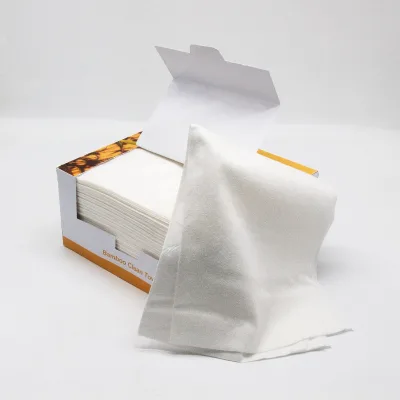
Packaging specifications also play a significant role in the product's readiness for retail or industrial distribution. Options range from simple polybags to more sophisticated packaging like color boxes, blister cards, and display boxes. The choice of packaging affects the perceived value of the product and its suitability for different sales channels. For instance, a "Box" or "Display Box" is ideal for retail environments where visual appeal drives sales, whereas "Polybag" or "Regular Packing" is more cost-effective for bulk industrial procurement.
The following table summarizes the observed technical specifications for bamboo fiber cleaning cloths in the current market:
| Specification Category | Observed Range / Options | Typical Application Context |
|---|---|---|
| Composition | 80% Polyester + 20% Polyamide | High durability, general cleaning |
| Fabric Weight | 180-350 GSM (Light); 300-400 GSM (Heavy) | Light duty vs. Auto/Appliance |
| Dimensions | 3030 cm; 4050 cm | Kitchen/Glass vs. Vehicle/Large surfaces |
| Item Weight | 30g (Single); 800g (Kit) | Logistics planning |
| Packaging | Polybag, Box, Blister Card, Display Box | Retail vs. Bulk Industrial |
| Color Options | Blue, Yellow, Green; Customized | Branding and color-coding |
Compliance, Certification, and Safety Verification
In the B2B procurement of cleaning textiles, compliance is not merely a formality but a critical risk management strategy. Buyers must verify that suppliers possess valid certifications that align with the destination market's regulatory requirements. Observed data highlights specific certifications such as BSCI (Business Social Compliance Initiative) and Azo-free status. BSCI certification indicates that the supplier adheres to social compliance standards regarding labor practices, which is increasingly important for corporate social responsibility (CSR) goals. The Azo certification confirms that the dyes used in the manufacturing process do not contain azo compounds, which are known to be carcinogenic and are banned in many jurisdictions.
While background knowledge often references standards like ISO 9001 for quality management or REACH for chemical safety in the European Union, these should not be assumed as present in every listing without explicit confirmation from the supplier. Buyers should request current, valid certificates for any claimed standard. The presence of "BSCI" and "Azo" in product listings suggests a baseline of compliance, but the absence of other certifications does not necessarily indicate non-compliance; it may simply mean the supplier has not listed them in the initial product description.
The "antibacterial" claim requires particular scrutiny. Unless the product has undergone specific testing against recognized standards for antimicrobial efficacy (such as JIS Z 2801 or AATCC 100), the term should be treated as a marketing attribute rather than a verified performance guarantee. Buyers should inquire about the specific mechanism of the antibacterial property—whether it is inherent to the bamboo fiber, added via a chemical treatment, or a result of the microfiber structure's ability to trap bacteria. Requesting test reports from independent laboratories is the most reliable method to validate these claims before placing a large order.
Cost Drivers and Minimum Order Quantity Analysis
The pricing structure for bamboo fiber cleaning cloths is influenced by several variables, including material composition, customization level, and order volume. The observed price range in the market spans from $0.02 to $13.00 per unit. This wide disparity is primarily driven by the distinction between a single basic cloth and a fully packaged, branded kit. A unit priced at $0.02 likely represents a bulk, unbranded item with minimal packaging, whereas a $13.00 item may include a premium box, custom logo printing, and a higher GSM weight.
Minimum Order Quantity (MOQ) is a significant factor in procurement planning. Data indicates that MOQs for these products typically range from 500 pieces to 20,000 pieces, with 500 PCS being a common entry point for many suppliers. However, some listings show MOQs as high as 3,000 or 10,000 PCS, particularly for customized orders involving specific logos or unique packaging. Buyers with smaller volume requirements should target suppliers with lower MOQs, though they may face a higher unit cost. Conversely, larger orders can often negotiate better pricing tiers, but the capital outlay and storage requirements increase.
Customization is a major cost driver. Services such as logo printing, custom color selection, and tailored packaging (e.g., specific box designs) add to the base cost of the product. While "Customized" is listed as an available attribute, the extent of customization directly impacts the lead time and unit price. Buyers must balance the desire for branding with the budget constraints, understanding that highly customized orders will require longer production cycles and higher minimums.
Supplier Evaluation and Operational Capabilities
Evaluating a potential supplier for bamboo fiber cleaning cloths requires looking beyond the product listing to assess operational reliability. Key indicators of a capable supplier include their production location, delivery timelines, and sample availability. The origin of these products is frequently listed as Jiangsu, China, a region known for its textile manufacturing infrastructure. Proximity to raw material sources and established supply chains in this region can facilitate faster production and lower logistics costs.
Lead times are a critical operational metric. Observed delivery times for these products range from 30 to 45 days for bulk orders. This timeline encompasses production, quality control, and shipping preparation. For buyers with tight deadlines, this lead time must be factored into the supply chain schedule. Additionally, sample lead times are typically shorter, ranging from 3 to 7 working days. This allows buyers to verify the quality of the material, the GSM weight, and the effectiveness of the antibacterial claims before committing to a large order.
Service quality is another dimension of supplier evaluation. Attributes such as "Excellent Service" and "Support" for logo printing suggest a supplier's willingness to accommodate buyer needs. However, buyers should verify these claims through direct communication. Questions regarding the supplier's capacity to handle rush orders, their return policies for defective goods, and their responsiveness to inquiries are essential. A supplier that offers "Customized Packing" and "Logo Printing" demonstrates flexibility, but the reliability of these services depends on their internal processes and quality control measures.
Quality Control and Long-Term Procurement Strategy
Implementing a robust quality control (QC) strategy is essential for maintaining the integrity of the bamboo fiber cleaning cloth supply. Given the variability in GSM and composition, buyers should establish clear acceptance criteria for incoming goods. This includes verifying the fabric weight using a GSM tester, checking the stitching quality of the edges, and ensuring the color consistency matches the approved samples. For products claiming antibacterial properties, periodic third-party testing should be scheduled to ensure the efficacy remains consistent over time.
Long-term procurement considerations involve building a sustainable relationship with suppliers that can adapt to changing market demands. The ability to customize colors, sizes, and packaging is a significant advantage for buyers looking to differentiate their products. However, this flexibility must be balanced with the need for consistency. Establishing a standard operating procedure (SOP) for reordering, including a fixed MOQ and agreed-upon lead times, can streamline the procurement process.
Buyers should also consider the environmental impact of their sourcing decisions. The "Sustainable" attribute observed in several listings aligns with growing market demand for eco-friendly products. Verifying the sustainability claims, such as the use of recycled materials or eco-friendly dyes, can enhance the brand value of the final product. Additionally, the "Stocked" attribute indicates that some suppliers maintain inventory, which can reduce lead times for urgent orders.
In conclusion, sourcing bamboo fiber antibacterial cleaning cloths requires a meticulous approach that balances technical specifications, compliance requirements, and cost considerations. By carefully evaluating material composition, verifying certifications, and understanding the cost drivers associated with customization, buyers can secure a supply chain that meets their quality and operational needs. The observed data provides a solid foundation for making informed decisions, but continuous verification and communication with suppliers remain the keys to successful procurement.
FAQs
What is the composition of the bamboo fiber cleaning cloth?
The cloth is composed of 80% polyester and 20% polyamide. This blend ensures high durability and absorbency while maintaining the softness associated with bamboo-derived fibers for effective cleaning tasks.
Can I request a customized logo on the cleaning cloth?
Yes, logo printing is supported for customization. Buyers can request specific branding, though this may influence the minimum order quantity and lead time depending on the supplier's capacity.
What certifications are available for these cleaning cloths?
Available certifications include BSCI and Azo-free status. These confirm adherence to social compliance standards and the absence of harmful azo compounds in the dyes used during manufacturing.
Which sizes are offered for the microfiber cleaning cloths?
Standard sizes include 30 by 30 cm and 40 by 50 cm. The 30 by 30 cm size is suitable for kitchen or glass cleaning, while the larger size is ideal for vehicle or appliance surfaces.
How does the fabric weight affect the cloth performance?
Fabric weight ranges from 180 to 400 GSM depending on the specific model. Heavier weights like 300 to 400 GSM provide better durability for heavy-duty vehicle or appliance cleaning applications.
What is the typical lead time for bulk orders?
The delivery time for bulk orders is typically 30 to 45 days. This timeline covers production, quality control, and preparation for shipping from the manufacturing location in Jiangsu, China.
Can the packaging be customized for retail distribution?
Yes, customized packing options are available including boxes, blister cards, and display boxes. Simple polybags are also offered for bulk industrial procurement to reduce costs.