Source BBQ Charcoal Briquettes for Camping, Restaurants, and Events
Compare 30 listings for BBQ Charcoal Briquettes from verified Chinese manufacturers. Options include charcoal grills, charcoal making machines, and bamboo-based products with varying certifications and specifications to suit different commercial needs.
Key considerations
Products List



Comprehensive Sourcing Guide
Strategic Sourcing Guide for BBQ Charcoal Briquettes
Procuring high-quality BBQ Charcoal Briquettes requires a disciplined approach that balances material science, manufacturing capabilities, and regulatory compliance. The global market for charcoal products is vast, ranging from simple lump charcoal to engineered briquettes designed for consistent heat and extended burn times. For buyers entering this sector, the primary challenge lies in navigating a supply chain that often conflates different product types, such as bamboo charcoal, standard charcoal briquettes, and specialized carbon products. This guide outlines the essential factors for sourcing, ensuring that procurement decisions are grounded in verified product attributes and realistic operational expectations rather than marketing assertions.
Material Composition and Product Variants
The foundation of any successful charcoal procurement strategy begins with a clear definition of the raw material. The market offers distinct categories based on the source material, each imparting unique combustion characteristics. A critical observation in the current supply landscape is the prevalence of bamboo-based products. Specific listings indicate the availability of charcoal produced from 100% bamboo, which is often marketed for its high density and low ash content. This material choice is significant because bamboo charcoal typically burns cleaner and hotter than traditional wood charcoal, making it a premium option for high-end barbecue applications.
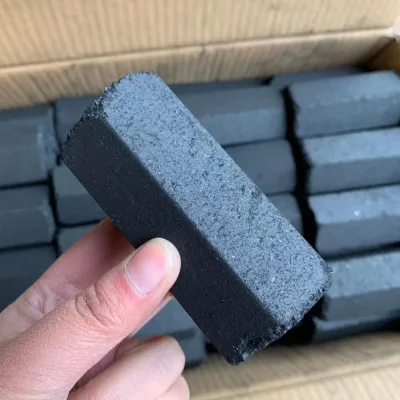
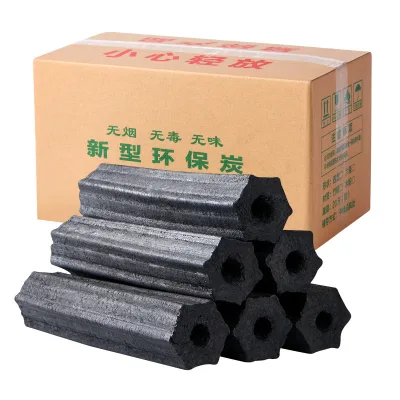
However, buyers must distinguish between pure bamboo products and composite briquettes. The data suggests that some products utilize a mix of materials, including ceramic, metal, or bamboo and wood combinations. When sourcing, it is imperative to verify the exact composition. For instance, a product labeled as "100% Bamboo" will have different burning properties compared to a briquette made from a blend of sawdust and binders. The physical form also varies; while some products are described as having a "spheric shape," others may be cylindrical or irregular. The diameter of these briquettes is a crucial specification, with specific models noted to have a diameter of 4cm. This dimension directly influences the surface area-to-volume ratio, which dictates the rate of ignition and the duration of the burn.
Furthermore, the processing method affects the final product's density and structural integrity. Some manufacturing processes utilize a "twin-roller" pressing mode, which compacts the material to achieve high density. Others may employ extrusion techniques. High-density products are generally preferred for commercial use as they resist crumbling and provide a more consistent heat output. Buyers should explicitly request documentation regarding the pressing mode and the resulting density to ensure the product meets the specific thermal requirements of their intended application.
Technical Specifications and Performance Metrics
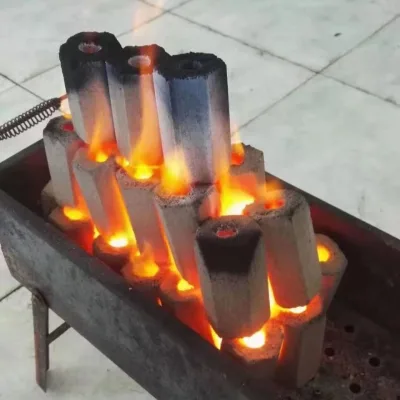
Understanding the technical specifications of charcoal briquettes is essential for matching the product to the end-use scenario. Key performance indicators include burning time, ash content, and moisture content. For high-performance applications, such as professional catering or extended outdoor events, a burning time of 4-6 hours is a standard benchmark for quality briquettes. This duration ensures that food can be cooked without the need for frequent refueling, which can disrupt the cooking process and affect flavor.
Ash content is another critical metric. Low ash content is a desirable trait, as excessive ash can clog ventilation systems and require frequent cleaning of the grill. The supply data highlights products with "low ash content" as a specific attribute, suggesting that manufacturers are optimizing their formulations to minimize residue. Similarly, moisture content plays a vital role in combustion efficiency. Products with "low moisture content" ignite more easily and produce less smoke, which is crucial for maintaining the pure flavor of the food being grilled.
The physical dimensions of the product must also align with the equipment being used. While some listings specify a diameter of 4cm, other industrial applications may require different sizes. The "18 inches" specification found in some contexts likely refers to the size of the furnace or the diameter of the grill rather than the briquette itself, but this distinction must be clarified during the inquiry phase. Additionally, the color of the product, which can range from black to various hues like red, green, or blue, is often a result of additives or specific processing techniques. While color can be an aesthetic choice, it should not compromise the structural integrity or combustion properties of the briquette.
Compliance, Certification, and Safety Standards
In the B2B procurement of charcoal products, compliance with international standards and safety certifications is non-negotiable. The supply chain data indicates that products often carry certifications such as CE and ISO. These certifications serve as evidence that the manufacturing process adheres to specific quality and safety protocols. The CE mark, for instance, indicates conformity with health, safety, and environmental protection standards for products sold within the European Economic Area. Similarly, ISO certification suggests that the manufacturer follows internationally recognized quality management systems.
Safety devices are also a critical consideration, particularly for the machinery used in the production of charcoal. Some listings mention "high pressure protection devices" as a feature of the manufacturing equipment. While this primarily pertains to the production line, it reflects a broader commitment to safety that often extends to the final product. Buyers should verify that the supplier has robust quality control measures in place to ensure that the charcoal does not contain harmful contaminants or excessive sulfur levels. The data notes "low sulfur content" as a specific attribute, which is important for reducing the emission of sulfur dioxide during combustion.
When evaluating suppliers, buyers should request copies of current certificates and verify their validity with the issuing bodies. It is also important to check if the products meet local regulations in the destination market. For example, while EN 1860-2 is mentioned in background contexts, its specific applicability to charcoal briquettes should be confirmed. Relying on generic claims without verified documentation can lead to compliance issues, customs delays, or product recalls.
Cost Drivers and Economic Considerations
The pricing of BBQ Charcoal Briquettes is influenced by a complex interplay of factors, including raw material costs, manufacturing complexity, and logistics. The observed price range in the market is extremely wide, spanning from $0.40 to $15,000. This variance is not indicative of a single product type but rather reflects the difference between raw materials, finished goods, and the scale of the order. A unit price of $0.40 likely corresponds to bulk raw material or a specific low-cost variant, while the upper end of the range may include specialized machinery, custom packaging, or large-scale industrial orders.
Minimum Order Quantity (MOQ) is another significant cost driver. The observed MOQ range extends from 1 to 3600 units. For small businesses or startups, a low MOQ of 1 unit allows for market testing without significant capital commitment. However, larger orders often benefit from economies of scale, reducing the per-unit cost. Buyers must balance the need for inventory flexibility with the desire for lower unit prices. Additionally, the lead time for delivery, which ranges from 15 to 45 days, impacts the overall cost of procurement. Longer lead times may require higher safety stock levels, tying up capital and increasing storage costs.
Packaging also plays a role in the final cost. Options range from standard cartons to wooden cases, with some products requiring "standard wooden packages" for protection during transit. The choice of packaging depends on the destination and the mode of transport. For international shipping, robust packaging is essential to prevent damage, but it adds to the overall weight and volume, increasing freight costs. Buyers should negotiate packaging terms that balance product protection with cost efficiency.
Supplier Evaluation and Operational Capabilities
Selecting the right supplier requires a thorough evaluation of their operational capabilities and reliability. The supply data indicates that products originate from China, a major hub for charcoal manufacturing. However, the location of the supplier is just one factor; the manufacturing process and quality control systems are equally important. Buyers should assess whether the supplier offers customization services, as many listings indicate that customization is available. This could include custom branding, specific dimensions, or tailored packaging.
After-sales support is another critical criterion. Suppliers that provide "online support" and "technical guidance" for installation and operation demonstrate a commitment to long-term partnership. This is particularly important for buyers who may be new to the industry or who require assistance with integrating the charcoal products into their existing operations. The condition of the product, typically listed as "new," should be verified to ensure that no refurbished or used items are being sold as new.
The production capacity of the supplier is also a key consideration. Some listings mention specific models, such as "SL-550," which may refer to the production machinery or the product model. Understanding the supplier's capacity to meet demand spikes is essential for maintaining a stable supply chain. Buyers should inquire about the supplier's ability to scale production and their track record for meeting delivery deadlines.
Quality Control and Long-Term Procurement Strategy
Implementing a robust quality control (QC) strategy is essential for mitigating risks in the charcoal procurement process. Buyers should establish clear acceptance criteria based on the technical specifications discussed earlier, such as burning time, ash content, and moisture content. Regular sampling and testing should be conducted to ensure that the product consistently meets these standards. The "high purity" and "fine particle size" attributes mentioned in the data suggest that some manufacturers focus on high-quality, refined products, which should be a benchmark for QC.
Long-term procurement considerations involve building a resilient supply chain. This includes diversifying suppliers to reduce dependency on a single source and maintaining open communication channels to address any issues promptly. The availability of "online support" and "technical guidance" from suppliers can facilitate smoother operations and quicker resolution of any problems. Additionally, buyers should monitor market trends and regulatory changes that could impact the supply of charcoal products.
In conclusion, sourcing BBQ Charcoal Briquettes requires a comprehensive understanding of material properties, technical specifications, and supplier capabilities. By focusing on verified attributes such as material composition, certification status, and performance metrics, buyers can make informed decisions that ensure product quality and operational efficiency. The wide range of available options, from 100% bamboo to composite briquettes, offers flexibility for various applications, but careful evaluation is necessary to select the right product for the specific needs of the business.
FAQs
What certifications do BBQ Charcoal Briquettes suppliers typically hold?
Suppliers often provide CE and ISO certifications for their products. These documents verify that manufacturing processes meet international safety and quality management standards required for global trade.
How long is the delivery time for BBQ Charcoal Briquettes orders?
The standard delivery time ranges from 15 to 45 days depending on order volume. Buyers should plan their inventory accordingly as lead times vary based on production capacity and shipping logistics.
Can BBQ Charcoal Briquettes be customized for specific branding needs?
Yes, customization is available for various product attributes including color and packaging. Manufacturers can accommodate specific requirements for branding and product dimensions to suit different market segments.
What is the minimum order quantity for BBQ Charcoal Briquettes?
Minimum order quantities range from 1 to 3600 units depending on the supplier and product type. Small buyers can start with lower quantities while larger enterprises may negotiate bulk rates.
Which materials are used to manufacture BBQ Charcoal Briquettes?
Products are commonly made from 100% bamboo or combinations of ceramic, metal, and wood. The material choice affects burning time and ash content, with bamboo offering high density and clean combustion.
What specifications define the size of BBQ Charcoal Briquettes?
Specific models feature a diameter of 4cm and may include spheric shapes. Other industrial variants have furnace outer diameters of 46cm or grill diameters of 40.5cm depending on the application.