Source Bayonet Base Light Bulb Socket for Home and Office
Find 25 Bayonet Base Light Bulb Socket options for residential and commercial lighting. Compare ENEC and VDE certified models in Bakelite, Porcelain, and Plastic. Evaluate 2A to 4A rated currents for GU10, E27, and E14 applications; compare the available evidence and request quotations based on your requirements.
Key considerations
Products List


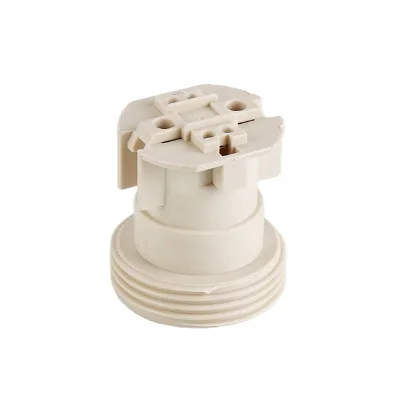
Coated Bayonet E27/e26/e14 Light Sockets Lamp Holder Socket Lampholder
$0.20 - $0.40
MOQ: 1000 Minimum
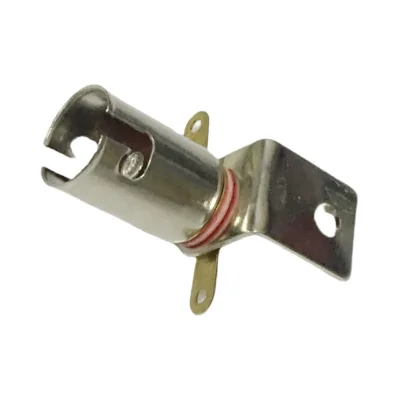
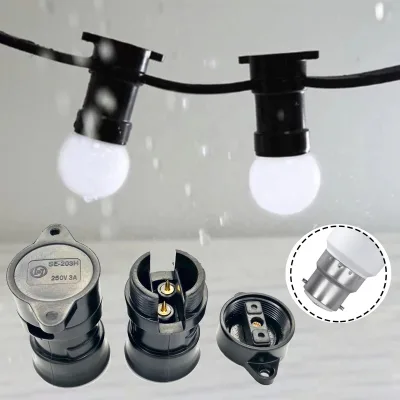
Comprehensive Sourcing Guide
Bayonet Base Light Bulb Socket Sourcing Guide
Procurement teams must first distinguish between the specific bayonet base variants available, as the market offers distinct models like the B22 lamp holder alongside other interface styles. The observed product data indicates a strong presence of manual switches designed for home and residential applications, often featuring safety mechanisms and easy installation protocols. Buyers should verify that the selected unit matches the intended fixture type, whether for general decorations, indoor lighting, or specific home office environments, to ensure functional compatibility.
The sourcing landscape reveals a diverse range of materials, including Bakelite, porcelain, and thermoplastic housing, each offering different thermal and mechanical properties. While some listings highlight a 10-year warranty, this attribute requires careful validation against the specific manufacturer's terms rather than assuming it applies universally to all listed items. Understanding the material composition is critical, as the choice between ceramic, plastic, or metal contacts directly influences the socket's durability and its ability to withstand the rated temperatures of the connected light sources.
Product Scope and Observed Listing Signals
Buyers should analyze the observed price range of 0.05 to 1.7 USD as a baseline for budgeting, while recognizing that unit costs fluctuate based on material quality and certification depth. The minimum order quantities observed between 500 and 10,000 units suggest that this product category is optimized for bulk procurement rather than small-scale retail replenishment. Sourcing strategies must account for these volume thresholds to achieve viable unit economics, as smaller orders may incur disproportionately higher per-unit costs or require special handling fees.
Listing signals indicate a variety of functional applications, ranging from simple lamp adapters to complex wiring kits for GU10 and E27 series bulbs. The data shows specific models tailored for LED down lights, ceiling lamps, and table lamps, necessitating a precise match between the socket's rated current and the intended light source. Procurement teams must scrutinize the "Function" attribute to ensure the product serves as a dedicated adapter or a primary fixture component, avoiding mismatches that could lead to installation failures or safety hazards in the final assembly.
Technical Specifications to Verify
Technical due diligence requires confirming the rated voltage and current capacity, as the data presents both 220V and 250V options alongside 2A and 4A current ratings. Buyers must verify that the selected socket's electrical rating exceeds the maximum load of the connected bulb to prevent overheating or premature failure. The presence of specific cable types, such as 0.5-1.5mm² rigid or flexible cables, further dictates the wiring approach, requiring that the terminal design, whether push-in or screw type, accommodates the specific gauge of wire used in the installation.
The physical interface and mounting style are equally critical, with observed data highlighting bayonet installation methods and half-thread shell designs. Verification of the bulb fixing standard, such as screw or bayonet mechanisms, ensures compatibility with the target light source, whether it is an E14, E27, or GU10 bulb. Additionally, the rated temperature range of T180 to T210°C must be confirmed for high-heat applications, ensuring the housing material can withstand the thermal output of halogen or high-power LED sources without degrading over time.
Compliance and Safety Documentation
Safety compliance is paramount, with the observed product data listing a comprehensive suite of certifications including ENEC, VDE, CE, RoHS, CQC, and IEC standards. Buyers must request valid, up-to-date certification documents for each specific model, as the presence of these marks on a listing does not guarantee that every unit in a shipment meets the same rigorous safety thresholds. The inclusion of UL certification in some records suggests a potential for North American market access, but this must be explicitly confirmed for the specific batch being procured to avoid regulatory non-compliance.
Documentation review should also extend to the material safety and environmental standards, particularly regarding the use of thermoplastic and copper contact materials. The RoHS certification indicates compliance with restrictions on hazardous substances, which is essential for maintaining environmental standards in export markets. Procurement teams should verify that the "Safety" feature claimed in the product attributes is backed by independent test reports, ensuring that the socket's design effectively mitigates risks such as short circuits or electrical shocks during normal operation.
Cost Drivers and Commercial Terms
Cost structures are heavily influenced by the choice of housing material, with ceramic and Bakelite options often commanding different price points compared to plastic alternatives. The observed MOQ range of 500 to 10,000 units creates a significant barrier to entry for smaller buyers, making it essential to negotiate volume-based pricing tiers that align with the buyer's inventory turnover rates. Buyers should also consider the packaging specifications, such as carton packing or bulk quantities of 500 or 1000, as these factors impact logistics costs and storage requirements at the destination.
Commercial terms must address the variability in lead times and the potential for customization, which is listed as an available attribute in the product data. While the base price range is observable, the final landed cost will depend on the complexity of the customization, such as specific color options like black or white, and the required certification levels. Procurement contracts should clearly define the responsibilities for shipping, insurance, and customs clearance, ensuring that the total cost of ownership remains predictable despite fluctuations in raw material prices or currency exchange rates.
Supplier Qualification and Quality Control
Supplier qualification should prioritize manufacturers located in established industrial hubs like Zhejiang, China, where the supply chain for electrical components is mature and robust. Buyers must verify the supplier's production capacity to handle the observed MOQs and their ability to maintain consistent quality across large batches. The presence of multiple certifications suggests a level of regulatory maturity, but on-site audits or third-party factory assessments are recommended to validate the actual manufacturing processes and quality control protocols in place.
Quality control measures must focus on the consistency of critical components, such as the copper contacts and the thermoplastic housing, which are prone to variation if not strictly monitored. Buyers should implement incoming inspection protocols that test for mechanical strength, electrical continuity, and thermal resistance to ensure the products meet the specified rated temperature and current ratings. Establishing a clear defect rate threshold and a remediation process for non-conforming goods is essential to mitigate the risks associated with bulk procurement of electrical components.
Long-Term Procurement Checks
Long-term procurement success relies on establishing a robust relationship with suppliers who can support the 10-year warranty claims observed in the product data. Buyers must verify the terms of this warranty, including the scope of coverage and the process for handling claims, to ensure that the supplier remains accountable for product failures over the extended lifecycle. Regular performance reviews should be conducted to assess the supplier's ability to maintain quality standards and meet delivery schedules, as any degradation in service can disrupt the buyer's supply chain.
Continuous monitoring of market trends and technological advancements is necessary to ensure the procured sockets remain relevant for evolving lighting technologies. As the industry shifts towards more energy-efficient LED solutions, buyers should verify that their current socket inventory supports the latest bulb types and standards without requiring immediate replacement. Maintaining a strategic inventory buffer and fostering open communication with suppliers regarding future product developments will help mitigate the risks of obsolescence and ensure a stable supply of high-quality bayonet base light bulb sockets.
FAQs
What materials are used for bayonet base light bulb sockets?
Bayonet base light bulb sockets are typically manufactured using durable materials such as Bakelite, Porcelain, Plastic, Ceramic, and Thermoplastic Pet. These materials ensure safety and easy installation for various lighting applications. The contact material is often copper to ensure reliable electrical conductivity. Housing materials like Thermoplastic Pet provide robust protection against heat and wear during regular use in home or office environments.
Can these sockets handle high voltage and current ratings?
Yes, these sockets are designed to handle specific voltage and current ratings. They support voltages of 220V and 250V, ensuring compatibility with standard electrical systems. The rated current varies by model, with options available for 2A and 4A applications. This flexibility allows them to be used in diverse settings, from low-power decorative lights to higher-load fixtures, while maintaining safety standards.
Which certifications ensure the safety of these light bulb sockets?
These light bulb sockets carry multiple international safety certifications to ensure reliability and compliance. Common certifications include ENEC, VDE, CE, RoHS, CQC, IEC, and UL. These marks indicate that the products meet rigorous standards for electrical safety, environmental protection, and performance. Buyers can trust these certified components for use in residential, commercial, and industrial lighting installations across different global markets.
What types of light sources are compatible with these sockets?
These sockets are compatible with a wide range of light sources, including E27, E14, GU10, and B22 lamps. They support LED bulbs, halogen lamps, and energy-saving lights. Specific models are designed for applications like table lamps, wall lamps, pendant lamps, and LED spotlights. This versatility makes them suitable for various decorative and functional lighting needs in homes, offices, and other indoor spaces.
How are these sockets packaged and what is the typical MOQ?
These sockets are packaged in cartons for efficient shipping and protection. The minimum order quantity (MOQ) typically ranges from 500 to 10,000 units, depending on the specific model and supplier. Packaging quantities may vary, with some models packed in quantities of 500 or 1000 per carton. This flexible packaging and ordering structure supports both small-scale projects and large-volume industrial procurement needs.
Where are these bayonet base sockets manufactured?
These bayonet base sockets are primarily manufactured in Zhejiang, China. This region is known for its robust manufacturing capabilities and supply chain efficiency for electrical components. The products originate from China, leveraging local expertise in producing high-quality lighting accessories. Buyers can expect consistent production standards and reliable supply chains from these established manufacturing hubs in the region.