Source Bio Block Filter Media for Industrial Agriculture Home
Compare 30 Bio Block Filter Media options from Chinese suppliers for industrial, agriculture, and home applications. Products feature HDPE or ceramic materials with customizable sizes and high surface areas for effective bacterial colonization.
Key considerations
Products List


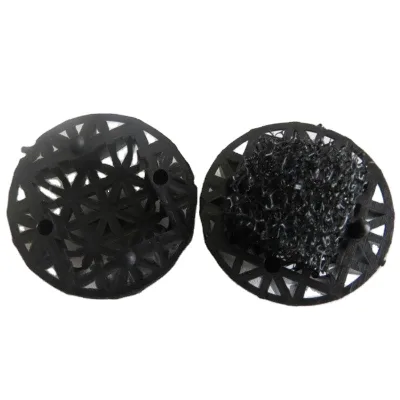


Bio Filter Media Mbbr for Biodigester Treatment
$115.00 - $140.00
MOQ: 1 CBM
Shanghai Dubhe Environmental Protection &Technology Co., Ltd


Comprehensive Sourcing Guide
Strategic Sourcing Guide for Bio Block Filter Media
The global demand for efficient biological filtration solutions has driven the development of specialized media designed to maximize bacterial colonization within compact spaces. For procurement professionals sourcing Bio Block Filter Media, the primary objective is to identify products that balance high surface area with structural integrity and chemical stability. The market offers a diverse array of configurations, ranging from high-density polyethylene (HDPE) blocks to ultra-high surface area ceramic units. Understanding the specific technical parameters, material compositions, and application requirements is essential for making informed purchasing decisions that align with industrial, agricultural, or commercial operational goals.
Technical Specifications and Material Composition
The performance of Bio Block Filter Media is fundamentally dictated by its material composition and physical geometry. A significant portion of the market utilizes HDPE as the base material, offering a density range typically observed between 0.96 and 0.98 g/cm³. This specific density ensures that the media remains buoyant or neutrally suspended depending on the hydraulic design of the filtration system. In contrast, alternative segments of the market offer media constructed from ultra-high surface area ceramic, which provides distinct advantages in terms of chemical inertness and mechanical strength.
Surface area is the most critical performance metric for biological media. Buyers must verify that the product offers a surface area exceeding 200 m²/m³ for standard polyethylene blocks, while ceramic-based options may demonstrate significantly higher metrics, such as 2500 m²/m³. The physical dimensions of the media vary widely to accommodate different reactor designs. Common specifications include tube sizes ranging from 36mm to 70mm, with specific model numbers like AS-BB70 or 36MM indicating distinct geometries. For ceramic media, dimensions such as 200200100mm are observed, tailored for specific aquarium or indoor fish farming applications.
Color is another observable attribute that often correlates with material additives or UV resistance. Products are frequently available in green, black, white, or blue variations. While color does not directly dictate biological efficiency, it can influence the selection process for aesthetic integration in visible systems or specific light absorption properties in outdoor agricultural setups. The weight of individual units also varies, with observed values including 70 kg and 45 kg for larger industrial blocks, while smaller units for specialized applications may weigh as little as 0.5 kg.
Compliance, Standards, and Certification Verification
When evaluating Bio Block Filter Media, procurement teams must scrutinize the adherence to industry standards and the availability of certification documentation. The supplied data indicates that products often reference specific standard codes such as "Bio Block50 55 36 70" or dimensional standards like "25x12mm, 10x10mm, 15x10mm." These codes serve as internal or industry-specific identifiers for the media's geometry and intended flow characteristics. However, buyers should not assume that a listed standard implies a third-party certification unless explicitly stated.
Verification of compliance should focus on the material safety and environmental impact. For media used in agriculture or home applications, it is crucial to confirm that the HDPE or ceramic materials are free from leachable toxins that could harm aquatic life or soil health. While specific certification bodies are not universally mandated for all regions, the presence of a "warranty" period, such as a 1-year warranty, suggests a manufacturer's confidence in the product's durability and non-degradation over time. Additionally, the availability of video outgoing inspection services indicates a supplier's willingness to provide visual proof of quality control prior to shipment, a valuable tool for verifying the physical condition of the media.
Buyers should also check for consistency in the "prod_standard" field. Discrepancies between the stated standard and the actual physical dimensions (e.g., diameter and height) can indicate manufacturing variances. For instance, a product listed with a diameter of 25mm and height of 12mm must match the physical sample exactly to ensure proper packing density and flow distribution within the filter vessel.
Cost Drivers and Pricing Dynamics
The pricing of Bio Block Filter Media is influenced by a complex interplay of material costs, manufacturing complexity, and logistics. The observed price range in the market spans from $0.02 to $350 per unit, reflecting the vast difference between small, single-piece units and bulk industrial pallets. The primary cost driver is the surface area-to-volume ratio. Ceramic media with a surface area of 2500 m²/m³ commands a higher price point compared to standard HDPE blocks with 200 m²/m³ due to the more energy-intensive production process required for ceramics.
Packaging and shipping represent significant secondary cost factors. The method of packing varies from simple woven bags (0.1 cbm/bag) to hard cartons, pallets, and stretch film configurations. Products shipped on pallets or floor-loaded containers typically incur higher freight costs but offer better protection and easier handling for industrial buyers. The weight per cubic meter is another critical metric; for example, a media with a weight of 95 kg/m³ will have different shipping implications compared to lighter alternatives.
Minimum Order Quantities (MOQ) also impact the effective unit cost. The market observes MOQs ranging from 1 cbm to 100 units. Buyers purchasing in bulk can often negotiate better rates, but they must balance this against storage costs and lead times. The customization availability allows for tailored solutions, which may increase the unit price but reduce long-term operational inefficiencies caused by ill-fitting media.
Typical Applications and Operational Context
Bio Block Filter Media serves a wide spectrum of applications, each with unique operational requirements. The data highlights usage in industrial, agricultural, home, and hospital settings. In industrial wastewater treatment, the focus is on high-volume processing and robustness. Here, media with a combined treatment method and high surface area are preferred to handle fluctuating loads of organic matter. The "Bio Block50 55 36 70" standards are often associated with these heavy-duty applications.
In the agricultural sector, the media is utilized for water purification in irrigation systems or livestock waste management. The durability of HDPE media makes it suitable for these environments where chemical exposure and physical abrasion are common. For home and hospital applications, the aesthetic and safety aspects become more prominent. Media in white or blue colors, or those designed for aquariums and indoor fish farming, prioritize non-toxicity and visual appeal. The specific application of "Aquarium Fish Tank" and "Indoor Fish Farming" requires media that can support bacterial culture without releasing harmful byproducts, often necessitating a pH level around 7.0.
The productivity of the filtration system is also a key consideration. Some units are rated for specific flow rates, such as 100L/Hour, or usage levels of 200L/PC. These metrics help buyers calculate the required volume of media to achieve the desired treatment capacity. Understanding the specific application context ensures that the selected media not only fits the physical dimensions of the filter but also meets the biological and hydraulic demands of the system.
Supplier Evaluation and Quality Control
Selecting a reliable supplier is paramount to ensuring consistent product quality. The origin of the products, primarily from regions like Jiangsu, Hebei, and China, indicates a concentrated manufacturing hub. Buyers should evaluate suppliers based on their transparency regarding production processes and quality assurance measures. The availability of video outgoing inspections is a strong indicator of a supplier's commitment to quality control, allowing buyers to verify the physical condition of the media before it leaves the factory.
When evaluating suppliers, procurement teams should look for clear documentation of the "prod_model" and "prod_packing" details. Consistency in model numbers, such as PE01 through PE05, suggests a standardized production line. Conversely, a lack of clarity in model identification can lead to confusion and potential errors in ordering. The "core_components" field, which often lists "bio ball" or specific media types, should be cross-referenced with the physical product to ensure the correct components are included.
Quality control should also extend to the packaging. Products packed in hard cartons and pallets for bio filter media are generally better protected during transit than those in simple woven bags. Buyers should verify that the packaging method aligns with the fragility of the media; for instance, ceramic media may require more robust packaging than HDPE blocks to prevent breakage. Additionally, the "warranty" and "video_outgoing_inspection" attributes serve as contractual safeguards, ensuring that the supplier stands behind the product's performance and condition upon delivery.
Long-Term Procurement Considerations
Sourcing Bio Block Filter Media is not merely a transactional activity but a strategic decision that impacts long-term operational efficiency. Buyers must consider the lifecycle of the media, including its resistance to fouling, degradation, and the ease of replacement. Media with a high surface area, such as the 2500 m²/m³ ceramic options, may offer longer service life due to their structural stability, but they may also be more difficult to clean or replace if they become clogged.
The "Customization" availability is a significant factor for long-term procurement. As operational needs evolve, the ability to source media with specific dimensions, such as 36mm, 50mm, 55mm, or 70mm tube sizes, allows for system upgrades without replacing the entire filtration unit. Furthermore, the "Number of Unites Per M3" metric, observed at 350,000 for certain media, helps buyers calculate the exact volume required for future expansions or replacements, ensuring that inventory management remains efficient.
Finally, buyers should monitor the "Weight Per M3" and "Surface Area" trends in the market. As technology advances, new media with higher surface areas and lower weights may become available, offering improved efficiency. Staying informed about these developments allows procurement teams to make timely upgrades that enhance the overall performance of their filtration systems. By focusing on these long-term factors, buyers can secure a supply chain that supports sustainable and efficient operations for years to come.
Comparative Analysis of Media Types
To assist in the decision-making process, the following table summarizes the key differences between the observed media types based on the provided data. This comparison highlights the trade-offs between material, surface area, and application suitability.
| Feature | HDPE Bio Block | Ceramic Bio Media |
|---|---|---|
| Material | HDPE | Ultra High Surface Area Ceramic |
| Density | 0.96-0.98 g/cm³ | Not specified (typically higher) |
| Surface Area | >200 m²/m³ | 2500 m²/m³ |
| Typical Models | AS-BB70, 36MM, PE01-PE05 | 25x12mm, 10x10mm, etc. |
| Primary Usage | Industrial, Agriculture, Home | Aquarium, Indoor Fish Farming |
| Weight per Unit | 45-70 kg (large blocks) | 0.5 kg (small units) |
| Color Options | Green, Black, White, Blue | Not specified |
| Packing | Pallet, Floor Loaded, Woven Bag | Hard Cartons, Pallets |
This comparison underscores that the choice of media depends heavily on the specific application. Industrial users may prioritize the robustness and high volume capacity of HDPE blocks, while aquarium enthusiasts may prefer the high surface area and compact nature of ceramic media. By carefully analyzing these attributes, buyers can select the most appropriate Bio Block Filter Media for their specific needs.
FAQs
What materials are used for Bio Block Filter Media?
Bio Block Filter Media is primarily constructed from HDPE or ultra-high surface area ceramic. HDPE offers a density between 0.96 and 0.98 g/cm3, while ceramic options provide significantly higher surface areas up to 2500 m2/M3 for specialized applications.
How is the surface area of Bio Block Filter Media measured?
Standard polyethylene blocks typically offer a surface area exceeding 200 m2/M3. Ceramic-based media can achieve much higher metrics, such as 2500 m2/M3, which is critical for maximizing bacterial colonization in compact filtration spaces.
Which specifications are available for tube sizes?
Tube sizes commonly range from 36mm to 70mm, with specific models like AS-BB70 or 36MM. Other dimensional standards include 25x12mm, 10x10mm, and 15x10mm, tailored to fit various reactor designs and flow requirements.
Can the product be customized for specific needs?
Yes, customization is available for Bio Block Filter Media to meet unique operational goals. Buyers can request specific dimensions, colors like green or black, and packing methods such as pallets or woven bags to align with their system constraints.
What are the typical usage applications for this media?
This media is designed for industrial, agricultural, home, and hospital applications. Specific uses include wastewater treatment, irrigation water purification, and aquarium fish tanks where a pH of 7.0 and non-toxic properties are essential for bacterial culture.
How is the product packed for shipping?
Packing options include pallets, floor loading, hard cartons, or woven bags depending on the product type. Some items are packed as 6PCS/CTN or 0.1cbm/Bag, ensuring protection during transit while accommodating different volume requirements.