Source Bio Degradable Disposable Growing Bags for Nursery, Greenhouse & Hydroponics
Browse 30 Bio-degradable Disposable Growing Bag listings and compare dimensions from 3 to 50 gallons, thickness, square or round shapes, drainage, handles, MOQ, and customization options. These nursery grow bags suit indoor, outdoor, greenhouse, and hydroponic planting needs.
Key considerations
Products List


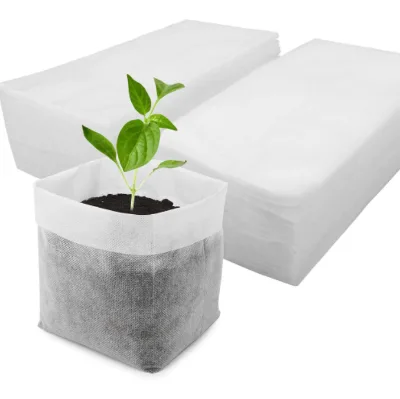


Biodegradable Breathable High Survival Seedling Bag White Nursery Bag
$0.01 - $1.00
MOQ: 500000 Pieces


Comprehensive Sourcing Guide
Bio-degradable Disposable Growing Bag Sourcing Guide
Procuring bio degradable disposable growing bags requires a nuanced understanding of material science, supply chain logistics, and specific agricultural or horticultural applications. These bags serve as critical tools in modern plant cultivation, offering a balance between environmental responsibility and functional durability. Buyers must navigate a market where terminology can be ambiguous, distinguishing between truly biodegradable materials and those that are merely biodegradable under specific industrial conditions. The following guide provides a structured approach to sourcing these products, ensuring that procurement decisions align with both operational needs and sustainability goals.
The core challenge in this category lies in verifying the actual degradation properties of the product against marketing claims. While many suppliers advertise "biodegradable" or "non-woven fabric" options, the specific material composition—whether it is polypropylene, polyethylene, or a starch-based blend—dictates the end-of-life pathway. Buyers need to establish clear criteria for what constitutes "disposable" in their specific context, whether that means direct burial in soil, composting in a facility, or simple reduction of plastic waste. This guide outlines the essential steps to validate product quality, commercial terms, and supplier reliability.
Product Scope and Observed Listing Signals
The observed market for growing bags presents a diverse range of product attributes, with listings indicating options such as non-woven fabric seedling bags and biodegradable nursing bags. Key specifications observed include dimensions ranging from 3 to 30 gallons, with thicknesses varying from 0.7oz to 2oz, and specific models like NW-09, NW-15, and BZ-PB29. These variations suggest that buyers can source products tailored to different scales of operation, from small-scale balcony gardening to large-scale greenhouse hydroponics. The presence of features like handles, drainage capabilities, and square or round shapes further indicates a market focused on user convenience and plant health optimization.
Color options are predominantly white, which is standard for reflecting sunlight and keeping root zones cool, a critical factor in plant growth. The application scope extends to indoor, outdoor, and greenhouse environments, with specific suitability noted for soilless cultivation and hydroponics. Buyers should note that while "biodegradable" is a common descriptor, the actual material is often non-woven fabric, which may require specific disposal methods. The availability of customization, including logo printing and specific dimensions, highlights the B2B nature of this market, where branding and specific sizing requirements are common procurement drivers.
Technical Specifications to Verify
When evaluating technical specifications, buyers must prioritize the material composition and thickness, as these factors directly impact durability and degradation rates. The observed thickness range of 0.01cm to 2oz suggests a wide variance in product robustness, with thinner bags likely intended for short-term seedling use and thicker bags for longer-term plant growth. It is essential to verify whether the non-woven fabric is made from recycled materials or virgin polymers, as this affects both the environmental footprint and the mechanical strength of the bag. Buyers should request material data sheets to confirm the presence of any biodegradable additives or starch blends that facilitate decomposition.
Dimensional accuracy and structural integrity are also critical verification points. The observed standard sizes, such as 3/5/7/10/15/20/30/50 gallons, should be cross-referenced with actual product measurements to ensure they meet planting requirements. Additionally, the presence of drainage features and the shape of the planting holes (circle or square) influence root health and water management. Buyers should verify the single package size and gross weight, such as 9x7x5 cm and 0.035 kg for certain models, to calculate shipping costs and storage requirements accurately. Confirming the production method, whether semi-manual or semi-mechanical, can also provide insights into the consistency of the final product.
Compliance and Safety Documentation
Compliance with environmental standards is a primary concern for buyers of bio degradable products. While standards such as EN 13432 and ASTM D6400 are often referenced in the industry, buyers must verify if the specific products they are sourcing meet these criteria for industrial compostability. These standards define the conditions under which a material must break down within a specific timeframe, ensuring that the "biodegradable" claim is substantiated by third-party testing. Buyers should request certificates of compliance or test reports from accredited laboratories to confirm that the bags do not leave behind microplastics or toxic residues in the soil.
Safety documentation should also include information on the chemical composition of the bags, particularly if they are used in organic farming or food crop production. Buyers need to ensure that the materials used in the non-woven fabric are free from harmful additives, such as heavy metals or persistent organic pollutants. Additionally, verifying the origin of the materials, such as the place of origin being Fujian, China, can help in assessing the regulatory environment and quality control practices of the supplier. Buyers should also check for any relevant food safety certifications if the bags are used in direct contact with edible plants.
Cost Drivers and Commercial Terms
Cost drivers for bio degradable growing bags include material costs, production volume, and customization requirements. The observed price range of $0.01 to $2.5 per unit reflects the variance in size, thickness, and material quality. Buyers should consider the total cost of ownership, including shipping and handling, which can be significant given the volume of goods typically ordered. The minimum order quantity (MOQ) ranges from 1 to 500,000 pieces, with some suppliers requiring a minimum of 3,000 pcs, which can impact cash flow and inventory management for smaller buyers.
Commercial terms such as delivery time, payment terms, and packaging details are also critical factors in the procurement process. The observed delivery time of 15-20 days suggests a need for careful planning to avoid stockouts. Buyers should negotiate clear terms regarding sample availability, as this allows for quality verification before committing to large orders. Packaging options, such as woven bags or bundles of 100 pieces, should be evaluated for their impact on storage efficiency and ease of use. Additionally, the availability of customized logos and branding can add value but may also increase the unit cost and lead time.
Supplier Qualification and Quality Control
Supplier qualification is essential to ensure that the bio degradable growing bags meet the required quality and sustainability standards. Buyers should conduct due diligence on potential suppliers, verifying their production capabilities, quality control processes, and environmental commitments. The observed production method of semi-manual and semi-mechanical processes suggests that buyers should assess the level of automation and consistency in production. Suppliers with a track record of exporting to reputable markets may have more robust quality control systems in place.
Quality control measures should include regular inspections of raw materials, in-process checks, and final product testing. Buyers should request samples to evaluate the physical properties of the bags, such as tensile strength, tear resistance, and drainage efficiency. Additionally, verifying the supplier's ability to provide customization, such as specific dimensions or logo printing, is important for branding purposes. Buyers should also assess the supplier's responsiveness and communication skills, as these factors can impact the overall procurement experience and problem resolution.
Long-Term Procurement Checks
Long-term procurement checks involve monitoring the performance of the bio degradable growing bags in real-world applications and assessing the supplier's ability to maintain consistent quality over time. Buyers should establish key performance indicators (KPIs) related to product durability, degradation rate, and customer satisfaction. Regular feedback from end-users, such as gardeners or farmers, can provide valuable insights into the practical performance of the bags. Buyers should also stay informed about advancements in biodegradable materials and standards, ensuring that their procurement strategy remains aligned with evolving sustainability goals.
Building a strong relationship with the supplier is crucial for long-term success. Buyers should engage in regular communication to discuss performance data, address any issues, and explore opportunities for improvement. This collaborative approach can lead to better product development, more favorable commercial terms, and a more resilient supply chain. Additionally, buyers should consider diversifying their supplier base to mitigate risks associated with single-source dependency. By maintaining a proactive approach to supplier management and quality assurance, buyers can ensure a steady supply of high-quality bio degradable growing bags that meet their operational and environmental objectives.
FAQs
What customization options are available for these grow bags?
Customization is available for these biodegradable nursing bags, allowing buyers to tailor specific attributes to their needs. The product supports customized logos and various dimensions ranging from 3 to 30 gallons. This flexibility ensures that the bags can meet distinct branding or sizing requirements for indoor, outdoor, or greenhouse applications without compromising the soilless cultivation function.
What are the standard dimensions and thickness specifications?
The standard dimensions include 3, 5, 8, 10, 15, 20, and 30 gallons, with some standards extending to 50 gallons. The thickness ranges from 0.7oz to 2oz, providing durability for plant growth. These specifications support various planting holes and shapes, ensuring suitability for greenhouse hydroponics and general garden usage while maintaining good drainage properties.
Can I order samples before placing a bulk purchase?
Yes, samples are available for evaluation before committing to a larger order. This allows buyers to verify the quality of the non-woven fabric and the effectiveness of the drainage features. The availability of samples supports informed decision-making for both floor-type and simple style grow bags, ensuring they meet the specific requirements for balcony gardens or indoor cultivation.
What is the typical delivery time for these products?
The typical delivery time is 15-20 days from order confirmation. This lead time applies to the production and shipping of the biodegradable nursing bags. Buyers should account for this duration when planning their inventory for indoor, outdoor, or greenhouse applications. The semi-manual semi-mechanical production method helps maintain consistent quality within this timeframe.
How are the grow bags packaged for shipment?
The grow bags are packaged in woven bags, with 500 pieces packed in one carton. This packaging method ensures efficient handling and protection during transit. The single package size is approximately 9x7x5 cm, and the single gross weight is 0.035 kg. This standardized packing supports bulk orders and simplifies logistics for international buyers sourcing from China.
What materials are used to make these seedling bags?
These seedling bags are made from non-woven fabric, which is designed for biodegradable and disposable use. The material supports soilless cultivation and provides good drainage for plant growth. This construction is suitable for various applications, including indoor, outdoor, and greenhouse environments. The non-woven fabric ensures that the bags are lightweight yet durable enough for the growing season.