Source Bio-Based Eco Resin Padel Paddle for clubs, gyms, and events
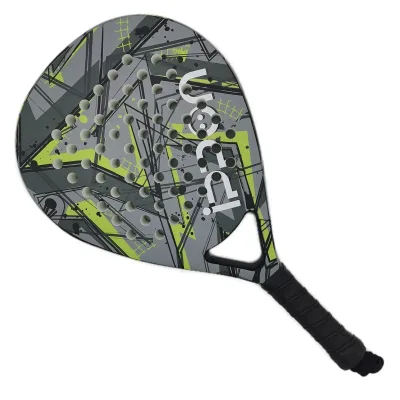
Compare 30 listings for Bio-Based Eco Resin Padel Paddle from verified Chinese manufacturers. Buyers can evaluate carbon fiber construction, customization options, and pricing for community sports use. These paddles feature EVA cores, carbon surfaces, and are designed for aerobic exercise with service lives ranging from one to four years.
Key considerations
Products List





Premium Eco-Friendly Padel Turf with Long-Lasting Synthetic Coating
$3.89 - $5.50
MOQ: 500 Square Meters


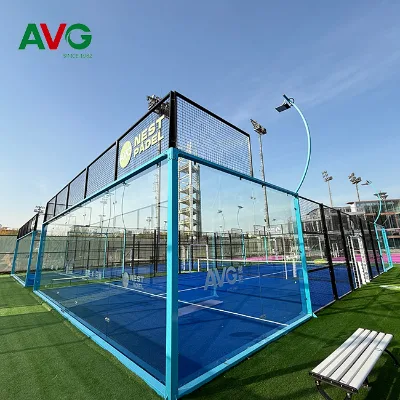


Comprehensive Sourcing Guide
Bio-Based Eco Resin Padel Paddle Sourcing Guide
The procurement of bio-based eco resin padel paddles requires distinguishing between standard carbon-composite models and those utilizing sustainable resin matrices. Current market listings reveal a diverse range of specifications, including carbon+EVA constructions and carbon fiber glass frames, yet explicit verification of bio-resin content is essential. Buyers must scrutinize material declarations to confirm the presence of eco-friendly resins rather than assuming all carbon paddles meet sustainability criteria. This distinction is critical for brands targeting environmentally conscious markets where green claims drive purchasing decisions.
Sourcing strategies should prioritize suppliers who can provide transparent material data sheets detailing the resin composition. While observed listings mention carbon surfaces and EVA cores, the specific integration of bio-based resins often requires direct supplier confirmation. Procurement teams should request sample testing to validate the eco-resin claims against standard performance metrics. Without this verification, buyers risk sourcing conventional paddles that fail to meet specific corporate sustainability mandates or regulatory requirements for green product labeling.
Product Scope and Observed Listing Signals
Market observations indicate a wide variance in product attributes, with paddle weights ranging from 360g and sizes varying between 42cm and 45.5cm. Listings frequently cite carbon+EVA or carbon fiber glass materials, alongside customizable branding options like "Customized or IPPON." These signals suggest a mature supply chain capable of high-volume customization, yet the specific application of bio-based resins remains a niche attribute within this broader category. Buyers must navigate these general listings to identify specific eco-friendly variants that align with their sustainability goals.
The observed price range of 0.7 to 15,000 USD reflects significant differences in production quality, material composition, and order volumes. Minimum order quantities fluctuate between 1 and 10,000 pieces, indicating flexibility for both small trial orders and large-scale distribution. However, the presence of standard models with "Ordinary" durability ratings alongside "Excellent" quality claims necessitates careful selection. Procurement teams should focus on suppliers who explicitly link their high-quality carbon constructions with eco-resin formulations to ensure the final product meets both performance and environmental standards.
Technical Specifications to Verify
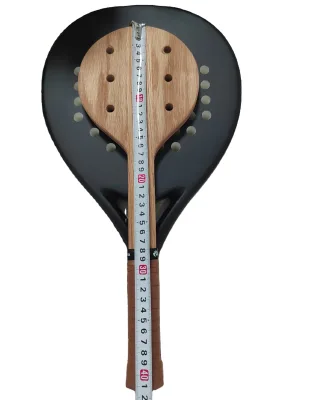
Technical due diligence must focus on the structural integrity of the paddle when bio-based resins are introduced. Key specifications to verify include the racquet balance point, which is observed at 320mm in some listings, and the core material composition, such as the pp honeycomb core noted in specific models. Buyers should confirm that the bio-resin does not compromise the stiffness or impact resistance required for competitive play. The elasticity is often described as "Intermediate Speed," but this must be validated against the specific resin formulation used in the core and face layers.
Dimensional consistency and weight distribution are equally critical for performance verification. Listings show single package sizes ranging from 50x10x40 cm to 75x50x20 cm, which impacts logistics and storage planning. The face size of 14.8x17x1.5cm and overall length of 42cm provide a baseline for standard sizing, but eco-resin variations may alter these dimensions slightly. Buyers should request detailed engineering drawings and physical samples to ensure the paddle maintains the required aerodynamic profile and balance point while utilizing sustainable materials.
Compliance and Safety Documentation
Regulatory compliance for bio-based sports equipment involves verifying adherence to international safety standards for recreational and competitive use. While specific certification numbers are not universally listed, buyers must ensure suppliers can provide test reports confirming the absence of harmful substances in the eco-resin and core materials. Documentation should cover chemical safety, particularly regarding the curing agents and binders used in the resin matrix. This verification is essential to prevent liability issues and ensure the product meets import regulations in target markets.
Safety documentation must also address the durability and service life of the paddle under normal usage conditions. Observed service life estimates range from 1 to 4 years, which serves as a benchmark for warranty and replacement policies. Buyers should require suppliers to submit data on the degradation rates of bio-resins compared to traditional epoxy systems. This evidence supports claims of product longevity and ensures that the eco-friendly attributes do not result in premature failure or safety hazards during intense aerobic exercise.
Cost Drivers and Commercial Terms
Commercial terms for bio-based paddles are heavily influenced by the cost of sustainable raw materials and the complexity of the manufacturing process. Payment structures typically involve a 30% deposit followed by a 70% balance payment, which is standard for B2B transactions in this sector. Buyers should anticipate higher unit costs for eco-resin variants compared to standard carbon models due to the specialized nature of the materials. Understanding these cost drivers is vital for accurate budgeting and margin analysis in the final product pricing strategy.
Lead times and sample availability are significant factors in the procurement timeline. Sample production is observed to take 5-7 days, but full production lead times can vary based on order volume and material availability. Minimum order quantities often start at 50 pieces for custom runs but can reach 1,000 pieces for standard configurations. Buyers must align their inventory planning with these constraints to avoid stockouts or excessive holding costs. Negotiating favorable terms regarding sample fees and bulk pricing is essential for optimizing the total cost of ownership.
Supplier Qualification and Quality Control
Supplier qualification requires a rigorous assessment of manufacturing capabilities and quality control systems. Origins are noted in Jiangsu and Zhejiang, China, regions known for sports equipment production, but buyers must verify the specific factory's experience with bio-based materials. Quality control protocols should include in-process inspections of the resin curing and lamination stages to ensure consistency. The "Excellent" quality rating observed in some listings should be backed by documented quality assurance procedures and defect rate statistics.
Quality control extends to the final product inspection, focusing on the stability and stabilization of the paddle frame. Buyers should implement a sampling plan that tests for balance, weight distribution, and surface integrity. The availability of customized logos and colors indicates a flexible production line, but this flexibility must not compromise the structural integrity of the eco-resin components. Establishing a clear communication channel for quality feedback and requiring pre-shipment inspections are critical steps to ensure the delivered paddles meet the specified performance and sustainability criteria.
Long-Term Procurement Checks
Long-term procurement success depends on establishing a reliable supply chain capable of scaling production while maintaining material consistency. Buyers should conduct periodic audits of the supplier's raw material sourcing to ensure the continued availability of bio-based resins. Building a partnership with suppliers who demonstrate a commitment to sustainability can provide a competitive advantage in the evolving market. Regular performance reviews against key metrics such as delivery reliability and defect rates are necessary to maintain high standards over time.
Continuous monitoring of market trends and regulatory changes is essential for adapting the procurement strategy. As environmental regulations tighten, the demand for verified eco-friendly sports equipment is likely to increase. Buyers should stay informed about new standards and certifications relevant to bio-based materials in the sports industry. Proactively updating supplier requirements and product specifications ensures that the procurement strategy remains aligned with both current market demands and future sustainability goals.
FAQs
What materials are used in the padel paddle construction?
The padel paddle is constructed from carbon fiber glass and EVA core materials. The frame features a carbon surface for durability and performance. Additionally, the racquet cover utilizes a PP honeycomb core, while the net material is made of wood. These components combine to provide a balanced and sturdy racket suitable for various playing styles.
Can the paddle be customized with a specific logo?
Yes, customized logos are available for this padel paddle. Buyers can request specific branding to be applied to the product. This customization option allows businesses to tailor the equipment for their specific market needs or corporate identity. The product supports personalized branding to enhance brand visibility and recognition among end-users.
What is the minimum order quantity for this product?
The minimum order quantity varies by specification. One listed model requires a minimum of 50 pieces, while another specification indicates an MOQ of 1000 pieces. Buyers should verify the specific model requirements before placing an order. This flexibility allows for different procurement scales depending on the exact product variant selected.
Where is the place of origin for these paddles?
The place of origin is listed as Jiangsu, China, and Zhejiang, China. These regions are known for manufacturing sports equipment. Buyers can expect products sourced from these specific Chinese provinces. The origin information helps in assessing logistics and supply chain considerations for international procurement.
What is the typical sample lead time for this item?
The sample lead time is typically 5 to 7 days. This timeframe allows for the preparation and dispatch of sample units for quality verification. Buyers can expect samples to be ready within this window. This efficient turnaround supports rapid decision-making and product evaluation before committing to larger bulk orders.
What payment terms are accepted for this product?
The accepted payment term is a 30% deposit with a 70% balance payment. This structure is standard for the transaction. Buyers are required to pay the initial deposit to initiate production, followed by the remaining balance upon completion. This payment method ensures security for both parties involved in the trade.