Source Black Hard Plastic Tool Case for Tools, Instruments, and Equipment
Compare 30 listings for a Black Hard Plastic Tool Case featuring waterproof and shockproof protection. Buyers can evaluate customization options, foam types, and dimensions to find the right case for tools, instruments, and equipment storage; compare the available evidence and request quotations based on your requirements.
Key considerations
Products List


Hard Plastic Storage Tool Case Transport Box Plastic Equipment Storage Case
$140.00 - $145.16
MOQ: 2 Pieces


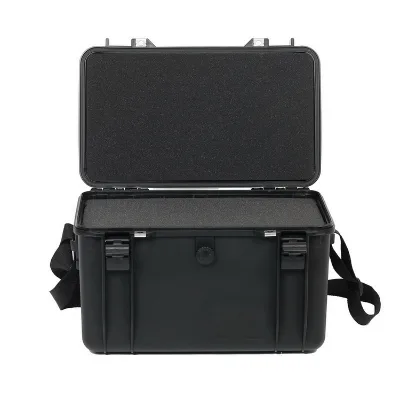

Customize Impact-Resistant and Extreme-Duty Tool Box Hard PE Case Tool Case
$30.00 - $300.00
MOQ: 50 Pieces


Comprehensive Sourcing Guide
Black Hard Plastic Tool Case Sourcing Guide
Procurement of black hard plastic tool cases requires careful evaluation of structural integrity and environmental resistance, as these units are designed to protect sensitive instruments and tools from physical shock and water ingress. The observed market data indicates that high-performance variants often feature IP67 or IP76 ratings, ensuring dust-tight seals and temporary submersion capabilities, which are critical for field operations in harsh conditions. Buyers must distinguish between general-purpose storage and specialized protective enclosures that utilize engineering-grade polypropylene or reinforced plastic to withstand heavy impacts without cracking.
The customization landscape for these cases is extensive, with suppliers frequently offering OEM and ODM support to tailor dimensions, internal foam layouts, and branding elements to specific client needs. While standard models exist, the ability to customize size, color, and logo placement allows organizations to align their equipment storage with corporate identity and unique operational requirements. This flexibility extends to internal configurations, where options like EVA, PU, or XPE foam can be selected to secure specific tools, ensuring that the final product serves as a precise extension of the user's workflow rather than a generic container.
Product Scope and Observed Listing Signals
The current market for black hard plastic tool cases presents a diverse range of styles, including both hand-held and wheeled configurations, catering to different mobility requirements and load capacities. Listings frequently highlight multi-purpose usage, suggesting these cases are suitable for a broad spectrum of applications ranging from industrial tool storage to the transport of delicate electronic instruments. The observed product attributes confirm that these cases are engineered for durability, with specific mentions of shockproof and waterproof functions that define their primary value proposition in professional environments.
Buyers should note that product specifications vary significantly in terms of dimensions and weight, with some models weighing approximately 2.6kg while others offer custom sizing to fit specific equipment profiles. The availability of various foam types, such as cube foam or custom-cut inserts, indicates a high degree of adaptability for securing irregularly shaped items. Additionally, the presence of different capacity levels, from medium to large, suggests that procurement strategies must account for the specific volume of tools being transported, ensuring the selected case provides adequate protection without unnecessary bulk.
Technical Specifications to Verify
When evaluating technical specifications, the thickness of the plastic shell is a critical metric, with observed data pointing to a standard thickness of 4mm for robust models. This dimension directly correlates with the case's ability to resist crushing forces and impact damage, making it a primary verification point for buyers seeking long-term durability. It is essential to confirm that the material composition, often engineering polypropylene, meets the required rigidity and flexibility balance to prevent brittleness in cold environments or deformation under heavy loads.
External dimensions and internal capacity must be meticulously cross-referenced with the actual size of the tools or instruments to be stored, as standard sizes like 839553307mm or 371313180mm may not suit all inventory needs. Buyers should verify the presence of custom-cut foam panels and the specific type of foam used, such as EVA or XPE, to ensure a snug fit that prevents internal movement during transit. Furthermore, the sealing mechanism and hinge quality should be inspected to guarantee that the waterproof and dustproof claims are maintained over repeated use cycles.
Compliance and Safety Documentation
Compliance with international safety and environmental standards is a non-negotiable aspect of sourcing black hard plastic tool cases, particularly for industries with strict regulatory requirements. The observed certification landscape includes ISO9001 for quality management, along with RoHS and Reach compliance, which ensure that the materials used are free from hazardous substances and meet European environmental directives. These certifications provide a baseline assurance that the manufacturing process adheres to recognized safety protocols, reducing liability risks for the purchasing organization.
In addition to material safety, the functional performance of the cases must be validated through specific testing standards, such as IP67 or IP76 ratings, which confirm the level of protection against dust and water. Buyers should request detailed test reports or certification documents that explicitly state the results of these ingress protection tests, rather than relying solely on marketing claims. Verifying that the supplier maintains a valid SGS report or similar third-party validation adds an extra layer of confidence regarding the product's ability to withstand the specific environmental challenges anticipated in its intended application.
Cost Drivers and Commercial Terms
The pricing structure for black hard plastic tool cases is influenced by several key factors, including the complexity of customization, the quality of materials, and the volume of the order. While observed price ranges can vary widely from 0.2 to 300 USD, the final cost is heavily dependent on whether the buyer requires standard off-the-shelf models or fully customized solutions with specific foam inserts and branding. High-volume orders typically benefit from economies of scale, but the minimum order quantity (MOQ) can range from a single piece to 1000 units, affecting the unit price significantly.
Commercial terms regarding lead times and packaging must be clearly defined to avoid supply chain disruptions, as production schedules can vary based on the level of customization required. The observed data indicates that packaging options range from standard cartons to customized solutions, which can impact both shipping costs and the protection of goods during transit. Buyers should negotiate clear terms for warranty coverage, with some suppliers offering up to 10 years of protection, and ensure that these terms are explicitly stated in the purchase agreement to safeguard against premature product failure.
Supplier Qualification and Quality Control
Supplier qualification for hard plastic tool cases requires a thorough assessment of their manufacturing capabilities, specifically their ability to deliver consistent quality across large production runs. The presence of OEM and ODM support indicates that suppliers have the technical infrastructure to handle custom designs, but buyers must verify their track record in maintaining dimensional accuracy and material consistency. It is advisable to audit the supplier's production facilities to ensure they utilize advanced molding techniques and quality control measures that prevent defects like warping or weak seams.
Quality control protocols should be established to include pre-shipment inspections that verify critical attributes such as waterproof seals, hinge durability, and foam density. Buyers should request samples that undergo rigorous testing for shock resistance and water ingress before approving bulk orders, ensuring that the final products meet the specified performance standards. Establishing a clear communication channel for reporting defects and a structured process for handling non-conforming goods is essential for maintaining a reliable supply chain and ensuring that the purchased cases perform as expected in real-world conditions.
Long-Term Procurement Checks
Long-term procurement success depends on establishing a robust framework for monitoring product performance and supplier reliability over the lifecycle of the contract. Buyers should implement regular review cycles to assess whether the tool cases continue to meet operational needs, particularly as equipment profiles or environmental conditions change. This involves tracking failure rates, warranty claims, and user feedback to identify any systemic issues that may require design modifications or supplier adjustments.
Sustainability and supply chain resilience are also critical considerations for long-term planning, as buyers must ensure that their suppliers can maintain consistent production despite market fluctuations or raw material shortages. Verifying that the supplier has a stable source of high-quality engineering plastics and a proven ability to scale production is essential for avoiding disruptions. Additionally, maintaining a relationship with suppliers who offer flexible customization options allows organizations to adapt their tool storage solutions to evolving requirements without the need for frequent re-sourcing.
FAQs
What certifications do these black hard plastic tool cases have?
These cases typically hold ISO9001, RoHS, Reach, and IP67 certifications. The IP67 rating ensures reliable waterproof and dustproof protection for sensitive instruments. Some models also feature SGS verification. These standards confirm material safety and durability for industrial use in demanding environments.
Can I customize the logo and color of the case?
Yes, customization is available for both logo and color. Buyers can choose green, black, or request custom colors. The logo can be applied as a customized print or PVC sticker. OEM and ODM support allows for tailored branding to meet specific corporate identity requirements.
What is the minimum order quantity for these cases?
The minimum order quantity starts at just one piece. This low MOQ allows buyers to test quality before placing larger orders. Bulk pricing may apply for quantities up to one thousand pieces. This flexibility supports both small prototype runs and large-scale industrial procurement needs.
How thick and durable is the plastic material used?
The case walls are typically four millimeters thick for robust protection. Made from engineering PP or plastic, they offer shockproof and waterproof performance. The sturdy construction protects instruments from impact. This thickness balances durability with manageable weight for handheld or wheeled transport applications.
What foam options are available for instrument protection?
Various foam inserts are available, including EVA, PU, EPE, and XPE. Cube foam and custom-cut panels ensure secure instrument placement. These materials provide excellent shock absorption and dustproof sealing. Buyers can select foam types based on specific equipment shapes and protection requirements.
Are these cases suitable for mobile phone or tool storage?
Yes, they serve multi-purpose usage including mobile phone and tool storage. Specific models are designed as waterproof mobile phone cases or tools packages. The rugged design protects electronics and hardware from water and shock. This versatility makes them ideal for field technicians and outdoor professionals.