Source Brake Camshaft Bearing for Trucks, Buses, and Industrial Engines
Compare 30 listings for Brake Camshaft Bearing options including steel and iron variants with ISO certifications. Buyers can review specifications like radial clearance and load ratings from suppliers in Shandong China to find suitable components for heavy-duty applications.
Key considerations
Products List


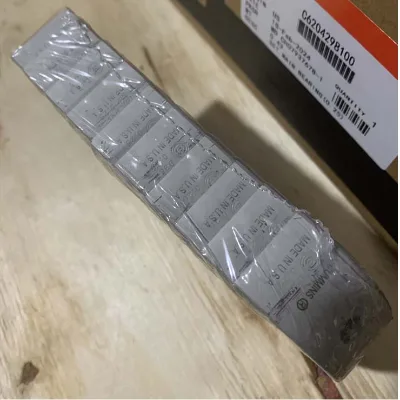


Comprehensive Sourcing Guide
Strategic Sourcing Guide for Brake Camshaft Bearing Components
Understanding Component Variability and Technical Specifications
When initiating a procurement strategy for Brake Camshaft Bearing components, the first critical step is recognizing the inherent variability in product attributes across different suppliers. The market does not offer a single monolithic product; rather, it presents a spectrum of configurations tailored to specific mechanical requirements. Based on observed industry data, buyers must distinguish between components designed for heavy-duty braking systems and those intended for lighter, high-speed applications. For instance, specific product listings indicate a classification of "Brake Drum" alongside "Wheel Hub" units, suggesting that the term "bearing" in this context may encompass a broader family of rotational support components used within the braking and wheel assembly ecosystem.
Technical specifications serve as the primary filter for supplier selection. A detailed examination of available inventory reveals significant divergence in material composition. Some units are fabricated from "Bearing Steel," which typically offers superior fatigue resistance and longevity for high-load applications, while others utilize "Steel" or "Iron" as the base material. The choice between these materials directly impacts the component's ability to withstand thermal cycling and mechanical stress. Furthermore, the load direction is a pivotal specification; observed data points to "Radial Bearing" configurations, which are designed to support loads perpendicular to the shaft. Buyers must verify if their specific application requires radial support or if a combined radial and axial load capacity is necessary, as the latter is not explicitly confirmed in the general product listings.
Precision and clearance tolerances are equally critical for operational reliability. The observed precision grades range from P0 to P5, with P0 representing standard tolerance and P5 indicating tighter, higher-precision fits. In high-speed applications, such as those noted with "Hight Speed" attributes, the radial clearance of 0.023 observed in specific listings becomes a vital parameter. Exceeding or falling short of the required clearance can lead to premature failure due to overheating or excessive friction. Additionally, the bearing arrangement, whether "Single" row or multi-row, and the separation status, such as "Unseparated" units, must align with the assembly design. A "Non-Aligning Bearing" configuration, for example, implies a rigid installation requirement where the shaft and housing must be perfectly aligned, whereas other applications might demand self-aligning capabilities.
Compliance, Certification, and Regulatory Standards
Navigating the compliance landscape is essential for B2B procurement, particularly when sourcing components for automotive and heavy machinery applications. The market data indicates a diverse array of certifications held by various suppliers, ranging from ISO standards to specific regional approvals. Buyers should expect to encounter products certified under ISO, TUV, VIA, DOT, CE, and E-Mark standards. The presence of these certifications suggests that the suppliers have undergone rigorous testing for quality management and product safety. However, it is crucial to note that not every listed product possesses every certification. A specific listing might highlight "ISO,TUV,VIA,DOT,CE," while another focuses on "TSRoHS,E-Mark,CE,ISOCOP,CCC." This variation necessitates a careful review of the certificate of conformity for each specific order to ensure regulatory alignment with the target market.
For buyers operating in the European Union, the E-Mark and CE certifications are often mandatory for wheel and braking components. Similarly, the DOT (Department of Transportation) certification is a prerequisite for products entering the United States market. The "CCC" (China Compulsory Certification) indicates compliance with Chinese domestic standards, which may be relevant for local sourcing or export to specific Asian markets. The "ISOCOP" and "TSRoHS" certifications further address environmental and safety concerns, ensuring that the materials used do not contain restricted hazardous substances.
It is important to treat these certifications as observations of specific product batches rather than universal guarantees for all items in the category. Buyers must verify that the specific model number, such as "KK35PP" or "NSS30," is covered under the claimed certification. The absence of a specific certification in a product description does not necessarily indicate non-compliance, but it does require the buyer to request explicit documentation from the supplier before finalizing a purchase. Relying on the general presence of "ISO" without specifying the standard (e.g., ISO 9001:2015) can lead to gaps in quality assurance. Therefore, procurement teams should explicitly request the certificate number and the scope of coverage for each component to mitigate regulatory risks.
Cost Drivers and Economic Factors in Procurement
The economic landscape for brake camshaft bearings is influenced by several dynamic factors, primarily material costs, manufacturing complexity, and order volume. The observed price range in the market spans from $0.09 to $1,000, a vast disparity that reflects the difference between simple, small-scale components and complex, high-performance assemblies. This wide range indicates that price alone is a poor indicator of value without context. A unit priced at $0.09 likely represents a basic, standard component with minimal customization, whereas a $1,000 item may include advanced features, specialized materials, or complex packaging requirements.
Material composition is a primary driver of cost. Components made from high-grade "Bearing Steel" generally command a higher price point than those made from standard "Steel" or "Iron." The additional processing required to achieve the "Chrome" finishing observed in some listings also adds to the manufacturing cost. This finishing process enhances anticorrosion properties, which is a critical feature for components exposed to harsh environments. The "Antiseptic" attribute mentioned in product descriptions further suggests specialized treatments that increase production expenses but extend the service life of the bearing.
Order volume plays a significant role in determining the final unit cost. The observed Minimum Order Quantity (MOQ) ranges from 1 to 1,000 units. Buyers purchasing small quantities may face higher per-unit costs due to the fixed costs of setup and packaging. Conversely, bulk orders can leverage economies of scale to reduce the unit price. However, the "Standard Plywood Carton" or "Box, Industrial Packing" requirements must be factored into the total landed cost. Packaging that meets specific client requirements, such as "Neture Box or Color Box," may incur additional charges. Furthermore, the "Lead Time" of 30-60 days observed in the market suggests that rush orders may incur premium fees, impacting the overall budget.
Typical Applications and Industry Use Cases
The versatility of Brake Camshaft Bearing components allows them to serve a wide array of applications, from heavy-duty trucks to consumer bicycles. The product data highlights specific use cases, including "Mountain Bike, Road Bike, Kids Bike," indicating that these components are not limited to industrial machinery but are also integral to the recreational and personal transportation sectors. In these applications, the "Size" of 3/8*170mm and the "Drive Wheel" configuration of "4WD" are critical specifications that ensure compatibility with the specific vehicle architecture.
In the automotive and heavy equipment sectors, the "Wheel Hub" and "Rear Wheel Hub Bearing Unit" classifications point to applications where rotational support and braking stability are paramount. The "Front Rear" position attribute suggests that these bearings are designed for installation in various locations within the vehicle's suspension and braking system. The "High Performance" quality rating implies that these components are engineered to withstand the rigorous demands of modern transportation, including high speeds and heavy loads.
The "Center bearing" specification further expands the application scope to include complex drivetrain systems where central support is required. The "Wheel Hub Diameter" range of 16-20" indicates suitability for a variety of vehicle sizes, from light trucks to large commercial vehicles. Buyers must carefully match the "Application" field of the product listing with their specific operational needs. For instance, a component listed for "Mountain Bike" use may not be suitable for a heavy-duty truck application, despite sharing similar nomenclature. Understanding the specific context of the application is essential to avoid mismatched specifications that could lead to system failure.
Supplier Evaluation and Quality Assurance Protocols
Evaluating potential suppliers requires a multi-faceted approach that goes beyond price and basic specifications. The "Place of Origin" being "Shandong China (Mainland)" for many listed products provides a geographical context, but it is not a definitive indicator of quality. Buyers should focus on the supplier's ability to provide consistent quality, as evidenced by their "Warranty" terms, which are observed to be "One Year" for many items. A robust warranty policy often reflects the supplier's confidence in their manufacturing processes and product durability.
Quality control should be a central pillar of the supplier evaluation process. The "Customization" attribute being "Available" for some products and "Non-Customized" for others highlights the need to assess the supplier's flexibility. A supplier that offers customization can adapt to unique design requirements, while a standardized supplier may offer better consistency and lower costs for common applications. The "Technics" of "Press" mentioned in the data suggests a specific manufacturing method that should be verified for its impact on the final product's structural integrity.
Buyers should also scrutinize the "Tolerance" and "Precision" claims. The "PType:Wheel Hub Bearing" designation indicates a specific tolerance class that must be maintained throughout the production run. Requesting sample units for testing is a prudent step to verify that the actual product matches the claimed specifications, such as the "Radial Clearance" of 0.023 or the "Rated Load" of Cr=11.7kn, Cor=6.45kn. Additionally, the "Condition" of the product, listed as "New," should be confirmed to ensure that no refurbished or used items are being sold as new.
Long-Term Procurement and Supply Chain Considerations
Sourcing brake camshaft bearings is not merely a transactional activity but a strategic decision that impacts long-term operational efficiency. The "Lead Time" of 30-60 days observed in the market underscores the importance of supply chain planning. Buyers must account for these lead times in their inventory management strategies to avoid production delays. The "Standard Component" status of some products suggests that they are readily available, but custom or specialized items may require longer lead times.
Packaging and logistics are also critical long-term considerations. The "prod_packing" options, ranging from "Standard Plywood Carton" to "as Per Client's Requirement," indicate that packaging can be tailored to specific shipping needs. However, the choice of packaging affects the protection of the components during transit and the ease of handling at the destination. "Box, Industrial Packing" is suitable for bulk industrial shipments, while "Color Box" may be preferred for retail distribution.
Finally, the "Quality" attribute of "High Performance" should be viewed as a long-term investment. While higher-quality components may have a higher upfront cost, they often result in lower total cost of ownership due to reduced maintenance, fewer replacements, and minimized downtime. Buyers should prioritize suppliers who demonstrate a commitment to quality through certifications, warranties, and consistent performance data. By focusing on these long-term factors, organizations can build a resilient supply chain that supports their operational goals and ensures the reliability of their braking systems.
Comparative Analysis of Product Attributes
To facilitate a clearer understanding of the market landscape, the following table summarizes key attributes observed across different product listings. This comparison highlights the diversity in specifications and helps buyers identify the specific requirements for their projects.
| Attribute Category | Observation A | Observation B | Observation C |
|---|---|---|---|
| Material | Bearing Steel | Steel | Iron |
| Certification | ISO, TUV, VIA, DOT, CE | TSRoHS, E-Mark, CE, ISOCOP, CCC | ISO |
| Precision Grade | P0/P6/P5 | PType:Wheel Hub Bearing | Not Specified |
| Load Direction | Radial Bearing | Radial Bearing | Not Specified |
| Packaging | Standard Plywood Carton | Box, Industrial Packing | Neture Box or Color Box |
| Origin | Shandong China | China | Shandong China (Mainland) |
| Application | Wheel Hub, Brake Drum | Mountain Bike, Road Bike | Center Bearing |
| Customization | Available | Non-Customized | As Per Client's Requirement |
| Lead Time | 30-60 Days | Not Specified | Not Specified |
| Warranty | One Year | One Year | Not Specified |
This table illustrates that while there are commonalities in the product category, significant variations exist. Buyers must carefully cross-reference their specific needs with these attributes to ensure they select the most appropriate component for their application. The diversity in materials, certifications, and packaging options underscores the necessity of a detailed specification sheet before engaging with any supplier.
FAQs
What certifications are available for brake camshaft bearings?
Available certifications include ISO, TUV, VIA, DOT, CE, E-Mark, and CCC. Specific models may hold different combinations like ISO,TUV,VIA,DOT,CE or TSRoHS,E-Mark,CE,ISOCOP,CCC. Buyers must verify the certificate of conformity for each specific order to ensure regulatory alignment.
How long is the lead time for these bearings?
The standard lead time ranges from 30 to 60 days. This duration applies to the manufacturing and delivery process for most orders. Buyers should plan their procurement schedules accordingly to avoid delays in their production lines.
Which materials are used to manufacture these bearings?
Materials include Bearing Steel, Steel, and Iron. Bearing Steel is often used for superior fatigue resistance, while Iron and Steel are also common options. The material choice directly impacts the component's ability to withstand thermal cycling and mechanical stress.
Can these bearings be customized for specific needs?
Customization is available for some products, while others are non-customized. Buyers can request specific packaging like Neture Box or Color Box. It is essential to confirm the customization options with the supplier before finalizing the purchase.
What is the price range for brake camshaft bearings?
The observed price range spans from 0.09 to 1000 USD. This vast disparity reflects differences between simple components and complex assemblies. Price alone is a poor indicator of value without considering material, customization, and order volume.
Where are these bearings typically manufactured?
The place of origin is primarily Shandong China. Many products are sourced from this region, which is a major manufacturing hub. Buyers should verify the specific location for each supplier to ensure logistical compatibility.