Source Braided Silk Cord Elastic for Garments, Bags, and Shoes
Find and compare 30 listings for Braided Silk Cord Elastic suitable for garment, bag, and shoe applications. Options include nylon, polyester, and metallic thread covers with strong elasticity and custom lengths available from Zhejiang suppliers.
Key considerations
Products List


Colorful Round Elastic Cord 1mm 1.5mm 2mm 3mm Braided Elastic Cords String
$0.03 - $0.22
MOQ: 2000 Yards


Petite Braid Trim with Elastic Button Loop for Costume, Crafts and Sewing
$0.09 - $0.39
MOQ: 1000 Yards


Wholesale High Quality Button Loop for Wedding Dress Pearl Trimming on Sale
$0.09 - $0.39
MOQ: 1000 Yards
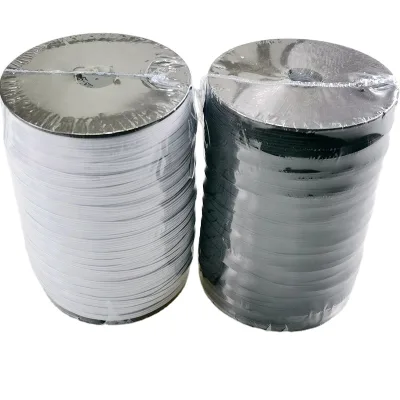

Factory Wholesale Strong Stretch Round Braided Elastic Cord Braided Elastic Cord
$2.00 - $2.20
MOQ: 1000 Pieces


Comprehensive Sourcing Guide
Braided Silk Cord Elastic Sourcing Guide
Sourcing Braided Silk Cord Elastic requires a careful distinction between marketing terminology and actual material composition, as the term "silk" is often used loosely in global trade to describe high-sheen synthetic fibers rather than natural protein filaments. Buyers must recognize that true silk elastic is rare and typically reserved for luxury fashion applications due to cost and durability constraints, whereas most commercially available "silk-like" elastic cords are engineered from synthetic blends designed to mimic the aesthetic while providing superior elasticity and resistance to environmental degradation. The observed market data indicates a strong prevalence of nylon, polyester, and spandex-based constructions, which offer the necessary tensile strength and recovery rates required for modern apparel and accessory manufacturing.
Procurement teams should approach this category with a focus on functional performance metrics rather than aesthetic descriptors alone. The core keyword suggests a product that combines the visual appeal of silk with the mechanical properties of elastic cordage, but the actual supply chain reality is dominated by braided synthetic cores covered in high-gloss sheaths. Understanding this distinction is critical for defining technical requirements, as natural silk lacks the inherent elasticity of spandex or rubber cores and would require complex weaving techniques to achieve stretch, often at the expense of durability. Therefore, the primary objective is to identify suppliers who can deliver the desired visual finish while meeting strict mechanical performance standards for stretch recovery and abrasion resistance.
Product Scope and Observed Listing Signals
The current market landscape for braided elastic cords reveals a diverse range of material compositions, with import rubber latex and synthetic blends being the most common core materials. Observed listings frequently highlight features such as strong elasticity, high tenacity, and abrasion resistance, which are essential for applications ranging from garment waistbands to bag straps. The presence of metallic threads in some cover materials suggests a niche market for decorative or high-fashion applications where visual impact is as important as structural integrity. Buyers should note that while the keyword implies silk, the actual products often utilize nylon or polyester covers to achieve a similar luster, providing a more cost-effective and durable solution for mass production.
Pricing and minimum order quantities (MOQ) vary significantly based on material complexity and customization requirements. The observed price range of 0 to 5.28 USD per unit indicates a highly competitive market with options for both budget-conscious bulk buyers and those seeking specialized, low-volume custom orders. MOQs ranging from 1 to 20,000 units allow for flexibility in testing samples versus committing to large-scale production runs. It is important to verify whether the listed prices include customization costs, such as specific color matching or custom lengths, as these factors can substantially impact the final landed cost. Buyers should also be aware that prices are subject to negotiation and fluctuation, reflecting the volatile nature of raw material costs for synthetic fibers and rubber.
Technical Specifications to Verify
Diameter and size consistency are critical technical parameters that directly impact the performance and aesthetic of the final product. The observed specifications indicate a diameter range of 1.0mm to 5.0mm, with regular sizes including 1.0mm, 1.5mm, 1.8mm, 2.0mm, 2.5mm, 2.8mm, 3.0mm, and 3.2mm. Buyers must verify that the supplier can maintain tight tolerances on diameter, as variations can lead to issues in automated sewing or assembly processes. Additionally, the length of the cord is often customizable, with standard packaging options including 30m, 40m, 50m, and 100m per bobbin or roll. It is essential to confirm the exact length per unit and the packaging format to ensure compatibility with existing production equipment and inventory management systems.
The construction method and material composition must be clearly defined to ensure the product meets functional requirements. The braided technique is commonly used to create a round, flexible cord that offers strong elasticity and durability. Buyers should verify the specific blend of cover materials, such as nylon, polyester, or metallic threads, and the core material, which is often import rubber latex or spandex. The finishing process, such as coating, can also affect the cord's performance, providing additional protection against moisture, abrasion, or UV degradation. It is crucial to request detailed technical data sheets that specify the tensile strength, elongation percentage, and recovery rate to ensure the cord will perform as expected in the intended application.
Compliance and Safety Documentation
Certification and standard compliance are vital for ensuring that the braided elastic cords meet international safety and quality requirements. The observed listings mention certifications such as CE and ISO9001, which indicate that the supplier adheres to specific quality management and product safety standards. Buyers should verify the validity of these certifications and ensure they cover the specific products being purchased. Additionally, the mention of SGS standards suggests that third-party testing may be available to confirm material composition and performance characteristics. It is important to request copies of relevant certificates and test reports to verify compliance with regulations in the target market, particularly for products intended for children or sensitive applications.
Environmental and chemical safety standards are increasingly important in the textile and accessory industries. Buyers should inquire about the supplier's compliance with restrictions on hazardous substances, such as REACH in Europe or CPSIA in the United States. The use of import rubber latex and synthetic fibers may involve chemical treatments that need to be disclosed and verified. Eco-friendly claims, if made, should be supported by credible certifications or test results. It is advisable to establish clear communication with the supplier regarding material safety data sheets (MSDS) and to ensure that all components of the cord, including dyes and coatings, meet the required regulatory standards for the end-use market.
Cost Drivers and Commercial Terms
Several factors influence the final cost of Braided Silk Cord Elastic, including material composition, customization requirements, and order volume. The use of high-quality synthetic fibers, such as nylon or polyester, and the inclusion of metallic threads can increase the base cost of the product. Customization options, such as specific colors, lengths, or packaging formats, may also incur additional charges. Buyers should request a detailed breakdown of costs to understand how these factors impact the final price. It is also important to consider the total cost of ownership, including shipping, tariffs, and potential waste due to quality issues, rather than focusing solely on the unit price.
Commercial terms and payment conditions play a significant role in the procurement process. The observed listings indicate that prices are subject to negotiation and fluctuation, reflecting the dynamic nature of the market. Buyers should establish clear agreements on price stability, especially for long-term contracts, to mitigate the risk of cost increases. Payment terms, such as deposits or letters of credit, should be negotiated to balance risk and cash flow. Additionally, it is important to clarify the supplier's policy on samples, as free samples can be a valuable tool for evaluating quality before committing to a large order. Clear communication regarding lead times, shipping methods, and return policies is essential to ensure a smooth procurement process.
Supplier Qualification and Quality Control
Supplier qualification is a critical step in ensuring the reliability and consistency of the braided elastic cord supply. Buyers should conduct thorough due diligence on potential suppliers, including verification of their business licenses, production capabilities, and quality management systems. The mention of 100% QC passed in the observed listings suggests a commitment to quality, but buyers should verify the specific quality control processes in place, such as incoming material inspection, in-process monitoring, and final product testing. It is advisable to request references or case studies from other clients to assess the supplier's track record and reliability.
Quality control measures should be clearly defined and agreed upon before placing orders. This includes establishing acceptable tolerance levels for diameter, length, and color consistency, as well as defining the criteria for elasticity and durability. Buyers should consider implementing their own quality checks upon receipt of goods, using standardized testing methods to verify performance. Regular audits of the supplier's production facilities can also help ensure ongoing compliance with quality standards. Establishing a strong partnership with the supplier, based on clear communication and mutual trust, can lead to improved product quality and more efficient problem resolution.
Long-Term Procurement Checks
Long-term procurement success depends on continuous monitoring and evaluation of supplier performance and market trends. Buyers should regularly review supplier metrics, such as on-time delivery rates, defect rates, and responsiveness to issues, to identify areas for improvement. It is also important to stay informed about changes in material costs, regulatory requirements, and technological advancements in elastic cord manufacturing. This proactive approach allows buyers to anticipate potential disruptions and adapt their sourcing strategies accordingly. Building a diversified supplier base can also mitigate risk and provide greater flexibility in responding to market changes.
Sustainability and ethical sourcing are becoming increasingly important considerations for long-term procurement strategies. Buyers should evaluate suppliers' commitments to environmental responsibility and social compliance, including their practices regarding waste management, energy consumption, and labor conditions. Engaging with suppliers on these issues can drive positive change and enhance brand reputation. Additionally, exploring opportunities for innovation, such as the development of new materials or production techniques, can lead to cost savings and improved product performance. By maintaining a strategic focus on quality, compliance, and sustainability, buyers can build a resilient and competitive supply chain for braided elastic cords.
FAQs
What certifications do the Braided Silk Cord Elastic products have?
The products hold CE and ISO9001 certifications as standard for the braided rope type. These certifications ensure compliance with international safety and quality management systems for industrial and garment applications.
Which materials are used to make the elastic cord cover?
The cover materials consist of Nylon, Polyester, or Metallic Thread options. The core material often utilizes Import Rubber Latex or Spandex to provide the necessary strong elasticity for various uses.
Can I request a custom length for the elastic cord?
Yes, custom length is available for the elastic cord products. Buyers can specify dimensions ranging from 1mm to 5mm in diameter with lengths tailored to specific project requirements like bags or shoes.
What is the typical packaging format for these elastic cords?
Packaging options include 30m, 40m, 50m, or 100m per bobbin, as well as 5yds or 6yds per bundle. Some items are also packed in cartons or 25m rolls depending on the specific model.
Where are these Braided Silk Cord Elastic products manufactured?
The products originate from Zhejiang, China (Mainland). This location is a known hub for textile manufacturing, ensuring efficient production and logistics for international buyers seeking these specific elastic cords.
How is the quality of the elastic cord ensured before shipping?
Every product undergoes a 100% QC passed inspection process before leaving the facility. This rigorous quality control ensures that the elastic cords meet the required standards for abrasion resistance and high tenacity.
What is the price range for the Braided Silk Cord Elastic?
The price needs to be negotiated as there are fluctuations based on order volume and specifications. Observed listed prices range from 0 to 5.28 USD, but final costs depend on the specific customization and quantity.