Source Breathable Invisible 3D Socks for sports travel daily work
Find 30 listings of Breathable Invisible 3D Socks featuring cotton materials, seamless knitting, and moisture-wicking properties. Buyers can compare customization options, sizes, and prices from verified suppliers in China.
Key considerations
Products List




Comprehensive Sourcing Guide
Strategic Sourcing Guide for Breathable Invisible 3D Socks
The global demand for specialized hosiery has shifted significantly toward performance-oriented, low-profile designs that prioritize comfort and hygiene. Among these, Breathable Invisible 3D Socks represent a critical category for B2B buyers seeking to supply retailers, fitness centers, and corporate uniform programs. Sourcing this specific product requires a nuanced understanding of manufacturing techniques, material science, and supply chain logistics. The following guide provides a structured approach to evaluating suppliers and products based on verified attributes and industry standards, ensuring that procurement decisions are grounded in factual evidence rather than marketing assertions.
Understanding 3D Seamless Knitting Technology
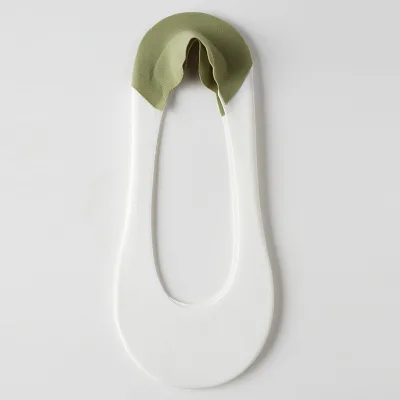
The core differentiator for the "3D" designation in sock manufacturing is the knitting technology employed. Unlike traditional cut-and-sewn methods that create a distinct seam at the toe, 3D seamless knitting produces a tubular structure that conforms to the foot's anatomy without a horizontal seam line. This construction method is explicitly observed in the product attributes as "3D Seamless Knitting" and "3D Seamless Structure." This design feature is not merely aesthetic; it serves a functional purpose by reducing friction points that often lead to blisters during extended wear.
When evaluating potential suppliers, buyers must verify the knitting machine capabilities. The technology allows for the creation of "3D Ergonomic Arch Support," a specific attribute observed in the product data. This implies that the knitting pattern varies the tension and stitch density across different zones of the sock to provide targeted support without adding bulk. For invisible socks, this is particularly critical as the lack of a visible seam at the toe box allows the sock to remain hidden within low-cut footwear. The "Thin" and "Ultra-thin" thickness specifications observed in the data indicate that the yarn count and knitting gauge must be precise to maintain structural integrity while achieving the desired low-profile look. Buyers should request samples to physically inspect the toe closure and arch area to confirm the absence of seams and the presence of the claimed ergonomic support.
Material Composition and Functional Performance
The performance of breathable invisible socks is inextricably linked to the material composition. The supplied data identifies "Cotton" as a primary material, which is a standard choice for its natural breathability and skin-friendly properties. However, the attribute list also highlights features such as "Moisture-Wicking," "Quick dry," and "Eco-Friendly." In a B2B context, relying solely on "Cotton" may be insufficient for high-performance applications, as pure cotton can retain moisture.
Buyers must investigate the blend ratios. The presence of "Moisture-Wicking Stretchable Durable" features suggests the inclusion of synthetic fibers like polyester or elastane, which are often blended with cotton to enhance elasticity and drying speed. The "Breathable" attribute is a recurring observation across multiple product entries, reinforcing the need for ventilation. When assessing material claims, procurement teams should verify the fiber content labels on the product samples. The data also notes "Anti-Bacterial" and "Deodorization" features, which may be achieved through specific yarn treatments or the integration of silver ions. It is crucial to distinguish between inherent material properties and chemical treatments. Buyers should ask for material safety data sheets (MSDS) or test reports to confirm that any anti-bacterial claims are based on verified testing rather than generic marketing language.
Technical Specifications and Sizing Standards
Precision in technical specifications is vital for minimizing returns and ensuring customer satisfaction. The product data reveals a mix of sizing standards, ranging from "One Size Fits All" to specific measurements like "Size: S" and "22cm: Weight: 23G." This variance indicates that different suppliers or product lines target different market segments. The "One Size Fits All" model relies heavily on the "Elastic Comfortable" fit provided by the seamless knitting and the inclusion of elastane in the blend.
For buyers targeting a specific demographic, such as "Adults" or "Children," the sizing data must be scrutinized. The observation of "Children" as a target age group alongside "Adults" suggests that the supply chain offers a wide range of SKUs. The "Height" specifications vary from "Low" to "Ankle Sock" and "Middle," which directly correlates to the "Invisible" requirement. True invisible socks typically fall into the "Low" or "Ankle" height category, ensuring they remain hidden inside the shoe. Buyers should create a specification matrix comparing the "Model Number" (e.g., FB1134WS, FB1055MS, YKJ166) against the corresponding "Thickness" and "Height" to ensure the product matches the intended use case. The "Weight" specification, such as 23g, is a useful metric for logistics planning and cost estimation, as it directly impacts shipping costs per unit.
Compliance, Certification, and Ethical Standards
In the textile industry, compliance is a non-negotiable aspect of B2B procurement. While the provided data lists "Customized" standards and a specific entry stating "no" for a standard, this likely refers to the lack of a pre-defined universal standard for the specific custom order rather than a lack of quality. However, the background information mentions "BSCI" (Business Social Compliance Initiative) and "ISO 9001" as potential certifications. Buyers must treat these as verification targets rather than guaranteed attributes.
When sourcing from regions like "Zhejiang, China" or "China" generally, suppliers should be able to demonstrate adherence to international labor and environmental standards. The "Eco-Friendly" attribute observed in the product features suggests a focus on sustainable practices, which may include the use of organic cotton or recycled fibers. Buyers should request proof of certification for any "Eco-Friendly" claims. Furthermore, the "Customized" logo and "Customized" packing options indicate a high degree of flexibility in the supply chain. This customization capability must be balanced with compliance requirements. For instance, if a buyer requires a specific eco-certification for their brand, the supplier must be able to source materials that meet those criteria. The "Small Orders: Accepted" attribute is a positive indicator for flexibility, but buyers should verify if this flexibility extends to compliance documentation for smaller batches.
Cost Drivers and Pricing Dynamics
The observed price range of $0.25 to $3.20 USD reflects a significant variance in product quality, material composition, and order volume. Several factors drive this cost disparity. First, the "3D Seamless Knitting" technology requires specialized machinery and skilled operators, which can increase the base cost compared to traditional knitting. Second, the material blend plays a major role; a sock made of 100% organic cotton with anti-bacterial treatment will command a higher price than a basic cotton-polyester blend.
The "MOQ" (Minimum Order Quantity) range of 2 to 3000 units further influences the unit price. Suppliers offering an MOQ of 2 are likely catering to small businesses or sampling needs, often at a premium per-unit cost. Conversely, orders approaching 3000 units benefit from economies of scale, driving the price toward the lower end of the observed range. Buyers should analyze the "Customized" nature of the product. Custom logos, specific packaging (e.g., "Carton Box" vs. individual poly bags), and unique color requirements (e.g., "White" or "Colored") add to the production complexity and cost. It is essential to request a detailed cost breakdown that separates the base product cost from customization fees to understand the true value proposition.
Supplier Evaluation and Quality Control Protocols
Evaluating a supplier for Breathable Invisible 3D Socks requires a multi-faceted approach. The "Wearing Scene" attributes, such as "All-Day Daily Wear," "Sports," "Travel," and "Standing Work," indicate that the product must withstand diverse stressors. Quality control should focus on the durability of the "3D Seamless Structure" and the retention of the "Elastic Comfortable" fit after repeated washing.
Buyers should implement a rigorous sampling protocol. This includes testing the "Anti-Slip" features, which are listed as a specific attribute, to ensure the sock stays in place during movement. The "Breathable" and "Quick dry" claims should be validated through moisture management tests. Additionally, the "Disposable" attribute observed in some product entries suggests a specific sub-category of socks that may have different quality expectations compared to durable daily wear socks. Buyers must clarify the intended lifespan of the product. For long-term procurement, establishing a quality control plan that includes pre-shipment inspections is critical. This plan should verify the "Thickness" consistency, the accuracy of the "Size" specifications, and the integrity of the "Logo" customization.
Long-Term Procurement and Supply Chain Resilience
Sourcing Breathable Invisible 3D Socks is not a one-time transaction but a strategic partnership. The "Season" attributes, covering "Spring, Summer, Autumn, Winter," suggest that these products have year-round demand, reducing the risk of seasonal inventory obsolescence. However, the "Spring / Autumn" and "Summer" specific mentions indicate that marketing strategies should be tailored to the climate.
Buyers should consider the "prod_packing" and "prod_origin" logistics. Products originating from "Zhejiang, China" benefit from a mature textile infrastructure, but lead times can vary based on the "Customized" nature of the order. The "Customized" packing option allows for branding opportunities but requires careful planning to avoid delays. Long-term success depends on the supplier's ability to maintain consistent quality across batches. Buyers should establish clear communication channels regarding "prod_model" changes and ensure that any updates to the "3D Ergonomic Arch Support" or material blends are communicated well in advance. By focusing on these strategic elements, buyers can build a resilient supply chain that delivers high-quality, Breathable Invisible 3D Socks that meet the evolving needs of the market.
FAQs
How are Breathable Invisible 3D Socks constructed?
These socks utilize 3D seamless knitting technology to create a tubular structure without toe seams. This method reduces friction and provides ergonomic arch support while maintaining a low-profile design suitable for invisible wear.
What materials are used for these socks?
Cotton is the primary material observed, often blended with synthetic fibers to achieve moisture-wicking and stretchable properties. Some variants include treatments for anti-bacterial and deodorization features to ensure hygiene during daily wear.
Which sizes are available for these products?
Options include one-size-fits-all models with elastic comfort as well as specific sizes like S or measurements such as 22cm. The fit is designed to be versatile for both adults and children depending on the specific model.
Can buyers request custom logos and packaging?
Yes, customization is available for logos, product packing, and standards to meet specific brand requirements. Suppliers offer flexible options including carton box packaging and customized branding to support various business needs.
What is the typical price range for these socks?
The observed price range spans from 0.25 to 3.2 USD per unit depending on order volume and specifications. Lower prices are generally associated with higher minimum order quantities and standard configurations.
How do these socks perform in different seasons?
They are designed for all-year wear, covering spring, summer, autumn, and winter with breathable and thermal properties. Specific models may target summer or spring-autumn seasons with varying thickness levels like ultra-thin or normal.