Source Bright Annealing 316L Coiled Tubing for Pharma Oil Gas
Compare 30 listings of Bright Annealing 316L Coiled Tubing from Chinese manufacturers. Buyers can evaluate grades, dimensions, and delivery times for pharmaceutical, oil and gas, and food industry applications.
Key considerations
Products List

ASTM A269 316L stainless steel bright-annealed coiled tubing for chemical injection
$3000.00 - $5000.00
MOQ: 1 Tons


316L (S31603) seamless bright annealed tubing per ASTM A269 / ASME SA269
$3500.00 - $4500.00
MOQ: 1 Tons
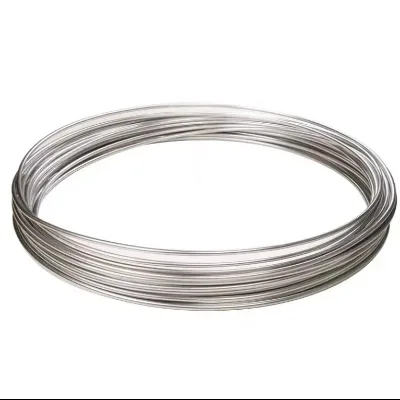


Comprehensive Sourcing Guide
Strategic Sourcing Guide for Bright Annealed 316L Coiled Tubing
Technical Specifications and Material Composition
When sourcing bright annealed 316L coiled tubing, buyers must first establish a precise understanding of the material composition and dimensional tolerances that define the product. The core material grade for this application is consistently identified as 316L, a low-carbon variant of the 316 stainless steel grade. This specific alloy belongs to the 300 Series of stainless steels and is characterized by its non-alloy classification in certain contexts, though it contains chromium and nickel for corrosion resistance. The "L" designation indicates a maximum carbon content of 0.03%, which is critical for preventing sensitization during welding or high-temperature exposure.
The manufacturing technique for these tubes typically involves cold drawing or cold rolling processes. These mechanical working methods are essential for achieving the precise dimensional accuracy and the smooth surface finish required for bright annealing. The surface treatment is explicitly described as "Bright," often resulting from a Bright Annealed (BA) delivery condition. This process ensures the internal and external surfaces remain free of scale and oxidation, providing a clean, reflective finish that is vital for sanitary applications or high-purity chemical processing.
Dimensional specifications vary based on the specific product model and application requirements. The outer diameter (OD) for these seamless pipes generally ranges from 4.78 mm to 114.3 mm, with some specialized models offering a range of 3/16" to 1". Wall thickness is equally variable, spanning from 0.51 mm to 5.0 mm in standard listings, while high-precision tubing may feature wall thicknesses as thin as 0.02" to 0.1". The length of the tubing is typically available in fixed lengths of 6 meters or can be customized to random lengths or specific customer requirements. Tolerances are critical; standard tolerances are often cited as ±0.05 mm, though these can be adjusted based on specific client requests. The shape is uniformly round, and the product type is classified as seamless, which eliminates the weld seam and provides uniform strength throughout the tube.
Compliance, Certification, and Standard Verification
Navigating the compliance landscape for bright annealed 316L coiled tubing requires rigorous verification against international standards and certification bodies. The primary production standards governing these tubes include ASTM A213, ASTM A269, and EN standards. Specifically, the product is frequently associated with ASTM A269 for seamless stainless steel tubing intended for general corrosion-resistant service. Markings on the product often reference these standards, such as "ASTM A269 TP316L BA TUBE," alongside specific identifiers like "GH-STEEL" or "TP304 SMLS BA."
Certification is a non-negotiable aspect of procurement for industries such as pharmaceuticals, food processing, and oil and gas. Buyers should expect to receive documentation confirming ISO certification, with specific mentions of ISO standards in the supply chain. Additional certifications that may be present include CE and AD2000-W0/TRD, which are crucial for equipment operating in European markets or under specific pressure vessel regulations. It is important to note that while ISO is a high-confidence fact, other certifications like ISO 15156 (for sour service) should be verified on a case-by-case basis rather than assumed for all inventory.
The markings on the tubing itself serve as a primary compliance indicator. Standard markings often include the manufacturer's identifier (e.g., GH-STEEL), the material grade (e.g., TP316L), the standard (e.g., ASTM A269), and the dimensions (e.g., 25.4 × 1.65 MM). These markings must be legible and traceable to the mill test reports. Buyers must ensure that the "Production Standard" listed on the invoice matches the physical markings on the tube to avoid discrepancies during customs clearance or quality audits. The origin of the product is consistently identified as China, with specific production hubs in Jiangsu, which can influence logistics and trade terms.
Cost Drivers and Pricing Dynamics
The pricing structure for bright annealed 316L coiled tubing is influenced by a complex interplay of material costs, processing complexity, and logistical factors. The observed price range in the market is extensive, spanning from $0.80 to $8,000 USD. This wide variance is not indicative of product quality differences alone but reflects the significant impact of order volume, specific dimensions, and surface finish requirements. Smaller diameter tubes with thinner walls and custom lengths will naturally command different price points compared to larger, standard-length stock items.
Material costs are a primary driver, given that 316L is a premium stainless steel alloy. The price of nickel and molybdenum, key components of the 316L alloy, fluctuates in the global market and directly impacts the base cost of the tubing. Furthermore, the "Bright Annealing" process adds a layer of cost. Unlike standard pickling and passivation, bright annealing requires a controlled atmosphere furnace to prevent oxidation, which increases energy consumption and operational complexity. This specialized process is necessary to achieve the "Bright" surface finish and is a significant cost factor compared to standard cold-rolled tubing.
Order volume plays a pivotal role in the final unit price. The Minimum Order Quantity (MOQ) ranges from 1 unit to 600 units. Buyers purchasing small quantities, often for prototyping or emergency repairs, will face higher per-unit costs. Conversely, bulk orders that meet or exceed the higher end of the MOQ range can leverage economies of scale. Trade terms also affect the landed cost. Common terms include EXW (Ex Works), FOB (Free on Board), CFR (Cost and Freight), and CIF (Cost, Insurance, and Freight). The choice of term determines who bears the cost of freight and insurance, significantly altering the total procurement cost. Additionally, invoicing is typically conducted based on actual weight, meaning the final invoice amount may differ slightly from the estimated weight used in the initial quote.
Typical Applications and Industry Suitability
Bright annealed 316L coiled tubing is engineered for environments where corrosion resistance, hygiene, and structural integrity are paramount. The product is explicitly listed for use in the Pharmaceutical Industry, Oil and Gas Industry, Food Industry, Chemical Industry, and Automotive Industry. In the pharmaceutical and food sectors, the bright annealed finish is critical because it prevents bacterial adhesion and facilitates easy cleaning and sterilization. The seamless nature of the tubing eliminates crevices where contaminants could accumulate, making it ideal for sanitary fluid transfer systems.
In the chemical and oil and gas industries, the 316L grade provides superior resistance to pitting and crevice corrosion, particularly in environments containing chlorides. The coiled form factor offers logistical advantages for these sectors, allowing for easier transportation and installation in confined spaces or long-distance piping runs without the need for numerous welds. The automotive industry utilizes these tubes for high-performance fluid lines where weight reduction and durability are essential. The "Seamless Pipe" classification ensures that the tubing can withstand high pressures without the risk of failure at a weld seam.
The specific applications often dictate the required surface finish and dimensional tolerances. For instance, hydraulic systems may require the high precision of cold-drawn tubes with tight tolerances (±0.05 mm), while general chemical transfer might prioritize the corrosion resistance of the 316L grade over ultra-tight dimensional control. The "Coiled Tube" standard allows for flexibility in routing, reducing the number of fittings required and minimizing potential leak points. Whether for instrumentation lines, heat exchangers, or structural supports, the versatility of 316L coiled tubing makes it a preferred choice across diverse industrial sectors.
Supplier Evaluation and Quality Assurance Protocols
Evaluating a supplier for bright annealed 316L coiled tubing requires a multi-faceted approach that goes beyond price comparison. Buyers must verify the supplier's ability to provide comprehensive testing documentation. The high-confidence facts indicate that products undergo rigorous testing, including Hydraulic Test, Eddy Current Test (ET), and Ultrasonic Test (UT). These tests are essential for detecting internal and external defects that are not visible to the naked eye. The presence of "HT/ET/UT" or "Hydraulic Test/NDT" on product listings confirms that non-destructive testing is part of the standard quality control process.
Suppliers should be capable of providing Mill Test Reports (MTRs) that align with the product markings and standards. The "GH-STEEL" or similar brand markings should be traceable to the specific heat number and production batch. Buyers should also assess the supplier's customization capabilities, as the product listing confirms that customization is available. This includes the ability to produce specific lengths, wall thicknesses, and surface finishes. The "Customization: Available" attribute suggests that suppliers can adapt to unique project requirements, but this capability must be validated through sample requests or factory audits.
Packaging is another critical factor in supplier evaluation. The product is typically packed in bundles or plywood boxes to prevent damage during transit. For international shipments, the packaging must be robust enough to withstand the rigors of ocean freight and handling. The "Packed in Bundles or Plywooden Box" specification indicates a standard practice, but buyers should confirm that the packaging meets the specific needs of their logistics chain. Furthermore, the supplier's location in Jiangsu, China, should be considered in the context of their export experience and ability to manage complex logistics.
Procurement Logistics and Long-Term Considerations
The procurement of bright annealed 316L coiled tubing involves careful planning regarding delivery times and inventory management. The observed delivery times vary significantly based on the order type. Stock items are typically available within 7 days, offering a quick turnaround for urgent needs. However, Made-to-Order (MTO) items generally require 30 days for production and delivery. Some listings indicate a broader range of 46-60 days, which may apply to larger orders or specific customizations. Buyers must align their project timelines with these lead times to avoid production delays.
Long-term procurement considerations include the stability of the supply chain and the availability of consistent quality. Given the reliance on specific manufacturing techniques like cold drawing and bright annealing, buyers should ensure that their supplier has the capacity to maintain these processes over time. The "Delivery Condition: Bright Annealed (BA)" is a critical specification that must be maintained throughout the supply chain. Any deviation in the delivery condition could compromise the material's properties and surface finish.
Trade terms such as EXW, FOB, FCA, CFR, and CIF offer flexibility in managing risk and cost. Buyers should select the term that best aligns with their logistics capabilities and risk tolerance. For example, EXW places the maximum responsibility on the buyer for transportation, while CIF includes insurance and freight costs up to the destination port. The invoicing method, based on actual weight, requires accurate weight estimation in the initial order to prevent disputes. Finally, buyers should consider the total cost of ownership, including potential costs for rework or replacement if the tubing does not meet the specified standards or tolerances. By understanding these logistical and long-term factors, buyers can secure a reliable supply of high-quality bright annealed 316L coiled tubing.
Comparative Analysis of Product Attributes
To facilitate decision-making, the following table summarizes the key attributes of bright annealed 316L coiled tubing based on the provided facts. This comparison highlights the variability in specifications and the standard features that buyers should expect.
| Attribute Category | Standard/Typical Value | Variability/Notes |
|---|---|---|
| Material Grade | 316L, 304, 304L, 316, 316Ti | 316L is the primary focus; 300 Series is standard. |
| Manufacturing Process | Cold Drawing, Cold Rolled | Determines surface finish and dimensional accuracy. |
| Surface Finish | Bright (BA) | Achieved via Bright Annealing; critical for hygiene. |
| Tube Type | Seamless | No weld seam; uniform strength. |
| Outer Diameter | 4.78~114.3 mm | Also available in 3/16" - 1" range. |
| Wall Thickness | 0.51~5.0 mm | Thin-walled options: 0.02" - 0.1". |
| Length | 6 meters or Custom | Random or Fixed length options available. |
| Standards | ASTM A269, A213, EN, GB | ASTM A269 is the most common reference. |
| Testing | Hydraulic, Eddy Current, Ultrasonic | NDT and pressure tests are standard. |
| Certification | ISO, CE, AD2000-W0/TRD | ISO is high-confidence; others vary by supplier. |
| Origin | China (Jiangsu) | Consistent location for all listed products. |
| Delivery Time | Stock: 7 Days; MTO: 30 Days | Extended lead times (46-60 days) possible for custom. |
| Packaging | Bundles or Plywooden Box | Standard protection for international shipping. |
This table serves as a reference for buyers to verify that the products they are evaluating align with the core requirements for bright annealed 316L coiled tubing. By cross-referencing these attributes with supplier documentation, buyers can ensure they are procuring materials that meet their specific technical and compliance needs.
FAQs
What standards govern bright annealed 316L coiled tubing production?
Production follows ASTM A213, ASTM A269, EN, and GB standards. These standards ensure the seamless tubing meets specific requirements for corrosion resistance and dimensional accuracy in industrial applications.
Can buyers customize the length and dimensions of the tubing?
Yes, customization is available for length, outer diameter, and wall thickness. Buyers can request fixed lengths of six meters or specific custom dimensions ranging from 4.78 mm to 114.3 mm.
How long does delivery take for stock versus made-to-order items?
Stock items are typically available within seven days. Made-to-order items generally require thirty days for production, though some specific custom orders may take up to sixty days.
Which certifications are commonly provided for this stainless steel tubing?
Products often carry ISO certification and may include CE or AD2000-W0/TRD marks. These certifications verify compliance with international quality and safety standards for various industrial sectors.
What testing methods are used to ensure the quality of the tubes?
Tubes undergo hydraulic, eddy current, and ultrasonic tests. These non-destructive testing methods detect internal and external defects to guarantee the integrity of the seamless stainless steel pipes.
What is the typical price range for purchasing this coiled tubing?
The observed price range spans from 0.8 to 8000 USD per unit. Final costs depend on order volume, specific dimensions, surface finish requirements, and the selected trade terms like EXW or FOB.