Source Brushless Stamford Diesel Generator for Industry, Construction, Emergency
Find 30 Brushless Stamford Diesel Generator options with varying power ranges from 20kW to 1000kW. Buyers can compare specifications including voltage, cooling methods, and alternator brands like Leroy Somer or Stamford for land use applications.
Key considerations
Products List


50kw Synchronous Energy-Saving Generator Stamford Brushless Alternator
$100.00 - $1200.00
MOQ: 1 Pieces

Fujian Factory Stamford Type 40kw Brushless Dynamo Alternator Generator
$100.00 - $1200.00
MOQ: 1 Pieces

40kVA Three Phase Permanent Magnet Generator Stamford Alternator Brushless
$100.00 - $1200.00
MOQ: 1 Pieces


775kVA Prime Rating Brushless Alternator Remote Start Diesel Generator with with Stamford
$5000.00 - $20000.00
MOQ: 1 Pieces

. 50kVA/40kw 50Hz/1500rpm Three Phase with Stamford Alternator Diesel Generator
$2000.00 - $20000.00
MOQ: 1 SET

3 Phase 1000kVA 1200kVA 1500kVA 2000kVA 2500kVA Stamford Brushless Generator Alternator
$2000.00 - $100000.00
MOQ: 1 Pieces


Hot Stamford Alternator 6.5-2000kw; Stanford Alternator Generator; Electric Alternator
$2000.00 - $100000.00
MOQ: 1 Pieces
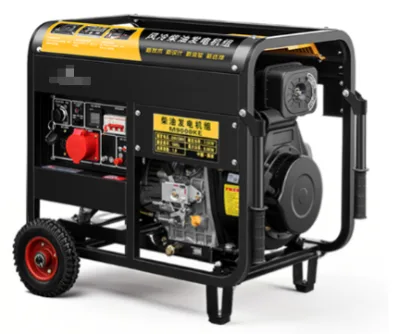


High Precision Diesel Generator with Stanmford Alternator for Sale
$40000.00 - $45000.00
MOQ: 1 Pieces


$28000.00 - $32000.00
MOQ: 1 Pieces
Comprehensive Sourcing Guide
Sourcing Guide for Brushless Stamford Diesel Generators
Understanding the Core Technology and Configuration
When sourcing a Brushless Stamford Diesel Generator, buyers must first distinguish between the engine platform and the alternator assembly. The term "Stamford" specifically refers to a well-known brand of alternators, often manufactured by Leroy Somer, which are integrated into diesel generator sets. The core technology relies on a brushless excitation system, typically utilizing an AC rotating exciter. This design eliminates the need for carbon brushes and slip rings, significantly reducing maintenance requirements and enhancing reliability over the unit's lifespan. The absence of brushes prevents the arcing and wear associated with older brushed systems, making these units ideal for environments where consistent power quality is critical.
The engine component of these units is generally a four-stroke diesel engine, designed for robust performance in land use applications. These engines are available in various cylinder configurations, typically ranging from four to eight cylinders, depending on the required power output. The prime power range for these systems generally spans from 20kW to 1000kW, allowing for scalability from small commercial backup units to large industrial power stations. The speed of the generator is a critical parameter, with standard configurations operating at 1500 RPM for 50Hz applications or 1800 RPM for 60Hz applications. This speed is directly linked to the number of poles in the alternator, which is commonly a four-pole design for these voltage classes.
The alternator itself features a stator winding made of 100% copper wire, ensuring high conductivity and thermal efficiency. The stator connection is typically a series star configuration, which is standard for three-phase AC output. The insulation class is usually rated at Class H, allowing the unit to withstand higher ambient temperatures, often up to 40°C, without degradation of the winding integrity. The bearing configuration can be either single or double, depending on the specific model and load requirements, providing the necessary support for the rotating shaft under varying operational loads.
Technical Specifications and Performance Parameters
A detailed review of technical specifications is essential before finalizing a procurement order. The rated voltage for these generators is highly customizable to match local grid standards. Common voltage configurations include 110/220V, 220/380V, 230/400V, 240/415V, and 254/440V. For specific industrial applications, voltages such as 480V or 440V may also be observed. The frequency is strictly tied to the rotational speed, with options for 50Hz or 60Hz to accommodate different regional power grids.
The protection class is a vital safety metric, typically rated at IP22 or IP23. This rating indicates the degree of protection provided against solid objects and water ingress. An IP23 rating, for instance, offers protection against solid objects larger than 12mm and water spray from any direction, making the unit suitable for outdoor or semi-outdoor installations where environmental exposure is a concern. The cooling method employed is often water cooling, which is necessary for high-power units to dissipate the significant heat generated during operation. This is complemented by an electrical instrument for adjusting speed, ensuring precise frequency control under varying load conditions.
The excitation mode is a defining characteristic of the brushless design. The AC rotating exciter provides the necessary field current to the rotor without physical contact, ensuring a stable voltage output. The Automatic Voltage Regulator (AVR) is a critical component in this chain, with models like the Sx440 or Sx460 being common choices. These regulators maintain voltage stability within tight tolerances, protecting connected equipment from surges or drops. The controller unit, often from brands like Smartgen or Deepsea, manages the start-up, shutdown, and monitoring functions, offering features such as remote monitoring and fault diagnostics.
Compliance, Certification, and Quality Standards
Verifying compliance with international and regional standards is a non-negotiable step in the procurement process. The manufacturing process for these generators should adhere to ISO9001 quality management standards, ensuring that the production facility maintains consistent quality control procedures. Additionally, the products themselves may carry certifications such as CE, Soncap, or Saso, depending on the destination market. These certifications indicate that the generator meets specific safety, health, and environmental protection requirements for the target region.
Buyers must verify the origin of the components. The alternators are frequently sourced from reputable manufacturers like Marathon, Stamford, or Leroy Somer. The engine origin is often traced to specific manufacturing hubs, such as Fuan City or Fuzhou in Fujian Province, China. It is important to note that while a product may be listed as meeting a standard like ISO9001, the specific certification status for a given batch should be confirmed via the supplier's documentation. The standard for the product model itself may vary, with some units adhering to specific power range standards (e.g., 20KW~1000KW) while others may reference dimensional standards like 1000720650(mm) for packaging or enclosure sizing.
The following table outlines key compliance and specification markers that should be verified during the sourcing process:
| Parameter | Typical Value / Standard | Verification Requirement |
|---|---|---|
| Quality Standard | ISO9001 | Request valid certificate for the manufacturing plant. |
| Safety Certification | CE, Soncap, Saso | Confirm region-specific compliance for the destination. |
| Alternator Brand | Stamford, Leroy Somer, Marathon | Verify brand authenticity and warranty terms. |
| Insulation Class | Class H | Check nameplate data for thermal rating. |
| Protection Class | IP22 / IP23 | Confirm suitability for the intended installation environment. |
| Winding Material | 100% Copper | Inspect material certificates or conduct physical verification. |
Cost Drivers and Pricing Dynamics
The pricing of a Brushless Stamford Diesel Generator is influenced by a complex interplay of factors, including power capacity, alternator brand, and customization levels. The observed price range for these units can vary significantly, from approximately $100 to $177,000, depending on the specific configuration and power rating. The primary cost driver is the prime power output; units at the lower end of the 20kW to 1000kW spectrum will be substantially less expensive than those approaching the 1000kW limit.
The choice of alternator brand also impacts the final cost. While Stamford is a premium option, alternatives like Marathon or generic equivalents may offer different price points. Customization is a significant factor; units that require specific voltage configurations, noise reduction enclosures, or specialized controllers will incur higher costs. The packaging method, whether bubble wrap or plywood case, adds to the logistical cost but is essential for protecting the unit during transit.
Minimum Order Quantity (MOQ) requirements can also affect the unit price. Some suppliers may offer a lower price per unit for orders meeting a specific threshold, such as 10 sets, while single-unit purchases might carry a premium. Lead times, typically within 25 days for standard orders, can influence pricing if expedited shipping is required. The delivery port, often Fuzhou or any port in China, adds a variable cost depending on the buyer's location and the chosen Incoterms. Buyers should request detailed quotations that break down the cost of the engine, alternator, controller, and enclosure to understand the true value proposition.
Typical Applications and Operational Context
Brushless Stamford diesel generators are versatile power sources designed for a wide range of applications. They are commonly used in land use scenarios where a reliable power supply is critical. The "Low Noise" and "Ordinary" land use types indicate that these units can be deployed in various environments, from urban commercial buildings to remote industrial sites. The specific usage categories include Common Units for general power supply, Standby Units for backup power during grid failures, and Emergency Crew units for critical response situations.
In commercial settings, these generators provide backup power for hospitals, data centers, and large office complexes where uninterrupted power is essential. In industrial applications, they serve as prime power sources for manufacturing plants, construction sites, and mining operations that may be located in areas with unstable grid infrastructure. The ability to operate at 50Hz or 60Hz makes them suitable for international projects where power grid standards vary. The high insulation class and robust cooling methods allow these units to function effectively in hot climates, with ambient temperatures reaching up to 40°C.
The installation method is typically fixed, meaning the generator is mounted on a skid or base frame and secured in a permanent location. This is suitable for power plants, backup rooms, or outdoor shelters. However, the customization options allow for mobile configurations if required. The "Self-Starting" feature ensures that the unit can automatically engage during a power outage, providing immediate power to critical loads without manual intervention. This makes them ideal for emergency crew applications where rapid response is necessary.
Supplier Evaluation and Quality Control
Selecting a reliable supplier is paramount to ensuring the longevity and performance of the diesel generator. Buyers should evaluate suppliers based on their ability to provide transparent documentation regarding component origins, manufacturing standards, and certification validity. The supplier should be able to confirm the use of 100% copper wire in the stator winding and verify the authenticity of the alternator brand. The production origin, often cited as Fujian or Fuan City, should be cross-referenced with the supplier's business registration and factory audit reports.
Quality control measures should be a key part of the procurement agreement. This includes pre-shipment testing, such as load bank testing, to verify the generator's performance under full load conditions. The supplier should provide test reports that confirm the voltage regulation, frequency stability, and insulation resistance. The protection class (IP22/IP23) should be verified through visual inspection and, if necessary, third-party testing. The controller functionality, including the AVR and speed adjustment instruments, should be tested to ensure seamless integration with the engine and alternator.
Buyers should also assess the supplier's logistics capabilities. The delivery port, typically Fuzhou or any port in China, should be clearly defined in the contract. The lead time, usually within 25 days, should be realistic and backed by a production schedule. Packaging is another critical aspect; the use of plywood cases or wooden cases ensures the unit arrives in pristine condition. The supplier should provide a detailed packing list and ensure that all components, including the controller, wiring, and mounting hardware, are included.
Long-Term Procurement and Maintenance Considerations
Long-term procurement involves more than just the initial purchase; it encompasses the total cost of ownership, including maintenance, spare parts, and potential upgrades. The brushless design of the Stamford alternator reduces the need for frequent maintenance, as there are no brushes to replace. However, regular inspection of the bearings, cooling system, and fuel system is still required. The choice of a single or double bearing configuration should align with the expected operational duty cycle; higher duty cycles may benefit from double bearings for extended life.
The controller system, often from Smartgen or Deepsea, plays a crucial role in long-term reliability. These controllers provide diagnostic data that can help predict maintenance needs before a failure occurs. Buyers should ensure that the controller software is upgradable and that the supplier provides technical support for troubleshooting. The insulation class H rating ensures that the generator can withstand thermal stress over time, but regular monitoring of the winding temperature is recommended to prevent premature aging.
Spare parts availability is another critical consideration. Buyers should verify that the supplier maintains a stock of critical components, such as AVR modules, sensors, and fuel filters. The customization options, such as specific voltage configurations or noise reduction enclosures, should be documented clearly to ensure that replacement parts are compatible with the original unit. The warranty terms should cover both the engine and the alternator, with clear definitions of what constitutes a manufacturing defect versus normal wear and tear.
In conclusion, sourcing a Brushless Stamford Diesel Generator requires a thorough understanding of the technical specifications, compliance requirements, and long-term operational needs. By carefully evaluating the supplier, verifying the quality of components, and planning for maintenance, buyers can secure a reliable power solution that meets their specific application requirements. The flexibility in voltage, frequency, and power output makes these units a versatile choice for a wide range of industries, provided that the procurement process is conducted with diligence and attention to detail.
FAQs
What is the prime power range for these generators?
The prime power range spans from 20kW to 1000kW, allowing scalability for various commercial and industrial needs. This capacity covers everything from small backup units to large power stations.
Which alternator brands are available for this unit?
Available alternator brands include Stamford, Leroy Somer, and Marathon. These reputable manufacturers ensure high reliability and compatibility with the brushless excitation system.
Can the unit operate in high ambient temperatures?
Yes, the unit is designed to operate at ambient temperatures up to 40°C. The Class H insulation ensures the winding integrity remains stable under these thermal conditions.
What is the typical delivery time for orders?
The typical delivery time is within 25 days for standard orders. This timeline applies to units shipped from ports like Fuzhou or other locations in China.
How is the stator winding constructed for efficiency?
The stator winding is constructed using 100% copper wire to ensure high conductivity and thermal efficiency. This material choice supports the series star connection configuration.
What protection class ratings are offered?
Protection class ratings of IP22 or IP23 are typically offered. These ratings provide protection against solid objects and water spray suitable for outdoor or semi-outdoor installations.
Is customization available for voltage configurations?
Customization is available for various voltage configurations to match local grid standards. Common options include 220/380V, 230/400V, and 240/415V.