Source Brushless Motor Slide Rails for elevators, cranes, and tables
Find 30 verified options for Brushless Motor Slide Rails designed for elevators, cranes, and machine tables. Buyers can compare specifications like load capacity, motion accuracy, and certifications from suppliers in China to select the right components for public traffic and industrial applications.
Key considerations
Products List




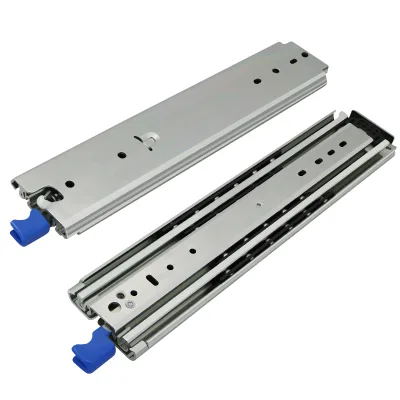
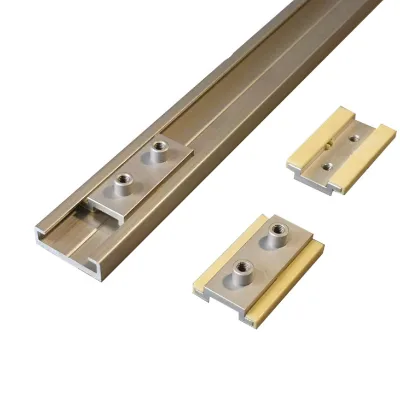


Comprehensive Sourcing Guide
Strategic Sourcing Guide for Brushless Motor Slide Rails
Understanding Technical Specifications and Core Attributes
When sourcing Brushless Motor Slide Rails, buyers must navigate a complex landscape of technical parameters that define performance, durability, and integration capabilities. The product data indicates a diverse range of configurations, suggesting that a single "standard" specification does not exist for this category. Instead, procurement teams must evaluate specific attributes such as drive modes, guide rail types, and load capacities to ensure alignment with operational requirements.
The observed data highlights a "T Guide" as a prevalent guide rail type, which is critical for maintaining alignment and stability under dynamic loads. The motion accuracy is a paramount specification, with observed values ranging from 0.003/100mm to specific tolerance levels like 0-0.05mm and 0-0.02mm. These figures represent the precision of the linear motion system and are essential for applications requiring high repeatability. Furthermore, the "Dynamic Rated Load" varies significantly across different models, with observed values of 49.52kN and 69.16kN. This variance underscores the necessity of verifying the specific load requirements of the intended application before selecting a supplier.
Another critical technical dimension is the "Allowed Static Moment," which dictates the rail's ability to withstand off-center loads. The data presents values such as 1.98/1.55/1.55 kN-M and 1.61/0.81/0.81 kN-M. These numbers correspond to the moments around different axes (X, Y, and Z), and exceeding these limits can lead to premature failure or binding of the slider. Buyers should also consider the "Screw Size," with observed specifications including M1235 and M816, which determine the compatibility with the driving motor and the overall mechanical assembly. The "Combined Height" and "Rail Height" are equally important for space-constrained designs, with observed heights ranging from 26 mm to 55 mm.
| Technical Attribute | Observed Range/Value | Sourcing Implication |
|---|---|---|
| Guide Rail Type | T Guide | Ensures stability; verify compatibility with existing mounting surfaces. |
| Motion Accuracy | 0.003/100mm | Critical for high-precision automation; verify tolerance requirements. |
| Dynamic Rated Load | 49.52kN - 69.16kN | Must exceed maximum operational load with a safety factor. |
| Allowed Static Moment | 1.61 - 1.98 kN-M | Determines resistance to tilting and overturning moments. |
| Screw Size | M816, M1235 | Must match the motor interface and structural mounting points. |
| Combined Height | 26 mm - 55 mm | Affects vertical space allocation in the machinery design. |
Compliance, Certification, and Standard Verification
In the industrial supply chain, compliance is not merely a formality but a prerequisite for market access and operational safety. The product data explicitly lists several certifications and standards that serve as benchmarks for quality assurance. Buyers should prioritize suppliers who can demonstrate adherence to ISO 9001, a standard for quality management systems that ensures consistent product quality. Additionally, the presence of CE certification indicates conformity with health, safety, and environmental protection standards for products sold within the European Economic Area.
The data also references specific product standards, such as ISO7465, which may relate to specific dimensional or performance criteria for elevator door systems or related linear motion components. While the data mentions "RoHS" (Restriction of Hazardous Substances), it is crucial to verify that this applies to the specific brushless motor slide rail model being purchased, as compliance can vary by component. The "Certification" field often appears in a concatenated format (e.g., "CE,ISO 9001:Customized"), which suggests that some certifications may be standard while others are contingent on custom orders.
Buyers must verify the origin of these certifications. The data indicates that products originate from locations such as "Suzhou, China," a major manufacturing hub. While the origin itself is not a quality indicator, it is relevant for understanding the supply chain logistics and potential regulatory frameworks. The "Standard" field also includes dimensional data like "530320230" and "5004004500 mm," which likely refer to packaging or specific model dimensions rather than international standards. Procurement teams should request valid certification documents directly from the supplier rather than relying solely on product listing descriptions.
Cost Drivers and Pricing Structure Analysis
The pricing landscape for Brushless Motor Slide Rails is influenced by a multitude of factors, ranging from material costs to customization levels. The observed price range is exceptionally broad, spanning from $0.1 to $1,500 USD. This wide disparity indicates that the market includes both simple, off-the-shelf components and highly engineered, custom-built systems. A unit priced at $0.1 likely represents a basic accessory or a small-scale component, whereas the $1,500 figure suggests a complete assembly or a high-load capacity system with advanced features.
Several key drivers influence these costs. First, the "Customization" attribute is listed as "Available," and the data shows variations in "Logo Printing" (ranging from "Without Logo Printing" to custom options). Customization typically incurs additional tooling and engineering costs, which will push the price toward the higher end of the spectrum. Second, the "Load Capacity" and "Dynamic Rated Load" are significant cost determinants. Components designed to handle 69.16kN require more robust materials and precision manufacturing than those rated for lower loads.
The "MOQ" (Minimum Order Quantity) range of 1 to 100,000 units also plays a critical role in the effective unit cost. Buyers ordering small quantities (MOQ 1) will likely face higher per-unit prices due to the lack of economies of scale. Conversely, large-volume orders can negotiate better pricing but require a significant upfront capital commitment. The "Packing" method, whether "Carton," "Export-Applicable Tray," or "Wooden Case," adds to the overall cost, particularly for heavy or delicate items requiring specialized protection. Buyers should analyze the total cost of ownership, including shipping and packaging, rather than focusing solely on the base unit price.
Typical Applications and Operational Context
The versatility of Brushless Motor Slide Rails is evident in the diverse applications suggested by the product data. The "Use of Occasions" is listed as "Public Traffic," which implies suitability for high-traffic environments such as elevators, escalators, or automated public transport systems. The "Type" is identified as "Elevator Door System" and "Track," reinforcing the connection to vertical transportation and automated access control. In these contexts, reliability and safety are paramount, as the failure of a slide rail could lead to significant operational downtime or safety hazards.
Beyond public traffic, the data points to industrial applications. The "Structure" is described as "Machine Parts" and "Machine Table," indicating use in CNC machines, robotic arms, and automated assembly lines. The "Feature" of being "Antiseptic" suggests potential use in medical or food processing equipment where hygiene is critical. The "Running Mode" is specified as "Moving," which is standard for linear actuators, but the "Installation" type is noted as "All-Terrain Crane," suggesting adaptability to rugged environments or mobile machinery.
The "Persons" attribute, listed as "6-Speed:1.00-2.00m/s," hints at applications involving passenger movement or specific speed-controlled mechanisms. This speed range is typical for elevator systems or high-speed sorting machinery. Buyers should match the specific application requirements, such as speed, load, and environmental conditions, with the rail's capabilities. For instance, a "Public Traffic" application would prioritize the "Antiseptic" feature and high load capacity, while a "Machine Table" application would focus on "Motion Accuracy" and "H Tolerance."
Supplier Evaluation and Sourcing Strategy
Evaluating suppliers for Brushless Motor Slide Rails requires a rigorous approach that goes beyond price comparison. The "prod_origin" data points to "China" and specifically "Suzhou," which is a significant manufacturing cluster. While this offers access to a wide range of suppliers, it also necessitates thorough due diligence to ensure quality consistency. Buyers should verify the supplier's capacity to meet the "Customization" requirements, as the data shows that many attributes, such as "Logo Printing" and specific certifications, are customizable.
A key aspect of supplier evaluation is the assessment of their "Certification" portfolio. The presence of ISO 9001 and CE is a positive indicator, but buyers must confirm that these certifications are current and cover the specific product lines being sourced. The "Standard" field in the data includes various dimensional codes, which may reflect internal company standards or specific customer requirements. Suppliers should be able to provide detailed technical drawings and specifications that align with these standards.
The "MOQ" range of 1 to 100,000 units suggests that suppliers cater to both small prototype orders and large-scale production runs. Buyers should assess the supplier's flexibility in handling different order sizes and their ability to scale production without compromising quality. Additionally, the "prod_packing" options (Carton, Wooden Case, Export-Applicable Tray) indicate the supplier's attention to logistics and product protection. A supplier offering robust packaging solutions is more likely to deliver products in pristine condition, reducing the risk of damage during transit.
Quality Control and Long-Term Procurement Considerations
Quality control is the backbone of a successful procurement strategy for Brushless Motor Slide Rails. The data highlights several critical quality metrics, including "H Tolerance" (0-0.05mm, 0-0.02mm) and "Mutual H" (0.007 mm). These tolerances are essential for ensuring the smooth operation and longevity of the slide rail system. Buyers should implement a quality control plan that includes regular inspections of these tolerances, as well as checks for "Dynamic Rated Load" and "Allowed Static Moment" to verify that the products meet the specified performance criteria.
Long-term procurement considerations also involve the "Feature" of the product, such as being "Antiseptic," and the "Structure" of the machine parts. These features can impact the maintenance schedule and the overall lifespan of the equipment. Buyers should inquire about the expected service life of the slide rails and the availability of replacement parts. The "Screw Size" and "Slider Weight" are also important for maintenance planning, as they determine the compatibility of replacement components.
Furthermore, the "Run Mode" and "Installation" type should be considered in the context of long-term reliability. An "All-Terrain Crane" installation implies exposure to harsh conditions, which may require more frequent maintenance or specialized lubrication. Buyers should establish a relationship with the supplier that includes technical support and after-sales service to address any issues that arise during the product's lifecycle. The "Customization" aspect also plays a role in long-term procurement, as custom parts may be harder to source if the supplier discontinues a product line.
In conclusion, sourcing Brushless Motor Slide Rails requires a comprehensive understanding of technical specifications, compliance requirements, cost drivers, and supplier capabilities. By carefully evaluating the data and adhering to rigorous quality control standards, buyers can ensure the selection of high-performance components that meet their specific operational needs. The broad range of observed attributes and prices underscores the importance of a tailored sourcing strategy that aligns with the unique demands of each application.
FAQs
What certifications are available for Brushless Motor Slide Rails?
Available certifications include CE, ISO 9001, and RoHS. Some products offer customized certification options depending on the specific model and order requirements.
Which guide rail type is commonly used for these systems?
The T Guide is a prevalent type used to ensure stability and alignment. This design helps maintain precision under dynamic loads in various industrial applications.
Can these rails handle high dynamic rated loads?
Yes, observed dynamic rated loads range from 49.52kN to 69.16kN. Buyers must verify that the specific model exceeds their maximum operational load requirements.
What is the motion accuracy specification for these rails?
Motion accuracy can reach 0.003mm per 100mm for high-precision applications. Tolerance levels like 0-0.05mm are also available for different operational needs.
How does customization affect the product specifications?
Customization is available for features like logo printing and specific certifications. This flexibility allows buyers to tailor products to unique operational or branding requirements.
What is the origin location for these manufactured rails?
Products originate from China, with specific manufacturing hubs in Suzhou. This location is a major production center for industrial machinery components and linear motion systems.
Which screw sizes are compatible with these slide rails?
Compatible screw sizes include M12*35 and M8*16. These dimensions determine the compatibility with the driving motor and the overall mechanical assembly structure.