Source BSE TSE Free HPMC Capsule for supplements, powders, and food
Find 30 listings for BSE TSE Free HPMC Capsule suitable for powder packaging and dietary supplements. Buyers can compare models, certifications, and customization options from verified suppliers in China.
Key considerations
Products List

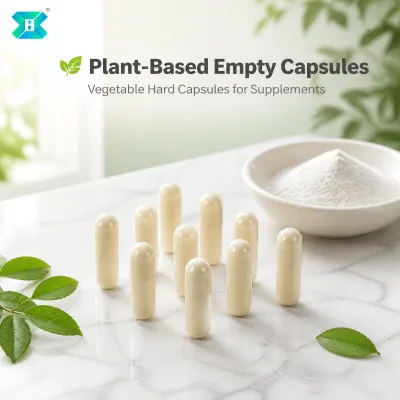


OEM Pms Capsule Private Label Supplement Pms Vitamins Capsule Pms Capsule
$2.00 - $3.00
MOQ: 10 Bottle
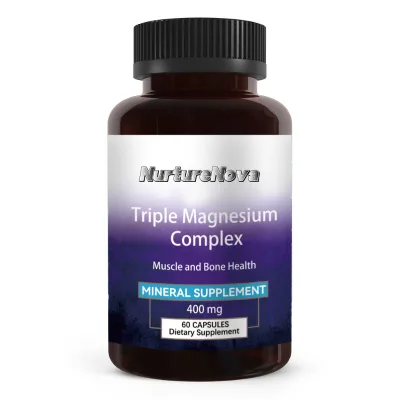

Nutrifirst Joint Health Food Supplement Wholesale Methyl Sulfonyl Methane Msm Powder Capsule
$0.01 - $0.06
MOQ: 100000 Pieces

Appetite Control Weight Management Bhb Salts Keto Diet Capsules with Mct Oil
$0.01 - $0.06
MOQ: 100000 Pieces


Comprehensive Sourcing Guide
Strategic Sourcing Guide for BSE TSE Free HPMC Capsules
Understanding the Technical Profile of HPMC Capsules
The search for BSE (Bovine Spongiform Encephalopathy) and TSE (Transmissible Spongiform Encephalopathy) free HPMC capsules centers on a specific class of vegetarian alternatives to traditional gelatin. High-Confidence Facts indicate that the material composition for these products is explicitly listed as HPMC (Hydroxypropyl Methylcellulose), a plant-based polymer derived from cellulose. This distinguishes them from gelatin-based capsules, which are animal-derived and carry the inherent risk of TSE/BSE transmission if sourcing controls are not rigorous. The observed product attributes confirm that these capsules are designed for powder packaging applications, with a specific usage profile targeting the food and supplement industries.
The physical specifications observed in the market data reveal a diverse range of model numbers, including 000, 00, 0, 1, 2, 3, 4, and 5. This variety allows procurement teams to select the exact fill volume required for their formulations. The standard size notation often appears as "size 00" or "size 0," with some listings noting a standard dimension of 700600730mm, which likely refers to packaging or storage dimensions rather than the capsule shell itself. The color options are extensive, ranging from white and transparent to colored variants, including green. This flexibility in color and customization supports branding needs and product differentiation. The moisture content is a critical technical parameter, with observed specifications indicating a maximum of 10.0%, ensuring stability during storage. Furthermore, the disintegration time is a key performance metric, with data suggesting a limit of 30 minutes, which is essential for ensuring bioavailability in pharmaceutical and nutraceutical applications.
Compliance and Certification Verification Protocols
When sourcing BSE TSE free products, the verification of certifications is the primary gatekeeping mechanism for safety. The supplied data lists several critical certifications associated with these products, including COA (Certificate of Analysis), HALAL, ISO, and HACCP. The presence of HALAL certification is particularly significant as it often implies strict adherence to animal-free sourcing, reinforcing the BSE/TSE-free claim. Additionally, GMP (Good Manufacturing Practice) is listed in the certification data, which is a mandatory standard for facilities producing food-grade and pharmaceutical-grade capsules.
Buyers must verify that the specific supplier holds valid, current certificates for ISO and HACCP, as these standards address food safety management systems. The "BSE TSE Free" claim itself is not a certification but a status that must be backed by a Certificate of Analysis (COA) from the manufacturer. The COA should explicitly state the absence of Bovine Spongiform Encephalopathy and Transmissible Spongiform Encephalopathy agents. Since the material is HPMC, the risk is theoretically lower than gelatin, but the supply chain for raw materials must still be audited. The data also mentions "Vegetable Capsule" as a product standard, which aligns with the BSE/TSE-free requirement. Procurement teams should request a specific declaration of origin for the raw HPMC material to ensure it has not been cross-contaminated with animal-derived substances during processing.
Cost Drivers and Pricing Dynamics
The pricing landscape for HPMC capsules is influenced by several variables, including raw material costs, customization requirements, and order volume. The observed price range in the market data spans from 0 to 300 USD, though this wide range likely reflects the difference between unit pricing for small samples and bulk contract pricing for large orders. The Minimum Order Quantity (MOQ) data shows a significant variance, ranging from 1 to 1,000,000 units. A specific high-confidence fact notes an MOQ of 10,000 units, which suggests that while small trials are possible, the primary economic model favors mid-to-large volume purchases.
Customization is a major cost driver. The data confirms that printing is available and can be customized, including customized printing on the capsule shell. This service adds value but also increases the unit cost and potentially the lead time. The packaging method also impacts cost; options range from simple carton packing to more complex combinations like PE Bag + Aluminum Foil Bag + Carton. The latter provides superior protection against moisture and light, which is crucial for maintaining the low moisture content (≤10.0%) observed in the product specifications. Buyers should anticipate that requests for specific colors, such as green or transparent variants, may carry a premium over standard white options. Additionally, the delivery time of 7-25 days indicates that logistics and production scheduling are significant factors in the total landed cost.
Typical Applications and Functional Specifications
The functional applications for BSE TSE free HPMC capsules are broad, covering the pharmaceutical, nutraceutical, and food supplement sectors. The product type is identified as "Capsule," with a specific usage noted as "Powder Packaging." This makes them ideal for dry powders, herbal extracts, and mineral supplements. The data also lists specific functions such as "Lowering Blood Pressure" and "Reduce Weight," indicating that these capsules are frequently used for health supplements targeting cardiovascular and metabolic health.
The target demographic is adults, with a gender classification of "Unisex." The product features include "Low-Salt," "Low-Fat," and "Sugar-Free," which aligns with modern consumer trends toward clean-label and health-conscious products. The single volume is listed as 0 cm³ in some entries, which likely indicates a placeholder or a need for specific volume calculation based on the selected model number (e.g., size 00 vs. size 1). The appearance is described as a "White Capsule Shell with White Powder," though colored shells are available. The high filling rate of 99.90% is a critical operational metric for manufacturers, ensuring minimal waste and consistent dosing accuracy. This high efficiency is particularly valuable for expensive active ingredients where precision is paramount.
Supplier Evaluation and Origin Analysis
Evaluating suppliers requires a focus on their location, production capabilities, and track record. The data consistently identifies the place of origin as China, specifically Shandong Province. This region is known for its robust manufacturing infrastructure for food and pharmaceutical packaging. The brand name "Shenghai" appears in the data, representing one of the entities in the market, though buyers should not limit their search to a single brand.
When evaluating a potential supplier, buyers should verify their production capacity against the observed MOQ of 10,000 units. Suppliers capable of handling orders up to 1,000,000 units demonstrate scalability. The availability of samples is a positive indicator of supplier confidence and flexibility, allowing buyers to test the product before committing to large orders. The delivery time of 7-25 days suggests a relatively efficient supply chain, but buyers must account for potential delays during peak seasons. It is essential to confirm that the supplier's facility is GMP certified and that they can provide a valid COA for every batch. The supplier's ability to offer customized printing and packaging solutions is also a key differentiator. Buyers should request references or case studies from other clients in the food or pharmaceutical industry to validate the supplier's reliability.
Quality Control and Long-Term Procurement Strategy
Quality control for HPMC capsules must be rigorous, focusing on the physical and chemical properties that define their performance. The disintegration time of ≤30 minutes is a non-negotiable standard for many applications, ensuring the capsule breaks down quickly in the digestive tract. Moisture content must be strictly monitored, with a limit of ≤10.0% to prevent microbial growth and maintain shelf life. The packaging must be robust; the observation of "PE Bag+Aluminum Foil Bag+ Carton" suggests a multi-layer protection strategy that buyers should insist upon for long-term storage.
Long-term procurement considerations involve building a stable supply chain that can adapt to fluctuating demand. The availability of customization, including printing and color, allows for brand evolution without changing the core product. Buyers should establish a relationship with suppliers who can provide consistent quality across batches, verified by regular COA submissions. The "Hard" flexibility attribute noted in the data suggests that the capsules are rigid and less prone to deformation during shipping, which is a significant advantage for logistics.
To mitigate risks, buyers should implement a dual-sourcing strategy where possible, ensuring that alternative suppliers are vetted and ready to step in if primary supply issues arise. The lead time of 7-25 days allows for some buffer in inventory planning, but buyers should maintain safety stock to account for potential delays. Regular audits of the supplier's facility, particularly regarding their BSE/TSE testing protocols, are essential for maintaining compliance and consumer trust. By focusing on these technical and operational details, procurement teams can secure a reliable supply of high-quality, BSE TSE free HPMC capsules that meet the stringent demands of the global market.
Summary of Key Specifications and Standards
| Attribute | Observed Value / Range | Significance for Procurement |
|---|---|---|
| Material | HPMC | Plant-based, inherently BSE/TSE free risk profile. |
| Certifications | COA, HALAL, ISO, HACCP, GMP | Essential for regulatory compliance and safety verification. |
| MOQ | 1 - 1,000,000 (Typical 10,000) | Determines initial investment and inventory strategy. |
| Disintegration Time | ≤30 min | Critical for bioavailability and product efficacy. |
| Moisture Content | ≤10.0% | Ensures stability and prevents microbial contamination. |
| Origin | Shandong, China | Indicates manufacturing hub; requires logistics planning. |
| Packaging | Carton, PE Bag, Aluminum Foil | Protects against moisture and light; impacts cost. |
| Customization | Printing, Color, Size | Allows for brand differentiation and specific fill volumes. |
| Delivery Time | 7-25 Days | Influences supply chain planning and lead time management. |
FAQs
What certifications verify BSE TSE free status for HPMC capsules?
Products typically carry COA, HALAL, ISO, HACCP, and GMP certifications to verify safety. These documents confirm the plant-based HPMC material and absence of animal-derived risks. Buyers must request a specific COA stating BSE/TSE free status for each batch to ensure compliance with global regulations.
Which capsule sizes are available for powder packaging applications?
Available model numbers include 000, 00, 0, 1, 2, 3, 4, and 5 to suit various fill volumes. The standard size notation often appears as size 00 or size 0. Buyers can select specific dimensions based on their formulation requirements and desired single volume capacity.
How long is the delivery time for bulk orders from China?
The standard delivery time ranges from 7 to 25 days from the place of origin in Shandong, China. This lead time accounts for production scheduling and logistics. Buyers should plan inventory accordingly, noting that peak seasons may impact the schedule.
Can suppliers provide customized printing and packaging options?
Yes, customized printing and packaging are available to support branding needs. Options include PE Bag plus Aluminum Foil Bag plus Carton for moisture protection. Buyers can request specific colors like green or transparent variants alongside standard white shells.
What is the minimum order quantity for HPMC capsule procurement?
The minimum order quantity typically starts at 10,000 units, though ranges from 1 to 1,000,000 are observed. Small samples are available for testing before committing to larger volumes. This MOQ structure supports both trial orders and large-scale manufacturing needs.
What are the key quality specifications for disintegration and moisture?
Disintegration time must be less than or equal to 30 minutes to ensure bioavailability. Moisture content is strictly controlled at 10.0 percent maximum to prevent microbial growth. These parameters are critical for maintaining product stability and efficacy in food and pharmaceutical applications.