Source Bubble Surfing Washing Machine for Fruit, Vegetable, and Leafy Greens
Compare 30 Bubble Surfing Washing Machine listings with capacities from 100kg to 4000kg per hour. Buyers can evaluate stainless steel models with adjustable cleaning times and customizable roller configurations for various produce types.
Key considerations
Products List


High-Efficiency Bubble Washing Machine for Vegetable Cleaning Equipment
$3900.00 - $15600.00
MOQ: 1 Pieces


Multifunctional Bubble Cleaning Washing Machine for Fruit and Vegetable
$3900.00 - $15600.00
MOQ: 1 Pieces


Flexible Speed Washing Machine Durable Air Bubble Surfing Washing Machine
$5000.00 - $5600.00
MOQ: 1 Pieces

Multifunctional Bubble Cleaning Machine Continuous Type Bubble Washing Machine
$5000.00 - $5600.00
MOQ: 1 Pieces

Multifunctional Bubble Cleaning Machine Hot Sale Automatic Bubble Washing Machine
$5000.00 - $5600.00
MOQ: 1 Pieces

Multifunctional Bubble Cleaning Machine High Efficiency Bubble Washing Machine
$5000.00 - $5600.00
MOQ: 1 Pieces


Automatic Bubble Cleaner Machine Multifunctional Bubble Cleaning Machine
$5000.00 - $5600.00
MOQ: 1 Pieces

Multi-Fruit Bubble Washing Machine Air-Blowing Surfing Washing Machine
$41000.00 - $220000.00
MOQ: 1 Sets


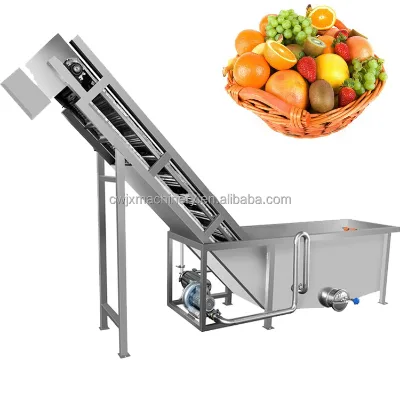
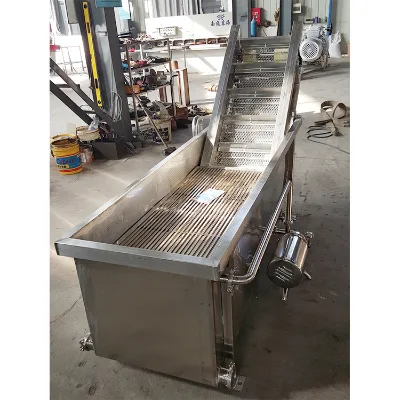


Air-Blowing Type/Bubble Surfing Washing Machine for Fruit and Vegetable Processing Line
$3600.00 - $12000.00
MOQ: 1 Pieces


Comprehensive Sourcing Guide
Strategic Sourcing Guide for Bubble Surfing Washing Machines
Understanding the Core Technology and Operational Mechanics
The Bubble Surfing Washing Machine represents a specialized category of industrial equipment designed primarily for the gentle yet effective cleaning of delicate produce. Unlike traditional high-pressure spray systems, this technology utilizes a fluidized bed of air bubbles to agitate fruits and vegetables, lifting them from the bottom of the tank and creating a "surfing" motion. This mechanism is critical for removing soil, pesticides, and surface contaminants without causing physical damage to the product skin. The observed product attributes indicate that these machines are predominantly constructed from stainless steel, specifically grades such as 304 and 316, which are essential for maintaining hygiene and resisting corrosion in wet environments. The functional description confirms their primary role is "Fruit and Vegetable Cleaning" and "Cleaning The Fruits" for further processing, making them indispensable in pre-wash stages for food processing lines.
The operational capacity of these units varies significantly based on the specific model configuration. Data from available listings reveals a wide range of throughput capabilities, with observed capacities spanning from 500kg/H to 4000kg/H. Some configurations list specific ranges like 800-1200kg/H or 200-3000kg/H, while others offer fully "Customized Capacity" to match specific production volumes. This variability suggests that buyers must align their procurement strategy with their actual hourly throughput requirements rather than assuming a standard output. The cleaning process itself is noted as having an "Adjustable" cleaning time, allowing operators to fine-tune the duration of the bubble agitation to suit different produce types, from delicate berries to root vegetables.
Technical Specifications and Configuration Analysis
When evaluating the technical specifications of bubble surfing washing machines, buyers must scrutinize several key parameters that define performance and integration capabilities. The power consumption is a critical metric for operational cost analysis. Observed power ratings in the market include 1.1KW, 1.5KW, and 5.6kw units. These figures indicate that the energy demand is not uniform across all models and likely correlates with the machine's size, capacity, and the intensity of the aeration system. The voltage requirement is consistently observed as 380V, which is standard for industrial three-phase power in many regions, including China.
The physical dimensions and structural design are equally important for facility planning. Machine sizes are often "Customization Available Based on Production Volume," with specific standard dimensions observed such as 400015801620mm or 61.21.3m. The internal configuration frequently involves a specific number of rollers, with observations noting a "Roller Number" of 9 and a "Roller Lenght" ranging from 600mm to 2000mm. These rollers likely play a role in the mechanical transport or agitation of the produce within the washing chamber. Furthermore, the number of sinks is a variable feature, with some units specified to have 2 sinks, which may facilitate a multi-stage washing process or allow for simultaneous cleaning and rinsing operations.
The following table summarizes the key technical observations derived from current market listings:
| Technical Attribute | Observed Values / Ranges | Notes |
|---|---|---|
| Material | Stainless Steel, Ss, 304/316 | 304 and 316 grades are preferred for food safety. |
| Voltage | 380V | Standard industrial three-phase. |
| Power | 1.1KW, 1.5KW, 5.6kw | Varies by model and capacity. |
| Capacity | 100kg-10t/H, 500kg/H, 300-4000kg/H | Highly customizable; verify specific needs. |
| Dimensions | 400015801620mm, 61.21.3m | Custom sizes available. |
| Rollers | 9 units, 600-2000mm length | Specific to transport/agitation design. |
| Sinks | 2 units | Multi-stage capability. |
| Condition | New | All observed units are new condition. |
Compliance, Certification, and Material Standards
Ensuring compliance with food safety and manufacturing standards is paramount when sourcing industrial washing equipment. The primary material standard observed is "Stainless Steel," with specific references to grades 304 and 316. These materials are generally recognized for their corrosion resistance and suitability for food contact applications, but buyers must verify that the specific stainless steel grade meets local regulatory requirements for food processing machinery. The "prod_standard" field in some listings shows values like "to be determined after finalizing with customer," indicating that final material specifications may be negotiated based on the specific application or regional regulations.
Regarding certifications, the provided data does not explicitly list third-party certifications such as CE, ISO, or FDA. However, the "prod_standard" for some models is listed as "Customized," suggesting that the machine can be tailored to meet specific compliance needs. Buyers should explicitly request documentation regarding material certificates (Mill Test Reports) for the stainless steel used. Additionally, since the "After-Sales Service" includes "Video Technical Support" and "Engineers Available to Service Machine Overseas," the supplier's ability to support international compliance standards is a critical factor. It is advisable to verify if the electrical components and safety mechanisms comply with the electrical safety standards of the buyer's destination country, as the observed voltage is 380V, which may require transformers or specific electrical infrastructure in other regions.
Cost Drivers and Pricing Dynamics
The pricing for bubble surfing washing machines is influenced by a complex interplay of factors, including capacity, material grade, customization level, and power consumption. The observed price range in the market is substantial, spanning from 1500 USD to 220,000 USD. This wide disparity reflects the difference between small-scale, entry-level units and large, fully automated, high-capacity systems. The minimum order quantity (MOQ) is consistently observed as 1, indicating that these machines are typically sold as individual units rather than requiring bulk purchases for a single transaction.
Several specific cost drivers can be identified from the product attributes. First, the material choice is a primary determinant; machines utilizing "Stainless Steel 304/316" will command a higher price than those using generic "Ss" or "Raw Material" descriptions, assuming the latter implies lower-grade alloys. Second, the "Customized" nature of the product, including "Customized Capacity" and "Customization Available Based on Production Volume," adds significant engineering and manufacturing costs. Third, the power rating, ranging from 1.1KW to 5.6kw, impacts the cost of motors and electrical components. Finally, the "prod_packing" method, which is often a "Wooden Case" or "Wooden Crate Packaging," adds to the overall cost, especially for international shipping where robust packaging is required to prevent damage during transit.
Typical Applications and Production Scenarios
The versatility of bubble surfing washing machines makes them suitable for a broad spectrum of agricultural and food processing applications. The core function is defined as "Fruit and Vegetable Cleaning" and "Fruit&Vegetables Washing for Further Processing." This positions the machine as a critical pre-treatment unit in processing lines for items such as leafy greens, root vegetables, berries, and stone fruits. The "Low Consumption High Efficiency" advantage suggests that these machines are designed to optimize water and energy usage while maintaining high throughput, which is essential for large-scale commercial operations.
The adjustable cleaning time and the ability to handle "Different Kind of Fruits" as raw materials indicate that these machines can be adapted for various produce types. For instance, delicate fruits may require a longer bubble surfing duration with lower agitation, while root vegetables might need a more robust cleaning cycle. The capacity range of 100kg to 10 tons per hour allows these machines to serve small-to-medium enterprises (SMEs) as well as large industrial facilities. The "Number of Sinks" feature, observed as 2 in some models, suggests that these units can be integrated into multi-stage washing lines, potentially separating the washing, rinsing, and sanitizing phases for enhanced food safety.
Supplier Evaluation and Service Capabilities
Selecting a reliable supplier is as critical as selecting the machine itself. The geographic origin of the observed products is predominantly China, with specific mentions of Henan, Zhengzhou, and Shanghai. While these regions are known for manufacturing, buyers should not assume uniform quality across all suppliers from these locations. Instead, evaluation should focus on the supplier's service infrastructure and technical support capabilities.
Key service indicators observed include "Video Technical Support" and "Engineers Available to Service Machine Overseas." These features are vital for international buyers who may face challenges with remote troubleshooting or on-site maintenance. The presence of overseas service engineers suggests a commitment to long-term support, which is essential for minimizing downtime. Additionally, the "After-Sales Service Provided" is a critical differentiator; buyers should verify the scope of this service, including warranty periods, availability of spare parts, and response times. The "prod_packing" method, described as "Standard Export Package" or "Wooden Crate," also reflects the supplier's attention to logistics and product protection during shipping.
Quality Control and Long-Term Procurement Considerations
To ensure the longevity and reliability of the Bubble Surfing Washing Machine, buyers must implement rigorous quality control measures during the procurement process. The "Condition" of the machines is listed as "New," but this should be verified through pre-shipment inspections. Buyers should request detailed inspection reports that cover the welding quality of the stainless steel construction, the integrity of the roller mechanisms, and the functionality of the electrical systems. The "Standard" field often lists dimensions or material grades, but buyers must ensure these match the agreed-upon specifications before production begins.
Long-term procurement considerations extend beyond the initial purchase price. The "Customized" nature of the machine means that future modifications or expansions may be necessary. Buyers should evaluate the supplier's flexibility in providing upgrades or additional modules. The "Advantage" of "Low Consumption High Efficiency" should be validated through performance testing to ensure that the machine meets energy and water usage targets over time. Furthermore, the "Raw Material" compatibility, listed as "Different Kind of Fruits," implies that the machine should be durable enough to handle varying abrasive levels and chemical residues from different produce types.
In conclusion, sourcing a Bubble Surfing Washing Machine requires a detailed understanding of technical specifications, material standards, and supplier capabilities. By carefully analyzing the observed data on capacity, power, and customization options, buyers can make informed decisions that align with their production needs. The wide price range and varying specifications necessitate a tailored approach, ensuring that the selected machine offers the optimal balance of performance, efficiency, and cost-effectiveness for the specific food processing application.
FAQs
What material is used for bubble surfing washing machines?
These machines are primarily constructed from stainless steel, specifically grades 304 or 316. This material ensures corrosion resistance and meets food safety hygiene standards required for cleaning fruits and vegetables in industrial settings.
How much capacity can these machines handle per hour?
Capacity varies significantly, ranging from 500kg/H to 4000kg/H depending on the model. Some units offer fully customized capacity to match specific production volumes, allowing flexibility for different business scales.
Can the cleaning time be adjusted for different produce types?
Yes, the cleaning time is adjustable to suit various fruits and vegetables. This feature allows operators to fine-tune the bubble agitation duration to prevent damage to delicate skins while ensuring thorough soil removal.
What is the standard voltage requirement for these units?
The standard voltage requirement is 380V, which is typical for industrial three-phase power. Buyers should verify their electrical infrastructure compatibility before installation to ensure safe and efficient operation of the machinery.
Do these machines offer overseas after-sales service support?
Yes, many suppliers provide engineers available to service machines overseas. This support includes video technical assistance and on-site maintenance to minimize downtime and ensure long-term operational reliability for international buyers.
What is the typical packaging method for export shipping?
Machines are typically packed in wooden cases or wooden crates for export. This robust packaging protects the equipment during transit and ensures it arrives safely at the destination facility for immediate installation and use.