Source Building Construction Structural Steel Angle for warehouses, workshops, and walkways
Find 30 verified listings for Building Construction Structural Steel Angle suitable for warehouses, workshops, and walkways. Buyers can compare specifications like Q235 and Q345 grades, hot-rolled techniques, and delivery times ranging from 15 to 20 workdays.
Key considerations
Products List


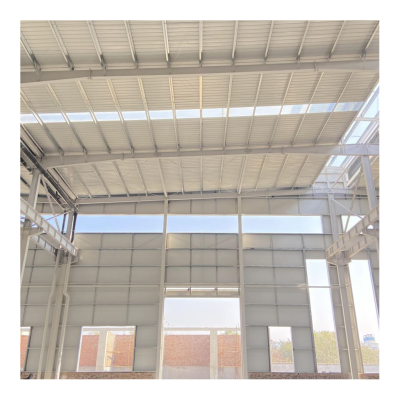

H Steel Columns Beam Steel Profile Structural Buildings Construction
$35.00 - $65.00
MOQ: 100 Square Meters


Construction Structural Steel Triangle or Angle Section Steel Profile
$1700.00 - $2000.00
MOQ: 10 Tons


Comprehensive Sourcing Guide
Strategic Sourcing Guide for Building Construction Structural Steel Angle
Understanding Product Specifications and Material Variability
When sourcing structural steel angles for building construction, buyers must first navigate the complex landscape of material composition and geometric specifications. The core product, identified in the market as "Angle Steel," is available in various forms, including "Equal" angles, which feature legs of identical length, a standard configuration for many structural frameworks. The material composition is a critical differentiator, with suppliers offering a range of grades such as A36, Q235, Q345, Ss400, and S235/S355. These designations indicate specific mechanical properties and chemical compositions suitable for different load-bearing requirements. For instance, Q235 is frequently cited as a standard carbon structural steel, while Q345 offers higher strength characteristics often required for more demanding structural applications.
The manufacturing process significantly influences the final product's performance. The supply chain presents two primary processing techniques: "Hot Rolled" and "Cold Bending." Hot-rolled steel angles are typically produced by passing steel through rollers at high temperatures, resulting in a product that is generally more ductile and suitable for heavy structural loads. Conversely, cold-bending techniques may be employed for specific customizations or lighter sections, though the dominant form for structural use is often the hot-rolled variety. The "Forming" process is explicitly noted as "Hot-Rolled Steel" in several product listings, suggesting that the majority of structural angles entering the market undergo this thermal treatment. Buyers should verify the specific forming method for their project, as it dictates the grain structure and residual stress profile of the steel.
Furthermore, the "Model Number" and specific product identifiers, such as "DG-F03" or "DG3-35," serve as internal references for suppliers to denote specific dimensions or profiles. However, these codes are not universal standards. The "Type" of steel for building structures is often categorized as "Light Section Steel" or "High-Strength Steel," depending on the intended application. Understanding these distinctions is vital before initiating a procurement inquiry, as the wrong material grade or forming method can compromise the integrity of the final structure.
Compliance, Certification, and Standard Adherence
In the realm of international construction, adherence to recognized standards and certifications is non-negotiable. The structural steel angle market operates under a framework of multiple international standards, including AISI, ASTM, BS, DIN, GB, and JIS. These standards define the chemical composition, mechanical properties, and dimensional tolerances of the steel. For example, the "Standard" attribute lists a broad spectrum of these codes, indicating that compliant products must meet the rigorous criteria of at least one of these organizations. Buyers must ensure that the specific angle steel they purchase aligns with the structural codes required by their local jurisdiction, which often mandates compliance with ASTM or DIN standards for safety and load-bearing calculations.
Certification serves as the third-party validation of these standards. The supply data indicates that products may carry certifications such as RoHS, ABS, UL, ISO, and CE. RoHS compliance ensures the material is free from specific hazardous substances, which is increasingly important for environmental regulations. ABS and UL certifications often relate to safety and quality management systems, while ISO and CE are critical for European and global market access. It is essential to note that not every listed product may possess every certification; the presence of these marks varies by supplier and specific product batch. Therefore, procurement teams must explicitly request proof of certification for the specific order, rather than assuming that the general product line is fully certified.
The "Standard" attribute also includes "Structural use" as a classification, reinforcing that these angles are designed for load-bearing applications. Additionally, the "Trademark" often references "Quality Carbon Structural Steel and Alloy Structural Steel," which serves as a qualitative descriptor but should be backed by tangible test reports. Buyers should verify that the "Standard" listed on the product matches the specific grade (e.g., Q235 or Q345) required by the engineering design. Misalignment between the claimed standard and the actual material grade can lead to structural failures or rejection by building inspectors.
Cost Drivers and Economic Factors in Procurement
The pricing of structural steel angles is influenced by a dynamic interplay of material costs, processing methods, and logistical factors. The observed price range in the market spans from $2.8 to $2,000 USD, a wide variance that reflects differences in size, weight, material grade, and surface treatment. The "MOQ" (Minimum Order Quantity) is a significant cost driver, with observed ranges from 1 unit to 600 units, and a specific high-confidence fact noting an MOQ of 1 Ton for certain listings. For smaller projects, the ability to order in smaller quantities may come at a premium per unit, whereas bulk orders often benefit from economies of scale.
Payment terms also play a crucial role in the financial planning of a procurement project. The standard payment structure observed is "30% TT + 70% Balance," indicating a common practice where a deposit is required to initiate production, with the remainder paid upon completion or shipment. This structure helps mitigate risk for both buyers and suppliers but requires careful cash flow management. Additionally, the "Packing" method, described as "Standard Packing," "in Bundles," or "Bulk," impacts shipping costs. Angles are typically bundled to prevent damage during transit, and the density of these bundles affects the volume of freight required.
Lead time is another economic consideration, with delivery times typically falling within "15-20 Workdays After Receiving Deposit TT." This timeline can fluctuate based on raw material availability, production capacity, and shipping logistics. Buyers should factor in potential delays when planning project schedules, as the "Delivery Time" is contingent upon the receipt of the initial deposit. The "Location" of the supplier, predominantly noted as "China," also influences logistics costs and lead times, particularly regarding ocean freight rates and customs clearance procedures.
Typical Applications and Structural Integration
Structural steel angles are versatile components utilized across a wide array of construction applications. Their primary function is to provide support, bracing, and connection points within steel frameworks. The "Application" field highlights uses such as "Steel Workshop," "Steel Fabricated House," "Frame Part," "Steel Walkway and Floor," and "Warehouse." In these contexts, the angles serve as critical elements in the "Steel Structure," often functioning as "Steel Column" components or bracing members. The "Connection Form" is typically "Welded Connection," which requires precise alignment and welding techniques to ensure structural integrity.
The integration of steel angles extends to various building systems, including "Residential Wall Structure," where they act as connectors, and "Steel Frame" systems that utilize "Steel Tube" and "Galvanized" components. The "Bracing" systems often employ "Steel Purlin" and "Galvanized" materials, which work in tandem with the angles to stabilize the structure against lateral loads. The "Roof" systems may utilize "Colorful Steel Sheet" or "Sandwich Panel" materials, which are supported by the underlying steel angle framework.
Furthermore, the "Maintenance" aspects of these structures often involve "Sandwich Panel," "EPS," "PU," or "Rock Wool" materials, which are integrated into the wall and roof assemblies. The "Surface Treatment" of the angles, including "Zinc Coating," "Spray-Painting," and "Ball Blasting," is crucial for protecting the steel from corrosion, especially in environments where the structure is exposed to the elements. The "Hot DIP Galvanized Thickness" is specified as 80um, and "Painted Thickness" ranges from 60-80um, ensuring a durable finish that extends the lifespan of the structural components.
Supplier Evaluation and Quality Control Protocols
Selecting a reliable supplier requires a rigorous evaluation of their capabilities, particularly regarding quality control and manufacturing consistency. The "Welding Method" employed by suppliers, such as "Auto Aubmerger Arc Welding" or "Hand Welding," directly impacts the quality of the connections. Automated welding generally offers higher consistency and speed, while hand welding may be necessary for complex or custom joints. Buyers should inquire about the specific welding techniques used for their order to ensure they meet the project's quality standards.
Quality assurance is further validated through "Welding Test" methods, including "Ultrasonic Testing" and "X-ray Testing." These non-destructive testing methods are essential for detecting internal defects in welds that could compromise the structural integrity of the angle steel. A reputable supplier should be able to provide test reports for these evaluations, demonstrating that their products have undergone rigorous scrutiny. The "Standard" and "Certification" attributes, such as ISO and CE, serve as indicators of a supplier's commitment to quality management systems, but direct verification of test results is necessary for critical applications.
The "Surface Treatment" process is another area where quality control is paramount. The "Zinc Coating" and "Spray-Painting" processes must be applied uniformly to prevent corrosion. The specified thicknesses, such as 80um for hot-dip galvanizing, should be verified through thickness gauges or third-party inspection. Buyers should also consider the "Packing" method, ensuring that "Standard Packing" or "Bulk" arrangements prevent damage during transit. The "Location" of the supplier, primarily in China, necessitates a thorough understanding of export procedures and potential logistical challenges.
Long-Term Procurement Considerations and Maintenance
Long-term procurement strategies for structural steel angles must account for durability, maintenance requirements, and lifecycle costs. The "Maintenance" attributes, including "Sandwich Panel," "EPS," "PU," and "Rock Wool," suggest that the angles are part of a larger system that requires periodic inspection and potential replacement. The "Galvanized" nature of the "Steel Tube" and "Bracing" components indicates a focus on corrosion resistance, which is essential for the longevity of the structure.
The "Customization" availability is a key factor for long-term projects. The "Customization" attribute confirms that suppliers can tailor products to specific needs, which is beneficial for unique architectural designs or retrofitting existing structures. The "Customized" attribute further reinforces this flexibility, allowing buyers to specify exact dimensions or surface treatments. However, customization may impact lead times and costs, requiring careful planning.
Finally, the "Delivery Time" of "Within 15-20 Workdays After Receiving Deposit TT" should be factored into long-term project schedules. Buyers must ensure that the supply chain is robust enough to handle potential delays, especially if the project timeline is tight. The "Payment Term" of "30% TT + 70% Balance" also requires financial planning to ensure that funds are available when the balance is due. By considering these long-term factors, buyers can secure a reliable supply of structural steel angles that meet both immediate construction needs and future maintenance requirements.
FAQs
What material grades are available for structural steel angles?
Available material grades include A36, Q235, Q345, Ss400, and S235/S355. These designations indicate specific mechanical properties suitable for different load-bearing requirements in building construction projects.
Which international standards do these steel angles comply with?
Products comply with multiple standards including AISI, ASTM, BS, DIN, GB, and JIS. Buyers must verify that the specific angle steel aligns with the structural codes required by their local jurisdiction.
How is the surface treatment applied to protect the steel?
Surface treatments include Zinc Coating, Spray-Painting, and Ball Blasting. Hot DIP Galvanized Thickness is typically 80um, while Painted Thickness ranges from 60 to 80um to ensure durability.
Can buyers request customized dimensions and specifications?
Yes, customization is available for specific project needs. Buyers should verify the specific forming method and model number, such as DG-F03 or DG3-35, to ensure they meet engineering designs.
What are the typical payment terms for purchasing these angles?
The standard payment term is 30% TT deposit plus 70% balance. This structure helps mitigate risk for both buyers and suppliers while requiring careful cash flow management for the procurement project.
How long does delivery take after receiving the deposit?
Delivery time is typically within 15 to 20 workdays after receiving the deposit. This timeline can fluctuate based on raw material availability, production capacity, and shipping logistics from the supplier location.
What certifications are commonly provided for these steel products?
Common certifications include RoHS, ABS, UL, ISO, and CE. These marks validate compliance with safety, quality management systems, and environmental regulations, though buyers must request proof for specific orders.