Source Casting Mining Eccentric for Crushers, Mills, and Shafts
Explore 30 listings for Casting Mining Eccentric components including cone crusher eccentrics, ball mill shafts, and crane pulleys. Buyers can compare specifications, materials, and standards from suppliers in China to find suitable parts for ore mining and metal processing machinery.
Key considerations
Products List


$3.00 - $60.00
MOQ: 1 Pieces

$3.00 - $60.00
MOQ: 1 Pieces

$3.00 - $60.00
MOQ: 1 Pieces

$3.00 - $60.00
MOQ: 1 Pieces


New Arrivals Heat-Treated Forged Eccentric Horizontal Balance Assembly for Mining Equipment
$3000.00 - $10000.00
MOQ: 1 Pieces


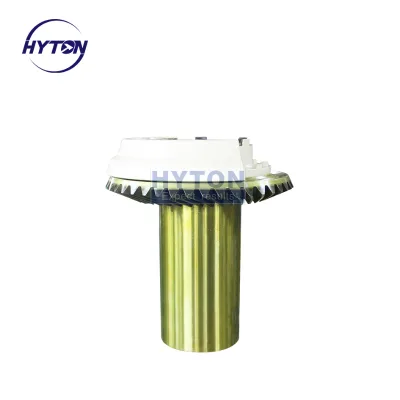


Jaw Crusher Spare Parts Eccentric Shaft for Mining Machinery Industry
$1800.00 - $2000.00
MOQ: 1 Pieces
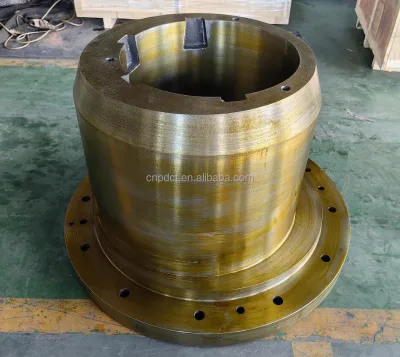
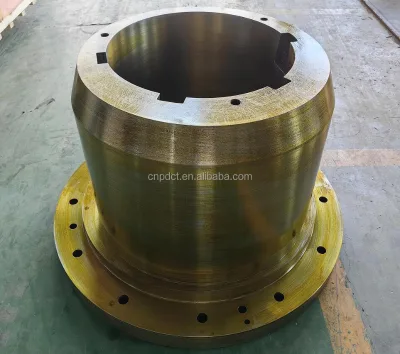
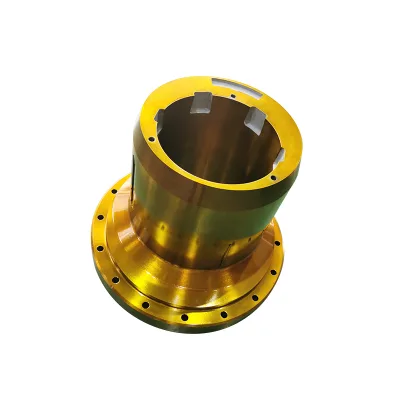
Comprehensive Sourcing Guide
Sourcing Guide for Casting Mining Eccentric Components
Understanding Technical Specifications and Model Variations
When sourcing Casting Mining Eccentric components, buyers must first navigate a complex landscape of model variations and technical definitions. The core keyword "Casting Mining Eccentric" refers to critical rotating assemblies used in heavy industrial machinery, particularly within the mining sector. Based on observed market data, these components are not monolithic; they appear under specific designations such as "Cone Crusher Eccentric Assembly," "Symons Eccentric," and "MP1000" or "HPB400" designations. These model identifiers often correlate with specific crusher types or mill configurations, meaning a generic search term may yield products incompatible with a buyer's existing equipment.
The manufacturing process is a primary differentiator. The supplied facts indicate that the predominant method for these components is "Casting." This process is essential for achieving the complex geometries and high structural integrity required for eccentric shafts that endure immense torsional and radial loads. However, the casting methodology varies. Some listings specify "water glass process casting," while others reference standards like "GB, ASME, AISI" or "DIN, ANSI, ASME, AISI." These standards imply different metallurgical approaches and quality control protocols. For instance, a component described with a "water glass process" may have specific surface finish characteristics or dimensional tolerances distinct from those cast under general industrial standards.
Buyers must also scrutinize the material composition, as this directly impacts durability in harsh mining environments. The observed data lists a wide array of materials, ranging from "Stainless Steel" and "9crsi, D2, HSS, H13" to specific ore types like "Lime Stone, Gold Mining, Iron Ore" which may refer to the application context rather than the shaft material itself. In some instances, "Gold" is listed as a material attribute, which could indicate a specific coating or a specialized alloy application for high-value extraction environments. The precision of these castings is equally critical, with some high-tolerance models claiming a precision of "+/- 0.005mm." This level of accuracy is vital for the smooth operation of ball mills and crushers, where misalignment can lead to catastrophic equipment failure.
Compliance, Certification, and Standard Verification
Navigating the compliance landscape for mining eccentric components requires a rigorous verification of standards and certifications. The market data reveals a diverse array of international standards that suppliers may claim to meet, including "GB, ASME, AISI," "DIN, ANSI, ASME, AISI," and "BS, ANSI, JIS, GB, GOST, ASTM, DIN." It is imperative for buyers to understand that the presence of these acronyms in a product listing does not automatically guarantee compliance. Instead, these should be treated as potential attributes that require validation against the specific project requirements.
Certification status is another area requiring careful scrutiny. While "ISO" and "CE" are mentioned in the context of product attributes, the data notes "ISOCondition:New" and "CE" as specific observations. Buyers should verify if the supplier holds active ISO 9001 certification for their manufacturing processes, as this is a baseline expectation for reliable industrial component suppliers. However, relying solely on the mention of "ASTM A27" or "ISO9001" in background data without specific documentation is risky. The procurement strategy must involve requesting current, valid certificates from the supplier rather than accepting them as inherent features of the product listing.
Furthermore, the "Standard" attribute often includes specific performance metrics. For example, one listing references "2151kg" under the standard field, which likely refers to a weight specification or a load-bearing capacity rather than a regulatory standard. Similarly, "5-200TPH" (Tons Per Hour) appears in the standard field, indicating throughput capacity. Buyers must distinguish between regulatory standards (like ISO or DIN) and performance specifications (like weight or throughput) to ensure the component meets the operational demands of their mining facility. The "According to crusher type" standard noted in the data highlights that compliance is often application-specific, requiring a deep understanding of the machinery the eccentric will serve.
Cost Drivers and Pricing Dynamics
The pricing structure for Casting Mining Eccentric components is highly variable, reflecting the complexity of the manufacturing process and the specific requirements of the order. The observed price range in the market spans from $1 to $80,000 USD. This vast disparity is not indicative of a single product line but rather a spectrum of components ranging from small, simple castings to massive, custom-engineered eccentric assemblies for large-scale crushers or ball mills.
Several key factors drive these costs. First, the material composition plays a significant role. Components made from specialized alloys like "9crsi, D2, HSS, H13" or those requiring "Stainless Steel" construction will inherently cost more than standard carbon steel equivalents. The inclusion of "Gold" as a material attribute, while potentially an outlier, suggests that specialized coatings or high-value applications can drastically inflate the unit price. Second, the manufacturing process and precision requirements are major cost determinants. Achieving a precision of "+/- 0.005mm" requires advanced machining and quality control measures that add to the final cost.
The Minimum Order Quantity (MOQ) also influences the effective unit price. The observed MOQ range is 1 to 500 units. For custom or large-scale eccentric assemblies, an MOQ of 500 may be standard, whereas a single replacement part might be available with an MOQ of 1. Buyers should be aware that lower MOQs often come with a higher per-unit cost due to the setup and tooling expenses associated with casting. Additionally, customization is a significant cost driver. The data confirms that "Customization: Available" and "Customized: Customized" are common attributes. Custom designs, whether for specific "Cone Crusher Eccentric" models or unique "Mining Equipment Components Eccentric Shaft" configurations, will invariably cost more than off-the-shelf standard parts.
Typical Applications and Operational Context
Understanding the application context is crucial for selecting the right Casting Mining Eccentric component. The data indicates that these parts are primarily used in "Ore Mining" and "Mine" operations. Specific applications include "Metal Coating Machinery," "Metal Drawing Machinery," "Metal Engraving Machinery," "Metal forging Machinery," and "Metal Processing Machinery Parts." This broad range suggests that while the core function is in mining, the components may also serve related heavy industries such as metal fabrication and processing.
The "Type" attribute specifically identifies "Ball Mill" as a primary application, with model numbers like "1200X4500" and "1830X6400" suggesting various mill sizes. The "Rotationl Speed" of "20-22r/min" provides a concrete operational parameter for these ball mill applications, indicating the rotational dynamics required for effective grinding. Furthermore, the "Motor Type" is listed as "AC Motor," which is standard for industrial mining equipment.
The "Advantage" of "High Performance" is frequently cited, implying that these components are designed to withstand the abrasive and high-stress environments of mining. The "Color: as Requested" attribute suggests that surface treatments or coatings may be applied for identification or corrosion resistance, though the primary focus remains on mechanical performance. Buyers must ensure that the eccentric component they source matches the specific operational parameters of their machinery, such as the required rotational speed and the type of ore being processed (e.g., "Gold Mining, Iron Ore").
Supplier Evaluation and Geographic Considerations
Evaluating suppliers for Casting Mining Eccentric components requires a focus on geographic origin and manufacturing capabilities. The data points to two primary regions of origin: "Ningbo, Zhejiang, China" and "Liaoning, China" (specifically "Liaoning, Shenyang"). These regions are known for their heavy industrial bases and casting capabilities. Ningbo is a major port city, which may facilitate logistics, while Liaoning is a traditional hub for heavy machinery and mining equipment manufacturing in China.
When evaluating suppliers, buyers should look for evidence of "Export Standard Packing" or "Plywood Case or Iron Pallet Packing." These packaging methods are essential for protecting heavy, precision-cast components during international transit. The "Condition: New" attribute is a basic requirement, but buyers should also verify the supplier's ability to provide "Customized" solutions. The presence of "Customization: Available" indicates that the supplier has the flexibility to adapt designs to specific client needs, which is often necessary for legacy equipment or specialized mining operations.
It is critical to avoid assuming that all suppliers in these regions offer the same quality. The variation in standards (e.g., "GB" vs. "DIN" vs. "ASME") suggests that different suppliers may specialize in different markets or quality tiers. Buyers should request detailed process documentation to confirm that the "Casting" process used aligns with the required standards. Additionally, the "Application" lists are broad, and a supplier claiming expertise in "Metal Cutting Machine" parts may not necessarily have the same depth of experience in "Cone Crusher Eccentric" assemblies. Due diligence should focus on the supplier's specific track record with mining eccentric components rather than general industrial capabilities.
Quality Control and Long-Term Procurement Strategies
Ensuring the long-term reliability of Casting Mining Eccentric components requires a robust quality control (QC) strategy. The observed precision of "+/- 0.005mm" sets a high bar for manufacturing quality. Buyers should insist on detailed inspection reports that verify dimensional accuracy, material composition, and surface finish. The "Standard" field often includes specific weight or capacity figures (e.g., "2151kg"), which should be cross-referenced with physical inspection to ensure the component meets the stated specifications.
For long-term procurement, the availability of "Customization" is a strategic advantage. As mining operations evolve or equipment ages, the ability to source custom eccentric components can extend the lifespan of existing machinery. Buyers should establish relationships with suppliers who can provide ongoing support for custom orders and spare parts. The "Plywood Case or Iron Pallet Packing" and "Carton+Plywoode Case" options indicate that packaging is a key part of the supply chain, and buyers should ensure that the packaging method protects the component throughout the supply chain to prevent damage before installation.
Finally, buyers must maintain a clear distinction between observed attributes and guaranteed claims. While the data lists "High Performance" as an advantage, this should be verified through performance testing or reference checks rather than accepted as a default. Similarly, the "MOQ" range of 1-500 offers flexibility, but buyers should negotiate terms that align with their inventory and cash flow needs. By focusing on verified standards, precise specifications, and reliable supplier capabilities, buyers can secure high-quality Casting Mining Eccentric components that ensure operational continuity and safety in demanding mining environments.
FAQs
What manufacturing process is used for these components?
The primary manufacturing process is casting, specifically using water glass process casting for certain models. This method ensures the complex geometries and high structural integrity required for eccentric shafts in heavy industrial machinery like cone crushers.
Which standards do these Casting Mining Eccentric parts meet?
Products may comply with various international standards including GB, ASME, AISI, DIN, ANSI, JIS, and ASTM. The specific standard often depends on the crusher type or application, such as meeting BS, GOST, or ISO requirements for different mining environments.
Can I request custom specifications for these eccentric assemblies?
Yes, customization is available for these components, allowing buyers to specify unique models like Symons Eccentric or MP1000. Suppliers can adapt the design to fit specific machinery requirements, ensuring the part matches the exact operational needs of the mining facility.
What materials are used for these mining equipment components?
Materials vary widely and include Stainless Steel, 9crsi, D2, HSS, H13, and specialized alloys. Some applications may involve specific ore types like gold mining or iron ore, influencing the material selection to ensure durability and high performance in harsh conditions.
How are these heavy components packed for international shipping?
Packaging options include Plywood Cases, Iron Pallets, or Export Standard Packing to protect the items during transit. Some listings also specify Carton plus Plywood Case or Plastic Sheet packaging, ensuring the precision castings arrive safely without damage.
What is the typical origin location for these suppliers?
Suppliers are primarily located in Ningbo, Zhejiang, China, and Liaoning, specifically Shenyang. These regions are known for their heavy industrial bases and casting capabilities, facilitating the production of high-performance mining equipment components.