Source CE Certified Floor-Standing Water Dispenser for Offices, Hotels, and Events
Find and compare 30 CE Certified Floor-Standing Water Dispenser options from Ningbo, China. Buyers can evaluate features like compressor cooling, stainless steel housing, and hot and cold water capabilities for commercial and event use.
Key considerations
Products List

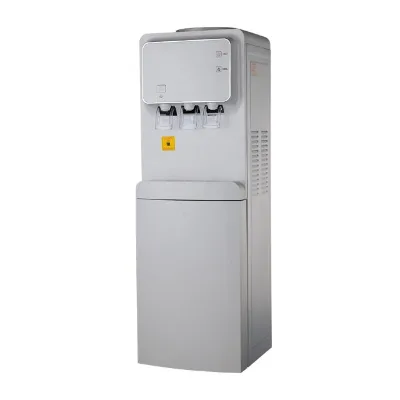
Floor-Standing Water Dispenser
$58.00 - $68.00
MOQ: 100 Pieces
Shaoxing Angel Drinking Water Purifying Technology Co., Ltd.

Floor-Standing Water Dispenser
$58.00 - $68.00
MOQ: 100 Pieces
Shaoxing Angel Drinking Water Purifying Technology Co., Ltd.


Comprehensive Sourcing Guide
Strategic Sourcing Guide for CE Certified Floor Standing Water Dispensers
Navigating the global market for commercial hydration solutions requires a precise understanding of technical specifications, regulatory compliance, and supply chain reliability. For buyers seeking a CE Certified Floor-Standing Water Dispenser, the procurement process involves more than simply selecting a unit that fits a budget. It demands a rigorous evaluation of how the product meets European safety standards, integrates into commercial or institutional environments, and delivers consistent performance over its operational lifecycle. This guide synthesizes observed market data and technical attributes to provide a structured framework for sourcing these units effectively, ensuring that procurement decisions are grounded in verifiable facts rather than marketing assertions.
Technical Architecture and Operational Specifications
The fundamental design of a floor-standing water dispenser dictates its suitability for high-traffic environments. Based on observed product attributes, the industry standard for these units often involves a robust Stainless Steel or ABS + Stainless Steel housing, ensuring durability against frequent use and potential impacts. The cooling mechanism is a critical differentiator; while some units utilize Water Cooling, the more prevalent and efficient method for commercial applications is Compressor Cooling, which allows for precise temperature control and rapid recovery times.
Temperature regulation is a primary performance metric. Buyers should verify that the unit offers distinct zones for hot and cold water. Typical observed specifications indicate a Hot Water Temperature range of 80-95°C, suitable for immediate beverage preparation, while the Cold Water Temperature is maintained between 4-10°C or 3-7°C, ensuring optimal refreshment. The output capacity is equally vital; observed models demonstrate a Cold Water Output of approximately 4L and a Hot Water Output of 6L per hour, with total system capacities reaching 120L/H for larger industrial units.
The internal configuration often includes specific components such as a Horse, Beer Tank, CO2 Bottle, and a Tool Box, particularly in models designed for beverage service. The Liquor Tube Length is a specific specification that can reach 30m, allowing for flexible installation layouts. Furthermore, the Refrigeration system typically relies on R22/R134 refrigerants, and the power consumption for standard units is observed around 1/3p, 280W. Safety features are integrated directly into the design, with Water Guard systems that are Water Anti-Proof and equipped with a Float mechanism to prevent overflow. The LED indicators provide visual feedback on operational status, and the Water Buttons are typically configured as Cold, & Hot, 2 Buttons for intuitive user interaction.
Compliance Verification and Certification Standards
For international procurement, particularly targeting markets in Europe or regions requiring CE compliance, verifying the CE and CB certifications is non-negotiable. The CE mark indicates conformity with health, safety, and environmental protection standards for products sold within the European Economic Area. The CB certification, part of the IEC system, facilitates the acceptance of electrical equipment across multiple countries, streamlining the import process.
While some background data suggests the existence of ISO 9001:2015, ISO 14001:2015, and ISO 45001:2018 standards, buyers must treat these as organizational capabilities rather than product-specific attributes unless explicitly stated on the unit's compliance documentation. The primary product-level standards observed include CE and CB, alongside specific SASO certification for markets in the Middle East. It is crucial to request the actual test reports and certificates of conformity from the supplier to confirm that the specific model, such as SC-BD03 or 8LIECH-BP, has undergone the necessary testing for electrical safety and electromagnetic compatibility (EMC).
Buyers should not assume that all listed products possess every certification. The presence of RoHS compliance is often implied in modern manufacturing but must be explicitly confirmed to ensure the absence of hazardous substances. The verification process should involve checking the prod_standard documentation, which may list physical dimensions such as 420×420×720mm or 32×38.2×102.8 inches, ensuring the physical footprint aligns with the intended installation space.
Cost Drivers and Pricing Dynamics
The pricing of floor-standing water dispensers is influenced by a complex interplay of materials, cooling technology, and customization levels. The observed market price range spans from $20 to $1,150, a significant variance that reflects differences in build quality and functionality. Units priced at the lower end of this spectrum may utilize Plastic housing or simpler cooling mechanisms, whereas the higher-end models typically feature Stainless Steel construction, Compressor Cooling, and advanced features like LED displays and Customization options.
The MOQ (Minimum Order Quantity) is another critical cost driver, with observed ranges varying from 1 to 460 units. Buyers purchasing single units or small batches may face higher per-unit costs due to the lack of economies of scale, while bulk orders can significantly reduce the average cost. The Leadtime is a fixed logistical factor, with a standard observation of 35 Days After Deposite. This timeline must be factored into the procurement schedule to avoid delays in deployment.
Customization is a significant value-add that impacts pricing. The Customization attribute is marked as Available, allowing buyers to tailor the Brand Name (often OEM), color, or specific functional modules to their corporate identity. However, customized orders may extend the lead time or increase the unit cost compared to standard New condition inventory. The prod_packing method also influences costs; options range from standard Carton packaging to Fumigation-Free Wooden Case for international shipping, which adds to the overall landed cost but ensures safer transit.
Typical Applications and Usage Scenarios
The versatility of these units makes them suitable for a diverse range of commercial and semi-commercial applications. The Application field is explicitly noted as Commercial, indicating their primary design intent for high-volume environments. However, the Usage attributes also highlight Home Decoration and Wedding Decoration, suggesting that aesthetic models are available for event planning or upscale residential settings.
In commercial settings, the Style is predominantly Standing Floor, designed to be a permanent fixture in office lobbies, hospital waiting rooms, conference centers, and hotel lobbies. The Installation method is strictly Floor-standing, requiring a stable, level surface and access to water and power lines. The Feature of Easy Operation and the Use case of Facilitates Easily are critical for environments where users may not be familiar with the equipment, ensuring a seamless user experience.
The Process of Frozen and Chilled water delivery makes these units ideal for venues requiring immediate access to cold beverages. The Type of Hot & Cold functionality supports a wide array of needs, from coffee and tea preparation to cold water consumption. The Hot Tank Material being Food Grade Stainless Steel and the Cold Tank Material being Food Grade Plastic ensures that the water quality remains high, meeting hygiene standards required in public spaces.
Supplier Evaluation and Origin Verification
When evaluating potential suppliers, the prod_origin is a key data point. The observed data indicates a strong concentration of manufacturing in Ningbo, China, a major hub for appliance production. Buyers should verify the specific factory location and capacity to ensure the supplier can meet their volume requirements. The Condition of the products is listed as New, which is standard, but buyers must confirm that the units are not refurbished or open-box items.
The Brand Name is often listed as OEM, meaning the supplier is capable of private labeling. This is advantageous for buyers looking to brand the units for their own distribution or corporate use. However, buyers must exercise caution regarding the Parts list; while the supplier claims the inclusion of a Horse, Beer Tank, CO2 Bottle, and Tool Box, these components should be verified against the specific order to ensure nothing is omitted.
Supplier reliability is further assessed through their Warranty terms. A standard 1 Year warranty is observed, which provides a baseline for after-sales support. Buyers should negotiate extended warranty periods or service level agreements (SLAs) if the procurement volume is high. The Customized attribute suggests that the supplier is flexible, but this flexibility must be balanced against the risk of quality control issues. A robust supplier will have a clear process for managing custom orders without compromising the CE certification or structural integrity of the unit.
Quality Control and Long-Term Procurement Strategy
Implementing a rigorous quality control (QC) protocol is essential for mitigating risks associated with international procurement. Given the Leadtime of 35 Days After Deposite, buyers should schedule pre-shipment inspections to verify that the Housing Material, LED functionality, and Water Guard systems meet the specified standards. The prod_packing must be inspected to ensure that Fumigation-Free Wooden Case or Brown Box, Color Box packaging is used correctly to prevent damage during transit.
Long-term procurement considerations should focus on the Refrigeration system's longevity and the availability of spare parts. The use of R22/R134 refrigerants requires that the supplier maintains a supply of compatible components for future maintenance. Additionally, the Hot Tank Volume of 1.2L and Cold Tank Volume of 4L should be sufficient for the intended usage; if the demand exceeds these capacities, buyers may need to consider units with higher output rates.
The Standard dimensions of 420×420×720mm or 32×38.2×102.8 must be strictly adhered to during the design phase of the installation site. Deviations in these dimensions can lead to installation failures. Finally, buyers should maintain a relationship with the supplier for ongoing support, ensuring that the CE and CB certifications remain valid and that the supplier continues to comply with evolving international safety standards. By adhering to these structured evaluation criteria, buyers can secure a reliable supply of high-quality, CE-certified floor-standing water dispensers that meet their operational and regulatory requirements.
FAQs
What certifications do these dispensers hold?
The units hold CE, CB, SASO, and EMC certifications. These marks confirm compliance with safety and electromagnetic standards for international markets, particularly Europe and the Middle East, ensuring regulatory readiness for commercial deployment.
How is the cooling system configured?
The system utilizes compressor cooling for efficient temperature control. This method maintains cold water between 3-7 degrees and hot water between 80-95 degrees, ensuring reliable performance in high-traffic commercial environments without excessive energy consumption.
Can the product be customized for branding?
Yes, customization is available for specific buyer requirements. Suppliers offer OEM branding options and can tailor features, allowing businesses to align the dispenser with their corporate identity while maintaining standard safety and performance specifications.
What is the standard lead time for orders?
The standard lead time is 35 days after deposit. This duration accounts for manufacturing, quality checks, and packaging preparation, ensuring that units are ready for shipment in either carton or fumigation-free wooden cases.
Which materials are used for the housing?
Housing materials include stainless steel, ABS, and plastic variants. Food-grade stainless steel is used for hot tanks to ensure hygiene, while cold tanks may use food-grade plastic, providing durability and safety for beverage service applications.
What is the water output capacity?
The units provide a cold water output of 4 liters and a hot water output of 6 liters per hour. Larger industrial models can reach a total capacity of 120 liters per hour, suitable for high-volume commercial usage scenarios.