Source CE Certified Folding Prosthetic Leg for Walking, Running, and Climbing
Compare 14 listings for CE Certified Folding Prosthetic Leg options tailored for daily mobility and sports. Buyers can review specifications like weight capacity, material composition, and customization availability to find the right fit for their needs.
Key considerations
Products List

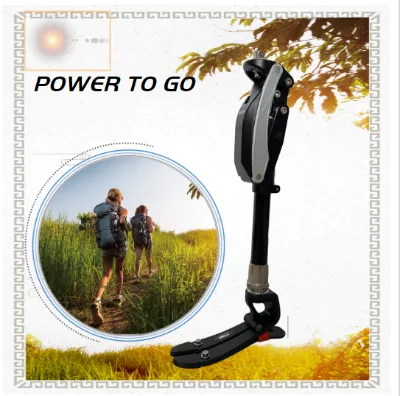
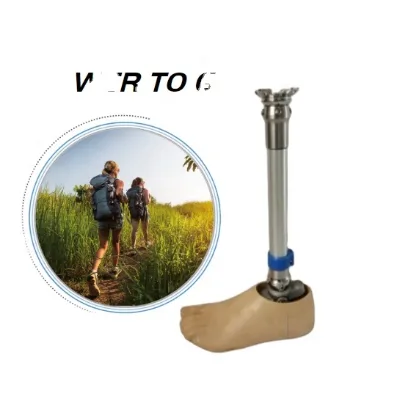
Prosthetic Female Three Jaws Prosthetic Legs
$10.00 - $12.00
MOQ: 10 Pieces
Shijiazhuang Wonderfu Rehabilitation Device Technology Co., Ltd.

Artificial Prosthetic Foot for Prosthetic Leg
$10.00 - $12.00
MOQ: 10 Pieces
Shijiazhuang Wonderfu Rehabilitation Device Technology Co., Ltd.


New Customized Prosthetic Leg for Supporting
$415.00 - $760.00
MOQ: 2 Sets
Shijiazhuang Wonderfu Rehabilitation Device Technology Co., Ltd.


Comprehensive Sourcing Guide
Sourcing Strategy for CE Certified Folding Prosthetic Legs
Procuring medical devices such as folding prosthetic legs requires a rigorous approach that balances technical performance, regulatory compliance, and supply chain reliability. The core keyword "CE Certified Folding Prosthetic Leg" indicates a specific intersection of mobility aids that must meet European safety standards while offering the mechanical advantage of a collapsible design. Buyers entering this market must navigate a complex landscape of product attributes, varying material compositions, and distinct certification requirements. This guide outlines the essential factors for sourcing these devices, ensuring that procurement decisions are grounded in verifiable data rather than marketing assertions.
Technical Specifications and Mechanical Design
The primary technical differentiator for this category is the folding mechanism. Unlike rigid prosthetic limbs, folding models are designed to collapse for easier transport and storage, a feature critical for active users or those with limited storage space. However, the supplied product data presents a nuanced reality regarding this specific attribute. While the search intent focuses on "folding" units, the observed product list contains entries explicitly marked as "Non-Folding" and "Non-Tilted." This discrepancy highlights a critical verification step: buyers must not assume that all products labeled with a specific model number or certification automatically possess the folding capability.
When evaluating technical specifications, the buyer must scrutinize the "prod_model" and "prod_standard" fields. The data indicates models such as 4F41, 1f10, 4F29, AK, and BK-4, each potentially representing different mechanical configurations. The size specifications vary significantly, with ranges noted from 13-30 cm to specific dimensions like 15105cm or 4.04.06.5cm. These dimensions likely refer to the folded state or the packaging, rather than the functional length of the limb. A folding prosthetic leg must maintain structural integrity under load while articulating. The "Body Weight up to" attribute in the data ranges from 100kg to 110kg, suggesting that the load-bearing capacity is a key specification to verify for each specific unit.
Material composition is another vital technical factor. The observed data lists "Stainless Steel," "Carbon Fiber," "PP" (Polypropylene), and "ABS" as potential materials. Carbon fiber is often preferred for high-strength, low-weight applications, while stainless steel offers durability. The "Product Weight" is observed between 0.25kg and 1kg, a range that varies significantly depending on the material and the complexity of the folding joint. Buyers should request detailed engineering drawings that specify the alloy grades and the type of locking mechanism used in the folding hinge to ensure it meets the user's daily activity levels.
Compliance and Certification Verification
The term "CE certified" is a mandatory requirement for selling medical devices in the European Economic Area. The provided facts confirm that "CE" and "ISO" are observed certifications associated with the products in the dataset. However, the presence of a certification label does not guarantee that every specific SKU in a catalog is compliant. The data also lists "ISO9001:2000" as a background standard, which pertains to quality management systems rather than the product safety standard itself.
Buyers must distinguish between the certification of the manufacturing facility and the certification of the specific device. The "prod_standard" field in the data includes entries like "Can Do Custom Service" and "vary from each client," which implies that compliance documentation may be batch-specific or model-specific. A responsible procurement strategy involves requesting the specific Declaration of Conformity (DoC) for the exact model number being purchased. The DoC should reference the relevant Medical Device Regulation (MDR) or Active Implantable Medical Device Directive (AIMDD) applicable to the product class.
Furthermore, the data mentions "Standard: 15105cm" and "Standard: 4.04.06.5cm" under the "prod_standard" attribute. These appear to be dimensional standards for packaging or specific product variants rather than international safety standards like ISO 10328 (which covers testing for lower limb prosthetics). Buyers should not rely on these dimensional entries as proof of safety compliance. Instead, they must verify that the product meets the essential requirements of the EU MDR, including biocompatibility of materials and mechanical testing results for the folding mechanism.
Cost Drivers and Pricing Dynamics
The observed price range for these products spans from 5 USD to 1800 USD. This extreme variance suggests that the market includes both low-cost components, accessories, or non-certified items alongside high-end, fully certified prosthetic systems. The lower end of the spectrum (5-50 USD) likely corresponds to packaging, small accessories, or non-medical grade components, whereas the upper end (1000-1800 USD) reflects complete, custom-fitted prosthetic legs with advanced materials and full certification.
Several factors drive the cost of a CE Certified Folding Prosthetic Leg. First, the material cost is significant; carbon fiber composites are substantially more expensive than stainless steel or plastic polymers. Second, the complexity of the folding mechanism adds to the manufacturing cost. A reliable hinge that can withstand millions of cycles without failure requires precision engineering and high-quality machining. Third, the level of customization plays a major role. The data indicates that "Customization: Available" and "Customized: Customized" are common attributes, but also notes "Non-Customized" options. Custom fittings, which involve taking precise measurements and adjusting the prosthetic to the user's residual limb, incur additional labor and time costs.
The Minimum Order Quantity (MOQ) also influences the unit price. The observed MOQ ranges from 1 set to 30 units, with specific instances of 5 PCS, 10 PCS, and 1 Set. Buying in bulk typically reduces the per-unit cost, but for a single patient or a small clinic, the MOQ of 10 or 30 units may be prohibitive. Buyers must calculate the total cost of ownership, including shipping, duties, and the potential cost of holding inventory if the MOQ is high. The "Capacity: 600 Sets/Month" suggests that suppliers have the ability to scale, but buyers should confirm if this capacity is dedicated to their order or if it is shared across multiple clients, which could impact lead times.
Typical Applications and Usage Scenarios
Understanding the intended application is crucial for selecting the right prosthetic leg. The data lists "Using Ambient" as both "Indoor" and "Outdoor," indicating that some models are versatile enough for various environments. However, the "Using Site" is specified as "Joint," which refers to the anatomical location of the device. The "Range of Application" includes "Thigh Prosthesis" and "Leg Prosthesis," confirming that the devices are designed for lower limb amputations.
The "Applicable Season" is noted as "Four Seasons of The Year," suggesting that the materials used are resistant to temperature fluctuations and humidity, which is essential for outdoor use. The "Function" is described as "Support and Protection," and the "Usage" is listed as "Correct Deformities," highlighting the therapeutic role of the device. For a folding prosthetic leg, the primary application is often for users who require mobility but also need to transport the device frequently, such as travelers, athletes, or individuals with limited storage space.
The "Body Weight up to" limit of 110kg or 100kg defines the user demographic. Buyers must ensure that the selected model matches the user's weight to prevent mechanical failure. The "Product Weight" of 0.25-0.68kg or 1kg is also a consideration for the user's energy expenditure; lighter devices reduce fatigue during walking. The "Color" options, ranging from "Various Colors" to specific "Yellow" or "Odourless" finishes, allow for personalization, which can be important for user acceptance and psychological well-being.
Supplier Evaluation and Operational Capabilities
When evaluating suppliers, the "prod_origin" is consistently listed as "China," with specific locations like "Hebei, China." While this provides a geographical baseline, buyers must look deeper into the supplier's operational capabilities. The "Capacity: 600 Sets/Month" is a strong indicator of production volume, but it must be verified against the supplier's actual track record. The "Service" attribute mentions "You Can Find Us Any Time," which suggests a commitment to customer support, but buyers should verify the availability of technical support, particularly for troubleshooting folding mechanisms.
The "Guarantee: 12 Months" is a standard warranty period observed in the data. This is a critical factor for long-term procurement, as prosthetic legs are subject to wear and tear. A 12-month guarantee implies that the manufacturer stands behind the durability of the product. However, buyers should clarify what is covered under this guarantee, such as manufacturing defects versus normal wear and tear or misuse. The "prod_packing" details, including "Carton," "Carton Box with Waterproof Film," and "Polybag and Safe Carton Box," indicate attention to logistics. Proper packaging is essential to prevent damage during transit, especially for delicate mechanical components like folding hinges.
Quality Control and Long-Term Procurement
Quality control is paramount in the medical device sector. The "Condition: New" and "Smell: Odourless" attributes suggest that the products are manufactured to high hygiene standards, which is essential for devices that come into contact with the skin. The "Material" lists like "Carbon Fiber, PP, ABS" must be verified for biocompatibility to ensure they do not cause allergic reactions or skin irritation.
For long-term procurement, buyers should consider the availability of spare parts. The folding mechanism involves moving parts that may require replacement over time. A supplier that offers a "Customized" service may be better positioned to provide bespoke parts, but buyers must confirm the lead time for these replacements. The "Standard: Can Do Custom Work" attribute suggests flexibility, but it also implies that lead times may vary. Buyers should establish a clear communication channel with the supplier to ensure that any custom requirements are documented and met.
The "MOQ" of 1 Set to 30 PCS offers flexibility for different procurement strategies. For a one-off purchase, a supplier with an MOQ of 1 is ideal. For a hospital or clinic stocking inventory, a supplier with a higher capacity and lower MOQ per unit might be more cost-effective. The "Lead time" is not explicitly stated in the data, but the "Capacity" of 600 sets/month suggests that standard orders can be fulfilled relatively quickly. However, custom orders may require additional time for design and testing.
Conclusion
Sourcing a CE Certified Folding Prosthetic Leg requires a meticulous approach that prioritizes verified specifications over marketing claims. The data reveals a diverse market with varying materials, certifications, and price points. Buyers must carefully distinguish between "folding" and "non-folding" models, verify the specific CE documentation for each model, and ensure that the load-bearing capacity matches the user's needs. By focusing on technical accuracy, compliance verification, and supplier reliability, buyers can secure high-quality prosthetic devices that enhance the mobility and quality of life for their clients. The wide range of observed attributes, from "Stainless Steel" to "Carbon Fiber" and "12 Months" guarantees, underscores the importance of detailed due diligence in every procurement decision.
FAQs
Can I find CE certified folding prosthetic legs with custom options?
Yes, suppliers offer CE certified prosthetic legs with customization available. However, the product data shows mixed attributes where some units are explicitly marked as non-folding and non-customized, requiring careful verification of the specific model before purchase.
What is the minimum order quantity for these prosthetic legs?
The minimum order quantity ranges from 1 set to 30 units depending on the supplier. Specific listings indicate MOQs of 5, 10, or 30 pieces, so buyers must check the individual product page to confirm the exact requirement for their order.
Which materials are used for CE certified prosthetic legs?
Materials observed include stainless steel, carbon fiber, PP, and ABS plastic. These components are selected for durability and weight, with product weights ranging from 0.25kg to 1kg, ensuring suitability for users with body weights up to 110kg.
How much do CE certified prosthetic legs cost?
Prices vary significantly from 5 USD to 1800 USD based on specifications and customization. Lower prices often correspond to accessories or non-medical components, while higher costs reflect complete, certified systems with advanced materials and folding mechanisms.
Where are these prosthetic legs manufactured?
The products originate from China, with specific mentions of Hebei as a production location. Buyers should verify the specific factory details for each model, as origin information is a key factor in logistics and supply chain reliability.
What is the warranty period for these medical devices?
A standard guarantee of 12 months is offered for the prosthetic legs. This warranty covers manufacturing defects, but buyers should clarify if it includes wear and tear or specific mechanical failures of the folding hinge mechanism.