Source CE Certified Hydraulic Joystick for Forklift Excavator Crane
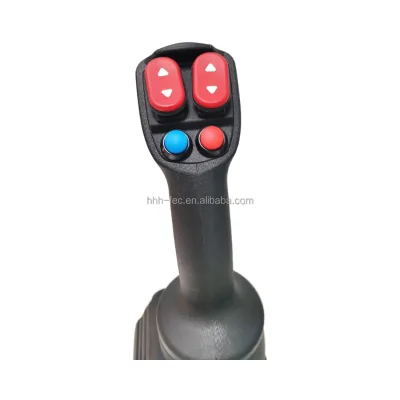
Compare 16 CE Certified Hydraulic Joystick options from verified suppliers. These mechanical rotation units support applications in forklifts, excavators, and cranes with varying torque and pressure ratings.
Key considerations
Products List




Comprehensive Sourcing Guide
Strategic Sourcing Guide for CE Certified Hydraulic Joysticks
Procuring hydraulic joysticks for industrial machinery requires a disciplined approach that balances technical performance with regulatory compliance. For buyers searching for a "CE Certified Hydraulic Joystick," the primary objective is to identify components that meet European safety directives while ensuring mechanical reliability in demanding environments. The market presents a diverse array of options, ranging from standard transmission units to specialized hydraulic control levers. This guide outlines the critical factors for sourcing these components, focusing on verified attributes, compliance verification, and long-term operational stability.
Understanding Technical Specifications and Mechanical Performance
The foundation of a successful procurement strategy lies in a precise understanding of the technical specifications required for the specific machinery. Hydraulic joysticks are not monolithic products; they vary significantly in operating parameters, mounting configurations, and control logic. When evaluating potential suppliers, buyers must scrutinize the mechanical rotation capabilities and tolerance levels. Data from the current market indicates that high-performance units often feature mechanical rotation with a tolerance of ±0.5°, ensuring precise control over hydraulic flow. This level of precision is critical for applications requiring fine motor control, such as excavators or forklifts.
Operating conditions further dictate the necessary specifications. The operating temperature range is a vital metric, with robust units designed to function reliably between -25°C and +80°C. This wide range ensures that the joystick remains operational in extreme cold or high-heat environments typical of outdoor construction sites or heavy industrial facilities. Additionally, the operating torque must be considered. Units with an operating torque of 3.5N and a maximum capacity of 50N offer a balance between ease of use and the ability to withstand high hydraulic pressures without mechanical failure.
Pressure ratings are equally critical. The maximum pressure rating determines the joystick's ability to control high-flow hydraulic systems. Specifications indicate that certain models are rated for a maximum pressure of 100 bar, with a maximum flow rate of 15 L/min. These figures are essential for matching the joystick to the hydraulic pump and actuator system of the target machinery. Buyers should verify that the selected unit's pressure and flow ratings align with the system's design limits to prevent premature wear or catastrophic failure.
Compliance and Certification Verification
The core keyword "CE certified" implies adherence to the European Union's safety, health, and environmental protection standards. However, the presence of a CE mark on a product listing does not automatically guarantee compliance; it must be supported by a valid technical file and declaration of conformity. In the observed market data, CE certification is a documented attribute for specific hydraulic joystick models. Buyers must request the CE Declaration of Conformity from the supplier to verify that the product has undergone the necessary conformity assessment procedures.
Beyond the CE mark, other quality management certifications provide insight into the manufacturer's consistency. ISO 9001 is frequently cited as a quality standard for these components. This certification indicates that the manufacturer operates a quality management system that ensures consistent product quality and continuous improvement. While some listings mention ISO 9001, buyers should verify that the certification is current and covers the specific manufacturing site producing the joystick.
It is important to distinguish between product-specific certifications and general company standards. For instance, while some background data references standards like EN 593 or ISO 5752, these are not universally applied to all hydraulic joysticks. Buyers should not assume a product meets these specific standards unless explicitly stated in the product documentation. Instead, the focus should remain on the CE mark and the specific technical data sheets that demonstrate compliance with relevant EU machinery directives.
Cost Drivers and Pricing Dynamics
The pricing of hydraulic joysticks is influenced by a complex interplay of factors, including material costs, manufacturing complexity, and certification status. The observed price range in the market spans from $2.30 to $1,000, reflecting the vast difference between simple mechanical levers and complex, high-pressure hydraulic control units. Several key drivers contribute to this variance.
First, the brand and origin play a significant role. Products originating from established manufacturing hubs like Sweden or specialized regions in China may command different price points based on perceived quality and labor costs. For example, units labeled with brands such as Caldaro or those associated with specific machinery models like Heli/Hangcha 3t Machinery often carry a premium due to their compatibility and reliability.
Second, the level of customization affects cost. While standard units are available, many suppliers offer customization options for logos, packaging, and specific mechanical configurations. These customizations require additional tooling and production time, which increases the unit price. Furthermore, the minimum order quantity (MOQ) impacts the effective cost per unit. The market shows an MOQ range from 1 piece to 100 pieces. Buyers purchasing in small quantities may face higher per-unit costs, whereas bulk orders often benefit from economies of scale.
Finally, the inclusion of value-added services, such as machinery test reports and extended warranties, influences pricing. Units that come with a 1-year warranty and provided test reports may be priced higher than basic models, but they offer greater risk mitigation for the buyer.
Typical Applications and Compatibility
Hydraulic joysticks are integral to a wide range of heavy machinery, and selecting the correct unit requires matching the component to the specific application. The market data highlights several key application areas, including forklifts, excavators, and general transmission systems. For forklifts, the joystick must be robust enough to handle frequent, repetitive movements while maintaining precision in lifting and tilting operations. Compatibility with specific brands like Heli or Hangcha is often a critical requirement for these applications.
Excavators represent another major application sector. In this context, the joystick controls the boom, arm, and bucket movements. The mechanical rotation and torque specifications are vital here, as the operator must be able to control the machine with precision even under heavy load. The operating temperature range is also crucial for excavators, which often operate in diverse climates.
Additionally, some joysticks are designed for use with specific machinery brands like Genie or Terex. These units are often engineered to fit the specific mounting points and hydraulic interfaces of the original equipment. Buyers must verify the compatible brand list to ensure seamless integration. The "Transmission Joystick" category, for instance, suggests a specific use case in power transmission systems, requiring careful attention to the model number and standard specifications.
Supplier Evaluation and Origin Considerations
Evaluating suppliers for hydraulic joysticks requires a thorough assessment of their capabilities, location, and track record. The origin of the product is a significant factor in procurement decisions. The observed data lists origins such as Sweden, Anhui, and Shandong, China. Each region has its own manufacturing strengths and quality control practices. Swedish products may be associated with high precision and durability, while Chinese manufacturers often offer competitive pricing and flexible customization options.
When evaluating a supplier, buyers should look for evidence of a robust quality management system. The presence of ISO 9001 certification is a strong indicator, but it should be verified against the specific product line. Additionally, the availability of machinery test reports is a valuable differentiator. Suppliers who provide these reports demonstrate a commitment to quality assurance and can offer buyers confidence in the product's performance.
The supplier's ability to handle logistics and delivery is also critical. Lead times can vary significantly based on the order quantity and the supplier's location. Some listings indicate delivery times based on quantity, while others provide specific terms. Buyers should clarify the delivery timeline to ensure it aligns with their production schedules. Furthermore, the shipping terms and the location of the supplier's showroom or factory can impact the overall procurement process.
Quality Control and Long-Term Procurement Considerations
Ensuring the long-term reliability of hydraulic joysticks requires a proactive approach to quality control. Buyers should insist on detailed product specifications, including dimensions, weight, and packing standards. The observed data mentions standard packing and carton packaging, which are essential for protecting the component during transit. The single gross weight and package size are also important for logistics planning.
For long-term procurement, the warranty period is a key consideration. A 1-year warranty is a common offering, but buyers should understand the terms and conditions of this warranty. Does it cover manufacturing defects, or does it exclude wear and tear? Understanding these details helps in assessing the total cost of ownership.
Furthermore, the availability of spare parts and technical support is crucial for maintaining machinery uptime. Suppliers that offer customization for packaging and branding may also provide better after-sales support. Buyers should establish a clear communication channel with the supplier to address any issues that arise during the product's lifecycle. Regular quality audits and performance reviews can help maintain a high standard of procurement and ensure that the hydraulic joysticks continue to meet the operational needs of the machinery.
Comparative Analysis of Product Attributes
To facilitate decision-making, the following table summarizes key attributes observed in the market for hydraulic joysticks. This comparison helps buyers quickly identify the features that align with their specific requirements.
| Attribute | Observation A | Observation B | Observation C |
|---|---|---|---|
| Certification | CE | ISO 9001 | CE |
| Brand | Caldaro | Huanxin | Genie/Terex Compatible |
| Model | CaldaroC01-C09 | Yj500 | C.B.15.0501 |
| Origin | Sweden | Anhui | Shandong, China |
| Max Pressure | 100 bar | N/A | Hydraulic |
| Operating Temp | -25°C to +80°C | N/A | N/A |
| Application | Excavator | Forklift | Transmission |
| Warranty | 1 Year | N/A | N/A |
| MOQ | 1 Piece | 1 Piece | 1 Piece |
| Customization | Logo/Packaging | Available | Available |
This table illustrates the diversity of options available. Buyers must carefully cross-reference these attributes with their specific machinery requirements. For instance, if a buyer requires a joystick for an excavator, they should prioritize models with high operating torque and a wide temperature range. Conversely, for a forklift application, compatibility with brands like Heli or Hangcha may be the deciding factor.
In conclusion, sourcing CE certified hydraulic joysticks involves a meticulous evaluation of technical specifications, compliance documentation, and supplier capabilities. By focusing on verified data and avoiding assumptions, buyers can secure components that ensure safety, reliability, and operational efficiency for their industrial machinery. The key lies in matching the specific needs of the application with the precise attributes of the available products, ensuring a procurement strategy that delivers value and minimizes risk.
FAQs
What certifications do these hydraulic joysticks have?
These units carry CE certification and ISO 9001 quality standards. Some listings also reference specific machinery compatibility standards like Heli or Hangcha 3T. Buyers should verify the specific declaration of conformity for each model.
How does the operating temperature range affect performance?
Robust units function reliably between -25°C and +80°C. This wide range ensures operation in extreme cold or high-heat environments typical of outdoor construction sites. Selecting a unit within this range prevents mechanical failure in harsh conditions.
Which specifications define the mechanical rotation tolerance?
High-performance units feature mechanical rotation with a tolerance of ±0.5°. This precision is critical for applications requiring fine motor control like excavators. It ensures accurate hydraulic flow control during demanding lifting and tilting operations.
Can I find suppliers offering customization options?
Yes, many suppliers offer customization for logos, packaging, and mechanical configurations. These options require additional tooling and production time. Buyers should confirm specific customization capabilities before placing orders to ensure they meet branding needs.
What is the typical minimum order quantity for these items?
The market shows an MOQ range from 1 piece to 100 pieces. Buyers purchasing small quantities may face higher per-unit costs. Bulk orders often benefit from economies of scale, so verify the specific MOQ with the supplier.
How long is the warranty period for these components?
A 1-year warranty is a common offering for these hydraulic joysticks. Buyers should understand the terms to know if it covers manufacturing defects or excludes wear and tear. Extended warranties may be available depending on the supplier.
What is the maximum pressure rating for these units?
Certain models are rated for a maximum pressure of 100 bar. This rating determines the ability to control high-flow hydraulic systems safely. Buyers must ensure the unit's pressure rating aligns with their machinery's design limits.