Source CE Certified Portable Power Generator for Construction, Events, and Emergency
Find 30 CE Certified Portable Power Generator options from Chinese manufacturers for land use, standby, and emergency crew applications. Compare models like 6D10D200A and Gd-30kVA with varying cooling methods and power outputs to select the right unit for your needs.
Key considerations
Products List


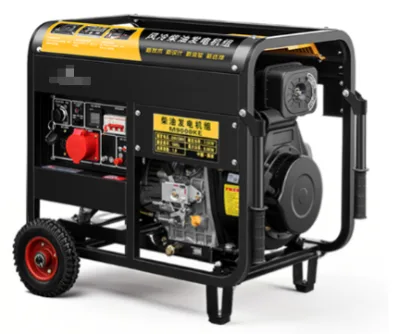


Portable Electric Power Generator, Available From Stock with Large Quantity
$1500.00 - $7000.00
MOQ: 1 Pieces

Power Generator Gasoline Generator Electric Generator
$160.00 - $200.00
MOQ: 10 Pieces
Dezhou Chuangtao Mechanical and Electrical Equipment Co., Ltd.


Comprehensive Sourcing Guide
Strategic Sourcing Guide for CE Certified Portable Power Generators
Procuring a CE Certified Portable Power Generator requires a disciplined approach that balances technical performance, regulatory compliance, and supply chain reliability. The global market for portable power solutions is vast, yet the specific intersection of certification, portability, and diesel technology presents unique challenges for B2B buyers. This guide synthesizes observed market data and technical attributes to provide a framework for evaluating potential suppliers without relying on unverified claims. Buyers must navigate a landscape where product attributes vary significantly between models, and where "CE certified" serves as a critical but not exhaustive marker of quality.
Technical Architecture and Configuration Analysis
The foundation of any portable power generator lies in its internal combustion engine and alternator configuration. Based on observed product data, the diesel engine segment frequently features a six-cylinder arrangement with an L-type cylinder configuration. This layout is distinct from inline or V-type arrangements and often implies specific spatial requirements for the generator set. The engine operates on a four-stroke cycle with a compression-ignition mode, utilizing diesel fuel as the primary energy source. This combination suggests a design optimized for durability and torque rather than high-speed, lightweight applications.
Cooling methods present a critical divergence in the market. While some units in the observed range utilize water-cooling systems, others are explicitly designed with air-cooled mechanisms. For portable applications, air cooling is often preferred for its simplicity and reduced maintenance requirements, as it eliminates the need for a complex radiator and coolant circulation system. However, water-cooled variants may be necessary for high-load, continuous duty cycles. The piston movement is consistently reciprocating, which is standard for diesel engines, but the integration of this movement with the alternator determines the final output stability.
Speed is another variable that buyers must scrutinize. Observed specifications indicate units operating at 1500rpm or 1800rpm. This speed directly correlates with the frequency of the generated electricity (50Hz or 60Hz). A buyer sourcing for a specific regional grid must ensure the generator's rotational speed matches the required output frequency. Furthermore, the excitation mode is noted as AC rotating exciter in certain models, which affects the voltage regulation and response time to load changes. The intake pressure impulse is described as supercharged, indicating the use of turbocharging to enhance power density, a feature that is particularly valuable in portable units where weight and size are constrained.
Compliance Verification and Certification Protocols
The term "CE certified" is a mandatory requirement for selling products within the European Economic Area, yet the depth of compliance varies. In the context of portable generators, the CE mark signifies conformity with health, safety, and environmental protection standards. However, buyers must distinguish between a self-declared CE mark and one backed by rigorous third-party testing. Observed data lists "CE BV SGS" as a standard component or certification reference for specific models, suggesting that some suppliers may hold additional international certifications beyond the basic CE mark.
Buyers should verify that the CE certification covers the specific model number being purchased. For instance, a model designated as "SN-30-1000KW" may have different compliance requirements compared to a "Gd-30kVA" unit. The certification process typically involves testing for electromagnetic compatibility (EMC), low voltage directives, and machinery safety. While the provided data mentions "CE" and "RoHS" as background certifications, these should be treated as baseline expectations rather than guarantees of performance. The "CCC" (China Compulsory Certification) is also noted for specific units, indicating compliance with Chinese domestic standards, which often run parallel to CE requirements but do not replace them for European export.
When evaluating a supplier, request the Declaration of Conformity (DoC) for the exact model. This document must list the specific harmonized standards applied, such as EN 60034 for rotating electrical machines or EN 1011 for welding equipment if applicable. The absence of a DoC or a generic document that does not reference the specific model number is a significant red flag. Additionally, the "Low Noise" attribute observed in several units implies compliance with specific noise emission directives, which are a key component of the CE marking for generators intended for residential or commercial use.
Cost Drivers and Pricing Dynamics
The pricing for portable power generators in the observed market spans a wide range, from approximately $26 to $110,000 USD. This extreme variance is driven by multiple factors, including power capacity, cooling technology, and the level of automation. The lowest price points likely correspond to smaller, air-cooled, or less automated units, while the upper end reflects high-capacity, water-cooled, or fully automated systems.
Key cost drivers include the engine model and the control system. Units featuring "Micro-Computer Control Automatic Diesel Generator" technology command a premium due to the added value of remote monitoring, automatic start/stop capabilities, and load management. The "Low Noise Automation Type" also adds to the cost, as it requires specialized acoustic enclosures and vibration damping systems. Packaging is another hidden cost factor; while some units are packed in simple plastic film or paper boxes, others require wooden cases or plywood crates, which increase shipping costs and environmental impact.
Buyers should also consider the "Standard Component" aspect. Units built with standard, readily available components may have lower initial costs but could face supply chain risks if those components become obsolete. Conversely, custom-built units with specific configurations may have higher upfront costs but offer better long-term reliability. The "Customization" attribute is available in the market, allowing buyers to tailor fuel tank configurations (top or bottom) or installation methods (portable vs. fixed), which will directly influence the final price.
Operational Applications and Environmental Suitability
The intended application of the generator dictates the necessary specifications. The observed data highlights "Land Use" as a primary condition, with specific sub-categories for "Common Units," "Standby Units," and "Emergency Crew" applications. This classification helps buyers match the generator to their operational needs. Standby units, for example, require high reliability and the ability to start automatically upon power failure, often necessitating the "Self-Starting Diesel Generator" configuration.
The "Low Noise" attribute is critical for applications in residential areas, hospitals, or events where noise pollution is a concern. These units often feature sound-attenuated enclosures and are designed to meet strict decibel limits. In contrast, "Emergency Crew" units may prioritize ruggedness and portability over noise reduction, focusing on the ability to operate in harsh environments. The "Installation Method" is listed as "Portable," which implies that the units are designed for mobility, likely featuring lifting points or wheels, though the specific weight and dimensions must be verified against the buyer's logistics capabilities.
Fuel tank configuration is another application-specific variable. The availability of "Top Tank or Bottom Tank" options allows buyers to optimize the center of gravity and refueling accessibility based on the installation site. For units intended for "Landuse Type of Unit: Low Noise Automation Type," the integration of automation systems with the fuel tank ensures that the generator can operate autonomously for extended periods without manual intervention.
Supplier Evaluation and Quality Assurance
Evaluating a supplier for portable power generators requires a multi-faceted approach. The "Origin" of the product is a significant factor, with "China" and specific regions like "Weifang" and "Fujian" appearing in the data. Weifang is historically known as a hub for diesel engine manufacturing, while Fujian is a major port for export. Buyers should verify the specific factory location to ensure it aligns with their quality expectations and logistics strategy.
Quality control should extend beyond the final product to the manufacturing process. The "Standard Component" attribute suggests that some suppliers use off-the-shelf parts, while others may integrate proprietary designs. Buyers should request a quality assurance plan that details the testing procedures for the engine, alternator, and control panel. The "N.W." (Net Weight) of 3.45 for certain units indicates that weight specifications are critical for logistics planning, and buyers should ensure that the quoted weight matches the actual product to avoid shipping discrepancies.
When assessing the "Product Packing," buyers should look for robustness. Options range from "Plastic Film Carton" to "Wooden Case Package." For international shipping, wooden cases are often required to meet ISPM 15 standards, while plastic film may be sufficient for domestic distribution. The "Plywood" packing option suggests a middle ground, offering protection without the bulk of a full wooden crate.
Long-Term Procurement and Maintenance Considerations
Long-term procurement success depends on the availability of spare parts and the ease of maintenance. The "Four-Stroke" engine design is generally more efficient and durable than two-stroke designs, but it requires regular oil changes and filter replacements. The "Reciprocating" piston movement implies that wear and tear on cylinder liners and piston rings is a natural part of the lifecycle, and buyers should ensure that the supplier offers a comprehensive spare parts catalog.
The "Cooling Method" also impacts long-term maintenance. Water-cooled systems require regular coolant checks and potential radiator cleaning, whereas air-cooled systems are generally lower maintenance but may require more frequent cleaning of cooling fins. The "Supercharged" intake system adds complexity, requiring attention to the turbocharger and intercooler to prevent performance degradation over time.
Buyers should also consider the "Installation Method" in the context of long-term use. While "Portable" units are designed for mobility, frequent moving can lead to wear on mounting points and connections. Ensuring that the unit is designed for its intended frequency of movement is crucial. Finally, the "Customization" availability allows buyers to specify features that may reduce long-term operational costs, such as larger fuel tanks to reduce refueling frequency or enhanced cooling for high-temperature environments.
Comparative Specification Overview
To facilitate decision-making, the following table summarizes key observed attributes across different product categories found in the market. This comparison highlights the diversity in specifications and helps buyers identify the features most relevant to their specific needs.
| Attribute Category | Observation A (Engine Focus) | Observation B (Generator Focus) | Observation C (Automation Focus) |
|---|---|---|---|
| Model Reference | 6D10D200A, 6D10D283A | Gd-30kVA, Gd-20kVA | SN-30-1000KW |
| Engine Type | 6-Cylinder, L-Form | Diesel, Compression-Ignition | Micro-Computer Control |
| Cooling Method | Water-Cooled | Air Cooled / Water Cooling | Low Noise Automation |
| Speed | Speed (Variable) | 1500rpm, 1800rpm | Variable |
| Installation | Portable | Portable | Portable |
| Packing | Plywood | Carton with Wooden Pallet | Plastic Wrapping / Wooden Case |
| Origin | China | China Fujian | Weifang |
| Certification | CCC | CE, BV, SGS | CE, BV, SGS |
| Usage | Land Use | Common, Standby, Emergency | Standby, Emergency |
This table illustrates that while the core technology (diesel, four-stroke) remains consistent, the implementation varies significantly. Buyers must align these attributes with their operational requirements rather than assuming a single product line satisfies all needs. The presence of "CE BV SGS" in the automation category suggests a higher level of compliance and quality assurance for complex systems, whereas the engine-focused models may prioritize raw power and durability.
In conclusion, sourcing a CE Certified Portable Power Generator requires a meticulous review of technical specifications, certification documentation, and supplier capabilities. By focusing on the observed data and verifying claims through direct supplier interaction, buyers can mitigate risks and secure reliable power solutions that meet both regulatory and operational demands. The wide range of options available, from basic air-cooled units to fully automated, low-noise systems, ensures that there is a solution for nearly every application, provided the buyer conducts thorough due diligence.
FAQs
What cooling methods are available for these generators?
Both water-cooled and air-cooled options are available depending on the specific model. Water cooling is used for high-load continuous duty cycles, while air cooling offers simplicity and reduced maintenance for portable applications.
Can I customize the fuel tank configuration for my needs?
Yes, customization is available for fuel tank placement, offering top tank or bottom tank options. This allows buyers to optimize the center of gravity and refueling accessibility based on their specific installation site requirements.
Which engine specifications are standard for these diesel units?
Standard units typically feature a six-cylinder L-type arrangement operating on a four-stroke cycle. They utilize compression-ignition diesel fuel and often include supercharged intake pressure impulse to enhance power density.
How do I verify the CE certification for a specific model?
Buyers must request the Declaration of Conformity for the exact model number to verify compliance. While some units list CE BV SGS, the certification must cover the specific harmonized standards applied to that generator.
What is the price range for these portable power generators?
The observed price range spans from approximately 26 to 110,000 USD depending on capacity and features. Lower prices correspond to smaller air-cooled units, while higher costs reflect high-capacity, water-cooled, or automated systems.
Where are these generators typically manufactured and shipped from?
Products originate from China, with specific manufacturing hubs in Weifang and Fujian. Weifang is known for diesel engine production, while Fujian serves as a major export port for international shipping logistics.
What packaging options are provided for international shipping?
Packaging varies from plastic film cartons to wooden cases or plywood crates. Wooden cases are often required for international shipping to meet ISPM 15 standards, while simpler packaging may suffice for domestic distribution.