Source CE Certified Roof Forming Machine for Wall Roof Floor
Compare 30 CE certified roof forming machines from verified suppliers. These units feature hydraulic pressure transmission, customizable profiles, and are designed for wall, roof, and floor applications with materials like PPGI steel.
Key considerations
Products List


Customized Roof Panel Roll Forming Machinery with Superior Quality
$17980.00 - $32000.00
MOQ: 1 Pieces


$8900.00 - $12500.00
MOQ: 1 Pieces




Comprehensive Sourcing Guide
Strategic Sourcing Guide for CE Certified Roof Forming Machines
Understanding the Technical Landscape of Roof Forming Equipment
When sourcing a CE Certified Roof Forming Machine, buyers must first distinguish between the specific mechanical architectures and material capabilities that define the equipment's utility. The market for these machines is characterized by a high degree of customization, where the core function remains consistent—transferring flat metal coils into specific profile shapes—but the execution varies significantly based on the intended application. The observed data indicates that these machines frequently utilize hydraulic pressure as the primary transmission method, a choice that offers superior control and force consistency compared to purely mechanical drives. This hydraulic system is often paired with robust motor configurations, such as combinations of 7.5kW and 4kW units, or single motors rated at 5.5kW, depending on the specific model's complexity and production speed requirements.
The physical dimensions and material handling capabilities are critical differentiators. Buyers should verify the bending width, which in observed specifications reaches up to 1025mm, allowing for the processing of wider steel sheets. The machine's ability to handle specific material thicknesses is equally vital; the observed range for curved thickness on steel roofs spans from 0.4mm to 0.8mm, with general material thickness capabilities extending from 0.3mm to 0.8mm. This range accommodates various gauges of Pre-Painted Galvanized Steel (PPGI) and colored steel, which are the primary raw materials processed. The raw material input may also include aluminum PPGI, suggesting versatility in the machine's design.
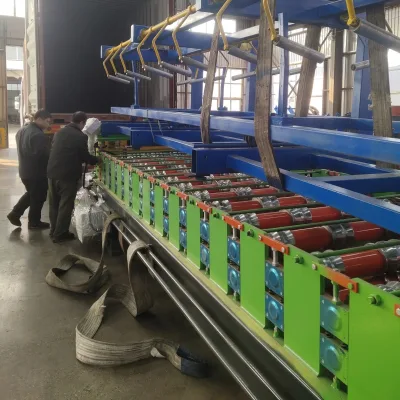
The forming process itself is defined by the number of stations or steps involved. Observed configurations include machines with 14 stations and others with 18 steps, indicating that the complexity of the final profile dictates the machine's length and operational cycle time. A higher station count generally allows for a more gradual deformation of the metal, reducing the risk of surface damage and ensuring a smoother finish on the final product. The speed of operation is another key metric, with observed throughput rates ranging between 15 to 20 meters per minute. This speed, combined with the station count, directly influences the machine's overall productivity and suitability for high-volume construction projects.
Compliance Verification and Certification Standards
The requirement for CE certification is a non-negotiable baseline for sourcing machinery intended for use in the European market or for buyers adhering to international safety standards. The presence of the CE mark signifies that the manufacturer has assessed the product and meets EU safety, health, and environmental requirements. However, buyers must exercise due diligence to ensure that the certification is valid and applies to the specific model being purchased. The observed data confirms that CE is a listed certification for these products, but it is essential to verify that the certification covers the entire machine assembly, including the electrical components and hydraulic systems.
Beyond the CE mark, other standards and certifications play a crucial role in validating the quality and safety of the equipment. The supply chain data references ISO standards, which typically relate to quality management systems, ensuring that the manufacturing process is consistent and reliable. Additionally, SGS certification is mentioned, which often pertains to third-party inspection and testing services that verify the product's compliance with specific technical standards. Buyers should request copies of these certificates and verify their authenticity directly with the issuing bodies. It is important to note that while "Customized" is listed as a standard in some contexts, this refers to the ability to tailor the machine's profile and dimensions rather than a deviation from safety standards.
The verification process should extend to the electrical and control systems. Components such as the frequency converters and controllers are critical for the machine's operation. Observed data mentions specific brands like "Saj" for frequency and "Omron" for encounter (likely referring to sensors or controllers), which are reputable names in the industrial automation sector. Buyers should confirm that these components are genuine and that the machine's electrical design complies with the relevant CE directives for low voltage and electromagnetic compatibility. The language settings of the control panel, often available in English or customizable to the buyer's needs, should also be verified to ensure safe and efficient operation by the local workforce.
Cost Drivers and Pricing Structure Analysis
The pricing of CE certified roof forming machines is influenced by a complex interplay of factors, including the level of customization, the complexity of the forming profile, and the quality of the raw materials used in construction. The observed price range for these machines spans from 6,000 to 60,000 USD, a wide spectrum that reflects the diversity of available configurations. At the lower end of this range, buyers can expect machines with standard profiles, fewer forming stations, and basic motor configurations. These units are typically designed for general-purpose applications where high precision or specialized profiles are not required.
As the price increases, the value proposition shifts toward enhanced capabilities and customization. Machines priced higher in the observed range often feature more advanced hydraulic systems, a greater number of forming stations, and the ability to process thicker or more specialized materials. The customization factor is a significant cost driver; the ability to produce custom profiles requires specialized tooling and engineering, which adds to the overall cost. The material thickness capability also impacts pricing, with machines capable of handling the upper limits of the 0.3-0.8mm range or specific high-strength alloys commanding a premium.
The weight of the machine is another indicator of its cost and quality. Observed weights range from 800kg to 3 tons, with heavier machines generally implying a more robust frame and higher-grade materials. For instance, a machine weighing 3 tons likely features a heavier frame, such as the 350h steel mentioned in the specifications, which provides greater stability during high-speed operation and reduces vibration. The packaging and shipping costs are also factors to consider, as the observed packing methods range from "naked and covered by plastic film" to "standard packaging" or "nude packing." These variations affect the logistics costs and the protection of the equipment during transit, which can be substantial for heavy machinery.
Typical Applications and Profile Versatility
The primary application of these machines is in the construction industry, specifically for the fabrication of roofing and wall cladding systems. The observed usage categories explicitly list "Wall," "Roof," and "Floor," indicating that these machines are versatile enough to produce components for various structural elements. The ability to form colored steel and PPGI makes these machines ideal for creating durable, aesthetically pleasing, and weather-resistant building envelopes. The specific models observed, such as YX35-1000, YX25-205-1025, YX37-840, and YX18-762, suggest a wide array of profile geometries that can be produced, catering to different architectural styles and structural requirements.
The versatility of the machine is further enhanced by the "Custom Profile" support mentioned in the specifications. This capability allows buyers to tailor the machine to produce unique profiles that may be required for specific building designs or to meet local building codes. The minimum bending radius of 1.5 meters observed in the data suggests that the machines can handle both straight and curved profiles, expanding their application to include arched roofs or curved wall panels. The material thickness range of 0.4-0.8mm for curved steel roofs indicates that these machines are suitable for a variety of load-bearing requirements, from light residential roofing to heavier industrial applications.
The production speed of 15-20 meters per minute ensures that these machines can meet the demands of large-scale construction projects. The ability to produce long, continuous lengths of roofing or wall panels reduces the need for on-site joining, which improves the structural integrity and weatherproofing of the final installation. The use of high-quality materials, such as Cr12MOV for cutting blades and Gcr15 bearing steel for rollers, ensures that the machine can maintain precision over long production runs, minimizing downtime and material waste.
Supplier Evaluation and Origin Verification
When evaluating suppliers for CE certified roof forming machines, buyers must prioritize transparency regarding the origin of the equipment. The observed data indicates that the majority of these machines originate from China (Mainland), with specific mentions of Cangzhou City in Hebei Province and Fujian Province. These regions are known for their manufacturing clusters in the metalworking and machinery sectors. Buyers should verify the specific factory location to ensure that the supplier has a physical presence and the capacity to support the equipment after sale.
The supplier's ability to provide customization is a key differentiator. The observed attribute "Customization: Available" and "Customized: Customized" suggests that suppliers are willing to adapt the machine to the buyer's specific needs. However, buyers should assess the supplier's engineering capabilities to ensure they can deliver on these promises. The presence of specific component brands like Omron and Saj in the specifications indicates that the supplier uses recognized parts, which is a positive sign of quality. Buyers should request a detailed bill of materials to verify the authenticity of these components.
The packaging and shipping methods provided by the supplier are also critical indicators of their professionalism. The observed packing methods, ranging from "naked and covered by plastic film" to "standard packaging," suggest that suppliers have different approaches to protecting the equipment. Buyers should ensure that the packaging is sufficient to prevent damage during long-distance shipping, especially for heavy machines weighing up to 3 tons. The supplier's ability to provide clear instructions in English or the buyer's preferred language is also essential for safe and efficient operation.
Quality Control and Long-Term Procurement Considerations
Ensuring the quality of the roof forming machine requires a rigorous approach to quality control, both during the manufacturing process and upon delivery. Buyers should insist on a pre-shipment inspection that verifies the machine's dimensions, motor power, and hydraulic system performance against the agreed specifications. The use of high-quality materials, such as 40cr round steel for shafts and Cr12 MOV with quenching for blades, should be confirmed through material test reports. These materials are critical for the machine's durability and the precision of the formed profiles.
Long-term procurement considerations include the availability of spare parts and technical support. The machine's complex components, such as the hydraulic pump (4kw with fan) and the roller system, will eventually require maintenance or replacement. Buyers should verify that the supplier has a reliable supply chain for spare parts and that they can provide technical support remotely or on-site. The language support mentioned in the specifications, including English or demand-based customization, is a positive indicator of the supplier's commitment to customer service.
The standard dimensions of the machine, such as 150015001400mm or 6.5m1.5m1.6m, should be verified to ensure that the equipment fits within the buyer's facility. The weight of the machine, ranging from 800kg to 3 tons, also impacts the foundation requirements and the logistics of installation. Buyers should plan for these factors in advance to avoid delays and additional costs. Finally, the customization options should be clearly defined in the contract to ensure that the final product meets the buyer's specific requirements for profile shape, material thickness, and production speed.
Summary of Key Specifications and Comparison
To facilitate a clear understanding of the available options, the following table summarizes the key specifications observed in the market for CE certified roof forming machines. This comparison highlights the variability in motor power, forming stations, and material capabilities, which are critical factors in the selection process.
| Specification Category | Observed Range / Options | Key Considerations |
|---|---|---|
| Motor Power | 5.5kW, 7.5+4kW | Higher power supports thicker materials and higher speeds. |
| Forming Stations | 14 Steps, 18 Steps | More stations allow for complex profiles and smoother finishes. |
| Material Thickness | 0.3-0.8mm (General), 0.4-0.8mm (Curved) | Must match the specific steel gauge required for the project. |
| Bending Width | Up to 1025mm | Determines the maximum width of the sheet that can be processed. |
| Production Speed | 15-20m/Min | Higher speeds increase output but may require more maintenance. |
| Machine Weight | 800kg to 3 Tons | Heavier machines offer better stability and precision. |
| Raw Material | PPGI, Colored Steel, Aluminum PPGI | Compatibility with the specific coil material is essential. |
| Certification | CE, ISO, SGS | Verify validity and scope of certification for the specific model. |
| Origin | China (Mainland), Hebei, Fujian | Verify factory location and supplier capacity. |
This table serves as a reference point for buyers to compare different models and suppliers. By focusing on these core specifications, buyers can make informed decisions that align with their production needs and budget constraints. The variability in these parameters underscores the importance of a detailed requirement analysis before engaging with suppliers. Ultimately, the goal is to secure a machine that not only meets the immediate production needs but also offers long-term reliability and support.
FAQs
What certifications do these roof forming machines hold?
These machines hold CE and ISO certifications to ensure safety and quality compliance. Some listings also reference SGS standards for third-party verification. Buyers should verify that the certification covers the specific model and electrical components before purchase.
How is the machine customized for different profiles?
Customization is available to support unique profile requirements for specific building designs. The machine can produce various models like YX35-1000 or YX25-205-1025 based on demand. This allows buyers to tailor the equipment for specific wall, roof, or floor applications.
Which materials can the machine process effectively?
The machine processes Pre-Painted Galvanized Steel, colored steel, and aluminum PPGI materials. It handles material thickness ranging from 0.3mm to 0.8mm for general use. Specific curved steel roof applications support thicknesses between 0.4mm and 0.8mm.
What is the typical production speed of this equipment?
The observed production speed ranges between 15 to 20 meters per minute. This throughput rate depends on the number of forming stations, which can be 14 or 18 steps. Higher station counts allow for more gradual deformation and smoother finishes.
Can the machine handle curved profiles for roofing?
Yes, the machine supports custom profiles including curved sections with a minimum bending radius of 1.5 meters. It is designed to process curved steel roof thicknesses from 0.4mm to 0.8mm. This capability expands its use to arched roofs and curved wall panels.
Where are these machines typically manufactured?
These machines originate from China, specifically from regions like Cangzhou City in Hebei Province and Fujian Province. Buyers should verify the specific factory location to ensure the supplier has the capacity for after-sales support and customization.
What is the price range for these forming machines?
The observed price range spans from 6,000 to 60,000 USD depending on configuration. Lower prices typically cover standard profiles with basic motors, while higher costs reflect advanced customization and robust hydraulic systems. Weight variations from 800kg to 3 tons also influence the final price.