Find CE Certified Undercounter Commercial Dishwashers for Hotels, Restaurants, Schools
Source 30 CE Certified Undercounter Commercial Dishwasher models with varying capacities and power ratings. Buyers can compare features like stainless steel construction, multi-function disinfection, and energy-saving designs tailored for hotel kitchens, restaurants, and school canteens.
Key considerations
Products List


Certified Under Counter Commercial Dishwasher with Low Water Consumption Design
$2573.00 - $5000.00
MOQ: 1 Pieces


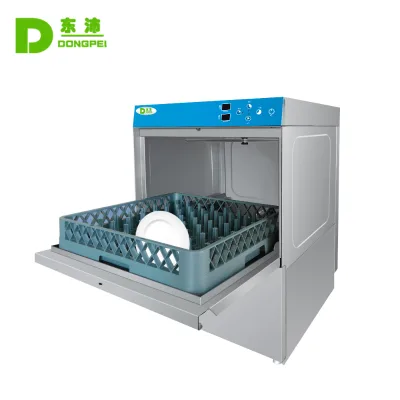


Compact and Powerful Undercounter Dishwasher for Commercial Kitchens
$2000.00 - $10000.00
MOQ: 1 Pieces

Compact Undercounter Conveyor Dishwasher with Advanced Cleaning Technology
$2000.00 - $10000.00
MOQ: 1 Pieces

Professional Under Counter Dishwasher for High-Volume Dishwasher Needs for Hotel and Restaurant
$2000.00 - $10000.00
MOQ: 1 Pieces

Compact Undercounter Dishwasher for Small Spaces and Efficient Cleaning
$2000.00 - $10000.00
MOQ: 1 Pieces

Professional Dish Washing Commercial Hood-Type Dishwasher for Restaurant
$500.00 - $3000.00
MOQ: 10 Pieces

High-Efficiency Commercial Conveyor Dishwasher for Restaurants and Café S
$500.00 - $3000.00
MOQ: 10 Pieces


Under-Counter Dishwasher Commercial Kitchen Dishwasher Small Kitchen Dishwasher
$1108.00 - $1208.00
MOQ: 1 Pieces

Countertop Dishwasher/Dishwasher/Commercial Dishwasher High Standard
$7465.00 - $7865.00
MOQ: 1 Pieces

Conveyor Washing Dishwasher Commercial Integrated Dishwasher Machine
$8160.00 - $8560.00
MOQ: 1 Pieces

Commercial Dish Washer Washing Machine Dishwasher for Hotel & Restaurant
$6597.00 - $6997.00
MOQ: 1 Pieces
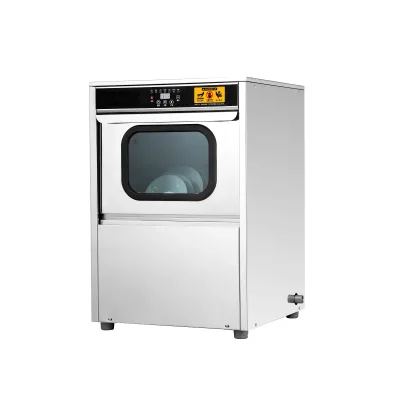
$1004.75 - $1102.65
MOQ: 5 pieces

Commercial Dishwasher Commercial Kitchen Dishwasher Freestanding Commercial Dishwasher
$1999.00 - $2199.00
MOQ: 1 Pieces


Comprehensive Sourcing Guide
Strategic Sourcing Guide for CE Certified Undercounter Commercial Dishwashers
Procuring a CE Certified Undercounter Commercial Dishwasher requires a disciplined approach that balances technical performance, regulatory compliance, and total cost of ownership. For buyers in the hospitality, food service, and institutional sectors, the decision is not merely about purchasing a machine but securing a reliable asset that maintains hygiene standards while optimizing operational efficiency. The market presents a diverse array of configurations, from semi-integrated units to fully integrated systems, each serving specific workflow demands. This guide synthesizes verified product attributes and industry standards to provide a robust framework for evaluating potential suppliers and selecting the appropriate equipment for your facility.
Technical Specifications and Operational Capabilities
When evaluating undercounter commercial dishwashers, the technical specifications must align precisely with the volume and type of items your operation processes. The core of any commercial dishwasher is its disinfection apparatus function, which often combines multiple methods to ensure thorough sanitation. In the current market, a prevalent configuration utilizes a style that integrates UV Ozone and Ultra-high Temperature disinfection. This dual approach is critical for eliminating pathogens effectively, particularly in high-volume environments where manual pre-rinsing may be insufficient.
The physical dimensions and capacity are paramount for undercounter models, which are designed to fit beneath standard kitchen counters. While some units are compact, others offer significant capacity, with observed specifications indicating a capacity of 350 liters or greater for larger commercial variants. The housing material is a primary determinant of durability and corrosion resistance. High-quality units are constructed from 304 Stainless Steel, a material that offers superior resistance to the harsh chemicals and high temperatures found in commercial dishwashing cycles. Some suppliers offer customizable material options, but the baseline for commercial-grade equipment should always be full 304 stainless steel to ensure longevity.
Control systems vary significantly between models, influencing ease of use and automation levels. Buyers may encounter semi-integrated control types, which offer a balance between manual oversight and automated functions, or fully integrated systems that streamline the entire washing process. The power requirements are equally variable, with observed ranges spanning from 0.37 kW for smaller, energy-efficient units to 54.7 kW for heavy-duty industrial models. Voltage compatibility is a critical technical check; units are often designed for 220V, 380V, or customized voltage configurations (3-phase/50Hz), necessitating a thorough audit of your facility's electrical infrastructure before purchase.
Compliance, Certification, and Regulatory Standards
The requirement for CE certification is non-negotiable for commercial dishwashers intended for the European market and many international jurisdictions. The CE mark indicates that the product conforms to health, safety, and environmental protection standards for products sold within the European Economic Area. In the context of commercial dishwashers, this certification validates that the electrical components, mechanical safety features, and chemical handling systems meet rigorous EU directives. While some background information suggests other standards like UL 921 or REACH, the primary verification point for the buyer must be the presence of the CE mark on the product documentation and the unit itself.
Beyond the CE mark, additional certifications such as ISOCE may be present, indicating adherence to specific international quality management systems. Buyers should request the specific certificate documents to verify the scope of the certification and ensure it covers the specific model being purchased. It is important to note that certification status is a property of the specific product listing and not necessarily a universal attribute of all suppliers in the category. Therefore, procurement teams must verify the certification for each specific unit or batch, rather than assuming it applies to the entire product line.
Water consumption is another critical metric tied to regulatory compliance and operational efficiency. Modern commercial dishwashers are designed to minimize water usage, with observed data showing consumption rates as low as 2.3 liters per hour for specific high-efficiency models. However, these figures are highly dependent on the model and cycle selected. Buyers should verify the water consumption rates against local environmental regulations and utility costs to ensure the selected unit meets both compliance and economic goals.
Cost Drivers and Pricing Structures
The pricing of commercial dishwashers is influenced by a complex matrix of factors, including power rating, material quality, automation level, and capacity. The observed market range is extensive, spanning from approximately $70 to $400,000 USD. This vast disparity reflects the difference between small, entry-level units and large, fully automated, industrial-grade systems. For undercounter models, the price is often driven by the complexity of the control system, the quality of the stainless steel, and the efficiency of the pump and heating elements.
Power consumption is a significant driver of long-term operational costs. Units with higher power ratings, such as those consuming 42 kW or 54.7 kW, will have higher upfront costs but may offer faster cycle times and higher throughput. Conversely, lower power units, such as those rated at 0.37 kW, are more energy-efficient but may have lower capacity or slower wash cycles. The choice of pump also impacts cost; high-performance pumps, such as those sourced from Italian manufacturers, often command a premium but provide superior reliability and pressure consistency.
Minimum Order Quantities (MOQ) are another factor affecting the total cost of acquisition. The observed MOQ range for these products is typically between 1 and 10 units. For small businesses or single-location purchases, an MOQ of 1 is ideal, allowing for flexible procurement without the burden of excess inventory. However, for larger chains or institutional buyers, negotiating an MOQ closer to the lower end of the range can facilitate bulk purchasing without requiring a massive initial commitment. Buyers should also consider the cost of packaging and shipping, as units are often packed in cartons and wooden frames to prevent damage during transit, which adds to the landed cost.
Typical Applications and Workflow Integration
The application of undercounter commercial dishwashers is diverse, ranging from hotels and restaurants to bars and schools. The specific environment dictates the required features and capacity. In hotel kitchens and restaurant canteens, the volume of dishes, cutlery, and glassware is high, necessitating machines with multi-function capabilities and high-efficiency cycles. The ability to wash a variety of products, including hot pots, plates, cutlery, cups, and glasses, is a standard requirement for these settings.
For smaller establishments like bars or small cafes, the undercounter form factor is essential due to space constraints. These units must be floor-standing and compact yet capable of handling the specific load of glassware and small plates typical of a bar environment. The installation type is almost exclusively floor-standing for undercounter models, allowing them to slide under existing countertops while maintaining stability.
Institutional settings, such as school canteens, present unique challenges regarding volume and hygiene standards. These facilities often require units with a higher capacity and robust disinfection capabilities. The observed specification of a multi-door disinfection cabinet or a single-door configuration depends on the workflow design. A single-door unit is often sufficient for smaller schools, while larger institutions may benefit from multi-door systems that allow for continuous loading and unloading. The warranty period, typically one year, is a standard consideration for these high-use environments, ensuring that the buyer has recourse for any mechanical failures during the initial operational phase.
Supplier Evaluation and Quality Assurance
Evaluating a supplier for commercial dishwashers requires a focus on transparency, technical support, and adherence to the stated specifications. Buyers should verify the origin of the product, with Guangdong, China, being a noted manufacturing hub for these units. While the location is a factual observation, the quality of manufacturing in this region varies, making supplier vetting essential. Key evaluation criteria include the consistency of the housing material, the reliability of the control systems, and the availability of spare parts.
Quality control should be a collaborative effort between the buyer and the supplier. The supplier should provide detailed technical drawings, including standard dimensions such as 570620796mm or 27007301800mm, depending on the model. Buyers must cross-reference these dimensions with their kitchen layout to ensure a proper fit. Additionally, the product model number, such as UDRL-50 or RL-UD-80, should be clearly documented to facilitate future maintenance and parts ordering.
The presence of advanced features, such as EGO temperature control or specific pump brands like Italy Fire, can be indicators of higher quality. However, these should be treated as observations rather than guarantees. Buyers should request proof of these components, such as manufacturer certificates or component datasheets, to verify that the supplier is using the specified parts. Furthermore, the customization options available, such as voltage adjustments or material upgrades, should be clearly defined in the contract to avoid disputes during the installation phase.
Long-Term Procurement and Maintenance Considerations
The lifecycle of a commercial dishwasher extends well beyond the initial purchase, making long-term procurement considerations vital. The warranty period, typically one year, is the baseline for support, but buyers should inquire about extended warranty options or service contracts. The availability of spare parts, particularly for critical components like pumps and heating elements, is crucial for minimizing downtime.
Energy efficiency is a long-term cost driver. Units with features like water saving and energy saving advantages can significantly reduce utility bills over time. Buyers should calculate the return on investment based on the specific power consumption and water usage rates of the selected model. For example, a unit with a power rating of 15.8 kW may offer a different balance of speed and efficiency compared to a 42 kW unit, depending on the specific operational needs.
Maintenance requirements should be clearly outlined by the supplier. The cleaning of filters, the descaling of heating elements, and the calibration of temperature controls are routine tasks that require specific attention. Buyers should ensure that the supplier provides comprehensive user manuals and training materials to facilitate these maintenance activities. Additionally, the packaging and shipping methods, such as the use of wooden frames and cartons, should be evaluated to ensure that the unit arrives in perfect condition, ready for immediate installation and operation.
Comparative Analysis of Key Product Attributes
To assist in the decision-making process, the following table summarizes the key attributes observed across different commercial dishwasher models. This comparison highlights the variability in specifications and helps buyers identify the features that best match their operational requirements.
| Attribute | Model A (Example) | Model B (Example) | Model C (Example) |
|---|---|---|---|
| Product Name | Dishwasher Machine | Dishwasher Machine | Dishwasher Machine |
| Control Type | Semi-Integrated | Full-Integrated | Semi-Integrated |
| Power | 0.37 kW | 54.7 kW | 15.8 kW |
| Voltage | 220V / 380V | 380V / 50Hz / 3p | 220V |
| Material | 304 Stainless Steel | Full 304 Stainless Steel | Stainless Steel |
| Capacity | ≥350L | N/A | N/A |
| Disinfection Style | UV Ozone & Ultra-high Temp | Multi-function | Multi-function |
| Certification | ISOCE | CE | CE |
| Warranty | 1 Year | 1 Year | 1 Year |
| Pump | Italy Fire | Italy Fire | N/A |
| Application | Hotel, Restaurant, School | Hotel, Commercial | Hotel, Commercial |
This table illustrates the diversity in the market. Model A represents a high-capacity, energy-efficient unit suitable for large institutions. Model B is a heavy-duty, high-power solution for industrial-scale operations. Model C offers a mid-range option with standard voltage requirements, ideal for smaller commercial kitchens. Buyers should use this framework to match their specific needs against the available specifications, ensuring that the selected unit provides the optimal balance of performance, compliance, and cost.
In conclusion, sourcing a CE Certified Undercounter Commercial Dishwasher is a multifaceted process that demands careful attention to technical details, regulatory compliance, and long-term operational needs. By leveraging the verified facts provided and adhering to the evaluation criteria outlined in this guide, buyers can make informed decisions that enhance their kitchen's efficiency and hygiene standards. The key lies in verifying every claim, understanding the specific application requirements, and selecting a supplier that offers transparency and reliable support throughout the product lifecycle.
FAQs
What certifications do these dishwashers hold?
These units hold CE and ISOCE certifications for safety and quality compliance. Buyers must verify the specific certificate documents for each model batch rather than assuming universal coverage across all listings.
Can I customize the voltage for my facility?
Yes, customization is available for voltage configurations including 220V, 380V, and 440V options. You should confirm the specific electrical infrastructure requirements before finalizing the order to ensure compatibility.
What material is used for the housing?
The housing is constructed from 304 stainless steel to ensure durability and corrosion resistance. Some models offer full 304 stainless steel with customizable material options for specific operational needs.
How much water does the machine consume?
Water consumption can be as low as 2.3 liters per hour for high-efficiency models. This rate varies by model and cycle, so verify the specific consumption data against your local utility costs.
Which disinfection styles are available?
Available styles include UV Ozone and Ultra-high Temperature disinfection methods. These multi-function systems are designed to effectively eliminate pathogens in high-volume commercial kitchen environments.
What is the minimum order quantity?
The minimum order quantity ranges from 1 to 10 units depending on the supplier. Small businesses can often procure single units, while larger chains may negotiate bulk rates within this range.
Where are these machines manufactured?
The products originate from Guangdong, China, a noted manufacturing hub for this equipment. Buyers should vet suppliers in this region for consistency in housing material and control system reliability.