Source CE Certified Unisex Resistance Band for Gym, Home, and Therapy
Find 30 listings for CE Certified Unisex Resistance Band from verified manufacturers in China. Compare models like DY-LB-02 and GL-EP014, review CE and ISO certifications, and evaluate customization options for strength training and physical therapy applications.
Key considerations
Products List


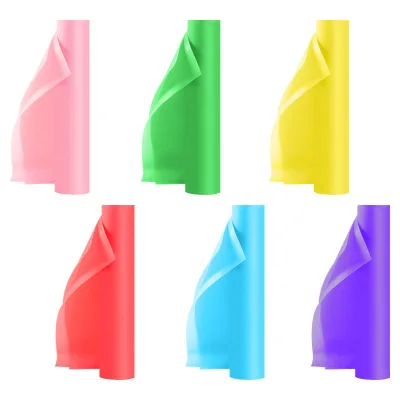


Unisex Physical Conditioning Train Legs Arms Back Shoulders Abdomen Resistance Band
$3.00 - $5.00
MOQ: 200 Pieces

Multiple Exercise Fitness Sport Core Training Body Elastic Resistance Band
$2.00 - $2.05
MOQ: 487 Pieces

Multiple Number Premium Gym Fitness Elastic Gym Exercise Resistance Band
$2.00 - $5.00
MOQ: 200 Pieces

Multiple Training Premium Exercise Safe Sport Body Exercise Resistance Band
$2.00 - $3.00
MOQ: 333 Pieces

High Back Multiple Colorful Sport Fitness Exercise Core Training Resistance Band
$3.00 - $3.20
MOQ: 312 Pieces

Exercise Multiple Training Wholesale Safe Sport Body Gym Resistance Band
$1.00 - $3.00
MOQ: 333 Pieces




Comprehensive Sourcing Guide
Strategic Sourcing Guide for CE Certified Unisex Resistance Bands
Understanding Product Specifications and Material Integrity
When sourcing CE certified unisex resistance bands, the primary objective is to identify products that balance durability with the specific elasticity required for diverse training regimens. The market data indicates that the core material for these products is predominantly latex, a choice driven by its high elasticity and ability to return to its original shape after repeated stretching. Buyers must verify that the material composition aligns with the intended usage, whether for gymnasium strength training, home fitness, or professional crossfit equipment. The observed product models, such as DY-LB-02 and DY-LB-08, suggest a variety of dimensional standards. For instance, specific bands are manufactured with a standard size of 500500.9mm, while others, like the ZY 056 model, offer larger perimeters of 2080 mm with varying thicknesses such as 4.5mm, 6.4mm, or 13mm. These dimensional variations directly influence the resistance level and the target muscle groups.
The physical condition of the bands is consistently listed as "New," ensuring that buyers receive products free from prior wear or degradation. However, the "Weight Adjustable" attribute is noted as "Fixed" in several specifications, which implies that the resistance is inherent to the band's material thickness and width rather than an adjustable mechanism. This distinction is critical for procurement planners who need to stock inventory for different fitness levels. The product origin data points to manufacturing hubs in Anhui and Nantong, China, regions known for their established rubber and fitness equipment industries. The packing methods vary significantly based on the product model; some are packaged individually in polybags within cartons, while others utilize wooden cases or mesh bags. These packaging differences affect shipping costs and the protection of the product during transit, particularly for larger perimeter bands.
Compliance Verification and Certification Standards
The requirement for CE certification is a non-negotiable baseline for accessing the European market and ensuring a minimum standard of safety and quality. The provided facts confirm that CE certification is available for these products, with specific mentions of CE and ISO certifications for certain models. Buyers must treat the presence of these certifications as a verification of the manufacturer's commitment to regulatory compliance rather than a guarantee of performance for every single unit. The HS Code 9506911900 is the standard classification for these goods, which is essential for accurate customs declaration and duty calculation.
While the high-confidence facts list CE and ISO, there are low-confidence background references to REACH and RoHS standards. Procurement teams should not assume these additional chemical compliance standards are met unless explicitly confirmed in the supplier's test reports. The verification process should involve requesting specific documentation that proves the latex material does not contain prohibited substances under REACH regulations. Similarly, while ISO 9001:2015 is mentioned in background data, it should not be cited as a confirmed attribute of the specific product listings without direct supplier confirmation. The primary focus for compliance should remain on the CE mark, which indicates conformity with health, safety, and environmental protection standards for products sold within the European Economic Area. Buyers should also verify that the "Certification Avai" status is current and that the certification applies to the specific production batch being ordered.
Cost Drivers and Economic Factors in Procurement
The pricing landscape for CE certified unisex resistance bands exhibits a wide range, observed between 0.05 and 12.05 USD. This significant variance is driven by several key factors, including the complexity of the customization, the material thickness, and the packaging requirements. The lower end of the price spectrum likely corresponds to standard, non-customized bands with minimal packaging, such as simple polybagging. In contrast, the higher price points are associated with specialized models, custom logo applications, and robust packaging solutions like wooden cases. The Minimum Order Quantity (MOQ) also plays a pivotal role in unit cost, with observed ranges spanning from 5 to 20,000 units. Smaller orders typically carry a higher per-unit cost due to the fixed overheads of production setup, while bulk orders allow for economies of scale.
Customization is a major cost driver. The availability of customized logos and specific branding options adds value but also increases the production complexity. Suppliers indicate that sample times for customized logos can be as short as two days, but the production time for bulk orders generally ranges from 15 to 20 days, or within 30 days for delivery. These lead times must be factored into the total cost of ownership, as extended lead times can impact inventory turnover and cash flow. Payment terms, typically T/T or Trade Assurance, also influence the financial risk profile for the buyer. Trade Assurance offers a layer of protection, potentially affecting the final negotiated price. Buyers should analyze the total landed cost, including shipping, duties, and potential inventory holding costs, rather than focusing solely on the unit price.
Typical Applications and Functional Versatility
The versatility of these resistance bands is evident in their diverse application scenarios. The product attributes list usage in gymnasiums, home environments, and professional settings such as crossfit training. The functional scope extends beyond simple strength training to include pilates, yoga, physical therapy, and body shaping. This multifunctionality makes the product suitable for a broad demographic, including adult women and unisex users. The "Type" is often categorized as "Body Shaping," while the "Function" explicitly mentions physical therapy and exercise, indicating that these bands are used for rehabilitation as well as athletic performance.
The specific dimensions of the bands dictate their application. For example, the 2080 mm perimeter bands with varying thicknesses are likely designed for full-body workouts and group training, offering a wide range of resistance levels. The "Folded" attribute suggests that some models are designed for portability and compact storage, making them ideal for home users or travelers. The "Style" is generally standard, ensuring familiarity for users across different fitness disciplines. However, the "Weight Adjustable" attribute being "Fixed" means that users must select the correct band thickness for their specific strength level, rather than adjusting a single band. This necessitates a diverse inventory strategy for retailers aiming to serve customers with varying fitness capabilities.
Supplier Evaluation and Operational Capabilities
Evaluating suppliers for resistance bands requires a deep dive into their operational capabilities, particularly regarding customization and quality control. The data confirms that OEM (Original Equipment Manufacturer) services are available, allowing buyers to brand the products with their own logos. The ability to accept customized logos is a standard feature, but the lead time for these customizations must be carefully managed. While sample times can be rapid, the production time of 15 to 20 days is a critical constraint for time-sensitive orders. Buyers should verify the supplier's capacity to handle large MOQs, given the observed range up to 20,000 units, without compromising on quality or delivery schedules.
The origin of the products, specifically Anhui and Nantong, provides insight into the supply chain logistics. These regions have established infrastructure for rubber processing and fitness equipment manufacturing. However, buyers should not assume uniform quality across all suppliers in these regions. The variation in packaging, from polybags to wooden cases, suggests that different suppliers have different logistical strategies. A supplier offering wooden case packaging may be better equipped for heavy-duty shipping or international export, while those using polybags might be optimized for lower-cost, high-volume domestic distribution. The payment terms of T/T or Trade Assurance indicate a standard B2B transaction model, but buyers should ensure that the supplier has a proven track record of meeting delivery deadlines, as the "Delivery Time" is listed as within 30 days.
Quality Control and Long-Term Procurement Strategy
Maintaining quality in the resistance band market requires rigorous control measures, especially given the variability in material thickness and elasticity. The "New" condition of the products is a baseline, but long-term durability depends on the quality of the latex and the manufacturing process. Buyers should implement a quality control protocol that includes random sampling of the received goods to check for defects such as uneven thickness, weak points, or inconsistent coloring. The "Solid Color" attribute suggests a standard aesthetic, but any deviation in color consistency could indicate batch inconsistencies.
For long-term procurement, building a relationship with a supplier who offers consistent customization and reliable lead times is essential. The ability to produce samples within 3-7 days, or 2 days for customized logos, allows for rapid prototyping and market testing. However, the transition from sample to bulk production must be managed carefully to ensure that the final product matches the approved sample. The "Customized" nature of the logo and the "OEM" capability mean that the supplier is acting as a partner in the product development process. Buyers should establish clear specifications for the product standard, such as the 500500.9mm or 20804.56.4mm dimensions, to avoid ambiguity.
| Feature | Standard Model | Customized Model |
|---|---|---|
| Logo | Standard / None | Customized Logo Available |
| Packing | Polybag / Carton | Custom Packaging Options |
| Sample Time | 3-7 Days | Within 2 Days (Logo) |
| Production Time | 15-20 Days | 15-20 Days (Varies) |
| Certification | CE, ISO | CE, ISO (Verify per batch) |
| MOQ | 5 - 20,000 | 5 - 20,000 |
The table above highlights the key differences between standard and customized procurement paths. While the core specifications remain similar, the customization adds layers of complexity to the logistics and quality assurance process. Buyers must ensure that the supplier maintains the same high standards for customized orders as they do for standard ones. The long-term strategy should focus on diversifying the supplier base to mitigate risks associated with production delays or quality issues, while maintaining a core relationship with a supplier who can deliver consistent CE-certified products at competitive prices. By adhering to these rigorous evaluation criteria, buyers can secure a reliable supply of high-quality resistance bands that meet the demands of the global fitness market.
FAQs
What certifications are available for these resistance bands?
CE and ISO certifications are available for specific models like DY-LB-02 and MB-34030. Buyers must verify that these certifications apply to the specific production batch being ordered rather than assuming they cover every unit.
Can I customize the logo on the resistance bands?
Yes, customized logos are available for most models including DY-LB-08 and ZY 056. Sample times for customized logos can be as short as two days, while bulk production typically takes 15 to 20 days.
What are the standard dimensions for the resistance bands?
Standard dimensions vary by model, such as 500*50*0.9mm for DY-LB-02 and 2080*4.5*6.4mm for ZY 056. These specific sizes influence the resistance level and target muscle groups for different training regimens.
How long does delivery take for bulk orders?
Delivery time is within 30 days for most orders. Production time generally ranges from 15 to 20 days, but this may vary depending on the complexity of customization and the specific model ordered.
Where are these resistance bands manufactured?
Products originate from manufacturing hubs in Anhui and Nantong, China. These regions are known for their established rubber and fitness equipment industries, ensuring consistent supply for global buyers.
What is the minimum order quantity for these bands?
The minimum order quantity ranges from 5 to 20,000 units depending on the supplier and model. Smaller orders typically carry a higher per-unit cost due to fixed production overheads.
How are the resistance bands packaged for shipping?
Packaging varies by model, with options including polybags in cartons, wooden cases, or mesh bags. The packaging method affects shipping costs and product protection during transit.