Source Chrome Single Hole Kitchen Faucet for Cooking, Cleaning, and Rinsing
Explore 30 options for a Chrome Single Hole Kitchen Faucet designed for modern and traditional styles. Compare brass body models with ceramic valve cores, single or dual handle configurations, and various certifications to find the right fit for your sourcing needs.
Key considerations
Products List


Comprehensive Sourcing Guide
Chrome Single Hole Kitchen Faucet Sourcing Guide
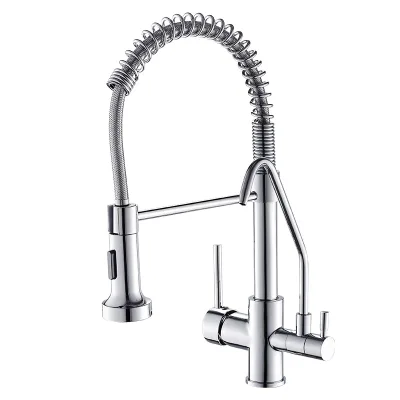
Sourcing a Chrome Single Hole Kitchen Faucet requires balancing aesthetic consistency with rigorous functional verification, as the market offers a wide spectrum of designs ranging from modern single-lever handles to traditional dual-handle configurations. Buyers must first distinguish between products marketed as "3-way" mixers with integrated purifiers and standard hot-cold water units, ensuring the selected model aligns with the specific plumbing infrastructure and usage patterns of the target kitchen. The observed product landscape includes brass body constructions with ceramic valve cores, which are critical for durability and leak prevention, yet the specific finish quality and internal mechanics vary significantly between suppliers.
The procurement strategy must account for the diversity in installation requirements, as the core keyword implies a single-hole setup, but some listings describe dual-handle designs or varying connection standards. While the chrome finish is a dominant visual preference, the underlying material quality, such as forged brass bodies versus alternative alloys, dictates the long-term performance and resistance to corrosion. Buyers should prioritize suppliers who explicitly define the valve core material and surface treatment processes, as these factors directly influence the faucet's lifespan and its ability to withstand the high-frequency usage typical in commercial and residential kitchens.
Product Scope and Observed Listing Signals
The current market signals indicate a broad range of functional capabilities, with many listings highlighting "Three Functions" or "Dual Function" capabilities that may include integrated water purification or spray modes. Buyers should carefully scrutinize product titles and descriptions to confirm whether the unit is a standard mixer or a specialized purifier faucet, as the internal plumbing requirements and maintenance needs differ substantially between these categories. The presence of "Lead Free" certifications in some listings suggests a growing emphasis on health safety, but this attribute must be verified against specific test reports rather than assumed based on marketing text alone.
Visual and stylistic attributes observed in the listings range from contemporary and modern designs to traditional styles, with finishes including polished nickel, chrome, and yellow variations. The "Single Hole" installation type is a consistent requirement for the core keyword, yet some product data references dual-handle configurations, indicating a potential mismatch between the listing title and the actual product design. Procurement teams must verify the "Number of Holes for Installation" and the "Shape" of the faucet head to ensure compatibility with the sink deck, as a single-hole requirement cannot be satisfied by a deck-mounted unit designed for multiple holes without additional hardware or modification.
Technical Specifications to Verify
The mechanical integrity of the faucet relies heavily on the valve core material, with ceramic cores being the industry standard for ensuring smooth operation and preventing drips over time. Buyers must confirm that the specified model, such as those with model numbers like FEKW1021C or JX-1108 series, utilizes a ceramic valve core rather than rubber washers, which degrade faster and require more frequent maintenance. The "Forged" production technique mentioned in several listings is a positive indicator of structural strength, suggesting the brass body is formed under high pressure to eliminate porosity and increase resistance to cracking under water pressure.
Connection standards and physical dimensions are critical technical parameters that often lead to installation failures if not verified prior to order. The observed connection types include "Female" connections with standard sizes ranging from 1/2" to 1", but buyers must cross-reference these with their local plumbing codes and supply line specifications to ensure a seamless fit. Additionally, the "Angle" of the spout, observed as 180 degrees in some listings, determines the reach and flexibility of the water flow, which is essential for filling large pots or cleaning deep sinks, and this specification should be validated against the sink's depth and width.
Compliance and Safety Documentation
Safety compliance is paramount in kitchen faucet procurement, particularly regarding lead content and material safety, as these products come into direct contact with drinking water. While some listings mention "Lead Free" attributes and certifications such as CE, ASME, ANSI, DIN, JIS, BS, and GB, buyers must request specific test reports from the supplier to validate these claims rather than relying on general certification statements. The presence of multiple international standards in the product data suggests a potential for high compliance, but the specific test results for lead leaching and material purity must be reviewed to ensure they meet the regulatory requirements of the destination market.
Documentation regarding the manufacturing process and surface treatment is equally important for ensuring long-term durability and resistance to corrosion. The "Polished" surface treatment and "Brass" finishing processes observed in the listings should be backed by quality control records that verify the thickness of the chrome plating and the adhesion of the finish to the brass body. Buyers should require evidence that the surface treatment process prevents tarnishing and scratching, as the chrome finish is often the first point of failure in low-quality faucets, leading to aesthetic degradation and potential hygiene issues in the kitchen environment.
Cost Drivers and Commercial Terms
The price range observed in the market, spanning from $0.44 to $69.40, reflects significant variations in material quality, manufacturing complexity, and brand positioning. Lower-priced units often utilize thinner brass bodies or alternative materials that may compromise durability, while higher-priced models typically feature thicker forged brass, superior ceramic valves, and more rigorous quality control processes. Buyers must analyze the cost per unit in the context of the total order volume, as the Minimum Order Quantity (MOQ) ranges from 8 to 3000 units, influencing the per-unit cost and the overall financial risk of the procurement.
Commercial terms such as packaging, customization options, and warranty provisions are key drivers in the final cost structure and must be clearly defined in the purchase agreement. The observed packaging methods, including "Carton with Pallet" and "Card Paper and Inner Box," affect shipping costs and the likelihood of damage during transit, which can significantly impact the landed cost of the goods. Additionally, the availability of OEM/ODM services and customization options allows buyers to tailor the product to their brand, but these services often incur additional costs and longer lead times that must be factored into the procurement timeline and budget.
Supplier Qualification and Quality Control
Supplier qualification should focus on the origin of the product and the consistency of their manufacturing processes, as the observed places of origin include Zhejiang and Taizhou, China, which are known hubs for faucet production. Buyers must verify the supplier's production capacity and their ability to maintain consistent quality across large batches, especially given the wide range of MOQs and the potential for variation in product attributes like color and finish. The "One Year" warranty mentioned in some listings provides a baseline for quality assurance, but buyers should negotiate extended warranty terms or performance guarantees for high-volume orders to mitigate the risk of early failure.
Quality control protocols must be established to ensure that the delivered products match the agreed-upon specifications, particularly regarding the "Chrome" finish and "Brass" material composition. Buyers should implement a pre-shipment inspection process that verifies the "Surface Finishing" and "Surface Treatment" to ensure the chrome plating is uniform and free from defects such as pitting or peeling. Additionally, random sampling for functional testing, including checking the "Single lever handle" or "Dual Handle" operation and the "Hot Cold Water" flow balance, is essential to confirm that the faucet performs as expected before it reaches the end customer.
Long-Term Procurement Checks
Long-term procurement success depends on establishing a reliable supply chain that can consistently deliver high-quality products over time, rather than focusing solely on the initial transaction. Buyers should monitor the supplier's ability to maintain the "Customization" capabilities and "Service" levels, such as OEM/ODM support, as these factors become increasingly important as the brand grows and market demands evolve. Regular audits of the supplier's production facilities and quality control systems can help identify potential issues before they result in product failures or customer complaints.
Performance tracking and feedback loops are essential for maintaining the quality of the Chrome Single Hole Kitchen Faucet supply over the long term. Buyers should collect data on warranty claims, return rates, and customer satisfaction to identify any recurring issues with specific models or batches. By analyzing this data, procurement teams can make informed decisions about continuing the relationship with a supplier, negotiating better terms, or switching to alternative sources that offer superior durability and performance, ensuring the brand maintains its reputation for quality in the competitive kitchen fixture market.
FAQs
What material is used for the faucet body?
The faucet body is constructed from brass to ensure durability and resistance to corrosion. This material choice supports long-term performance in kitchen environments while meeting safety standards for water contact.
Which certification standards does the product meet?
The product holds multiple certifications including ASME, ANSI, DIN, JIS, BS, GB, and CE. These standards verify compliance with international safety and quality requirements for plumbing fixtures.
Can the faucet be customized for specific needs?
Yes, customization is available for this faucet model to suit specific buyer requirements. Buyers can request tailored solutions through OEM or ODM services provided by the manufacturer.
How is the faucet installed on the sink?
The faucet is designed for deck-mounted installation using a single hole configuration. This setup simplifies the fitting process and ensures a secure fit on standard kitchen sinks.
What is the warranty period for this item?
The product comes with a one-year warranty to cover manufacturing defects. This guarantee provides buyers with assurance regarding the quality and reliability of the brass body and ceramic valve core.
Which surface treatment is applied to the finish?
The faucet features a polished surface treatment with a chrome or nickel finish. This process enhances the aesthetic appeal and provides a smooth, easy-to-clean surface for daily kitchen use.