Source Circular Vibrating Rotary Screening Machine for Mining, Food, and Chemicals
Find 30 Circular Vibrating Rotary Screening Machine options from Xinxiang, China. Compare specifications like screen size, transmission structure, and usage for ore, food processing, and chemical applications with customizable features and warranty terms.
Key considerations
Products List


Hot Sale Portable Screening Machine Mobile Circular Vibrating Screen
$1400.00 - $2500.00
MOQ: 2 Pieces


Circular Screening Filtering Machine Rotary High Frequency Vibrating Screen
$850.00 - $4000.00
MOQ: 1 Pieces


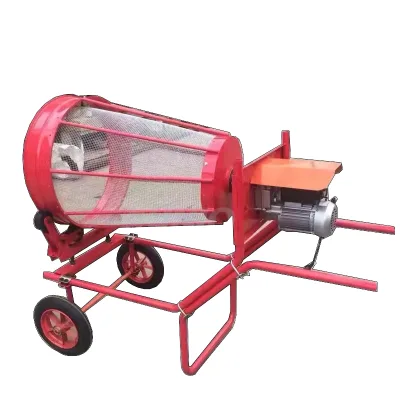


High-Quality Circular Vibrating Screen for Sale/Vibrating Screen Machine
$16000.00 - $80000.00
MOQ: 1 Pieces


Vibration Screen Machine with High Output & Long Life Circular Vibrating Screen
$50000.00 - $200000.00
MOQ: 1 Pieces

Mining Linear Vibrating Screen Machine vibration sieve for Sand Screening
$50000.00 - $200000.00
MOQ: 1 Pieces

Cheap Price New Shaker Screening Machine Vibrating Sieve Rotex Type Gyratory Screen
$19260.00 - $45600.00
MOQ: 1 Pieces


Comprehensive Sourcing Guide
Strategic Sourcing Guide for Circular Vibrating Rotary Screening Machines
Understanding Core Technical Specifications and Operational Mechanics
When sourcing a Circular Vibrating Rotary Screening Machine, buyers must first distinguish between the specific mechanical architectures available in the current market. The fundamental operation relies on a high-frequency vibration mechanism that creates a circular motion to separate materials efficiently. Based on observed market data, the transmission structure is a critical differentiator. Some units utilize an electromagnetic shaker design, which is often preferred for high-frequency applications requiring precise control over vibration intensity. In contrast, other configurations employ an eccentric vibrating screen mechanism, which may offer different throughput characteristics depending on the material density.
The running track of the machine is another primary specification to verify. While the core keyword implies a circular motion, the market presents options ranging from standard circular vibrating screens to linear vibrating screens, depending on the specific customization requested. The shaft configuration also varies significantly; procurement records indicate the availability of both single-shaft and double-shaft models. The choice between these configurations directly impacts the stability and screening capacity of the unit. For instance, a double-shaft arrangement might be necessary for heavier loads or specific slurry applications, whereas a single-shaft design could suffice for lightweight fine shaker tasks.
Supporting devices are equally vital for the longevity and performance of the equipment. The market offers distinct options for vibration isolation, including coil springs and rubber springs. The selection between these materials depends on the operating environment and the nature of the material being processed. Coil springs are often standard for general industrial applications, while rubber springs might be selected for environments requiring higher damping or noise reduction. Furthermore, the physical dimensions of the screening surface are customizable. Specifications indicate that the diameter of the screening area can range from 600mm to 1200mm, with some models supporting diameters from 800mm to 1200mm. This variability allows buyers to match the machine footprint to their existing facility constraints.
Compliance Verification and Certification Standards
In the global B2B procurement landscape, verifying compliance and certification status is a non-negotiable step, particularly for machinery that operates at high frequencies. While general market knowledge often references CE certification as a standard for European compliance, specific product listings in this category show a mix of "customized" standards and specific model-based standards like TS-300. Buyers must not assume that every listed unit carries a specific certification unless explicitly documented in the supplier's current product data sheet.
The standardization of these machines often follows a model-specific approach. For example, certain units are designated with the "TS" model designation, while others carry the "GP" designation. These model codes often correlate with specific production standards, such as "diameter from 800mm to 1200mm" or other proprietary manufacturing protocols. When evaluating a supplier, the buyer should request the specific standard documentation associated with the model number provided. If a supplier claims a "customized" standard, it is essential to clarify what technical parameters are being modified and whether these modifications affect the safety or operational integrity of the machine.
Furthermore, the origin of the product plays a role in compliance expectations. Many units in this category originate from Xinxiang, Henan, or generally from China. While this geographic origin is common for this type of industrial equipment, it does not automatically dictate the certification level. Buyers should verify if the supplier has the capability to produce units that meet the specific regulatory requirements of their destination market, whether that be the European Union, North America, or other regions. The absence of a specific certification claim in a product listing should be treated as a gap in information rather than a confirmation of non-compliance, prompting a direct inquiry to the supplier for written proof of adherence to relevant safety and quality standards.
Cost Drivers and Pricing Structure Analysis
The pricing structure for circular vibrating rotary screening machines is highly variable, reflecting the diverse range of specifications and customization options available. Market observations indicate a price range spanning from approximately $115 to $200,000 USD. This vast disparity is not arbitrary but is driven by several key factors, including the scale of the machine, the complexity of the transmission structure, and the level of customization required.
The primary cost driver is the transmission mechanism. Units equipped with electromagnetic shakers or complex eccentric vibrating screens typically command higher prices due to the precision engineering and specialized components involved. Similarly, the supporting device selection influences cost; rubber springs may be more expensive than standard coil springs depending on the material grade and durability requirements. The diameter of the screen also correlates with price, with larger units (e.g., 1200mm diameter) generally costing more than smaller counterparts (e.g., 600mm diameter) due to increased material usage and manufacturing time.
Customization is another significant factor in the final cost. The market data confirms that customization is available for almost every aspect of the machine, including material, color, and specific functional requirements. A "customized" order often involves a longer lead time and higher unit cost compared to standard off-the-shelf models. Additionally, the warranty period can influence the price; units offering a two-year warranty may be priced higher than those with a standard one-year warranty, reflecting the supplier's confidence in the product's durability and their commitment to after-sales support. Buyers should be prepared for a tiered pricing model where the base price covers a standard configuration, and additional costs are incurred for specialized features, larger dimensions, or extended warranty terms.
Typical Applications and Industry Use Cases
Circular vibrating rotary screening machines are versatile tools deployed across a wide spectrum of industries, each with unique material handling requirements. The primary applications identified in the market include mining, chemical processing, food processing, and laboratory experiments. In the mining sector, these machines are frequently used as mine shakers to process ore, separating valuable minerals from waste rock based on particle size. The ability to handle slurry, ceramic, glaze, and solid-liquid mixtures makes them particularly valuable in the chemical and ceramic industries.
For food processing applications, the machines function as lightweight fine shakers, ensuring that food products meet strict size and purity standards. The versatility of the equipment is further highlighted by its use in experiments shakers, where precise control over vibration frequency and amplitude is required for research and development purposes. Some models are specifically designed as thin oil shakers, indicating specialized use in the lubrication or fluid processing sectors. The functional capabilities extend to rotary vane shakers and spiral flash shakers, suggesting that the technology is adaptable to various flow dynamics and material viscosities.
The capacity of these machines also varies significantly to meet different production demands. Observed data suggests a capacity range of 10 to 900 tons per hour (T/H), allowing buyers to select a unit that matches their specific throughput requirements. Whether the application involves high-volume ore processing or small-batch chemical experiments, the availability of different screen sizes (5-200mm) and feed sizes (below 400mm) ensures that the machine can be tailored to the specific material characteristics. This adaptability makes the Circular Vibrating Rotary Screening Machine a critical asset for facilities requiring efficient, scalable, and reliable screening solutions.
Supplier Evaluation and Quality Control Protocols
Evaluating a supplier for circular vibrating rotary screening machines requires a rigorous assessment of their technical capabilities, production standards, and quality control measures. Buyers should prioritize suppliers who demonstrate a clear understanding of the machine's transmission structure and supporting devices. A reputable supplier will be able to explain the differences between electromagnetic, eccentric, and other vibration mechanisms and recommend the most suitable option for the buyer's specific application.
Quality control should be a central component of the supplier evaluation process. Buyers must verify that the supplier adheres to strict manufacturing standards, particularly regarding the materials used in construction. The market data indicates that materials can be customized, which means the buyer must specify the exact grade and type of material required for their application. Additionally, the packaging method is an indicator of the supplier's attention to detail; options range from wooden packaging and wooden boxes to standard export wooden cases and containerized shipping. Proper packaging is essential to prevent damage during transit, especially for heavy machinery with delicate vibrating components.
Warranty and after-sales support are also critical indicators of supplier reliability. While the market offers warranties ranging from one to two years, buyers should inquire about the specific terms and conditions of these warranties. A supplier that offers a longer warranty period may be more confident in the durability of their product, but the buyer must also understand what is covered and what constitutes a valid claim. Furthermore, the supplier's location, often cited as Xinxiang, Henan or generally China, should be considered in the context of logistics and communication. A supplier with a strong local presence may offer better support for maintenance and troubleshooting, while an international supplier might provide broader logistical capabilities.
Long-Term Procurement Considerations and Operational Efficiency
When planning long-term procurement for circular vibrating rotary screening machines, buyers must consider factors beyond the initial purchase price. The total cost of ownership includes maintenance, energy consumption, and the potential for future upgrades or modifications. The availability of customization is a significant advantage for long-term planning, as it allows the machine to be adapted to changing production needs without requiring a complete replacement. For example, the height of the machine can be modified, and the movable support can be adjusted as requested, ensuring that the equipment remains relevant as operational requirements evolve.
Energy efficiency is another critical consideration, particularly for high-frequency vibrating screens that operate continuously. The transmission structure plays a major role in energy consumption; electromagnetic shakers may offer different efficiency profiles compared to eccentric vibrating screens. Buyers should request energy consumption data from the supplier to make an informed decision. Additionally, the durability of the supporting devices, such as coil or rubber springs, will impact the frequency of maintenance and the overall lifespan of the machine.
Finally, the lead time and production capacity of the supplier are essential for long-term planning. While the market data does not specify exact lead times, the availability of customized models suggests that production times may vary. Buyers should establish clear timelines with the supplier to ensure that the equipment is delivered when needed. By carefully evaluating these long-term factors, buyers can secure a Circular Vibrating Rotary Screening Machine that not only meets their current needs but also supports their future growth and operational efficiency.
FAQs
What transmission structures are available for this machine?
Available transmission structures include electromagnetic shakers, eccentric vibrating screens, and standard vibrating screens. Buyers can select based on frequency requirements, with options ranging from high-frequency electromagnetic designs to eccentric mechanisms for different throughput needs.
Can the machine diameter be customized to fit my facility?
Yes, the screen diameter is customizable and ranges from 600 to 1200mm. Some specific models support diameters from 800mm to 1200mm, allowing the equipment to match specific facility constraints and screening surface area requirements.
Which supporting devices are used for vibration isolation?
The machines utilize either coil springs or rubber springs as supporting devices. The choice depends on the operating environment, with coil springs often used for general industrial applications and rubber springs selected for higher damping or noise reduction.
What is the typical capacity range for these screening units?
The capacity ranges from 10 to 900 tons per hour. This wide range allows buyers to select a unit that matches their specific throughput requirements, whether for high-volume ore processing or smaller batch chemical experiments.
How long is the warranty period for these machines?
Warranty periods typically range from one to two years. Units offering a two-year warranty may be priced higher, reflecting the supplier's confidence in durability and their commitment to extended after-sales support for the equipment.
What packaging methods are used for shipping this equipment?
Packaging options include wooden packaging, wooden boxes, standard export wooden cases, and containerized shipping. Proper packaging is essential to prevent damage during transit, especially for heavy machinery with delicate vibrating components.
Can the material and color be customized for specific needs?
Yes, both material and color are customizable options. Buyers can specify the exact grade and type of material required for their application, ensuring the machine meets specific durability and operational requirements.