Source Class II Immunoassay Analyzer for Hospital Lab and Clinical Testing
Compare 30 Class II Immunoassay Analyzer models from verified Chinese manufacturers. These devices support hospital diagnostics, medical research, and clinical applications with features like touchscreen displays and online technical support.
Key considerations
Products List


Immunoassay Analyzer Humanautomatic Chemiluminescence Immunoassay Analyzer
$500.00 - $600.00
MOQ: 2 Pieces

Automatic Immunoassay Analyzer Chemiluminescence Immunoassay Clia Analyzer Machine
$12000.00 - $14000.00
MOQ: 1 set


Blood Analyzer Immunoassay System Immunofluorescence Quantitative Analysis
$600.00 - $1000.00
MOQ: 1 Pieces


Portable Immunofluorescence Quantitative Analyzer for Rapid Antigen Testing
$800.00 - $950.00
MOQ: 1 Pieces


Innovative Immunofluorescence Analyzer for Rapid Laboratory Testing Solutions
$800.00 - $950.00
MOQ: 1 Pieces

High-Performance Immunofluorescence Analyzer for Research and Clinical Use
$800.00 - $950.00
MOQ: 1 Pieces


Lab Automatic Chemiluminescence Immunoassay Analyzer Clia Analyzer Biochemistry Analyzer
$7500.00 - $15000.00
MOQ: 1 Pieces

Clia Analyzer Laboratory Instrument Automatic Biochemistry Analyzer
$7500.00 - $15000.00
MOQ: 1 Pieces

Versatile Chemiluminescence Immunoassay Analyzer for Research and Clinics
$1999.00 - $14999.00
MOQ: 1 Pieces

Biobase Immune Rapid Analysis Equipment Fluorescence Immunoassay Analyzer
$1800.00 - $2300.00
MOQ: 1 Pieces


Comprehensive Sourcing Guide
Strategic Sourcing Guide for Class II Immunoassay Analyzers
The global procurement landscape for medical diagnostic equipment has evolved to prioritize precision, regulatory compliance, and operational efficiency. For buyers specifically targeting a Class II Immunoassay Analyzer, the decision-making process requires a granular understanding of technical specifications, certification frameworks, and supply chain reliability. These instruments, often categorized under biological diagnostics and imaging diagnostic equipment, serve as critical assets in hospital settings, enabling rapid and accurate patient monitoring. This guide synthesizes observed market data and technical attributes to provide a disciplined framework for sourcing these essential devices without relying on unverified claims or speculative market figures.
Technical Architecture and Operational Specifications
When evaluating a Class II Immunoassay Analyzer, the primary focus must be on the underlying technology and operational parameters that define its performance. The market presents a diverse array of configurations, ranging from fully automatic systems to specialized instruments designed for specific chromatographic or spectrometric applications. A critical observation in current listings is the prevalence of the "Trfia" methodology, which stands as a key technical differentiator for many units. This methodology often dictates the sensitivity and specificity of the diagnostic results, making it a non-negotiable attribute for laboratories requiring high-precision data.
Furthermore, the physical and electrical specifications of these analyzers must align with the infrastructure of the intended facility. Observed data indicates that many units operate on a supply voltage of AC 220±22V with a power frequency of 50/60Hz, ensuring compatibility with standard grid systems in many regions. Environmental constraints are equally vital; the operational ambient temperature range is typically specified between 5°C and 40°C, with relative humidity requirements not exceeding 80%. These parameters are not merely suggestions but operational boundaries that, if exceeded, can compromise the integrity of the analytical results.
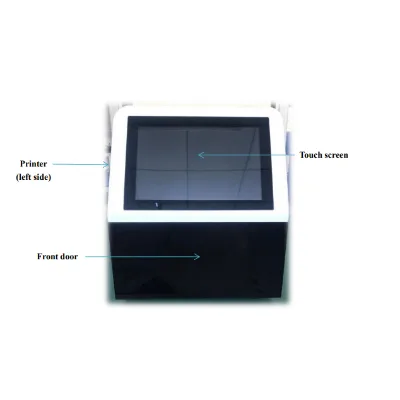
The hardware interface also plays a significant role in user experience and workflow efficiency. Modern Class II instruments frequently feature touchscreen displays, facilitating intuitive navigation and data entry. The inclusion of printing capabilities allows for immediate generation of hard-copy reports, a feature often mandated by hospital accreditation standards. Additionally, the physical dimensions of the equipment, such as the standard footprint of 390310640mm observed in certain models, must be considered during facility planning to ensure adequate space for operation and maintenance.
Regulatory Compliance and Certification Verification
Navigating the regulatory landscape is perhaps the most critical step in sourcing medical diagnostic equipment. The classification of these devices as Class II instruments places them under specific regulatory oversight, requiring rigorous verification of certifications before procurement. Buyers must confirm that the product possesses valid certifications such as CE, ISO, IEC, and GMP. The presence of FDA approval is another high-priority indicator for markets where such clearance is mandatory for commercial distribution.
The distinction between different certification types is essential. While some listings mention "ISOClassification:Biological Diagnostics," this refers to the functional categorization of the device rather than a standalone certification. Buyers should specifically look for ISO 13485:2003 compliance, which is the standard for quality management systems in the medical device industry, though specific claims regarding this standard should be verified against current documentation. The "MSDS" (Material Safety Data Sheet) certification is also frequently cited, indicating that the manufacturer has provided safety data regarding the chemical components used in the device or its reagents.
It is imperative to treat certification claims as observations that require validation rather than absolute guarantees. A supplier may list "CE, ISO, IEC, GMP" as attributes, but the buyer must request the actual certificate numbers and verify their validity with the issuing bodies. The "EEC" certification, often listed alongside others, refers to compliance with European Economic Community directives, which is crucial for any procurement intended for the European market. Failure to verify these certifications can lead to significant legal and operational risks, including the inability to import the device or the potential for regulatory fines.
Cost Drivers and Economic Considerations
The pricing structure for Class II immunoassay analyzers is influenced by a complex interplay of factors, including technological complexity, certification status, and supply chain logistics. The observed price range in the current market spans from approximately $500 to $30,655, reflecting the vast diversity in product capabilities. Lower-priced units may be entry-level models or those with limited functionality, while the upper end of the spectrum typically corresponds to fully automatic systems with advanced features such as high-throughput capabilities, sophisticated software integration, and extended warranty periods.
The minimum order quantity (MOQ) is another economic factor that affects procurement strategy. In the observed market, MOQs range from 1 to 2 units, suggesting that buyers can often procure single units without needing to form large consortia or share costs with other entities. However, the total cost of ownership extends beyond the initial purchase price. Buyers must account for the cost of consumables, such as chromatographic columns and mobile phases, which are often proprietary to the specific analyzer model. For instance, units utilizing liquid chromatography may require specific "Convetional Analytical Columns" or "Narrow Bore Columns" with diameters ranging from 20 to 40mm and lengths between 10 and 30cm.
Warranty terms also play a significant role in the economic equation. A standard observation in the market is a 2-year warranty, which provides a baseline level of protection against manufacturing defects. However, the scope of this warranty—whether it covers parts, labor, or both—must be clearly defined in the procurement contract. Additionally, the "After-Sale Service" provision, often listed as "Online Technical Support," should be evaluated for its responsiveness and depth. The availability of spare parts and the lead time for repairs can significantly impact the operational continuity of a laboratory, making these hidden costs a critical component of the financial analysis.
Typical Applications and Clinical Utility
The application of Class II immunoassay analyzers is predominantly centered in hospital environments, where the demand for rapid and accurate diagnostic testing is highest. These instruments are designed to support a wide range of clinical applications, from routine blood tests to specialized patient monitoring. The "Female" group classification observed in some listings suggests that certain models may be optimized for gynecological or reproductive health diagnostics, although this should be verified against the specific product manual.
The versatility of these analyzers is further demonstrated by their ability to function as both "Patient Monitor" and "Analyzer" units. This dual functionality allows for seamless integration into existing clinical workflows, reducing the need for multiple distinct devices. The "Durable" feature highlighted in product attributes indicates that these machines are built to withstand the rigorous demands of a high-volume clinical setting. Furthermore, the "Customization" availability suggests that manufacturers can tailor certain aspects of the device to meet specific institutional needs, such as custom software interfaces or specialized reagent kits.
In addition to hospital settings, these analyzers are also utilized in medical research applications. The "Medical Research" appliance classification points to their utility in academic and clinical trial settings, where precise data collection and analysis are paramount. The ability to handle various sample types, including those requiring "Liquid Chromatography" or "X-Ray Spectrometer" analysis, enhances their utility in diverse research scenarios. Buyers should ensure that the selected analyzer aligns with their specific application requirements, whether they focus on routine diagnostics, specialized patient monitoring, or advanced research projects.
Supplier Evaluation and Quality Assurance
Selecting the right supplier is as critical as selecting the right equipment. The sourcing process should involve a thorough evaluation of the supplier's track record, manufacturing capabilities, and commitment to quality. The "Jiangsu, China" origin of many observed products highlights the importance of understanding the geographical context of the supply chain. While this region is a hub for medical device manufacturing, buyers must verify the specific factory conditions and quality control measures in place.
Quality assurance should be a continuous process, not a one-time check. Buyers should request detailed documentation regarding the manufacturing process, including the "Stationary Phase" and "Detector" specifications. For example, the use of "SDD" (Silicon Drift Detector) or "MSD" (Mass Spectrometry Detector) and "TCD" (Thermal Conductivity Detector) indicates the level of sophistication in the analytical capabilities of the device. The "Gaspath System" configuration, whether "Single" or otherwise, also impacts the performance and reliability of the instrument.
The "Carton" or "Carton Packing" specification is a basic but important detail regarding the logistics of shipping. Proper packaging ensures that the delicate equipment arrives in pristine condition, minimizing the risk of damage during transit. Buyers should also inquire about the "Product Name" and "Model Number" to ensure that the exact specifications match the procurement requirements. The "English" language support is a standard feature that facilitates communication and documentation, but buyers should verify the availability of local language support if the device will be operated in a non-English speaking region.
Long-Term Procurement and Lifecycle Management
The procurement of a Class II Immunoassay Analyzer is a long-term investment that requires careful planning for the entire lifecycle of the device. The "2 Years" warranty period is a starting point, but buyers should consider the long-term availability of technical support and spare parts. The "Online Technical Support" attribute is a valuable resource, but its effectiveness depends on the responsiveness and expertise of the support team. Buyers should establish clear service level agreements (SLAs) that define response times and resolution protocols.
Maintenance and calibration are ongoing requirements that can significantly impact the operational efficiency of the analyzer. The "Fully automatic" standard suggests that the device is designed to minimize manual intervention, but regular maintenance is still necessary to ensure optimal performance. Buyers should develop a maintenance schedule that aligns with the manufacturer's recommendations and the specific usage patterns of the laboratory. The "Touchscreen Display" and "Printing" features should be regularly tested to ensure they remain functional and compliant with data integrity standards.
Finally, the "Customization" availability offers an opportunity to future-proof the procurement. As clinical needs evolve, the ability to upgrade or modify the analyzer can extend its useful life and maintain its relevance. Buyers should explore the potential for software updates, reagent kit expansions, and hardware upgrades when negotiating the initial contract. By adopting a holistic approach to lifecycle management, buyers can maximize the return on investment and ensure that the Class II Immunoassay Analyzer continues to meet the evolving needs of their clinical operations.
Comparative Analysis of Key Specifications
To facilitate a more informed decision-making process, the following table summarizes the key technical and operational specifications observed in the current market for Class II immunoassay analyzers. This comparison highlights the diversity in product offerings and helps buyers identify the features that align with their specific requirements.
| Specification Category | Observed Attribute | Typical Range/Value | Relevance to Procurement |
|---|---|---|---|
| Instrument Classification | Class II | Class II | Determines regulatory oversight and safety requirements. |
| Methodology | Trfia | Trfia | Defines the analytical technique and sensitivity. |
| Certification | CE, ISO, FDA, EEC | Varies by region | Essential for legal import and clinical use. |
| Warranty | 2 Years | 2 Years | Indicates manufacturer confidence and support duration. |
| Supply Voltage | AC 220±22V | 220V ±10% | Must match local power grid infrastructure. |
| Ambient Temperature | 5°C to 40°C | 5-40°C | Critical for maintaining device stability and accuracy. |
| Detector Type | SDD, MSD, TCD | SDD/MSD/TCD | Impacts detection sensitivity and application scope. |
| Chromatography Type | Liquid Chromatography | Liquid | Defines the separation technique used for analysis. |
| Packing | Carton | Carton | Affects shipping safety and handling requirements. |
| Origin | Jiangsu, China | Jiangsu, China | Influences lead times and logistics planning. |
This table serves as a reference point for buyers to compare different models and suppliers. It is important to note that while these attributes are observed in the market, they are not universal guarantees. Buyers must verify each specification against the specific product documentation and the supplier's claims to ensure accuracy and compliance. By systematically evaluating these factors, procurement professionals can make informed decisions that balance technical performance, regulatory compliance, and economic efficiency.
FAQs
What certifications are required for class ii immunoassay analyzers?
Required certifications include CE, ISO, IEC, GMP, FDA, and EEC. Buyers must verify these documents directly as listings may vary. ISOClassification indicates biological diagnostics but is not a standalone certification.
How does the Trfia methodology impact analyzer performance?
The Trfia methodology is a key technical differentiator for precision and sensitivity. It dictates the accuracy of diagnostic results in hospital settings. This feature is critical for laboratories requiring high-precision data from Class II instruments.
What are the standard warranty terms for these devices?
A standard observation in the market is a 2-year warranty period. This coverage typically protects against manufacturing defects but scope varies. Buyers should confirm if labor and parts are included in the contract.
Can these analyzers be customized for specific hospital needs?
Customization is available for certain models to meet institutional requirements. Manufacturers may tailor software interfaces or reagent kits to specific needs. This flexibility supports diverse clinical applications in hospital environments.
Where are class ii immunoassay analyzers typically manufactured?
Many observed products originate from Jiangsu, China. Buyers must verify specific factory conditions and quality control measures in this region. The origin affects supply chain logistics and lead times for procurement.
What are the operational environmental limits for these instruments?
Operational limits typically include an ambient temperature of 5°C to 40°C. Relative humidity must not exceed 80% for optimal performance. Supply voltage usually requires AC 220±22V at 50/60Hz.
What is the minimum order quantity for purchasing these analyzers?
The observed minimum order quantity ranges from 1 to 2 units. This allows buyers to procure single units without forming large consortia. Total cost of ownership must still account for consumables and maintenance.