Source Autoclavable Detachable Ultrasonic Scaler for Child Adult Pet
Compare 30 listings of the Autoclavable Detachable Ultrasonic Scaler designed for child, adult, and pet applications. Buyers can evaluate models like Lk-F12 and Maxpiezo7+ with features such as touch panels, remote control, and CE/ISO certifications to find the right dental scaling solution.
Key considerations
Products List


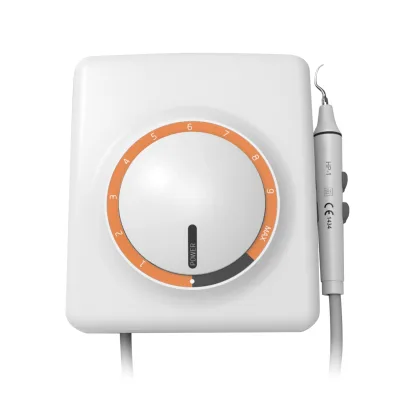


Pets Vet Ultrasonic Dental Scaler Portable High Speed Veterinary Dental Scaler
$61.00 - $76.00
MOQ: 1 Pieces
Comprehensive Sourcing Guide
Strategic Sourcing Guide for Autoclavable Detachable Ultrasonic Scalers
Procuring dental ultrasonic scalers requires a rigorous approach that balances technical performance with regulatory compliance and long-term operational reliability. The core keyword "Autoclavable Detachable Ultrasonic Scaler" points to a specific subset of dental equipment designed for high-frequency vibration to remove calculus and plaque. In the current market, buyers must navigate a landscape where product attributes vary significantly between models. This guide synthesizes available product data to provide a structured framework for evaluating potential suppliers, ensuring that the selected equipment meets the stringent demands of modern dental practices.
Technical Specifications and Functional Architecture
When evaluating an ultrasonic scaler, the primary focus must be on the mechanical architecture and power delivery systems. The product data indicates a clear distinction between different model series, such as the Lk-F12, Maxpiezo7+, LK-F17R, and various TY-series units. A critical technical requirement for the "detachable" aspect of the keyword is the handpiece design. Available listings confirm that the handpiece is detachable, a feature essential for sterilization protocols. This design allows the handpiece to be separated from the main control unit, facilitating thorough cleaning and preventing fluid ingress into the electronic components.
Power specifications are another vital area of investigation. The observed data reveals a range of input voltages, specifically 220V and 110V, with some models supporting a broader AC100240V range at 4763Hz. This variability necessitates that buyers verify the specific voltage requirements against their local electrical infrastructure to avoid equipment failure. Furthermore, the power output is a key performance indicator. Data points suggest an output power range of 3W to 20W, with input power consumption noted between 30va and 48va. Buyers should ensure that the selected unit provides sufficient wattage for heavy calculus removal without compromising the stability of the device during operation.
The control interface also varies across models. Some units feature a touch screen panel that is described as waterproof, which is crucial for maintaining hygiene in a wet clinical environment. Others may utilize a remote control mechanism. The presence of a foot switch, powered by 1.5V batteries, is also noted in specific configurations, allowing for hands-free operation. The water supply system is another technical differentiator; while some models utilize a bottle-based water supply, others may integrate different fluid delivery systems. The compatibility of scaler tips is equally important, with listings indicating that specific models come with 5PCS of tips and are compatible with brands such as EMS.
Compliance and Certification Verification
Regulatory compliance is non-negotiable in the medical device sector. The product data explicitly lists several certifications, including CE, ISO, and TUV. These certifications are critical indicators that the device has undergone testing for safety and electromagnetic compatibility. The CE marking, referenced multiple times in the data, signifies conformity with health, safety, and environmental protection standards for products sold within the European Economic Area. Similarly, ISO certification suggests adherence to international quality management standards.
However, buyers must exercise caution when interpreting these certifications. The data lists "ISOCondition:New" and "ISOType:Metal Scaler" in various contexts, which may refer to the condition of the product or specific product types rather than a universal certification status for every listed item. Therefore, it is imperative for procurement teams to request valid, current certification documents directly from the supplier. The presence of a CE certificate is noted as a standard attribute, but the specific standard (e.g., ISO 13485 for medical devices) should be verified. Additionally, the data mentions "prod_standard: ce" and "prod_standard: Metal package," which highlights the need to distinguish between product standards and packaging standards.
Buyers should also verify the "Quality Guarantee" terms associated with the device. Specific listings mention a host warranty of 3 years and a handpiece warranty of 1 year. This distinction is vital for total cost of ownership calculations, as the handpiece is a high-wear component. Ensuring that the warranty covers the specific components that require frequent replacement or sterilization is a key part of the compliance and risk management strategy.
Cost Drivers and Pricing Dynamics
The pricing for ultrasonic scalers in the observed market ranges from 48 USD to 326 USD. This wide disparity suggests that the cost is driven by factors beyond the basic function of scaling. The "Metal Package" and "Metal Scaler" designations in the data point to build quality and material durability as significant cost drivers. Units constructed with metal housings likely offer better heat dissipation and durability compared to plastic alternatives, justifying a higher price point.
The inclusion of accessories also impacts the final cost. Listings that include a bottle, specific scaler tips (e.g., 5PCS), and a remote control or foot switch will naturally command a higher price than base units. The model designation, such as Maxpiezo7+ versus Lk-F12, likely correlates with feature sets like touch screen capabilities, water pressure control, and advanced functions like perio and endo functionality. These advanced features increase the complexity of the manufacturing process and the R&D costs, which are reflected in the price.
Minimum Order Quantity (MOQ) is another factor influencing procurement costs. The observed MOQ range is 1 to 5 units. For smaller clinics or those testing a new supplier, an MOQ of 1 allows for low-risk evaluation. However, larger orders may benefit from volume discounts, though specific discount tiers are not provided in the data. Buyers should negotiate based on the total value of the order, considering the long-term warranty and the cost of consumables like scaler tips.
Typical Applications and Clinical Versatility
The application scope of these devices is broad, covering Child, Adult, and Pet categories. This versatility is a significant advantage for general dental practices and veterinary clinics. The data explicitly states that the application includes "Child, Adult, Pet" and "Adult" in various listings. This suggests that the ultrasonic scalers are designed with adjustable power settings to accommodate the varying thickness of calculus and the sensitivity of different patient groups.
The functional capabilities extend beyond simple scaling. Specific models are described as having "Scaling, Perio and Endo Function." This indicates that the device can be used for periodontal therapy, which involves cleaning below the gum line, and potentially for endodontic procedures, which require precise control. The "Type: Metal Scaler" designation further implies robustness suitable for demanding clinical environments. The detachable handpiece design is particularly beneficial for autoclaving, ensuring that the instrument can be sterilized between patients to prevent cross-contamination.
The water supply system, often utilizing a bottle, allows for portability and ease of use in various clinical setups. The water pressure range of 0.01MPa to 0.5MPa provides flexibility in adjusting the flow rate for different procedures. This adaptability makes the device suitable for a wide range of dental treatments, from routine cleanings to specialized periodontal care.
Supplier Evaluation and Quality Assurance
Evaluating suppliers requires a focus on the consistency of product attributes and the reliability of the supply chain. The data indicates that the country of origin for these products is China. While this is a common manufacturing hub for medical devices, buyers should verify the specific factory standards and quality control processes. The "Condition: New" attribute is listed frequently, but buyers must ensure that "New" refers to the actual state of the product and not just a listing status.
Quality assurance should be a primary criterion in supplier selection. The data mentions a "Quality Guarantee" of 3 years for the host and 1 year for the handpiece. This warranty structure suggests that the manufacturer stands behind the durability of their product. Buyers should inquire about the process for handling warranty claims, including the lead time for repairs or replacements. The "prod_packing" is listed as "Carton" or "Metal Package," which affects the shipping and storage conditions. Ensuring that the packaging is robust enough to protect the device during transit is essential.
The "Customization: Available" attribute is a significant differentiator. Suppliers offering customization can tailor the device to specific clinic needs, such as specific voltage requirements or branding. However, customization may impact lead times and costs. Buyers should assess whether the customization options align with their operational requirements and budget constraints.
Long-Term Procurement and Operational Considerations
Long-term procurement strategies must account for the total cost of ownership, including maintenance, consumables, and potential upgrades. The detachable handpiece design is a key factor in this regard, as it allows for easy replacement of worn components without replacing the entire unit. The compatibility with EMS brand tips is a notable feature, suggesting that buyers can source consumables from multiple suppliers, potentially reducing costs.
The power consumption and voltage requirements are also critical for long-term operation. Devices with a broad input voltage range (AC100~240V) offer greater flexibility for clinics that may expand internationally or experience power fluctuations. The water pressure and flow rate specifications should be monitored to ensure consistent performance over time. Regular maintenance of the water supply system and handpiece is necessary to prevent clogging and ensure optimal scaling efficiency.
The "Packing Size" of 332311cm and "G.W." of 1.26kgs for certain models provide insights into the logistics of storage and shipping. Buyers should consider the physical footprint of the device in their clinic and the storage requirements for the packaging. The "Main Unit Input" of DC30V, 1.5A indicates the need for a stable power supply, which may require additional power management equipment in some settings.
In conclusion, sourcing an Autoclavable Detachable Ultrasonic Scaler involves a comprehensive evaluation of technical specifications, compliance, cost, and supplier reliability. By focusing on the verified attributes such as voltage ranges, certification status, and warranty terms, buyers can make informed decisions that ensure the long-term success of their dental practice. The market offers a variety of models with distinct features, and careful selection based on specific clinical needs is essential for maximizing the value of this investment.
FAQs
Can the handpiece be detached for sterilization?
Yes, the handpiece is detachable to facilitate thorough cleaning and sterilization protocols. This design prevents fluid ingress into electronic components and supports autoclavable requirements for clinical safety.
What certifications do these ultrasonic scalers hold?
The devices carry CE, ISO, and TUV certifications indicating compliance with safety standards. Buyers should verify specific certificate documents as some listings note condition rather than universal certification status.
Which voltage options are available for these units?
Units support 220V, 110V, and a broad AC100~240V range at 47~63Hz. Verify local electrical infrastructure compatibility to ensure stable operation and prevent equipment failure during clinical procedures.
What is the warranty coverage for the host and handpiece?
The warranty typically covers the host for three years and the handpiece for one year. This distinction is vital for total cost of ownership as the handpiece is a high-wear component requiring frequent replacement.
How much does an Autoclavable Detachable Ultrasonic Scaler cost?
Prices range from 48 USD to 326 USD depending on features and build quality. Metal packaging and advanced functions like touch screens generally command higher prices than basic plastic models.
What is the minimum order quantity for these devices?
The minimum order quantity ranges from 1 to 5 units depending on the supplier. This allows smaller clinics to evaluate new suppliers with low risk before committing to larger bulk orders.